Auto insurance rates in Arizona vary dramatically based on dozens of factors, and most drivers overpay simply because they don’t understand how insurers calculate premiums. An auto insurance comparison in Arizona reveals that identical coverage can cost hundreds of dollars more or less depending on where you shop and what discounts you qualify for.
At Insurance Brokers of Arizona®, we’ve helped thousands of drivers cut through the confusion and find rates that actually fit their budget. This guide walks you through exactly how to compare quotes, avoid costly mistakes, and lock in the best possible price.
What Really Drives Your Arizona Auto Insurance Rate
Your Driving Record Sets the Foundation
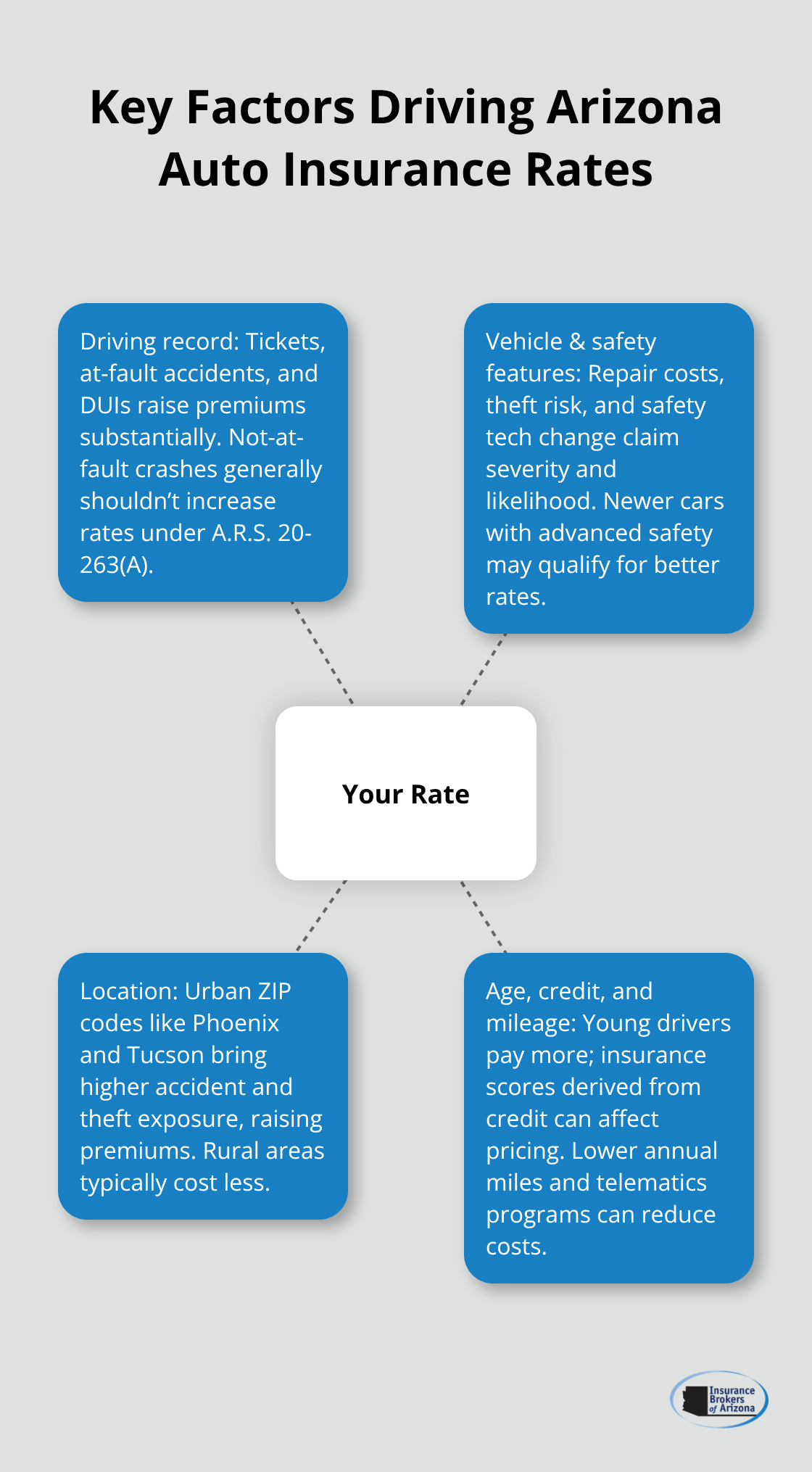
Your driving record is the single most important factor insurers examine when calculating your premium, and Arizona insurers take this seriously. According to The Zebra, a not-at-fault accident raises your six-month premium by roughly eight dollars, but an at-fault accident jumps that figure to several hundred dollars depending on your insurer. A DUI conviction creates catastrophic rate increases, with some insurers charging as much as $6,623 for six months of coverage after a conviction.
Bankrate data shows that driving history, accidents, violations, and DUI records are among the top factors influencing rates across Arizona. Arizona law under A.R.S. 20-263(A) prevents insurers from raising your rates for accidents you didn’t cause or didn’t significantly contribute to, so an accident where you’re clearly not at fault won’t damage your premium. This protection matters because it shields you from rate hikes beyond your control.
Vehicle Type and Safety Features Impact Your Cost
Your vehicle type matters enormously because repair costs and safety ratings directly affect claim likelihood and severity. A 2014 Nissan Rogue costs roughly $115 per month for full coverage with Progressive, while a Corvette might run $70 per month and an Outback around $110 per month, showing how dramatically the same coverage varies by vehicle. Newer vehicles with advanced safety features typically qualify for better rates than older models, and insurers reward hybrid or electric vehicles with environmental discounts in some cases.
Location Determines Your Premium More Than You Think
Where you live in Arizona determines your rate more than many drivers realize. Phoenix and Tucson residents pay significantly higher premiums than drivers in rural areas because urban zones experience more accidents, theft, and weather-related claims. A Mesa resident reported paying about $125 per month for full coverage, while other Arizona locations showed variations ranging from $100 to over $300 per month depending on ZIP code and carrier. The Arizona state average for six-month full coverage is about $1,282 according to The Zebra, but this masks huge differences between cities.
Age, Credit History, and Driving Habits Shape Your Rate
Your age and gender influence pricing substantially, with teenage drivers paying around $3,134 for six months of full coverage compared to adult rates. Credit history plays a surprising role too, as Arizona insurers use credit inquiries and payment history to calculate your insurance score, affecting eligibility and pricing. Annual mileage impacts your rate because higher mileage means greater exposure to accidents and claims, so if you work from home or rarely drive, you should inform your insurer since some carriers offer usage-based programs like Progressive’s Snapshot that monitor your actual driving and reward safe habits with savings up to 40 percent at renewal.
Understanding these rate factors positions you to make smarter decisions when comparing quotes across carriers. The next section shows you exactly how to gather multiple quotes and identify which coverage options actually protect your assets without wasting money on unnecessary add-ons.
Comparing Auto Insurance Quotes in Arizona
Multiple Carriers Reveal Staggering Price Differences
Shopping with just one or two insurers almost guarantees you’ll overpay. The Arizona auto insurance market is hard, with carriers raising rates quarterly in recent years, which means your current insurer’s quote from six months ago is almost certainly higher than what competitors charge today. According to The Zebra, comparing quotes across multiple carriers reveals staggering price differences for identical coverage. USAA quotes full coverage at around $1,075 for six months while Travelers comes in at $727 for the same protection-a $348 difference that most drivers never discover because they don’t request side-by-side quotes.
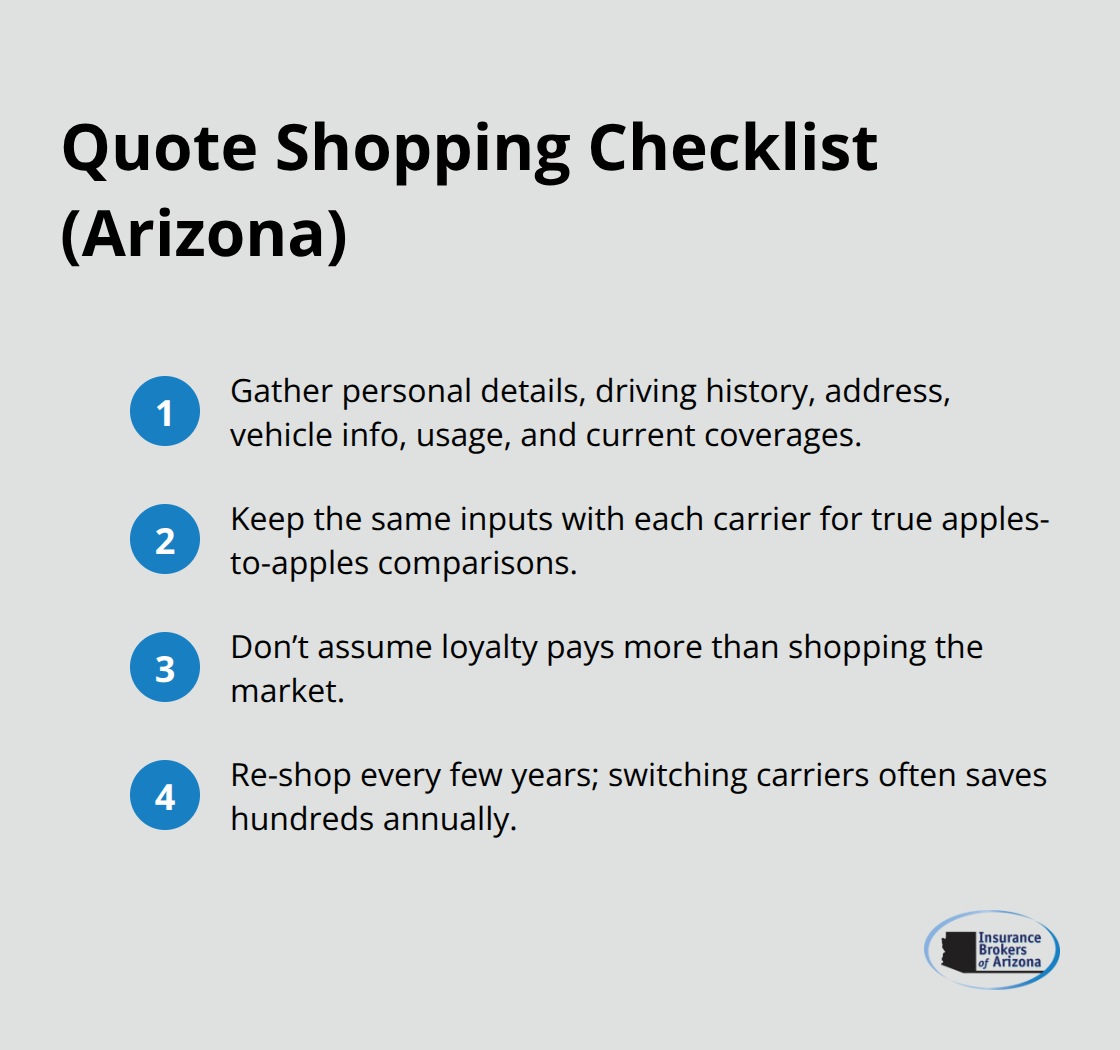
When you request quotes, prepare your personal information, driving history, address, vehicle details, how you use the car, and your current coverage details. This consistency ensures apples-to-apples comparisons across carriers. Most people think loyalty pays, but the data proves otherwise. Loyalty discounts rarely overcome the actual price differences between insurers, so switching carriers every few years typically saves hundreds of dollars annually.
Finding the Right Carrier for Your Profile
Geico and Progressive tied for first in US News rankings for Arizona, with Geico offering the most discounts of any state insurer and strong digital tools, while Progressive provides ride-share coverage and its Snapshot safe-driving program that rewards lower rates. However, Travelers consistently undercuts both on price, averaging around $1,445 annually compared to the state average of $2,429. Root emerges as Arizona’s cheapest option at about $1,394 annually according to The Zebra’s evaluation, though availability may be limited based on your profile.
An independent broker matters here because they access roughly 28 carriers simultaneously rather than forcing you to contact each company individually. Insurance Brokers of Arizona® partners with over 40 reputable carriers, which means we compare far more options than most drivers could manage alone.
Coverage Choices Determine Protection, Not Just Price
Understanding what full coverage actually means prevents you from either overpaying for unnecessary protection or leaving yourself dangerously exposed. Arizona requires minimum liability limits of 25/50/15, meaning $25,000 per person and $50,000 per accident for bodily injury plus $15,000 for property damage. Full coverage combines liability, collision, and comprehensive protection, but lenders typically require higher limits if you’re financing or leasing.
Medical Payments coverage helps with deductibles and co-pays from your own injuries regardless of fault, which many drivers skip despite its low cost. Uninsured and Underinsured Motorist coverage protects you against drivers without adequate insurance, a critical consideration in Arizona where uninsured-driver prevalence remains a genuine concern. Your deductible choice dramatically impacts your monthly payment. Raising your deductible from $500 to $1,000 typically saves 15 to 30 percent on collision and comprehensive premiums, but only choose this if you can actually afford that out-of-pocket cost after a claim.
Gap insurance covers the difference between what you owe on your loan and your vehicle’s actual value if it’s totaled, which matters significantly if you’re financing a new car. Windshield replacement deserves special attention because some insurers penalize you with higher premiums even when you file a glass claim, while Arizona law under ARS 20-264 allows zero-deductible glass coverage when paired with comprehensive. Rental car reimbursement with daily limits of $30 to $100 covers rental costs if your car is in the shop, protecting you from expensive daily rental charges during repairs.
Discounts Stack Up Fast When You Know Where to Look
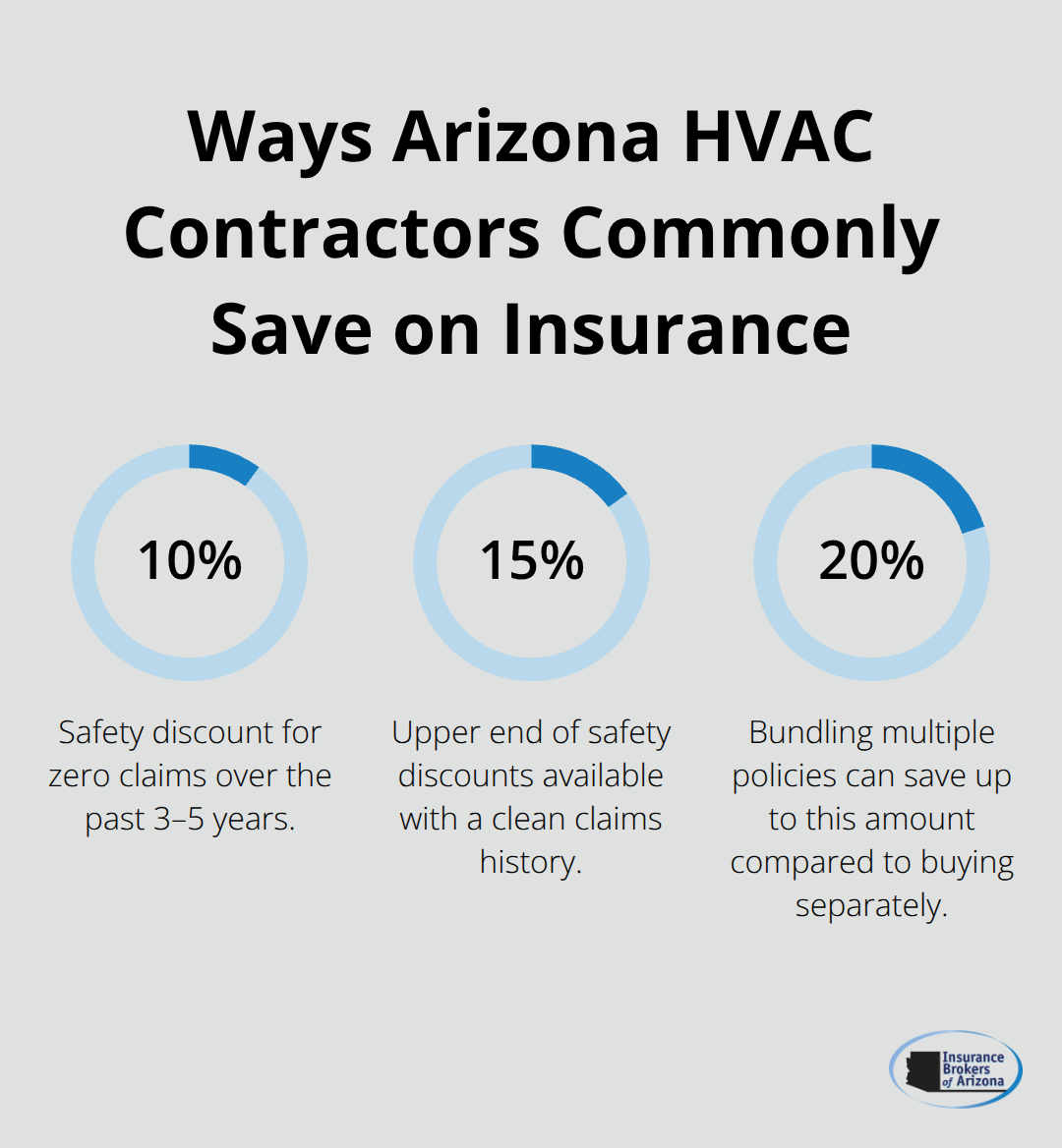
Most Arizona drivers capture only 20 to 30 percent of available discounts, leaving money on the table month after month. Multi-car discounts reach 20 percent when you insure multiple vehicles with the same carrier, and bundling auto with homeowners or renters coverage adds up to 17 percent savings with some insurers. A three-year accident-free discount runs about 7 percent, while paying your entire annual premium upfront saves roughly 14 percent compared to monthly payments.
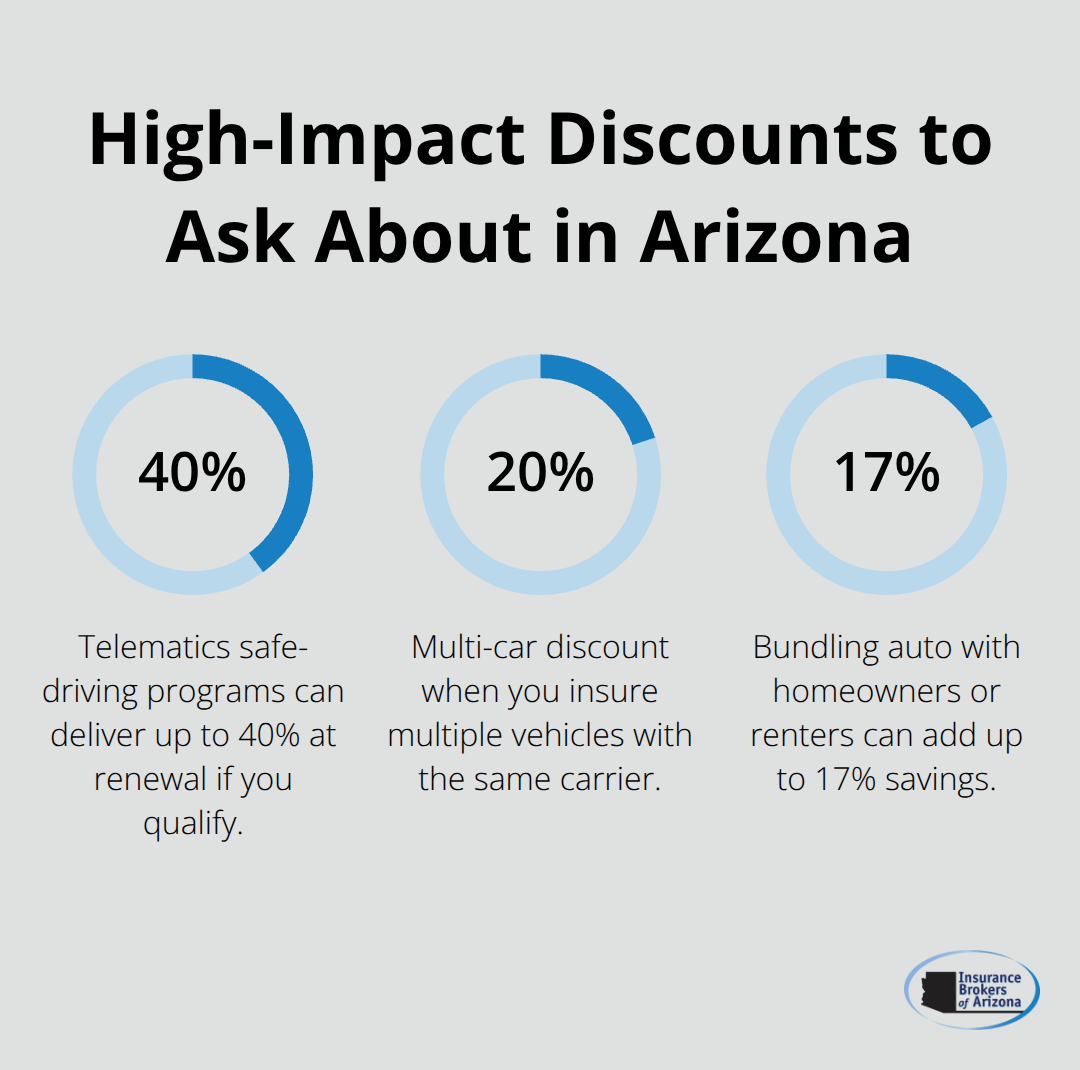
Good Student discounts reach 10 percent for drivers under 23 with a B average or better, automatic payment enrollment saves around 6 percent, and good payment history adds another 5 percent if you’ve avoided late payments for three years. Telematics programs like Progressive’s Snapshot and Mercury’s MercuryGo reward safe driving with savings up to 40 percent at renewal if you qualify, though this requires installing monitoring software or using your phone. Environmental discounts apply to hybrid and electric vehicles with some carriers.
The actual combination of discounts you qualify for depends entirely on your profile, so requesting quotes from at least three to five carriers and asking specifically about every available discount reveals your true lowest rate. Most people skip this step and accept the first quote, which explains why Arizona’s average six-month premium of $1,282 masks such enormous variation between drivers with similar profiles. Once you’ve gathered your quotes and identified the discounts that apply to your situation, the next step involves avoiding the common mistakes that trap drivers into overpaying for years.
Common Mistakes When Shopping for Auto Insurance
Price Alone Won’t Protect Your Assets
The cheapest quote available will trap you into a costly mistake. Price tells you nothing about whether you’re actually protected or whether you’ll regret your choice when a claim arrives. We see drivers constantly select inadequate coverage to save fifty dollars monthly, then face ten thousand dollars in out-of-pocket costs after an accident because they skipped collision coverage or chose limits too low for their assets. The Arizona state average of around $1,282 for six months of full coverage exists because most drivers either overpay for unnecessary add-ons or underpay and carry dangerous gaps.
Your coverage selection should start with your actual financial exposure, not with whatever quote looks smallest. If you own a home or have meaningful savings, carrying only the state minimum of 25/50/15 exposes those assets to judgment if you cause a serious accident. A single at-fault accident involving injuries can generate fifty thousand to one hundred thousand dollars in liability claims, which exceeds Arizona’s minimum coverage by enormous margins. The right approach calculates your net worth, determines coverage limits that actually protect it, then finds the cheapest carrier offering those specific limits.
Annual Reviews Prevent Rate Hikes From Compounding
Most Arizona drivers ignore their renewal notices and simply pay whatever new premium arrives, which costs them thousands annually. Arizona insurers raised rates quarterly in recent years according to industry reports, meaning your rate from last year is almost certainly higher than what new competitors charge today. The data from The Zebra shows that six-month premiums jumped from around $2,133 in 2025 to approximately $2,563 in 2026, illustrating how quickly costs escalate when you stop shopping around. A calendar reminder to request new quotes thirty days before renewal takes thirty minutes and regularly saves three hundred to six hundred dollars annually.
Many drivers also fail to update their coverage when life circumstances change, carrying collision and comprehensive on a vehicle worth only five thousand dollars while driving a newer car worth thirty thousand with only liability coverage. A car is considered totaled in Arizona when repair costs exceed roughly seventy percent of its pre-accident value, so older vehicles may not justify expensive collision coverage, but newer financed vehicles absolutely require it. Your driving record improves over time, so a three-year accident-free discount worth about seven percent according to carrier data may now apply to your policy even if you didn’t qualify previously. Life changes like relocating to a lower-risk area, getting married, or retiring and driving less should trigger immediate quote requests since these factors significantly impact your rate.
Discount Combinations Multiply Your Savings
Drivers who capture only single discounts leave hundreds of dollars annually on the table. Multi-car discounts reach twenty percent, bundling auto with homeowners adds up to seventeen percent savings with some carriers, three-year accident-free records earn about seven percent, paying annually instead of monthly saves roughly fourteen percent, and automatic payment enrollment adds another six percent. Combining just four of these discounts stacks to approximately fifty-seven percent savings before even considering telematics programs like Progressive Snapshot or Mercury’s MercuryGo that reward safe driving with up to forty percent additional savings at renewal.
Most carriers don’t advertise your full discount eligibility clearly, so you must specifically ask about every available discount when requesting quotes. Good Student discounts reach ten percent for drivers under twenty-three with a B average, environmental discounts apply to hybrid and electric vehicles, and paid-in-full discounts save approximately fourteen percent. Asking carriers directly about lesser-known discounts reveals the difference between capturing five discounts versus ten discounts, which can easily exceed four hundred dollars annually on your premium. Your actual lowest rate only emerges when you request quotes from multiple carriers and explicitly ask about every discount you might qualify for based on your specific circumstances.
Financial Stability Ratings Determine Whether Claims Get Paid
An incredibly cheap quote means nothing if the company disappears or denies your claim. Choosing an insurer based purely on price while ignoring financial stability ratings represents genuine recklessness that can cost you tens of thousands when a claim arrives. Rating agencies like AM Best, JD Power, and Trustpilot evaluate insurer solvency and customer service, with CSAA Insurance Group earning top ratings in Arizona according to The Zebra’s evaluation.
Before committing to any carrier, verify their AM Best financial strength rating to confirm they can actually pay claims if you’re in a serious accident. An insurer’s complaint ratio through the National Association of Insurance Commissioners provides concrete data about how many customers file complaints relative to their market share, revealing problematic claims practices that cheap quotes won’t expose. Some carriers build reputations for low rates but terrible claims handling, forcing you to fight for payment months after an accident while driving an unrepaired vehicle. The seventeen percent bundling discount with homeowners coverage means nothing if your auto insurer denies your claim while your home insurer remains solid, leaving you without auto coverage when you need it most. Spend the extra time verifying that any carrier you choose maintains strong financial ratings and reasonable complaint levels before moving forward with their quote.
Final Thoughts
Finding the best auto insurance rate in Arizona requires three concrete actions that most drivers never take. First, stop accepting whatever quote your current insurer sends at renewal and request fresh quotes from at least three to five carriers every year-the data proves this works, as six-month premiums jumped from $2,133 in 2025 to $2,563 in 2026, meaning drivers who renewed without shopping paid hundreds extra for identical coverage. Second, stack every discount you qualify for rather than accepting single discounts that leave money on the table (multi-car discounts, bundling, accident-free records, automatic payments, and telematics programs combine to cut your premium by fifty percent or more). Third, verify that any carrier you choose maintains strong financial ratings and reasonable complaint levels before committing, because the cheapest quote means nothing if the company denies your claim.
An auto insurance comparison in Arizona reveals that identical drivers with identical vehicles pay wildly different premiums depending on which carriers they contact and which discounts they claim. Most people never discover this because they contact one or two insurers and accept the first quote, leaving hundreds of dollars annually on the table. The difference between overpaying and finding your actual best rate typically exceeds four hundred dollars per year, which compounds to thousands over just a few years.
We at Insurance Brokers of Arizona® understand that navigating this process alone feels overwhelming, which is why we partner with multiple reputable carriers to handle the comparison work for you. Contact Insurance Brokers of Arizona® today to request your personalized quote comparison and stop overpaying for auto insurance.
Disclaimer: The information provided in this blog is for general informational purposes only and does not constitute legal, financial, or insurance advice. Coverage options, terms, and availability may vary. Please consult with a licensed professional for advice specific to your situation.