Picking the right auto insurance deductible is one of the most overlooked decisions Arizona drivers make. Most people either choose too low a deductible and overpay on premiums, or pick too high a deductible and risk financial hardship after an accident.

We at Insurance Brokers of Arizona® help clients find the sweet spot that matches their budget and risk tolerance. This guide walks you through the exact factors you need to consider.

What a Deductible Is and How It Works

A deductible is the amount you pay out of your own pocket when you file a claim, and your insurance company pays the rest. If you hit a parked car and cause $3,000 in damage with a $500 deductible, you pay $500 and your insurer covers the remaining $2,500. This applies to collision and comprehensive coverage, which protect your vehicle from accidents and weather events. The deductible amount you choose directly shapes your monthly premium, but the relationship works against what many Arizona drivers assume. Higher deductibles lower your monthly payments because you agree to absorb more risk yourself, while lower deductibles raise your premiums since the insurance company takes on more financial responsibility per claim. Progressive reports that $500 is the most common deductible choice nationwide, and for good reason-it strikes a reasonable balance for many drivers. Arizona residents should understand that deductibles are per claim, not annual, meaning you pay the deductible every time you file an approved claim, not just once per year.

How Deductibles Affect Your Monthly Premium

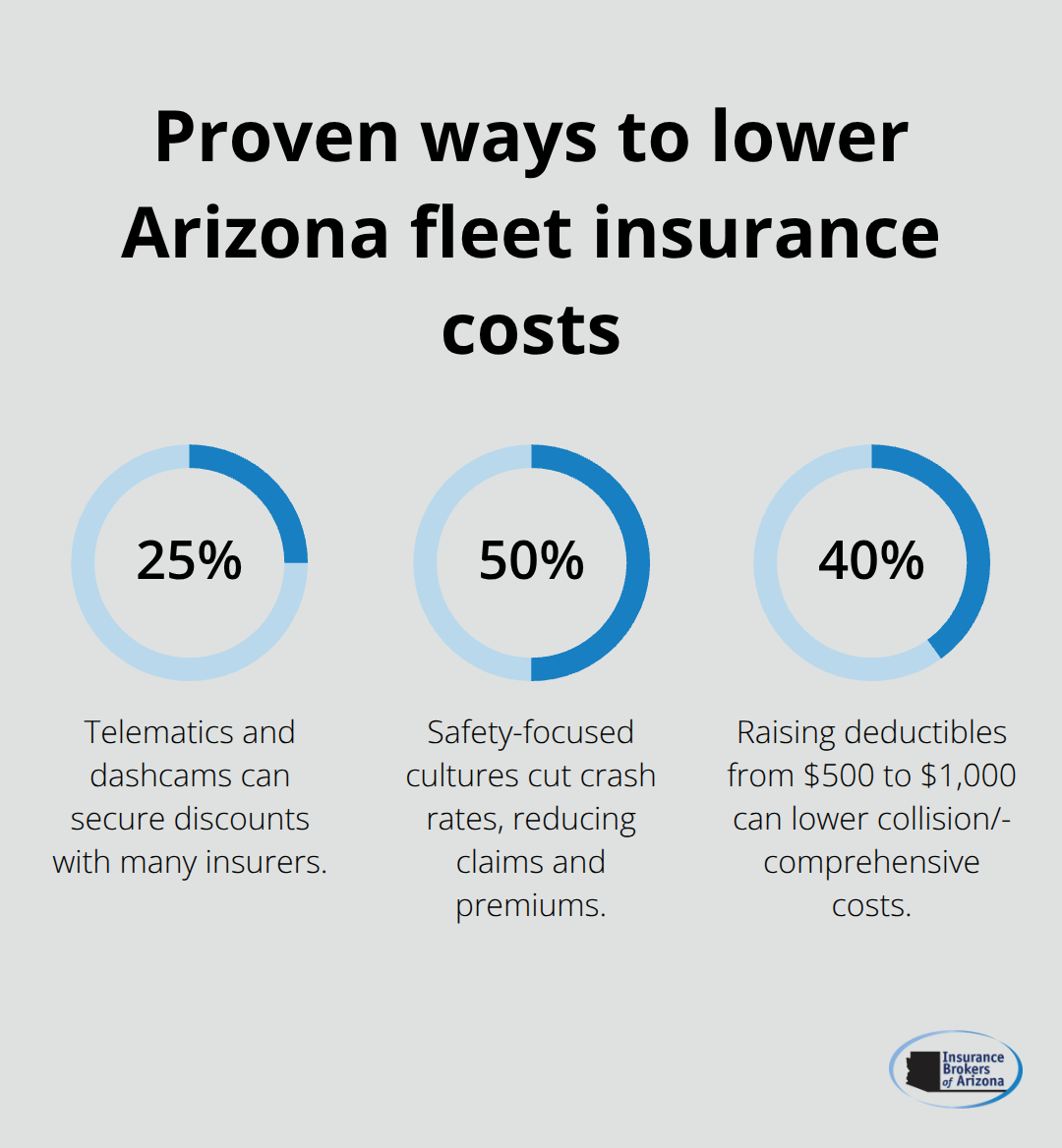
The premium difference between a $250 deductible and a $1,000 deductible can be substantial, sometimes 30 to 40 percent lower for the higher deductible. However, this savings only matters if you don’t file claims frequently.

Chart showing that premiums can be 30%–40% lower with a higher deductible. - auto insurance deductible

A driver who files one collision claim every five years pays that deductible once during that period, so the monthly savings add up fast. But a driver involved in two accidents over five years pays the deductible twice, which can erase years of premium savings.

Assessing Your Claim Likelihood

Arizona drivers must honestly assess their claim likelihood based on their commute, traffic exposure, and parking situation. Someone driving peak hours on Phoenix’s I-10 faces different risk than someone working from home and driving occasionally. The math matters too-if your monthly premium drops by $40 with a higher deductible, you save $240 annually, but a single claim means you forfeit five years of those savings.

Getting Accurate Quotes for Your Situation

Run actual quotes from multiple carriers at different deductible levels to see the exact numbers for your situation, not relying on industry averages that may not reflect Arizona-specific rates or your driving profile. This comparison reveals whether the premium savings justify the higher out-of-pocket risk in your particular case. Your next step involves examining your personal financial situation and driving habits more closely to narrow down which deductible range makes sense for you.

Factors to Consider When Choosing Your Deductible

Your Emergency Fund Sets Your Deductible Ceiling

Your emergency fund is the first hard constraint on deductible selection, and ignoring it leads to financial disaster. If you have $800 saved and pick a $1,500 deductible, you cannot afford to file a claim without borrowing money or going into debt. Many Arizona drivers choose deductibles based solely on premium savings without checking their actual cash reserves. Count the money you can access within 24 hours without touching retirement accounts or selling assets. That number is your realistic deductible ceiling.

Three months of expenses saved means you can comfortably handle a $1,000 or $1,500 deductible. One month of savings suggests you stick with $500 or lower. The premium savings mean nothing if a single accident forces you to finance the deductible through a credit card at 20 percent interest, which erases years of monthly savings in weeks.

Your Arizona Driving Environment Shapes Your Risk Profile

Your driving environment in Arizona matters far more than national statistics. Someone commuting through downtown Phoenix during rush hour faces collision risk that someone working from home cannot match. If you drive peak hours in heavy traffic, park on busy streets, or navigate areas with high accident rates, a lower deductible reduces your financial vulnerability to statistically likely events.

Conversely, if you drive mostly surface streets in light traffic or work from home, the premium savings from a higher deductible compound faster than your actual claim likelihood. Your commute pattern directly influences whether you should absorb more risk through a higher deductible or protect yourself with lower out-of-pocket costs.

Hub-and-spoke diagram showing factors that determine your deductible fit. - auto insurance deductible

Your Vehicle’s Age and Value Determine Coverage Strategy

Your vehicle’s current value directly determines whether physical damage coverage even makes financial sense. A 2015 sedan worth $8,000 with a $1,000 deductible means an accident that totals the car leaves you paying $1,000 for a vehicle worth $8,000, which is wasteful. For older vehicles worth less than $5,000, dropping collision coverage entirely often costs less than paying premiums plus deductible.

For newer financed vehicles, your lender may require a lower deductible regardless of your preference, so check your loan documents first. Newer technology-heavy vehicles and electric vehicles cost substantially more to repair than older models, which shifts the math toward lower deductibles for newer cars since repair bills exceed deductibles more frequently. These three factors work together to narrow your realistic deductible range, and understanding how they interact reveals which option actually saves you money over time.

Strategies for Selecting the Right Deductible

Compare Actual Numbers Before You Decide

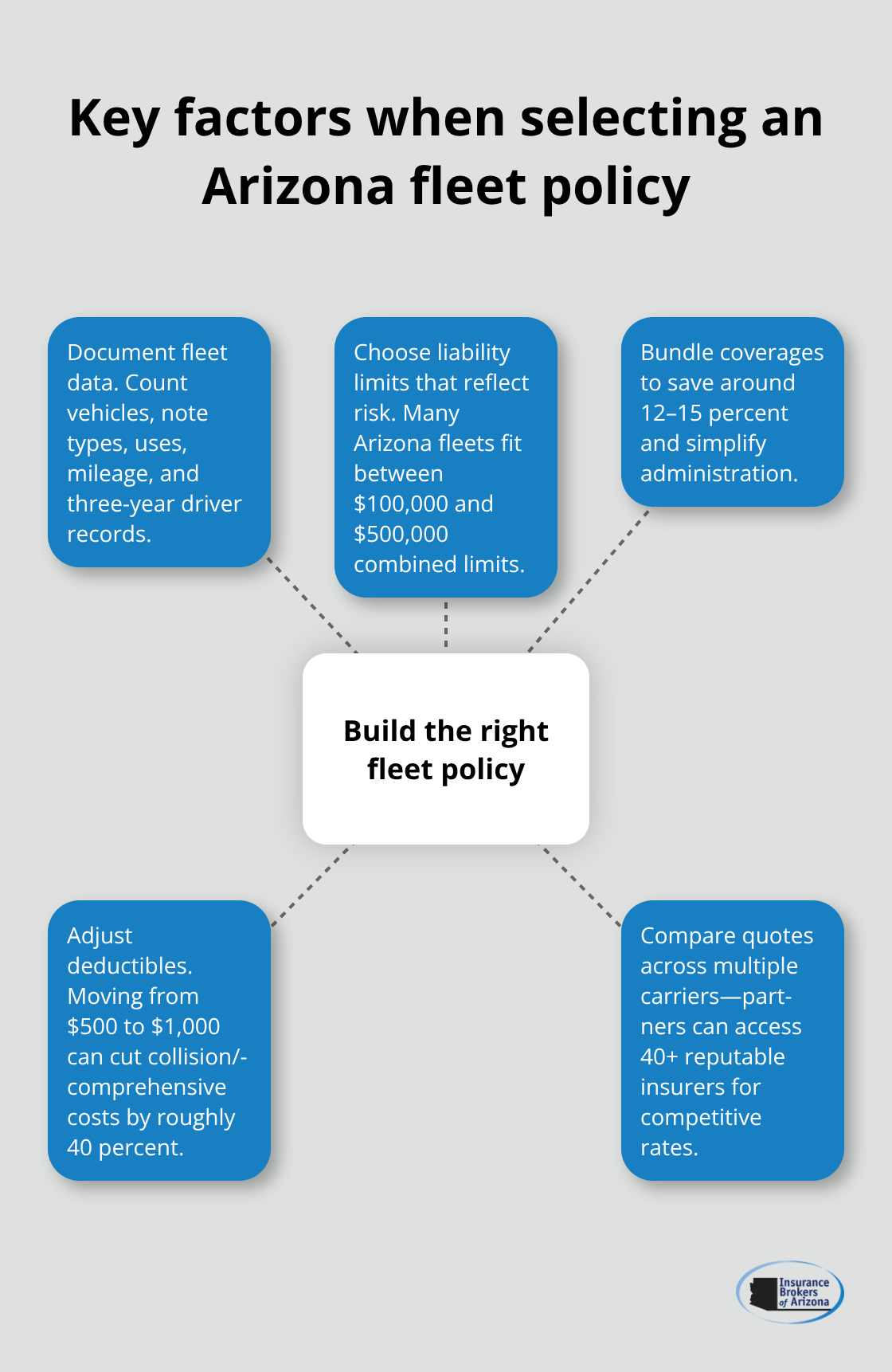
The real test of deductible selection happens when you compare actual numbers from your insurer rather than relying on industry benchmarks. Get quotes at three different deductible levels-typically $250, $500, and $1,000-and calculate the five-year cost for each option. If dropping from $500 to $250 costs an extra $25 monthly but saves only $250 in out-of-pocket risk, that’s $1,500 in additional premiums over five years to protect against a single claim you may never file. The math often reveals that the mid-range deductible saves more money than either extreme.

Compact checklist of steps to compare deductible options with real quotes.

Arizona drivers commonly find that a $500 deductible delivers 70 to 80 percent of the premium savings compared to a $250 deductible while maintaining reasonable financial protection. However, this changes dramatically if you drive a newer vehicle with expensive repairs-a single collision on a 2024 model can cost $8,000 to $12,000 in repairs, making a $500 deductible feel dangerously high. Run the numbers specific to your vehicle’s repair costs and your actual premium quotes before you decide.

Optimize Deductibles Across Different Coverage Types

The most overlooked strategy involves using different deductibles across your coverage types rather than locking in one deductible for everything. Comprehensive coverage typically costs 40 to 50 percent less than collision coverage, which means lowering your comprehensive deductible from $500 to $250 might add only $3 to $5 monthly while dramatically reducing your out-of-pocket costs for theft, weather, or vandalism claims.

These events happen frequently in Arizona-vehicle theft rates in Phoenix rank among the highest nationally, and monsoon season creates predictable comprehensive claims. Conversely, keep collision at $1,000 to preserve premium savings since collision claims happen less frequently for most drivers. You can also optimize glass coverage separately; some insurers offer zero-deductible glass or waive the deductible if you use their preferred repair shop, which matters in Arizona where windshield damage from debris on highways is common.

Review Your Deductible Annually

Reassess your deductible annually rather than setting it once and forgetting it. Major life changes-a new job with a longer commute, purchasing a newer vehicle, or building additional emergency savings-all justify reconsidering your deductible. Your financial situation improves over time, which typically means you can comfortably absorb a higher deductible and recapture those monthly savings.

Job loss or reduced income shifts the math toward lower deductibles that protect your limited cash reserves. Each renewal cycle offers an opportunity to confirm your choice still aligns with your current circumstances rather than your situation from twelve months ago.

Final Thoughts

Choosing the right auto insurance deductible comes down to three core decisions: understanding what you can realistically afford to pay out of pocket, honestly assessing your driving risk in Arizona, and running actual numbers from your insurer rather than guessing based on industry averages. The deductible that works for someone commuting through Phoenix traffic differs completely from the deductible that makes sense for someone working from home. Your emergency fund sets the ceiling, your vehicle’s value shapes the strategy, and your claim likelihood determines whether premium savings actually materialize over time.

The most common mistake Arizona drivers make is selecting a deductible based solely on monthly premium savings without considering the total five-year cost or their actual financial cushion. A $1,000 deductible saves money only if you avoid filing claims, but a single accident erases years of those savings. Conversely, a $250 deductible provides peace of mind but costs substantially more in premiums if you never file a claim.

We at Insurance Brokers of Arizona® work with drivers every day to find that balance and can show you actual quotes at different deductible levels to help you understand which option truly saves money for your circumstances. Contact Insurance Brokers of Arizona® to schedule a consultation or request quotes online, and we’ll run the numbers specific to your situation and vehicle.

Bundling your home and auto insurance can cut your premiums significantly, but finding the right quotes requires knowing what to compare. We at Insurance Brokers of Arizona® help clients navigate this process every day, and we’ve seen firsthand how bundled policies deliver real savings.

Getting bundled home and auto insurance quotes doesn’t have to be complicated. This guide walks you through each step, from gathering your information to evaluating coverage options that actually fit your needs.

Why Bundling Actually Saves Money

Bundling home and auto insurance works because insurers reward customer loyalty. When you combine policies with one company, they reduce their administrative costs and gain a more stable customer. That savings gets passed to you. Forbes Advisor analyzed bundling discounts across nine major carriers and found an average discount of 14 percent, translating to roughly $466 in annual savings. State Farm leads the pack with a 23 percent average bundling discount, which amounts to about $787 per year for customers who switched between May 2023 and April 2024. Erie offers a 15 percent discount averaging $535 annually, while Nationwide bundles average 15 percent off, around $516 per year.

Visualization of leading carrier bundling discounts and typical annual savings for U.S. policyholders

These aren’t theoretical numbers-they reflect actual customer experiences. The discount applies to both your auto and home premiums, so the savings compound across both policies rather than applying to just one.

The Real Numbers Behind Bundle Savings

The savings range widely depending on which insurer you choose and your specific situation. A Liberty Mutual survey of new customers who switched between May 2023 and April 2024 showed an average savings of $950 per year by bundling auto and home, though this varies significantly by policy and location. Auto-Owners offers a smaller 10 percent average bundling discount at about $214 annually, but their bundled quotes run cheaper overall at roughly $1,878 per year. USAA, limited to military members and their families, offers a 6 percent discount averaging $185 per year but maintains the lowest bundled premiums at approximately $2,630 annually. The point here is clear: bundling typically saves between 5 and 25 percent on total premiums, but the actual dollar amount depends entirely on which carrier you select and the coverage levels you choose.

Bundled Quotes Beat Separate Policies Only Sometimes

This is where most people get confused. A bundled quote isn’t automatically cheaper than purchasing auto and home separately. You must compare the bundled total against the cost of purchasing each policy independently from different insurers. If insurer A quotes you $1,200 for auto bundled with home at a 15 percent discount, but insurer B quotes $800 for auto alone and insurer C quotes $300 for home alone, the separate policies win at $1,100 total. This happens more often than people realize, especially if one carrier dominates the bundled price while competitors excel in specific coverage areas. The convenience of managing one policy, one renewal date, and coordinated claims handling through a single insurer adds real value beyond the discount percentage. However, convenience shouldn’t override price-always obtain quotes from at least three carriers comparing bundled versus separate options side by side (using identical coverage levels and deductibles).

What Comes Next in Your Quote Journey

Now that you understand how bundling discounts work and why they don’t always deliver the lowest total cost, you need to prepare for the actual quote process. The information you collect before requesting quotes determines whether you receive accurate comparisons or inflated estimates that waste your time.

Steps to Get Bundled Home and Auto Insurance Quotes

Collect the Right Information Before You Request Quotes

Requesting quotes without proper preparation wastes everyone’s time and produces useless comparisons. You need specific details about your home and vehicles before contacting insurers, and the information you collect determines whether quotes are accurate or wildly off. For your auto policy, collect the Vehicle Identification Number (VIN) for each car you want to insure, current mileage, the primary driver’s license number, and how many miles you drive annually. Insurers use mileage data heavily-driving 5,000 miles per year versus 15,000 miles per year changes your premium significantly. Include information about any safety features like anti-lock brakes, airbags, or anti-theft devices, as these lower your costs.

For your home, gather the year it was built, total square footage, roof material and age, foundation type, and the replacement cost estimate (not the market value). This matters because a 1,200-square-foot home built in 1975 with an asphalt roof costs far more to rebuild than the purchase price suggests. Document your current security features-alarms, deadbolts, fire extinguishers, sprinkler systems-since these qualify for discounts.

Compact checklist of home and auto details to prepare before requesting bundled quotes - bundled home and auto insurance quotes

Decide Your Coverage Preferences Now

Most importantly, decide your coverage preferences before you request quotes. Higher deductibles reduce premiums but increase your out-of-pocket costs after a claim, so determine what deductible amount you can actually afford to pay. Choose whether you want replacement cost coverage (pays to rebuild or replace items at current prices) or actual cash value (pays depreciated amounts) for your home, as this choice significantly impacts your premium.

Request Identical Quotes from Multiple Insurers

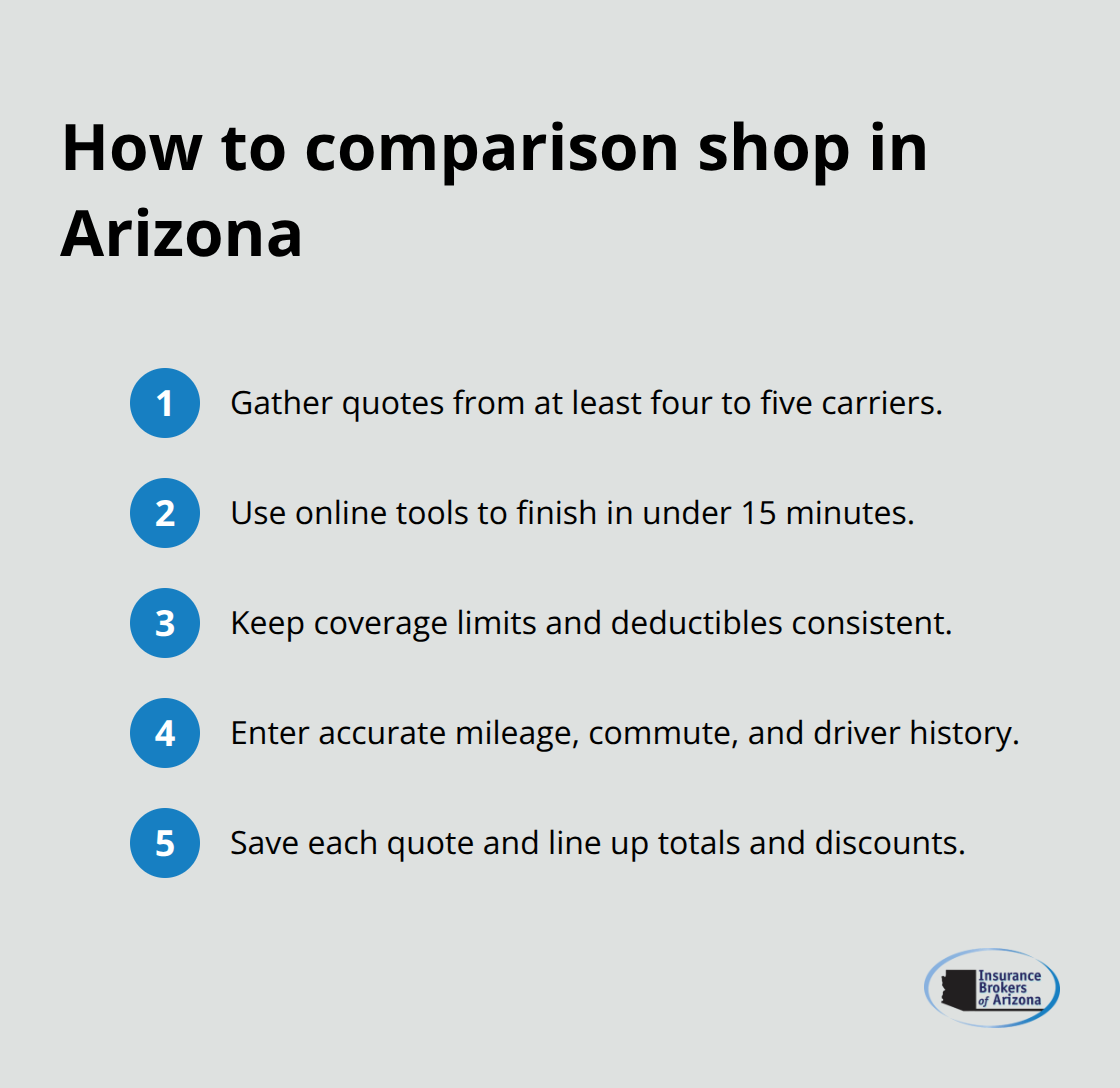
When you request quotes from multiple insurers, use identical information across all of them. This is non-negotiable. If you tell one insurer your home has a 2,000-square-foot replacement cost and another that it has 2,100 square feet, you’re comparing apples to oranges. Request quotes from at least three different carriers using the exact same deductibles, liability limits, and coverage options. Many insurers offer online quote tools that let you enter information directly, but some require phone conversations with agents or brokers. Online quotes often move faster, but agent-based quotes sometimes uncover discounts you’d miss otherwise.

Create a Detailed Comparison Spreadsheet

After you collect quotes, create a spreadsheet comparing premium costs, bundling discounts applied, total annual costs, coverage limits, and available add-on discounts like autopay or paperless billing. Don’t just look at the bundled price-also request separate quotes for auto alone and home alone from each carrier, then add those numbers together to verify whether bundling actually saves you money at that company. Some carriers bundle aggressively on marketing but apply discounts inconsistently, so seeing the math yourself prevents surprises.

Ask each insurer specifically how they calculate their multi-policy discount and whether additional discounts (loyalty, claims-free, security features) stack on top of the bundling discount. This information reveals which carriers truly reward bundling and which ones use it as a marketing tactic without substantial savings. Once you understand the discount structure and have your spreadsheet complete, you’re ready to evaluate which quotes actually meet your coverage needs and fit your budget.

What Actually Matters in Your Bundled Quotes

Your spreadsheet is complete, but now comes the harder part: deciding which quote actually protects you and your finances. Premium price is only one factor, and focusing solely on the lowest number is how people end up underinsured or paying for coverage they don’t need.

Compare Coverage Limits, Not Just Premiums

Start with coverage limits across all your quotes, not just the premium amounts. If one insurer quotes $1,500 annually with $100,000 in liability coverage and another quotes $1,600 with $300,000 in liability, the cheaper option leaves you dangerously exposed if you cause a serious accident. Arizona doesn’t mandate minimum liability limits, but liability limits should match your assets plus future earnings. Someone with a house and savings should carry at least $300,000 in liability coverage, while someone with significant assets should consider $500,000 or more.

Your deductible choice matters just as much as the premium. A $1,000 deductible reduces your annual premium compared to a $500 deductible, but only select the higher deductible if you can actually pay it after a loss without financial strain. Too many people select high deductibles to save $200 annually, then face a $2,000 water damage claim and cannot afford to pay it.

Financial Strength Determines Whether the Company Pays Your Claim

An insurer’s financial strength rating reveals whether they will actually pay when you file a claim. Check each company’s rating from A.M. Best, the industry standard for assessing insurer stability. State Farm, Nationwide, and USAA all maintain A ratings (Excellent) from A.M. Best, meaning they have the reserves to pay claims even during catastrophic events. Smaller regional carriers sometimes offer competitive prices but carry lower ratings, which creates real risk.

NAIC complaint data shows actual customer experiences with claims handling. Auto-Owners has exceptionally low complaint levels for both auto and home policies, while Nationwide sits just below the industry average. State Farm occasionally runs slightly above average in complaint categories, so do not assume the largest carrier automatically delivers the best claims experience.

Request information about how each company handles claims-specifically whether you can file online, through an app, or only by phone. Progressive and State Farm both offer mobile app claims filing, which matters when you need to document damage quickly after an incident. Ask how long claims typically take to resolve and whether the company offers rental car coverage while your vehicle is being repaired or replacement coverage while your home is being rebuilt. These details separate insurers that actually support you during difficult times from those that simply collect premiums.

Stack Discounts to Reveal True Savings

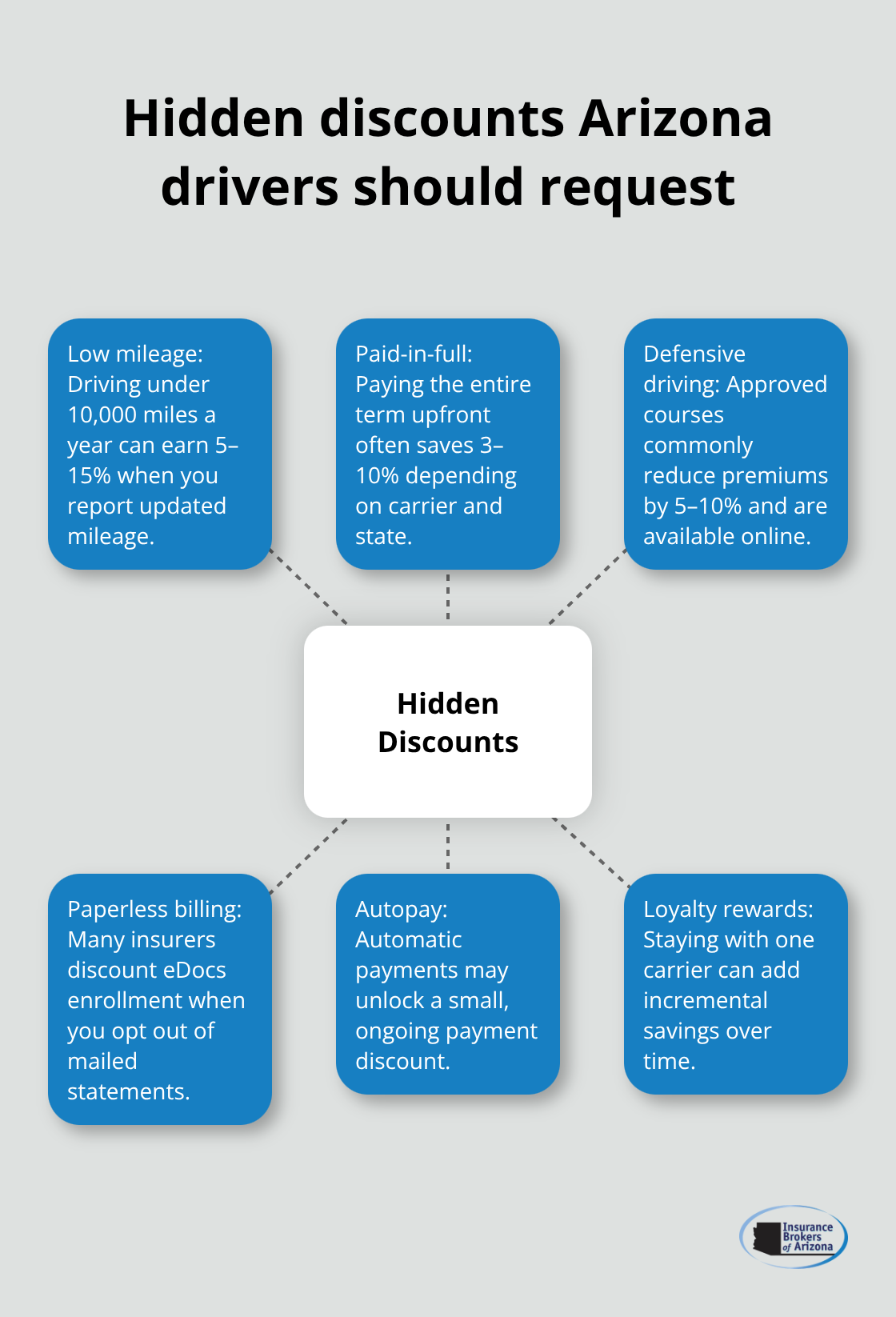
The multi-policy discount is just the beginning. Ask each insurer about additional discounts that stack on top of bundling. Autopay discounts typically save 2 to 5 percent, paperless billing saves another 1 to 3 percent, and safety features like home security systems or anti-theft devices save 5 to 15 percent depending on the carrier.

Hub-and-spoke diagram showing common discounts that stack with a bundling discount - bundled home and auto insurance quotes

Some insurers offer loyalty discounts after you have been with them for three or five years, while others reward claims-free records.

Liberty Mutual’s multi-car discount rewards customers who insure more than one vehicle, with bigger savings as you add more cars. Progressive often delivers multi-policy savings exceeding 20 percent for new customers bundling multiple policies, while their typical multi-policy savings run around 7 percent.

Calculate your actual annual cost by applying these stacked discounts to the base premium, not just looking at the headline bundling percentage. A 15 percent bundling discount plus 3 percent autopay plus 5 percent security features equals 23 percent off, which is substantially different from the 15 percent headline number. Ask whether discounts apply permanently or reset annually, since some carriers reduce discounts after the first year to gradually raise your rate.

Final Thoughts

Bundled home and auto insurance quotes require systematic comparison to deliver real financial benefits, but the effort pays off when you approach it strategically. Gather your VINs, mileage, home square footage, roof material, and desired deductibles, then request quotes from at least three carriers using identical coverage levels. Request both bundled and separate quotes from each company to verify whether bundling actually saves you money at that specific carrier.

Coverage limits and deductible amounts matter far more than fixating on the lowest premium, since underinsurance creates greater financial risk than paying slightly more for adequate protection. Pay attention to each insurer’s financial strength rating and complaint history rather than assuming the largest carrier delivers the best claims experience. Stack additional discounts like autopay and security features on top of the bundling discount to reveal your true annual cost.

We at Insurance Brokers of Arizona® work with over 40 reputable carriers and can request bundled home and auto insurance quotes across multiple insurers simultaneously, compare coverage options side by side, and identify which policies fit your needs and budget. Contact Insurance Brokers of Arizona® to let our team handle the comparison process so you move forward with confidence knowing your home and vehicles are properly insured.

Young drivers face some of the highest insurance premiums on the road. At Insurance Brokers of Arizona®, we know finding the best auto insurance for young drivers requires understanding what drives up costs and where you can save.

This guide walks you through the real numbers, practical strategies to lower your rates, and how to pick a policy that actually fits your situation.

Why Young Drivers Pay Higher Premiums

The Crash Risk Factor

Teens and young adults face insurance premiums that far exceed what older drivers pay. The reason is straightforward: data shows they crash more. The CDC reports that drivers aged 16–19 are more likely to be in crashes than any other age group, which insurers translate directly into higher risk and higher rates. The Insurance Information Institute notes that crash rates for teen drivers aged 16–19 are nearly three times higher per mile than drivers 20 and older. This statistical reality explains why premiums are so aggressive at the youngest ages.

Real Numbers for Teen and Young Adult Drivers

A 16-year-old added to a parent’s full-coverage policy can push premiums from around $2,671 to as high as $5,910 per year, according to Bankrate data from October 2025. For teens buying their own policy, the numbers climb even higher-an 18-year-old male on a standalone full-coverage plan averages around $7,611 per year. These figures shock most families, but they reflect the actual risk profile insurers assess.

How Rates Drop With Age and Experience

The good news is that rates drop consistently as you age and gain experience. According to Bankrate’s analysis, a 20-year-old pays significantly less than a 16-year-old, and rates continue falling through your mid-twenties. A 20-year-old on a parent’s policy averages around $3,728 per year, while a 25-year-old on the same policy averages about $2,550 per year-a decline of roughly 41% over five years. This pattern holds across most carriers and states, making age one of the most predictable factors in your premium calculation.

What Else Shapes Your Quote

Several factors beyond age drive your specific quote: your driving record, the vehicle you choose, your location, your credit score (where permitted by state law), and the coverage limits you select. A vehicle matters more than many young drivers realize-choosing an affordable, reliable car with strong safety ratings costs far less to insure than a luxury model. Your state also plays a huge role in pricing; Louisiana averages around $5,468 to add a 16-year-old to a parent’s policy, while North Carolina is substantially cheaper for the same coverage.

Compact list of the main factors that impact a young drivers auto insurance price. - best auto insurance for young drivers

Getting Accurate Quotes

When shopping for a quote, you’ll need to provide details like your date of birth, GPA if eligible for student discounts, your license information, and the vehicle’s make and model. Pricing varies dramatically even for identical coverage-some insurers offer premiums in the mid-$3,000 range for young drivers while others charge significantly more for the same protection. This variation makes it essential to compare multiple carriers before you commit to a policy.

How to Cut Your Young Driver Insurance Costs

Keep Your Driving Record Clean

Your driving record is the single most controllable factor in your insurance rate, and it matters far more than most young drivers realize. One accident or ticket raises your premium by hundreds of dollars annually, while a clean record qualifies you for accident forgiveness programs that protect you from rate increases after your first claim. State Farm’s Drive Safe & Save program cuts premiums by up to 30% for low-mileage and safe drivers. Progressive offers accident forgiveness with three tiers, meaning your first accident won’t automatically trigger a rate hike. The math is clear: avoiding even one collision over three years saves you more money than most discount combinations combined. If you already have a violation on your record, focus on maintaining a clean slate going forward-insurers typically review your driving history over the past three to five years, so older incidents gradually lose their impact.

Stack Discounts and Rewards Programs

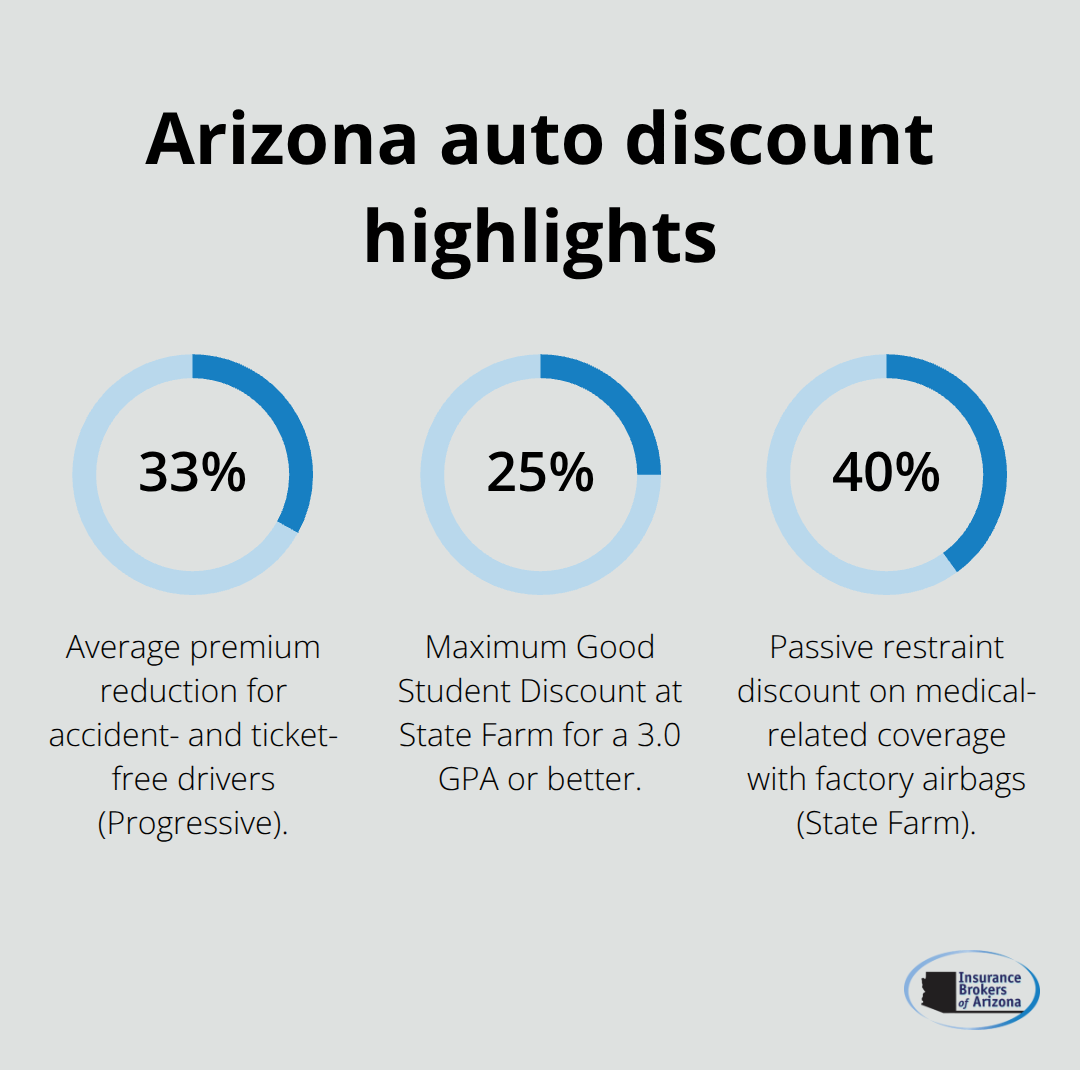
Discounts are where most young drivers leave money on the table. Good student discounts range from 3% to 8% depending on the carrier-State Farm offers 7%, Auto-Owners offers 8%, and Geico offers 5%-so if you maintain a B average or higher, apply immediately. Usage-based insurance programs like Nationwide SmartRide, USAA SafePilot, or Geico DriveEasy reward safe driving behavior and can save 15% to 30% at renewal based on your actual driving patterns rather than age alone.

Percentage savings for good student discounts from major insurers.

Bundling auto with renters or homeowners insurance saves over $950 annually according to Liberty Mutual data. Completing a certified teen driving program knocks another 5% off your premium at most carriers.

Choose Your Vehicle and Coverage Strategically

The vehicle itself dramatically affects your rate-a reliable, affordable sedan with strong safety ratings costs far less to insure than a sports car or luxury vehicle. Collision and comprehensive coverage are essential if your car is financed or leased, but if you own an older vehicle outright, raising your deductible from $500 to $1,000 lowers your monthly cost substantially. Coverage limits matter too: carrying liability at 100/300/100 instead of your state’s minimum protects you from catastrophic financial loss if you cause a serious accident, and this protection costs less than you expect when bundled with other discounts. Shopping for the right combination of vehicle choice, deductible level, and coverage limits transforms your premium from unaffordable to manageable.

Finding the Right Insurance for Your Situation

Compare Quotes Across Multiple Carriers

Shopping for auto insurance as a young driver means comparing prices across multiple carriers because rate differences are substantial. Bankrate’s data from late 2025 shows that identical coverage can range from the mid-$3,000s to well over $5,000 annually depending on which company quotes you. Start with at least three to five carriers using the same coverage limits and deductibles so you compare apples to apples.

Three practical steps for comparing auto insurance quotes effectively. - best auto insurance for young drivers

When you request quotes, have your license information, vehicle details, and GPA ready if you qualify for student discounts. Progressive, Geico, Auto-Owners, and Travelers consistently appear in young driver comparisons, but your specific rate depends entirely on your location, driving record, and vehicle choice. Many carriers let you build quotes online in minutes, though some like Auto-Owners require agent contact. The variation is real: a 20-year-old in one state might pay $3,500 annually while the same driver in Louisiana could face nearly $5,500 for identical protection. The time spent comparing quotes takes an hour but often uncovers $500 to $1,000 in annual savings.

Select Coverage Levels That Protect Your Future

Coverage levels deserve careful attention because state minimums often leave you financially exposed. Most states require liability coverage, but minimums are dangerously low-many sit at 25/50/25, meaning if you cause a serious accident, you’re personally liable for costs exceeding those limits. Carrying 100/300/100 instead costs only marginally more but protects your future earnings if you cause significant damage. Collision and comprehensive coverage are essential if your car is financed or leased, but if you own an older vehicle outright, dropping collision while keeping comprehensive saves money without leaving you stranded.

Evaluate Claims Support and Service Quality

Customer service matters more than young drivers typically admit because claims happen when you least expect them. Progressive offers accident forgiveness and Deductible Savings Bank features that reward safe driving, while State Farm’s Drive Safe & Save program monitors behavior and cuts premiums up to 30% for low-mileage drivers. USAA delivers exceptional service for military families with pay-per-mile options and SafePilot telematics. Check each carrier’s claims process before committing-look for online claim filing, 24-hour support, and favorable repair network ratings through CRASH Network. Some insurers handle claims in hours while others take days, and that difference matters when you need your car back quickly.

Final Thoughts

Finding the best auto insurance for young drivers requires three straightforward actions: understand why you pay more, identify where to cut costs, and compare options across multiple carriers. Your age and driving record shape your premium, but discounts, vehicle selection, and coverage strategy put real control in your hands. A clean driving record saves more money than any discount combination, usage-based programs reward safe behavior with 15% to 30% savings, and bundling your auto policy with renters or home coverage cuts over $950 annually.

We at Insurance Brokers of Arizona® match your specific situation-your age, vehicle, location, and driving record-to coverage and pricing that work for your budget. Our team works with over 40 reputable carriers to find options tailored to your needs rather than pushing unnecessary add-ons, and we handle the comparison work so you avoid contacting multiple insurers yourself. Whether you’re 16 and adding to a parent’s policy or 25 buying your own coverage, we’ve helped thousands of Arizona drivers find policies that protect them without breaking the bank.

Get a personalized quote from our team today and bring your license information, vehicle details, and GPA if you qualify for student discounts. The difference between shopping alone and working with an agent often means hundreds of dollars in annual savings plus coverage tailored to your actual needs. Contact us to see how much you can save on the best auto insurance for young drivers.