Getting auto insurance no car might sound impossible, but several coverage options exist for people who don’t own vehicles. Whether you frequently borrow cars, rent vehicles, or use car-sharing services, you still need protection.

We at Insurance Brokers of Arizona® help clients navigate these unique insurance situations daily. The right coverage protects you from liability and financial risk, even without vehicle ownership.

What Non-Owner Car Insurance Actually Covers

Non-owner car insurance provides liability coverage for bodily injury and property damage when you drive vehicles you don’t own. This coverage typically ranges from $25,000 to $100,000 per person for bodily injuries, with property damage limits that start at $25,000. The Insurance Information Institute reports that these policies cost between $200 to $500 annually, which makes them 40-60% cheaper than standard auto insurance policies.

Coverage Limits and Protection Scope

Most insurers offer flexible liability limits that you can adjust based on your risk tolerance and budget. State minimum requirements apply to non-owner policies just like traditional coverage (meaning you must meet your state’s mandatory liability thresholds). Medical payments coverage and personal injury protection add $50-150 extra per year to your premium, while uninsured motorist protection costs roughly the same amount.

Key points on liability limits and common add-ons for non-owner car insurance

What This Insurance Won’t Cover

Non-owner policies exclude physical damage to the vehicle you drive and your own medical expenses after an accident. The coverage acts as secondary protection when you borrow cars, which means the vehicle owner’s insurance pays first. If their limits fall short, your non-owner policy covers the remaining costs. Comprehensive and collision coverage remain unavailable with these policies, regardless of how much you’re willing to pay.

Prime Candidates for Non-Owner Coverage

Frequent car borrowers, regular rental car users, and car-sharing service members gain the most value from non-owner policies. People who need to file SR-22 forms after license suspensions can maintain coverage without owning vehicles. However, household members who share vehicles should skip non-owner insurance and get added to the family policy instead.

When Non-Owner Insurance Doesn’t Make Sense

The math works against infrequent drivers who rent cars less than twice per year, as rental company coverage costs less for occasional use. Company car drivers already receive protection through their employer’s commercial auto insurance. Understanding these scenarios helps you determine whether alternative coverage solutions might better serve your specific situation.

Alternative Insurance Solutions for Non-Car Owners

Family members can add you as a named driver to their policy for $300-800 annually, which costs less than most non-owner policies. Progressive and State Farm charge an average of $450 per year to add an adult child to their parents’ coverage, while Geico typically charges $520. This option works best when you live in the same household and drive the family vehicle at least once monthly. The coverage follows you when you drive other family-owned vehicles, but excludes rental cars and borrowed vehicles from friends.

Rental Car Coverage Options That Work

Rental companies charge $15-30 daily for their liability coverage, which adds up to $450-900 for monthly renters. Your personal credit card often provides collision damage waiver protection, but offers zero liability coverage for injuries or property damage you cause. American Express Platinum cards cover up to $50,000 in collision damage, while Chase Sapphire Preferred caps at $100,000. Frequent renters save money with annual rental car policies from companies like Allianz (which cost $89 yearly and cover liability gaps that credit cards miss).

Car-Share and Rideshare Protection Gaps

Zipcar provides only $300,000 liability coverage, which falls short in serious accidents where medical bills exceed $500,000. Turo offers $1 million liability protection, but their $3,000 deductible leaves drivers exposed to significant out-of-pocket costs. Uber and Lyft cover passengers but provide zero protection when you drive someone else’s personal vehicle through their platforms. Personal mobility coverage from State Farm fills these gaps for California residents at $200-400 annually, which covers injuries while you enter or exit rideshare vehicles plus uninsured motorist protection for bicycle and scooter accidents.

Diagram showing coverage gaps and a potential solution for car-share and rideshare use - auto insurance no car

Commercial Auto Insurance for Business Use

Company vehicles fall under commercial auto insurance policies that employers maintain for business purposes. These policies typically provide higher liability limits than personal coverage and include protection for employees who drive company vehicles. However, personal use restrictions may apply, and coverage might not extend to your personal vehicle or rental cars outside of business activities.

Once you understand these alternative options, you need to know the specific steps and documentation required to secure any type of auto insurance without vehicle ownership.

How to Purchase Auto Insurance Without a Vehicle

Non-owner car insurance requires specific documentation that differs from standard auto policies. You need a valid driver’s license, Social Security number, and complete records from the past five years. Insurance companies also request your address history and employment information. State Farm and Geico require credit checks for non-owner policies, while Progressive focuses more heavily on your record. Most insurers want to see three years of continuous coverage history, but they make exceptions for new drivers or those who return from military deployment.

Documentation That Speeds Up Your Application

Your motor vehicle record from the DMV costs $10-15 and shows violations, accidents, and license status that insurers verify anyway. Previous insurance declarations pages prove your coverage history and help secure better rates. If you need SR-22 forms, bring court documents that specify your requirements. Companies like Travelers and Farmers often approve applications within 24 hours when you provide complete documentation upfront.

Checklist of documents and timelines to speed non-owner insurance applications - auto insurance no car

Missing paperwork delays approval for 3-7 business days and sometimes results in higher premiums.

Quote Comparison Across Multiple Carriers

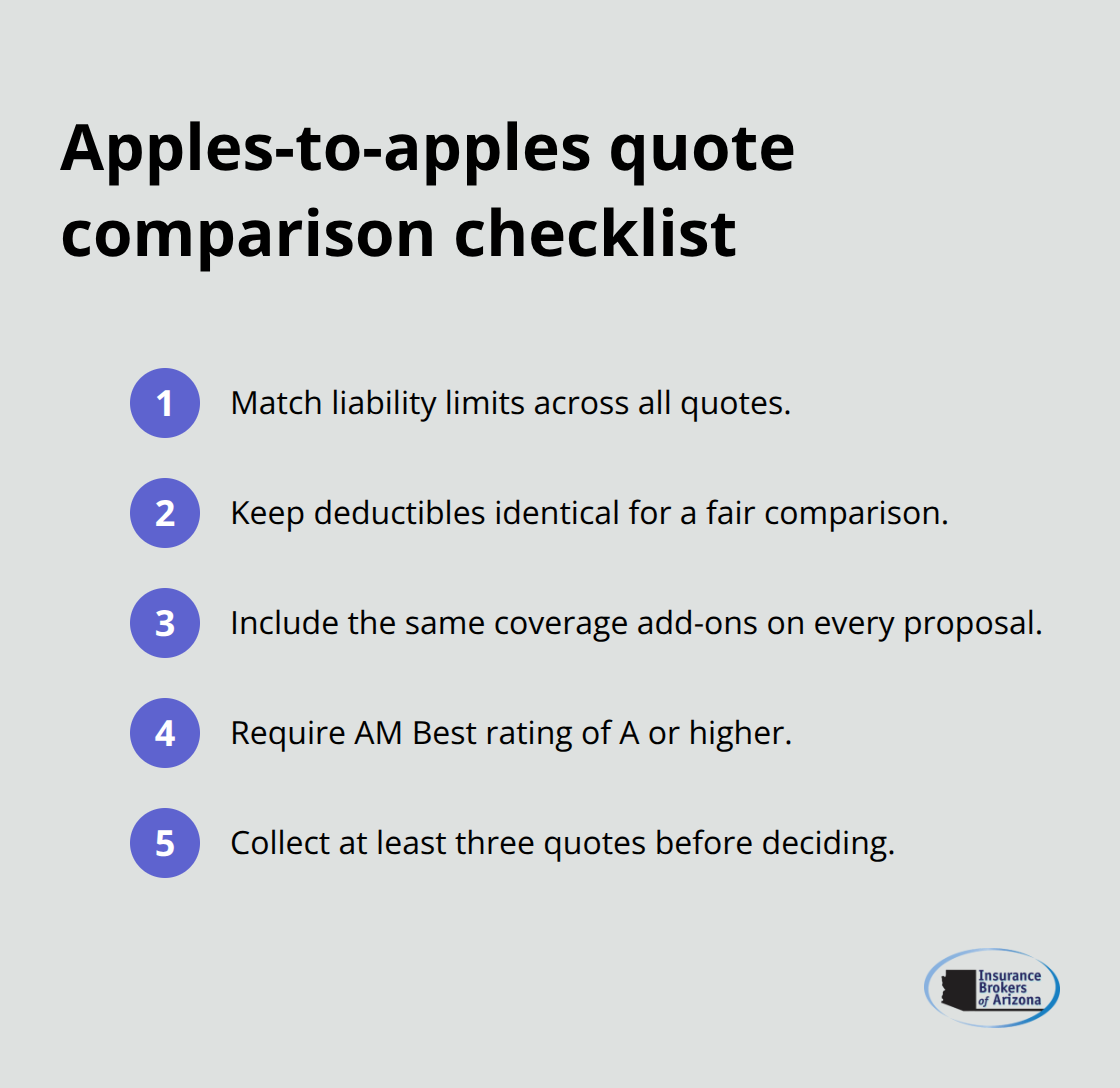
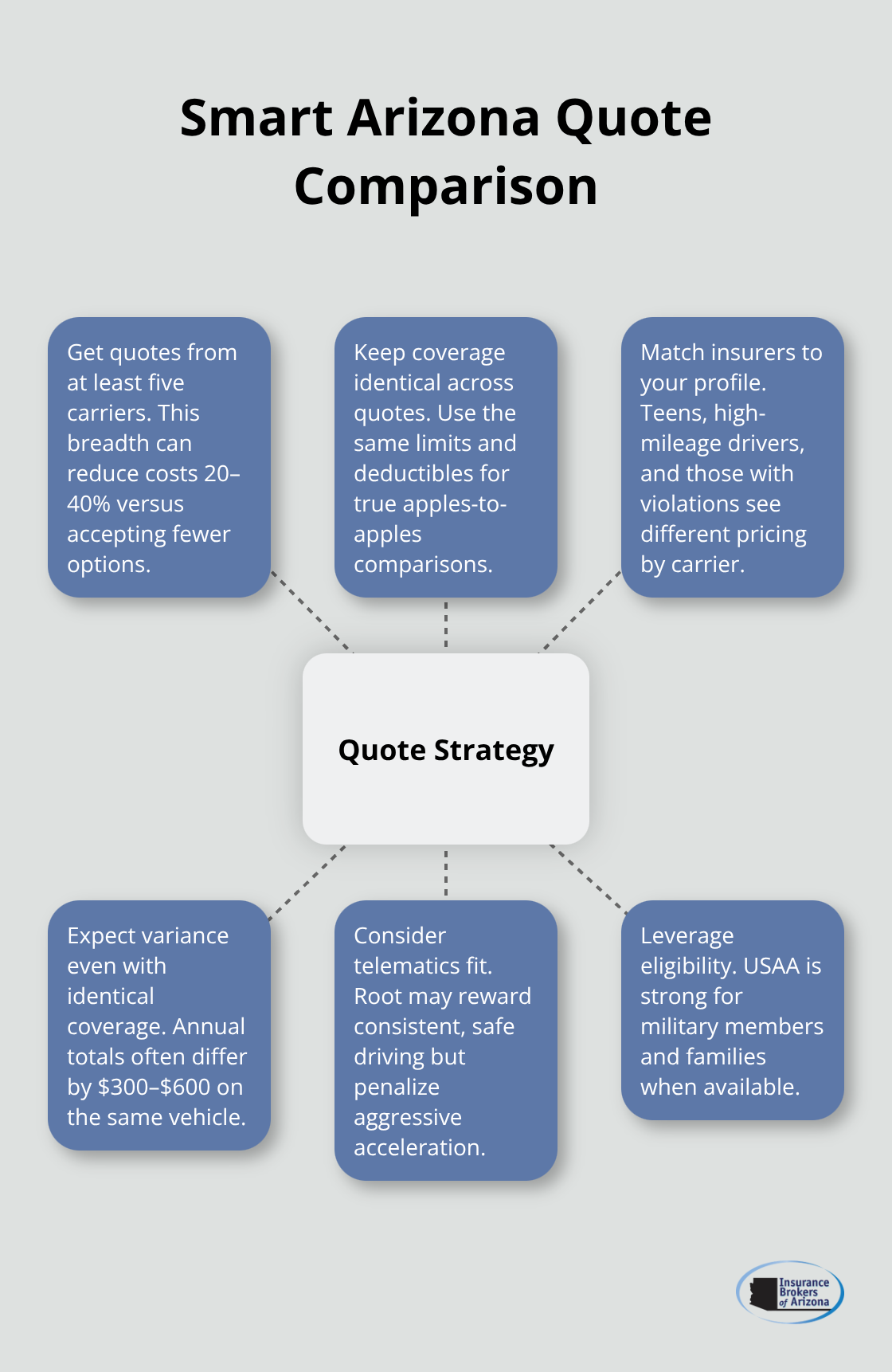
Non-owner policies aren’t available through online quote systems at most companies. You must call agents directly or visit local offices to get accurate rates. Geico charges $180-320 annually for basic coverage, while State Farm ranges from $250-450. Progressive offers the most competitive rates for drivers with violations at $200-380 yearly. Compare identical coverage limits across carriers because base quotes often include different liability amounts. Request quotes for $100,000 per person and $300,000 per accident to make fair comparisons.

Professional Broker Assistance

Insurance brokers work with multiple carriers to find the lowest rates for non-owner coverage (which saves clients an average of $150 annually compared to single-company shopping). We at Insurance Brokers of Arizona® partner with over 40 reputable carriers to provide competitive options and exceptional customer service. Professional brokers understand state requirements and can match your specific needs with appropriate coverage limits and optional protections.

Final Thoughts

Auto insurance no car situations demand careful evaluation of your habits and financial priorities. Non-owner policies provide substantial value for frequent borrowers and renters, with liability protection that costs 40-60% less than traditional coverage. Annual savings of $300-600 compared to standard policies make this coverage attractive for people who drive regularly without vehicle ownership.

Your decision hinges on how often you drive, your household situation, and specific coverage needs. Family members benefit more from named driver additions to existing policies, while occasional drivers might find rental company coverage sufficient. Car-sharing users face coverage gaps that non-owner policies address effectively (especially when standard rideshare protection falls short).

The application process requires complete documentation and direct contact with insurance agents, as online systems don’t handle these specialized policies. Insurance Brokers of Arizona® partners with multiple reputable carriers to provide personalized coverage solutions for individuals, families, and businesses throughout Arizona. Our expertise in non-owner policies helps clients find the right protection at competitive rates.

Getting auto insurance as a new driver feels overwhelming with countless coverage options and confusing terms. Arizona requires specific minimum coverage, but many new drivers don’t understand what they actually need.

We at Insurance Brokers of Arizona® see new drivers make costly mistakes that could easily be avoided. The right knowledge can save you hundreds of dollars annually while protecting you properly on the road.

Understanding Auto Insurance Basics for New Drivers

What Coverage Do Arizona Drivers Actually Need?

Arizona mandates liability insurance with minimum limits of $25,000 per person and $50,000 per accident for bodily injury, plus $15,000 for property damage. These minimums provide inadequate protection. A single accident can easily exceed $25,000 in medical costs and leaves you financially exposed.

We recommend 100/300/100 coverage instead – $100,000 per person, $300,000 per accident, and $100,000 property damage. This higher coverage costs roughly $200-300 more annually but protects your assets from lawsuits. The extra cost proves minimal compared to potential financial devastation from a serious accident.

How Insurers Calculate Your Premium

Insurance companies use specific factors to determine your rates. Age plays the biggest role – 16-year-old drivers pay an average of $6,701 annually for males and $5,969 for females (according to The Zebra). Your ZIP code significantly impacts costs, with urban areas like Phoenix seeing higher premiums due to accident frequency.

Vehicle choice matters tremendously. Sports cars can increase premiums by 40-60% compared to sedans. Credit score affects rates in Arizona, with poor credit adding $1,000-2,000 annually. Insurers also consider your grades if you’re a student, with B averages qualifying for discounts.

Terms That Impact Your Wallet

Deductibles directly affect your premium and out-of-pocket costs. Raising your deductible from $500 to $1,000 typically reduces premiums by 15-20%. Collision coverage pays for your vehicle damage regardless of fault, while comprehensive covers theft, vandalism, and weather damage.

Chart showing typical premium reductions when increasing your deductible from $500 to $1,000

Uninsured motorist coverage protects against Arizona’s estimated 13% uninsured drivers. Personal injury protection covers medical expenses regardless of fault. These terms help you make informed decisions rather than accept whatever an agent suggests.

Smart coverage choices set the foundation, but new drivers can take additional steps to reduce their insurance costs significantly.

Ways to Lower Auto Insurance Costs as a New Driver

Academic Performance Pays Real Money

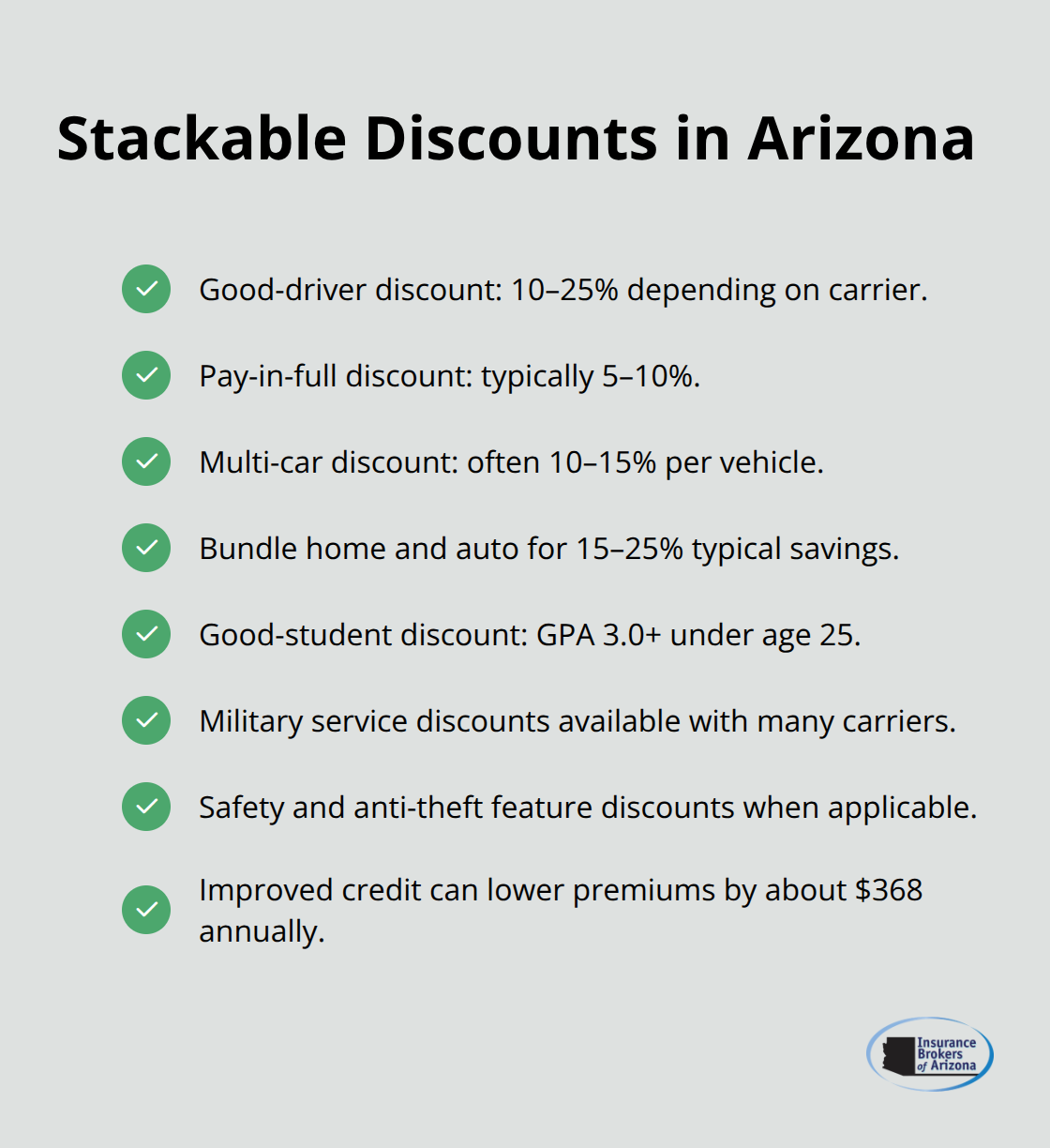
Good student discounts offer substantial savings that many new drivers overlook. Students who maintain a B average or 3.0 GPA qualify for discounts that range from 10-25% with most insurers. State Farm provides some of the largest good student discounts, which potentially save families $500-800 annually. Erie offers competitive rates for teen drivers with strong academic performance and often beats national averages by significant margins.

The discount typically applies until age 25, which makes academic achievement financially rewarding for years. Students must provide report cards or transcripts as proof, but this small effort yields major savings. Some insurers extend discounts to honor roll students or those in the top 20% of their class.

Compact list of actionable steps to reduce auto insurance costs for new drivers - auto insurance as a new driver

Vehicle Selection Makes or Breaks Your Budget

Your car choice dramatically impacts insurance costs more than most new drivers realize. Sports cars like Mustangs or Camaros can increase premiums by 60-80% compared to sedans. Luxury vehicles with high theft rates also carry expensive premiums. The Mazda MX-5 Miata and Subaru Outback average around $2,640-2,735 annually for insurance (significantly below sports car averages).

Older vehicles with strong safety ratings provide the sweet spot for new drivers. Cars over 5-7 years old typically cost less to insure while they still offer modern safety features. Avoid modified vehicles entirely, as customizations can increase premiums by hundreds of dollars annually.

Multi-Policy Bundling Creates Immediate Savings

Auto insurance combined with renters or homeowners policies generates automatic discounts of 15-25%. Most major insurers offer multi-policy discounts, which makes bundling one of the easiest ways to reduce costs. Renters insurance added for $150-200 annually while you save 20% on auto premiums creates net savings for most new drivers.

USAA provides exceptional bundling discounts for eligible members, while other insurers compete aggressively for bundled business. The savings compound when parents bundle teen drivers with existing home and auto policies (creating family-wide discounts that benefit everyone).

Even with these cost-cutting strategies, new drivers often make expensive mistakes that completely undermine their savings efforts.

Common Mistakes New Drivers Make with Auto Insurance

Minimum Coverage Creates Maximum Financial Risk

Arizona’s minimum liability limits of $25,000/$50,000/$15,000 provide dangerously inadequate protection that exposes new drivers to financial ruin. A single emergency room visit after an accident averages $35,000-50,000, which immediately exceeds state minimums. Medical costs from serious injuries routinely reach $200,000-500,000, which leaves drivers personally liable for amounts that could bankrupt them for decades.

Hub-and-spoke diagram of common insurance mistakes new drivers make - auto insurance as a new driver

Erie and USAA data shows that drivers with minimum coverage face lawsuit settlements that average $150,000 above their policy limits in moderate accidents. New drivers with minimum coverage also lack collision and comprehensive protection, which means they pay out-of-pocket for vehicle repairs or replacement. A totaled $15,000 vehicle becomes a complete loss without collision coverage.

Rate Comparison Failures Cost Thousands Annually

New drivers who accept their first insurance quote without comparison waste an average of $1,500-2,500 annually according to industry data. Premium differences between insurers can exceed 200% for identical coverage. State Farm might quote $4,200 while Erie offers $2,800 for the same new driver profile.

USAA provides the cheapest rates for eligible young adults but requires military connections that many families overlook. Geographic variations compound these differences dramatically. Phoenix drivers pay 30-40% more than Tucson residents with identical profiles (despite similar risk factors). Online comparison tools reveal these disparities instantly, yet most new drivers never use them.

Coverage Update Neglect Creates Claim Denials

New drivers who fail to adjust coverage after major life changes create coverage gaps that insurers exploit to deny claims. Students who take vehicles to out-of-state schools without notification may find themselves completely uninsured during accidents. Marriage, job changes, and vehicle purchases all trigger necessary coverage adjustments that many drivers ignore until claim time.

Usage-based insurance programs offer substantial discounts for low-mileage drivers, but students must actively enroll rather than assume automatic qualification. Defensive driving course completion reduces premiums by 10-15% with most carriers, but certificates expire and require renewal (typically every three years). These proactive updates separate financially protected drivers from those who face claim denials and premium penalties.

Final Thoughts

New drivers who approach auto insurance strategically save thousands annually while they secure proper protection. The data reveals that smart coverage selection, sensible vehicle choices, and discount optimization reduce premiums by 30-50% compared to uninformed decisions. Academic performance, defensive courses, and policy bundling create immediate savings that compound over time.

Professional guidance eliminates the costly mistakes that trap many new drivers in expensive policies. We at Insurance Brokers of Arizona® help clients navigate complex coverage options and secure competitive rates from multiple carriers. Our experience identifies discounts and coverage combinations that independent shoppers often miss.

Auto insurance as a new driver transforms from an overwhelming expense into manageable protection through proper preparation. Gather quotes from multiple insurers while you focus on adequate liability limits above state minimums (rather than accepting bare-bones coverage). Document your grades, research vehicle safety ratings, and complete defensive courses to maximize your savings potential.

House fires devastate families across America every year, leaving homeowners wondering about their financial protection. Does home insurance cover fires? The answer affects millions of property owners nationwide.

We at Insurance Brokers of Arizona® see these questions daily from concerned homeowners. Understanding your fire coverage prevents costly surprises when disaster strikes.

What Does Home Insurance Actually Cover for Fire Damage

Standard homeowners insurance policies cover three major categories of fire damage, and the numbers show why this protection matters. Fire ranks as the second leading cause of homeowners insurance claims according to the Insurance Information Institute, with the average fire damage claim reaching $79,000 per the National Association of Insurance Commissioners.

Compact list showing structural damage, personal property, and additional living expenses coverage for fires in U.S. homeowners insurance.

Structural Damage Protection

Your dwelling coverage handles repairs to walls, ceilings, floors, and foundations that flames, smoke, or heat damage. This includes attached structures like garages and porches. Most policies also cover other structures on your property, such as detached sheds or fences, typically at 10% of your dwelling coverage amount. The key difference lies between replacement cost and actual cash value policies – replacement cost covers the full repair amount without depreciation, while actual cash value factors in wear and tear.

Personal Property Coverage

Personal property coverage protects your belongings inside the home, but standard policies limit certain items to $1,000-$2,500. Electronics face caps of $1,000-$2,000, while firearms get theft-only coverage up to $2,500. High-value items need scheduled property endorsements for full protection. Standard policies often fall short when homeowners lose valuable collections, jewelry, or expensive electronics in fires.

Additional Living Expenses

Additional living expenses coverage pays for temporary housing, meals, and relocation costs while contractors repair your home. This coverage typically ranges from 10-30% of your dwelling coverage and can last 12-24 months (depending on your policy terms). The National Fire Protection Association reports that U.S. fire departments respond to a fire every 24 seconds, making this temporary housing benefit essential for many families.

However, not all fire damage receives coverage, and certain exclusions can leave homeowners with significant out-of-pocket expenses.

What Fire Damage Gets Denied

Insurance companies deny fire damage claims more often than homeowners expect, and these exclusions can leave property owners with devastating financial losses. Claims face rejection when insurers suspect arson, find evidence of neglect, or discover business property mixed with personal belongings.

Arson and Intentional Fire Setting

Insurance fraud investigators examine every fire claim for signs of intentional fire setting. The Insurance Information Institute reports that insurers deny claims when they find accelerants, multiple ignition points, or suspicious circumstances around the fire. Homeowners face claim denials if family members deliberately start fires, even without the policyholder’s knowledge.

Insurance companies also reject claims when homeowners fail to cooperate with investigations or provide inconsistent statements about the fire’s origin. Documentation from fire department reports becomes critical evidence in these cases. Any indication of arson leads to automatic claim rejection plus potential criminal charges against the responsible parties.

Neglected Maintenance Issues

Electrical fires from faulty wiring that homeowners ignored for months get denied regularly. Insurance adjusters look for maintenance records and previous inspection reports to determine if negligence caused the fire. Policies exclude damage that results from the homeowner’s failure to maintain their property in reasonable condition.

Smoke detectors with dead batteries, overloaded electrical circuits, and blocked chimney flues all represent maintenance issues that can void coverage. The National Fire Protection Association found that maintenance-related fires account for 13% of all residential fire incidents, yet these claims often face denial due to negligence clauses.

Business Property Exclusions

Home-based businesses face particular challenges because standard homeowners policies exclude business property from coverage. A home office computer worth $3,000 receives no compensation under personal property coverage if used primarily for business purposes. Professional equipment, inventory, and business documents require separate commercial coverage or specific endorsements to receive protection.

The National Association of Insurance Commissioners found that business property exclusions affect 15% of home fire claims. Even part-time business activities can trigger these exclusions, leaving entrepreneurs with significant uncompensated losses after fires.

Two-percentage chart showing maintenance-related residential fires and home fire claims affected by business property exclusions in the U.S. - does home insurance cover fires

Successful fire damage claims require proper documentation and prompt action, which makes the claims process your next priority after the flames are out.

How to File a Fire Damage Insurance Claim

Fire damage claims require immediate action to protect your financial interests and prevent further losses. The first 24 hours after a fire determine whether your claim gets approved quickly or faces months of delays.

Three-step guide outlining immediate claim actions for U.S. homeowners after a house fire. - does home insurance cover fires

Contact Your Insurance Company Immediately

Call your insurance company within hours of the fire, not days later. Most policies require prompt notification, and delays can give insurers grounds to reduce or deny your claim. The National Fire Protection Association data shows that homeowners who report claims within 24 hours receive settlements 40% faster than those who wait longer.

Your insurance company will assign an adjuster and provide initial guidance on emergency expenses. Ask about your policy’s additional living expenses coverage limits and what documentation you need for reimbursement. Get your claim number and adjuster’s contact information during this first call.

Document Everything Before Cleanup Begins

Take extensive photos and videos of all damage before you touch anything or allow cleanup crews to start work. Insurance adjusters need visual evidence of the fire’s path, smoke patterns, and structural damage to process your claim accurately.

Photograph damaged personal property, burned areas, and water damage from firefighting efforts. The Insurance Information Institute recommends taking at least 100 photos from multiple angles to capture the full extent of damage. Save all receipts for emergency expenses like temporary housing, clothing, and meals (additional living expenses coverage reimburses these costs).

Professional fire damage restoration companies often arrive quickly, but never let them start work without documenting the scene first.

Get Multiple Professional Assessments

Insurance adjusters work for the insurance company, not for you, which creates an inherent conflict of interest in damage assessments. Hire your own licensed contractor or structural engineer to inspect hidden damage that adjusters might miss.

Professional inspections typically cost $500-$1,500 but can identify thousands of dollars in additional damage. The National Association of Insurance Commissioners reports that independent assessments find 25% more damage on average than insurance company estimates.

Obtain at least three repair estimates from licensed contractors to establish fair market pricing for restoration work. Keep your claim open for at least six months after initial settlement, as fire damage often reveals itself gradually through issues like foundation settling, electrical problems, or delayed smoke damage effects. Understanding home insurance terms helps you navigate the claims process more effectively.

Final Thoughts

Fire coverage forms the backbone of standard homeowners insurance policies across America. The Insurance Information Institute confirms that fire protection comes automatically with most policies, which makes it one of the most reliable forms of property protection available to homeowners. Does home insurance cover fires? Yes, but exclusions create significant gaps that catch homeowners off guard.

Arson investigations, maintenance neglect, and business property restrictions account for thousands of denied claims annually. The National Association of Insurance Commissioners data shows that homeowners who understand these exclusions prevent 60% of claim disputes before they start. Documentation separates successful claims from rejected ones (homeowners who photograph damage immediately and obtain independent assessments receive settlements averaging 25% higher than those who rely solely on insurance company evaluations).

We at Insurance Brokers of Arizona® help Arizona homeowners find policies that match their specific fire risk profile. Our experience shows that proper coverage selection and policy understanding make the difference between financial recovery and devastating loss after fires strike your property. The claims process rewards preparation and thorough record-keeping above all other factors.