
What’s the Best Commercial Truck Insurance?

Commercial truck insurance protects your business from financial losses that can reach millions of dollars. The Federal Motor Carrier Safety Administration requires minimum coverage of $750,000 for most commercial trucks.
At Insurance Brokers of Arizona®, we help trucking companies find policies that match their specific needs. Choosing what is the best commercial truck insurance depends on your cargo type, routes, and risk tolerance.
Types of Commercial Truck Insurance Coverage
Commercial truck insurance includes three main coverage categories that directly impact your business survival. Liability insurance forms the foundation, with FMCSA mandating $750,000 minimum for most freight operations and $1,000,000 for hazardous materials. States like California demand even higher minimums at $750,000 for general freight trucks over 10,000 pounds. These aren’t suggestions – operators face immediate shutdown and massive fines without proper liability coverage.
Liability Insurance Requirements and Limits
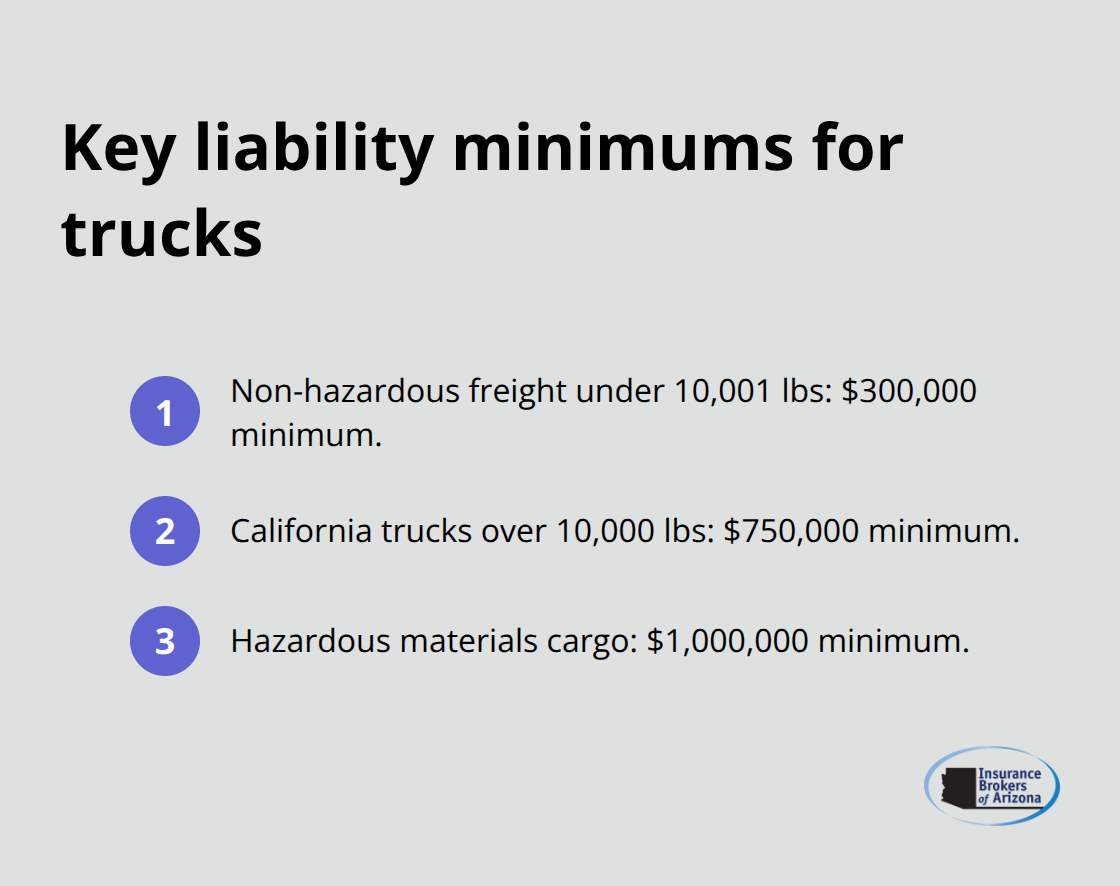
Federal regulations set strict minimum liability requirements based on cargo type and weight. Interstate carriers must carry $300,000 for non-hazardous freight under 10,001 pounds, while hazardous materials require $1,000,000 coverage. State requirements vary significantly – Alabama requires only $7,500 for lighter loads, while California demands $750,000 for trucks over 10,000 pounds. Smart operators exceed these minimums since accident settlements regularly reach millions of dollars.
Physical Damage and Cargo Protection
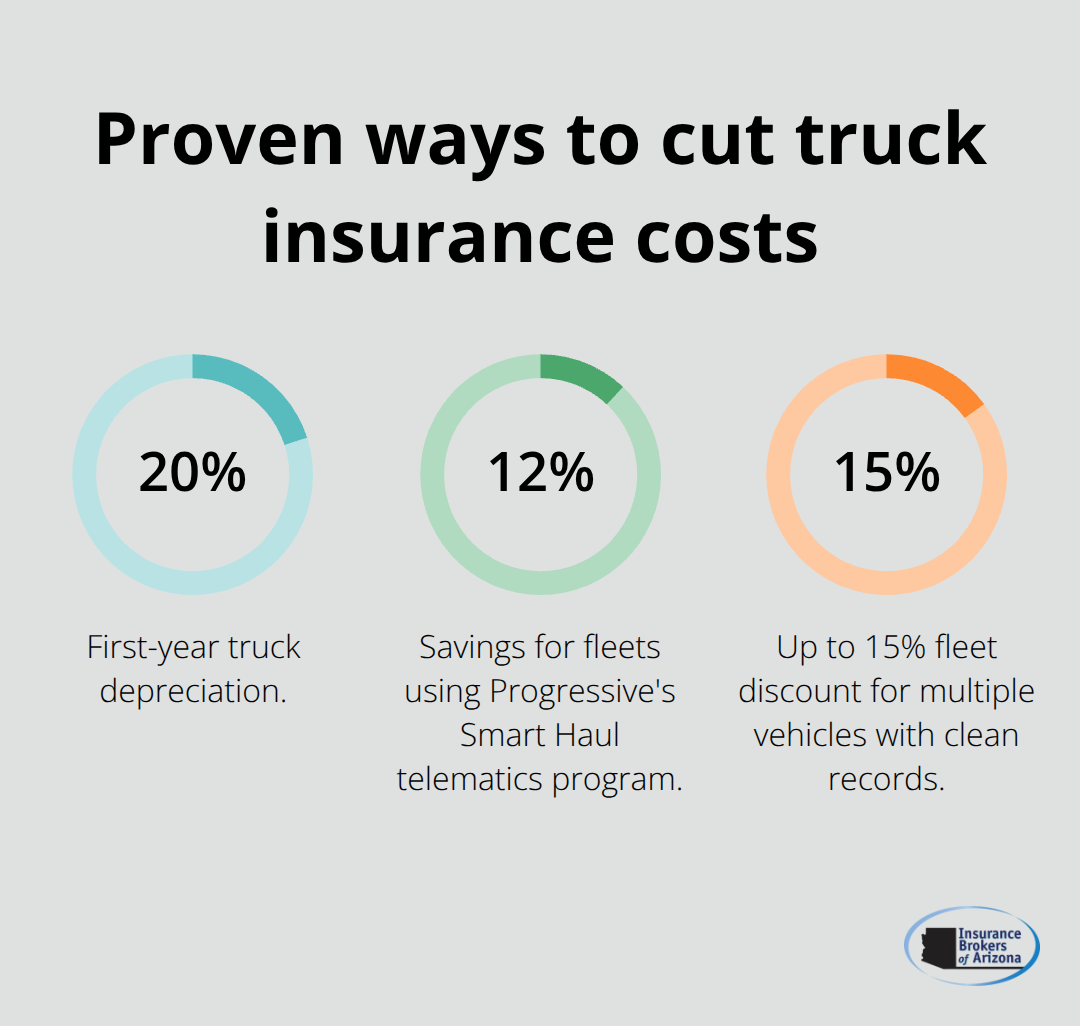
Physical damage coverage splits into comprehensive and collision protection. Comprehensive handles theft, vandalism, and weather damage, while collision covers accident repairs. The average commercial truck costs $150,000 to replace, making this coverage essential for fleet survival. Operators choose actual cash value over agreed value for older trucks to reduce premiums by 15-20%. Gap coverage becomes vital for financed vehicles since trucks depreciate 20% in the first year alone.
Additional Coverage Options for Enhanced Protection
Motor truck cargo insurance protects freight during transport, typically ranging from $100,000 to $250,000 per load. Shippers increasingly require proof of cargo coverage before contracts, making this protection non-negotiable for most operators. Non-trucking liability covers personal use of company trucks, preventing coverage gaps that cost $50,000+ in personal injury claims. These additional protections become the foundation for evaluating what factors drive your insurance costs.
Factors That Affect Commercial Truck Insurance Costs
Insurance companies use three primary factors to calculate your commercial truck insurance premiums, and these variables give you direct control over your costs. Driver safety records create the biggest impact on rates – a single accident increases premiums by 25-40% for three years, while DUI convictions can double your costs according to National Independent Truckers Insurance Co data. Clean records become your strongest tool for rate negotiations, with some carriers offering 15% discounts for accident-free fleets. Operators save thousands annually when they implement driver monitoring programs and mandatory safety training.
Driver Experience and Safety Records
Commercial insurers scrutinize every violation, accident, and claim from the past five years when they set rates. Drivers aged 18-25 face premium increases of 50-75% compared to experienced operators due to higher accident statistics. Progressive’s Smart Haul program demonstrates how technology monitoring reduces costs – participating fleets save 12% or more through electronic logging device data that proves safe habits. Direct Auto Insurance offers fleet discounts up to 15% for multiple vehicles with clean records.
The bottom line: operators who hire drivers with spotless records and maintain ongoing safety programs directly reduce their insurance expenses while they protect their business reputation.
Type of Cargo and Routes Traveled
Hazardous materials require $1,000,000 minimum coverage compared to $300,000 for general freight, which immediately increases premiums by 200-300%. Interstate operations cost more than local delivery routes because cross-state travel exposes carriers to varying state regulations and increased accident risks. Refrigerated cargo and specialized equipment transport face higher rates due to cargo value and technical complexity (specialized equipment often requires additional endorsements). The trucking industry transported 10.23 billion tons of freight in 2020, with 72.5% of total transported weight moving by truck according to the American Trucking Associations.
Vehicle Age and Safety Features
Trucks over seven years old pay 20-30% higher premiums than newer models with advanced safety features like collision avoidance systems and electronic stability control. Newer vehicles include enhanced security features that reduce theft risk and lower insurance costs. Fleet operators who maintain younger vehicle inventories see direct premium reductions because insurers view modern safety technology as risk mitigation (dash cameras and telematics systems provide additional discounts). These cost factors work together with your choice of insurance provider to determine your final premium rates.
How to Choose the Right Commercial Truck Insurance Provider
Commercial truck insurance provider selection demands careful evaluation of three performance areas that directly impact your business operations and financial protection. Forbes Advisor rates The Hartford at 5.0 for its Risk Engineering team that actively helps reduce claims, while Acuity ranks first in claims process satisfaction with 71% positive customer sentiment. Travelers receives a 4.3 rating for its Deluxe Coverage option that includes rental reimbursement and diminishing deductibles. Both The Hartford and Travelers score poorly on customer service according to the Consumer Sentiment Index, which makes Acuity the standout choice for claims handling.
Comparing Coverage Options and Policy Limits
Insurance providers offer vastly different coverage structures that create significant gaps in protection if you choose incorrectly. The Hartford specializes in Risk Engineering services that reduce claim frequency, but their customer service problems create delays during routine policy changes. National Independent Truckers Insurance Co provides competitive rates that average $650 monthly for transport truckers and $1,000 for specialty operations, though their claims processing speed varies significantly by region. Progressive’s Smart Haul program offers 12% discounts through telematics monitoring, but their coverage options limit cargo protection compared to specialized trucking insurers. Direct Auto Insurance provides fleet discounts up to 15% for multiple vehicles (making them attractive for growing operations).
Evaluating Customer Service and Claims Processing
Claims processing speed and customer service quality determine whether your business survives major accidents or faces bankruptcy from delayed payments. Acuity maintains exceptionally low complaint ratios compared to industry averages, which demonstrates superior customer support when you need it most. The Hartford offers specialized services but receives poor customer service ratings that create problems during policy management. Smart operators verify AM Best ratings of A- or higher and research state insurance department complaint data before they sign contracts.
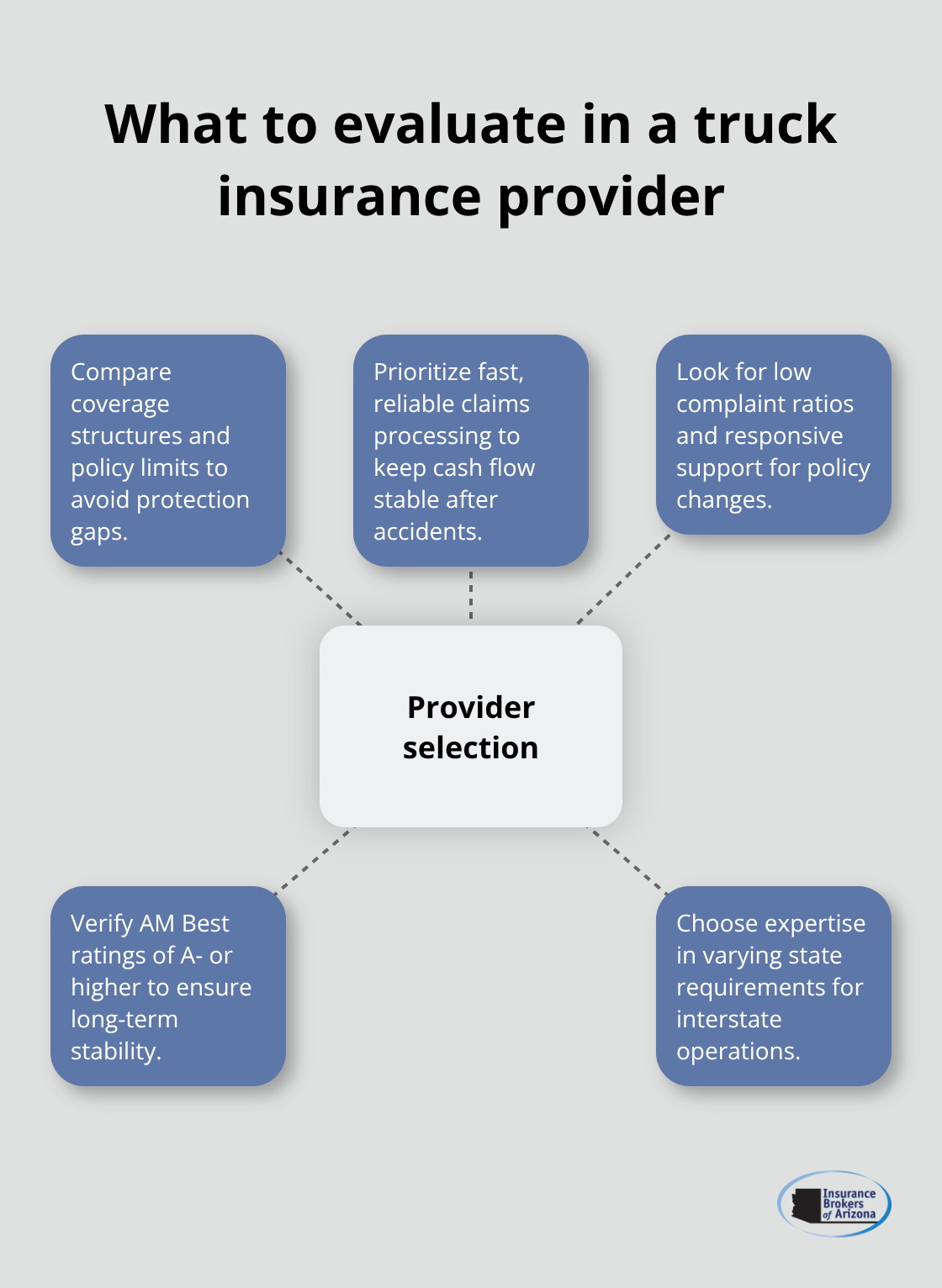
Financial stability ratings matter because a bankrupt insurer leaves you completely exposed during accidents.
Understanding State Requirements and Compliance
Commercial truck insurance requirements change dramatically across state lines, which makes provider expertise in multi-state operations essential for interstate carriers. California mandates $750,000 coverage for trucks over 10,000 pounds while Alabama requires only $7,500 for lighter loads (creating compliance nightmares for operators who lack proper guidance). The best providers customize policies for your specific cargo types, routes, and risk profile rather than offer generic commercial auto coverage that leaves dangerous gaps in protection. Interstate operations face varying state regulations that require specialized knowledge to maintain compliance and avoid costly violations.
Final Thoughts
The best commercial truck insurance balances adequate coverage with cost control while you maintain full regulatory compliance. Your decision impacts business survival during major accidents that reach millions in damages. Driver safety records, cargo types, and vehicle age create the primary cost variables you control through strategic fleet management and smart hiring practices.
Acuity leads in claims satisfaction with 71% positive sentiment, while The Hartford offers superior Risk Engineering services despite customer service weaknesses. Provider financial stability matters because bankrupt insurers leave you exposed during accidents. State requirements vary dramatically from Alabama’s $7,500 minimums to California’s $750,000 mandates for heavier trucks (creating compliance challenges for interstate operators).
We at Insurance Brokers of Arizona® help trucking companies find policies that match their specific cargo, routes, and risk profile. Our expertise in multi-state compliance helps interstate operators avoid costly violations while they secure competitive rates. Proper coverage starts with accurate risk assessment and provider comparison based on your operational needs rather than price alone.


