Auto insurance premiums hit record highs in 2024, with the average auto insurance cost per month reaching $196 nationwide. This represents a 26% increase from just two years ago.

We at Insurance Brokers of Arizona® see Arizona drivers paying even more, with monthly premiums averaging $218. Understanding these costs helps you make smarter coverage decisions.

Chart comparing national average auto insurance cost to Arizona's average, showing Arizona's higher rates

How Much Do Americans Really Pay for Auto Insurance

Louisiana drivers face the harshest reality with monthly premiums that average $358, while Wyoming residents enjoy the lowest costs at just $92 per month according to NerdWallet’s October 2025 analysis. Florida follows Louisiana closely at $350 monthly, which makes geography the biggest factor in what you pay. New Hampshire and Vermont round out the cheapest states with monthly costs under $120, creating a massive $266 gap between the most and least expensive markets.

Premium Increases Hit Every State Hard

Auto insurance costs jumped 8% in the first half of 2025 compared to 2024, with some states that saw even steeper increases according to Bankrate data. The Bureau of Labor Statistics confirms this upward trend started in December 2021 and shows no signs that it will slow. Nevada, Florida, and Louisiana now all exceed $290 monthly for full coverage, while New York drivers pay over $335 monthly. Predictions from Insurify suggest tariffs could push premiums up another 8% by year-end, which means today’s rates represent the floor, not the ceiling.

Western States Lead Affordability Rankings

Western mountain states consistently offer the lowest premiums, with Idaho that averages 46% below national rates and Wyoming that leads affordability nationwide. These states benefit from lower population density, fewer accidents per capita, and reduced weather-related claims. Hawaii surprises many with premiums 38% lower than the national average (attributed to high public transport usage and fewer licensed drivers per capita).

Southern and Coastal Markets Drive High Costs

Southern and coastal states dominate the expensive end, driven by hurricane risks, high uninsured motorist coverage rates, and costly court environments. Michigan stands out as an expensive outlier in the Midwest due to its unique no-fault insurance requirements, while Massachusetts surprises with rates 22% below average despite high costs of daily life. These differences stem from measurable factors like weather patterns, traffic density, and state insurance laws rather than arbitrary price decisions.

Understanding these state-by-state variations helps you see the bigger picture, but your personal rate depends on factors you can actually control.

What Determines Your Auto Insurance Rate

Your age alone can make or break your budget. Drivers under 25 face the steepest costs, with 20-year-olds who pay $4,686 annually for full coverage according to NerdWallet data. Men pay more than women, especially at younger ages, though this gap narrows after 30. Your record matters more than any other factor – a single at-fault accident increases rates by 48%, while a ticket adds 27% to your premium. A DUI devastates your wallet with an 85% rate increase (annual costs jump to $4,274). Poor credit scores punish drivers with 67% higher premiums compared to those with good credit, which makes your financial history as important as your record.

Chart showing percentage increases in insurance rates: 48% for at-fault accident, 27% for a ticket, and 85% for a DUI - average auto insurance cost per month

Vehicle Choice Controls Your Premium

Sports cars and luxury vehicles cost significantly more to insure due to higher repair costs and theft rates. Advanced safety features like automatic emergency braking and blind spot monitoring can reduce your premium through safety discounts. The age and value of your vehicle affects comprehensive and collision coverage costs – older cars with lower values make these coverages optional, which saves approximately $1,165 annually according to Consumer Reports data.

Coverage Decisions Shape Your Monthly Bill

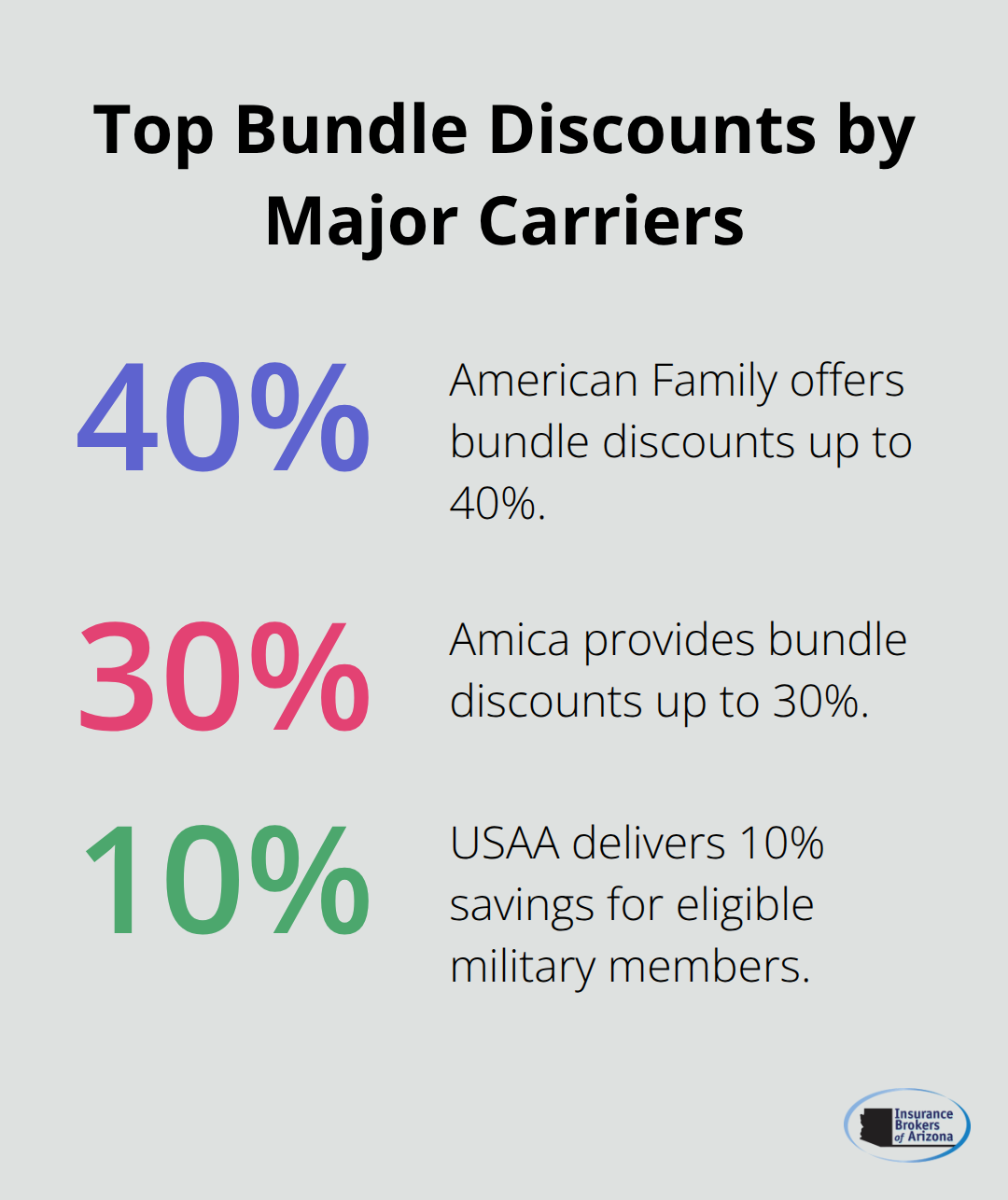
You cut your annual premium by $464 to $525 when you raise your deductible from $500 to $1,000 (Insurance Information Institute data). Full coverage costs three times more than minimum liability, but experts recommend at least $100,000/$300,000/$100,000 limits for adequate protection. You save up to 30% on premiums when you bundle auto insurance with homeowners coverage, while annual mileage under 10,000 miles reduces costs by approximately $116 yearly.

These rate factors work together to create your unique premium, but smart shoppers know how to minimize their impact through strategic choices and comparison tactics.

How to Cut Your Auto Insurance Costs

Consumers who switch insurance companies save a median of $461 annually according to Consumer Reports data. Thirty percent of consumers changed insurers in the last five years, and those who shop annually find better rates consistently. We at Insurance Brokers of Arizona® work with over 40 reputable carriers, which means you get competitive options without the hassle of multiple phone calls. Independent agents compare rates across carriers to find your best deal, while direct insurers show you only their own prices.

Stack Multiple Discounts for Maximum Savings

Auto insurance bundled with homeowners coverage saves up to 30% on premiums (Consumer Federation of America data), while good student discounts, military service discounts, and defensive course completion reduce premiums by approximately $233 annually. Automated driver programs save a median of $120 on premiums, though privacy-conscious drivers might skip this option. Annual mileage under 10,000 miles cuts costs by around $116 yearly, and dividend policies from certain insurers offer cashback benefits worth $116 or more.

Hub and spoke chart showing various ways to save on auto insurance, including switching companies, bundling policies, and adjusting deductibles - average auto insurance cost per month

Adjust Your Deductible and Coverage

You save between $464 and $525 annually when you raise your deductible from $500 to $1,000 according to Insurance Information Institute data. Older cars with lower values make comprehensive and collision coverage optional, which saves approximately $1,165 annually. Full coverage costs three times more than minimum liability, but experts recommend at least $100,000/$300,000/$100,000 limits for adequate protection.

Improve Your Credit Score and Record

Poor credit costs you 67% more in premiums compared to good credit, which makes credit improvement a financial priority beyond just loan rates. Pay bills on time, reduce credit card balances, and check your credit report for errors that drag down your score. Keep your record clean – even minor violations stay on your record for three to five years and increase costs significantly. Pay out of pocket for minor accidents instead of claims when possible, as this avoids potential premium increases worth up to $348 according to Consumer Reports research.

Final Thoughts

Auto insurance costs vary dramatically across states, with Wyoming drivers who pay $92 monthly while Louisiana residents face $358 monthly premiums. Arizona drivers pay $218 monthly, which exceeds the national average auto insurance cost per month of $196. These rates continue to climb with 8% increases in 2025 and additional tariff-driven hikes predicted ahead.

Your personal rate depends on factors you control like your record, credit score, and coverage decisions. Smart shoppers who switch carriers save $461 annually, while strategic deductible changes and discount combinations cut hundreds more from premiums. Clean records prevent the 48% rate increases that follow accidents (Consumer Reports data confirms this impact).

Arizona drivers benefit from experienced professionals who understand local market conditions. We at Insurance Brokers of Arizona® work with multiple reputable carriers to find competitive rates for your specific situation. Our approach helps individuals, families, and businesses secure appropriate coverage at affordable prices.

Commercial auto insurance costs can drain your business budget faster than you think. The average small business pays $1,200 annually for commercial vehicle coverage, but smart strategies can cut these expenses significantly.

We at Insurance Brokers of Arizona® see businesses overpay for coverage daily. Finding cheap commercial auto insurance requires knowing where to look and what mistakes to avoid.

What Strategies Cut Commercial Auto Insurance Costs Most

The quickest path to lower premiums starts with aggressive comparison shopping across multiple carriers. The National Association of Insurance Commissioners data shows businesses can find price variances of 40% or more for identical coverage when they quote from at least five different insurers. Independent agents provide quotes from 15 to 20 carriers simultaneously, which gives you access to rates that captive agents (who represent single insurers) cannot match.

Smart Deductible Adjustments Slash Premium Costs

Raising your deductible from $500 to $2,500 typically reduces premiums by 25% according to industry data. For businesses with clean claims histories, pushing deductibles up to $10,000 can cut costs by 50% as the National Association of Insurance Commissioners reports. The key lies in maintaining enough cash flow to handle higher out-of-pocket expenses when claims occur.

Chart showing 25% reduction in premiums when raising deductible from $500 to $2,500

Bundle Policies for Immediate Savings

Progressive’s research shows businesses save around 12% on auto insurance when they bundle it with property coverage. This multi-policy discount strategy works because insurers prefer customers who consolidate their coverage. The savings compound when you add general liability and workers compensation to the package (creating comprehensive business protection).

Annual Reviews Prevent Rate Creep

Companies that skip annual policy reviews pay premiums that average 12% above current market rates. Businesses that switch carriers every three years maintain more competitive rates than those who stay with one insurer long-term. The insurance market shifts constantly, and yesterday’s best rate becomes tomorrow’s overpriced policy without regular monitoring.

These cost-cutting strategies work best when you understand the specific factors that drive your premium calculations in the first place.

What Drives Your Commercial Auto Insurance Rates

Your driver records create the foundation of your premium calculations, and the numbers tell a harsh story. Companies with drivers younger than 25 face costs that are 60% higher than those with experienced operators, according to Insurance Information Institute data. Clean records slash premiums by up to 35%, while accidents within the past three years add approximately $1,200 to annual insurance costs. The Federal Motor Carrier Safety Administration found that businesses that implement driver safety programs decrease accident rates by 40% within one year. Companies that train new hires for 40 hours reduce first-year accident rates by 60%, which makes comprehensive driver education a direct path to lower premiums rather than a nice-to-have expense.

Vehicle Selection Determines Base Premium Structure

Your vehicle choices dictate premium costs more than most business owners realize. Construction vehicles incur premiums that are 40% higher than passenger cars, while delivery vehicles face rates 25% higher than office commuter cars. Businesses that switch from cargo vans to standard sedans save approximately $800 per vehicle annually. Fleet technology reduces accidents by 30% and qualifies businesses for discounts that average 20% on insurance rates according to industry studies. The age and size of vehicles matter too – newer and larger vehicles command higher premiums, but their safety features often offset costs through available discounts.

Location and Coverage Limits Shape Final Costs

Urban Arizona businesses pay 30% more for insurance compared to rural operations due to higher claim frequencies and traffic density. Your coverage limits directly impact costs – businesses that reduce combined single limits from $300,000 to $100,000 decrease premiums significantly, though this strategy requires careful risk assessment. Replacement cost coverage costs 30% more than actual cash value coverage but provides full vehicle replacement without depreciation calculations (making it valuable for newer fleets). The key lies in matching your coverage limits to actual business risks rather than purchasing maximum coverage across all categories.

Hub and spoke chart illustrating key factors affecting commercial auto insurance rates including driver records, vehicle selection, and location - cheap commercial auto insurance

These rate factors work together to create your final premium, but many businesses unknowingly make costly mistakes that push their rates even higher than necessary.

What Costly Mistakes Drive Up Your Commercial Auto Insurance

Most businesses sabotage their own insurance costs through three expensive errors that compound over time. The first mistake involves purchasing minimal liability coverage to save money upfront, which backfires when lawsuits exceed policy limits. Businesses that carry only state minimum coverage face personal asset exposure when claims reach nuclear verdict territory – awards exceeding $10 million that have increased by 300% since 2010 according to the American Transportation Research Institute.

Minimal Coverage Creates Maximum Risk

Smart businesses carry at least $1 million in combined single limit coverage because the cost difference between minimum and adequate coverage averages just $200 annually per vehicle. The protection gap spans millions in potential exposure when businesses choose inadequate limits. Companies that select state minimums often discover their mistake too late when major accidents occur and legal settlements exceed their coverage caps.

Outdated Policy Information Triggers Premium Penalties

The second critical error involves failure to update policy details when business operations change. Companies that add vehicles without notifying insurers face coverage gaps that void protection entirely. Businesses that remove vehicles continue paying premiums for non-existent assets (wasting thousands annually on phantom coverage).

Driver additions create similar problems when new employees lack proper coverage notifications. This oversight can trigger policy cancellations after accidents occur. Annual revenue updates matter because insurers calculate exposure based on business size, and outdated information leads to incorrect premium calculations. The National Association of Insurance Commissioners found that businesses with current policy information pay 15% less than those with outdated details.

Wrong Provider Selection Costs Thousands Annually

The third mistake involves choosing insurers based on price alone rather than claims handling capability and industry expertise. Carriers with poor commercial auto experience delay claim payments and dispute coverage decisions, which creates cash flow problems during critical periods. GEICO maintains a high complaint rate according to the NAIC Company Complaint Index, making it a risky choice despite competitive pricing.

Businesses need insurers that understand commercial operations and provide 24/7 claim reporting because downtime costs exceed premium savings. Companies should match with insurers that specialize in their industry rather than accept one-size-fits-all solutions that fail when claims occur. Working with a local agent provides the expertise needed to navigate complex commercial coverage decisions.

Ordered list chart showing three major mistakes businesses make with commercial auto insurance: minimal coverage, outdated policy information, and wrong provider selection - cheap commercial auto insurance

Final Thoughts

Cheap commercial auto insurance becomes achievable when businesses apply systematic comparison strategies and maintain strong risk management practices. Data proves companies reduce premiums by 40% or more through aggressive quote collection from multiple carriers, strategic deductible adjustments, and policy bundling. Companies that establish driver safety programs and maintain clean records achieve the most significant long-term savings.

Experienced insurance professionals help businesses avoid costly coverage mistakes that drain budgets unnecessarily. We at Insurance Brokers of Arizona® connect you with competitive options from multiple reputable carriers. Our team helps you navigate complex coverage decisions while avoiding inadequate limits, outdated policy details, and poor provider selection.

Your next action involves collecting quotes from at least five different insurers while you evaluate current coverage requirements. Annual policy reviews prevent rate increases and maintain competitive rates as your business grows (smart businesses treat insurance as protection investment rather than expense minimization). Balance cost reduction with adequate coverage that protects against catastrophic losses.

Owning a home in a flood zone, wildfire area, or aging property can make finding affordable coverage challenging. High-risk home insurance often comes with higher premiums and limited options.

We at Insurance Brokers of Arizona® help homeowners navigate these complex insurance markets daily. Understanding your options can save thousands while protecting your most valuable asset.

What Puts Your Home in the High-Risk Category

Insurance companies classify homes as high-risk based on three primary factors that significantly impact your ability to get coverage and the premiums you pay. Location tops the list, with properties in flood zones, wildfire areas, and hurricane-prone regions facing automatic high-risk status. The National Association of Insurance Commissioners reports that approximately 10% of homeowners nationwide need high-risk coverage, with coastal states like Florida, Louisiana, and Texas accounting for two-thirds of hurricane and flood losses.

Pie chart showing 10% of homeowners need high-risk coverage, with coastal states accounting for 66% of hurricane and flood losses - high-risk home insurance

Geographic Location Determines Risk Level

Properties within one mile of wildfire zones or Special Flood Hazard Areas with a 1% annual chance of flooding face premium increases of 20-50% above standard rates. Coastal areas experience the highest risk classifications due to hurricane exposure and storm surge potential. Between 2018-2023, insurers canceled nearly 2 million homeowner policies due to rising climate risks (more than four times the normal rate). Florida alone has had 36 presidential disaster declarations since 2000, with damages exceeding $300 billion in the last seven years according to NOAA.

Property Age Creates Insurance Challenges

Homes built before 1970 often trigger high-risk classifications due to outdated electrical systems, plumbing, and structural components. The Insurance Information Institute found in 2022 that properties with these aging infrastructures face coverage denials or significantly higher premiums. Roof age specifically matters most, with insurers typically requiring replacement for roofs over 20 years old. Credit scores also play a major role, as insurers use them to determine eligibility and rates.

Claims History and Property Features

Previous claims history becomes a permanent red flag, with homeowners who file multiple claims within five years often facing policy cancellations or premium increases of 30-40%. Swimming pools, certain dog breeds, and home-based businesses automatically increase risk classifications. Properties with outdated heating systems, knob-and-tube wiring, or structural damage from previous storms face immediate scrutiny. Insurers evaluate risk mathematically, not emotionally, which means you can address these specific factors through targeted improvements and proper disclosure to improve your coverage options.

Coverage Options for High-Risk Properties

High-risk homeowners face three distinct insurance pathways, each with specific advantages and limitations. Standard homeowners insurance becomes unavailable once insurers classify your property as high-risk, which forces you into specialized markets with different rules and pricing structures. The average cost difference ranges from 20-50% higher than standard policies according to the National Association of Insurance Commissioners, but understanding your options prevents overpayment for inadequate coverage.

Hub and spoke chart showing three main coverage options for high-risk properties: FAIR Plans, Specialty Carriers, and Standard Policy Modifications - high-risk home insurance

FAIR Plans Serve as Last-Resort Coverage

State-sponsored FAIR Plans operate in over 30 states as insurers of last resort when private companies refuse coverage. California’s FAIR Plan offers maximum coverage of $3 million for combined residential protections, though policies cover only specific perils like fire and smoke. These plans cost significantly more than private insurance but guarantee availability regardless of your property’s risk factors.

Florida homeowners report FAIR Plan premiums that average 40-60% above previous private coverage, yet these programs prevent complete loss of insurability. Difference in Conditions policies can supplement FAIR Plan coverage for broader protection against excluded perils.

Specialty Carriers Target High-Risk Properties

Companies like Foremost specialize in older properties and unusual risks that standard insurers decline, while others focus on specific geographic regions or property types. Surplus lines insurers operate outside standard regulations and offer customized policies for unique situations at premium rates. These carriers often require property inspections and risk mitigation measures before they issue coverage.

Chubb provides up to $100 million in personal liability coverage for high-value properties (demonstrating how specialty markets serve specific niches). Shopping among specialty carriers can reveal coverage options unavailable through traditional channels, though expect higher deductibles and stricter policy terms than standard homeowners insurance.

Standard Policy Modifications Bridge Coverage Gaps

Some traditional insurers offer modified standard policies with higher deductibles or excluded perils rather than complete coverage denial. These hybrid policies maintain relationships with established carriers while accommodating increased risk factors. Wind and hail exclusions commonly appear in coastal areas, while wildfire exclusions affect mountain and forest properties.

Modified policies often cost 15-25% less than specialty carriers but require separate coverage for excluded perils. This approach works best for properties with single risk factors rather than multiple high-risk characteristics. Understanding these cost structures helps you evaluate whether premium savings justify coverage gaps when you move to the next phase of cost analysis and reduction strategies.

How Much More Will You Pay for High-Risk Coverage

High-risk homeowners face premium calculations that differ dramatically from standard policies. Insurers weigh location risk at 40-50%, property condition at 30%, and claims history at 20% of total cost determination. Florida homeowners report average premium increases of $1,450 from 2020 to 2023, while coastal properties in Special Flood Hazard Areas pay 20-50% above standard rates according to the National Association of Insurance Commissioners.

Ordered list chart showing three main factors insurers use to determine high-risk insurance premiums: Location risk, Property condition, and Claims history

Your credit score impacts rates significantly, with lower scores that push premiums higher by 15-25% in most states. Insurers calculate replacement costs separately from purchase price, exclude land value but include upgraded materials and labor costs that often exceed original construction expenses.

Premium Calculation Methods Target Specific Risk Factors

Insurers use catastrophe models that analyze historical weather patterns, geological data, and property characteristics to determine rates. Properties within wildfire zones face automatic surcharges of 25-40% above base premiums, while flood zone locations trigger additional assessments through FEMA flood maps. Age-based pricing penalizes homes built before 1970 with rate increases of 15-30% due to outdated infrastructure.

Claims frequency models track neighborhood loss patterns over 10-year periods, which means your neighbors’ claims affect your rates even without personal claims history. Credit-based insurance scores (different from credit scores) incorporate payment history and debt levels to predict claim likelihood, with poor scores that add 20-35% to base premiums in states where this practice remains legal.

Strategic Home Improvements Cut Premiums Immediately

New roof installation reduces premiums by 10-20% instantly, while electrical system upgrades from knob-and-tube wiring lower rates by 15-30%. Storm shutters and reinforced materials qualify for disaster resistance discounts of 5-15% in hurricane zones. Security systems with monitored alarms provide discounts of 5-20% based on system sophistication.

Deductible increases from $500 to $2,500 can save up to 25% on premiums, though you must afford higher out-of-pocket costs when claims occur. Home and auto insurance bundles with the same carrier typically yield 5-15% discounts, while six-year loyalty with one insurer provides discounts up to 10%. Fire-resistant landscaping and defensible space maintenance can reduce wildfire premiums by 10-15% in high-risk areas.

Multiple Carrier Quotes Reveal Price Variations

Surplus lines insurers often provide competitive rates for unique properties that standard carriers reject outright. Specialty carriers like Foremost target older homes with customized rates that can beat traditional insurers by 15-25%. Price variations of hundreds or thousands of dollars exist between carriers for identical coverage, which makes comparison essential.

The Comprehensive Loss Underwriting Exchange report shows your property’s claim history to all insurers, so transparency about past issues prevents policy cancellations after discovery. Experienced brokers who understand high-risk markets identify carriers that write policies others decline and negotiate better terms than direct applications typically achieve.

Final Thoughts

High-risk home insurance demands strategic action and professional expertise to secure adequate coverage at fair rates. Properties in flood zones, wildfire areas, or with older infrastructure face premium increases of 20-50% above standard policies, yet coverage options exist through multiple channels. The solution centers on understanding your specific risk factors and addressing them systematically.

New roofs, electrical upgrades, and security systems deliver immediate premium reductions of 10-30%. FAIR Plans guarantee coverage when private insurers refuse applications, while specialty carriers often offer competitive alternatives for unique properties. Multiple carrier quotes reveal price variations of hundreds or thousands of dollars for identical coverage (making comparison shopping essential for cost savings).

We at Insurance Brokers of Arizona® help Arizona homeowners navigate complex high-risk markets and secure coverage that others cannot obtain independently. Document your property improvements and obtain quotes from multiple carrier types before making decisions. Professional guidance through specialized high-risk home insurance markets saves time and money while protecting your most valuable investment.