Commercial auto insurance often comes with a higher price tag than personal auto coverage. At Insurance Brokers of Arizona®, we frequently field questions about how much more expensive commercial auto insurance is compared to personal policies.

This blog post will explore the factors that influence commercial auto insurance costs, compare it to personal auto coverage, and provide strategies to help businesses reduce their premiums while maintaining adequate protection.

What Drives Commercial Auto Insurance Costs?

Commercial auto insurance rates depend on several key factors. Businesses that understand these elements can make informed decisions about their coverage and potentially reduce their premiums.

Vehicle Type and Usage

The type of vehicle and its use significantly influence insurance costs. Larger vehicles, such as trucks or vans, typically cost more to insure due to their higher potential for damage in accidents. The Insurance Information Institute reports that commercial vehicles often spend more time on the road than personal vehicles, which increases the likelihood of accidents and claims.

Driver Experience and Safety Record

Driver experience and safety records directly impact insurance rates. A study by the American Transportation Research Institute found that drivers with clean records help businesses secure lower premiums. Strict hiring criteria and ongoing driver training programs can lead to substantial savings for businesses (though individual results may vary).

Coverage Limits and Risk Factors

The level of coverage a business chooses and the specific risks associated with its operations affect premiums. Higher liability limits provide better protection but increase costs. The National Association of Insurance Commissioners reports that typical commercial policies start at $1 million of liability coverage (a significantly higher amount than personal auto policies).

Chart comparing typical liability coverage limits for commercial and personal auto insurance policies - how much more expensive is commercial auto insurance

Location and Industry-Specific Risks

Business location and industry play crucial roles in determining insurance costs. Urban areas generally have higher premiums due to increased traffic and accident rates. Additionally, businesses in high-risk industries (such as construction or transportation) often face higher insurance costs due to the nature of their operations.

Vehicle Fleet Size

The number of vehicles in a business’s fleet also impacts insurance costs. Larger fleets typically require more comprehensive coverage and may face higher overall premiums. However, some insurers offer fleet discounts for businesses with multiple vehicles under one policy.

These factors help insurance professionals find the right balance between comprehensive coverage and affordable premiums. The next section will compare commercial auto insurance to personal auto coverage, highlighting the key differences that contribute to their cost disparities.

How Commercial and Personal Auto Insurance Differ

Commercial and personal auto insurance policies serve different purposes and come with distinct features that impact their costs and coverage. These differences explain why commercial policies typically come with higher premiums.

Coverage Scope and Liability Limits

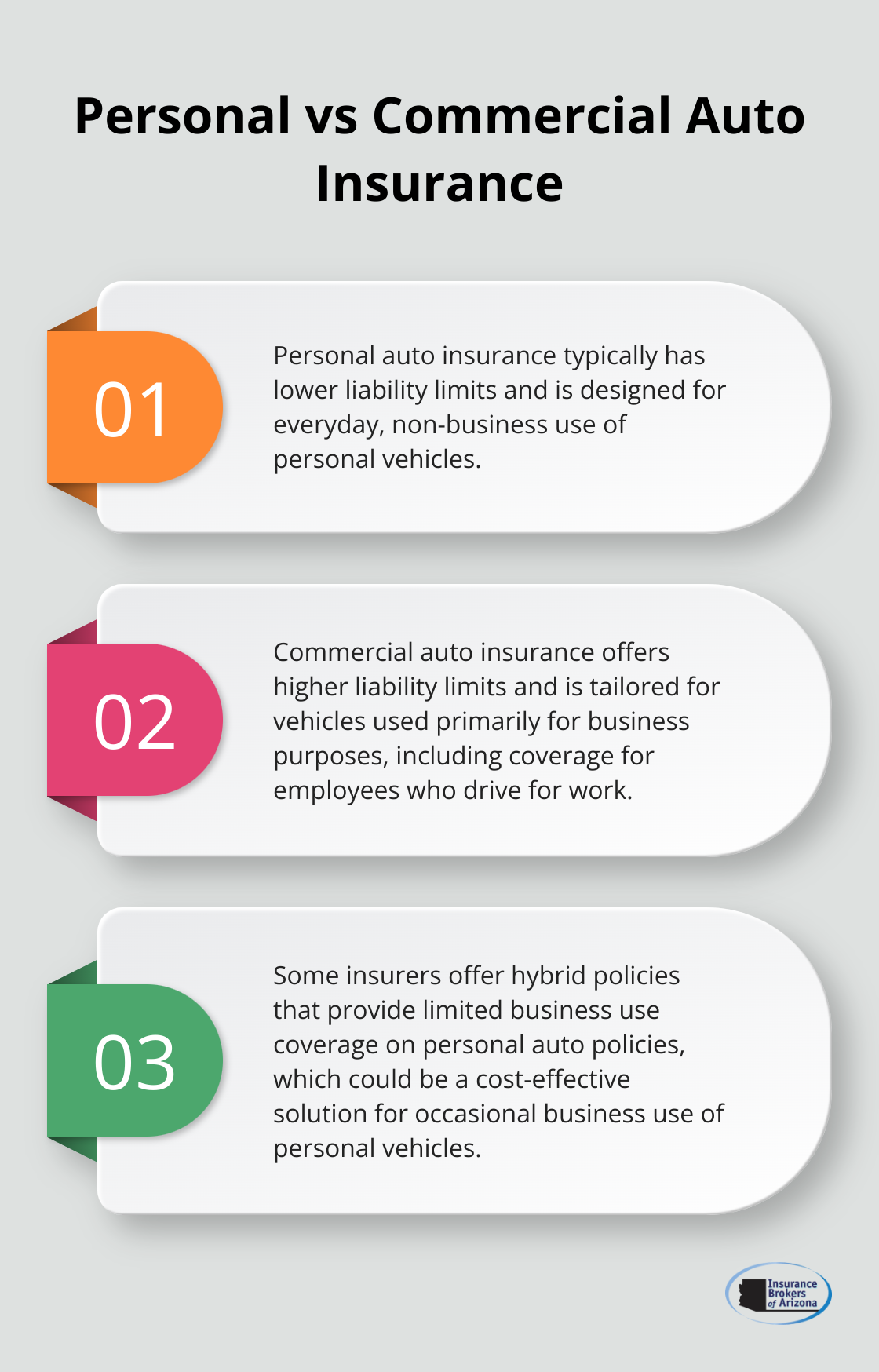
Commercial auto insurance offers broader coverage and higher liability limits than personal policies. A typical personal auto policy might provide liability coverage of $100,000 to $300,000, while commercial policies often start at $1 million. This increased protection is essential for businesses, as they face greater financial risks in the event of an accident.

The Insurance Information Institute reports that commercial vehicles have a higher likelihood of involvement in accidents due to increased time on the road. This higher risk exposure necessitates more comprehensive coverage, which drives up premiums.

Chart listing key factors that contribute to higher commercial auto insurance premiums compared to personal auto insurance

Additional Endorsements and Specialized Coverage

Commercial auto policies often include endorsements not typically found in personal policies. These may cover hired and non-owned vehicles, cargo, or specialized equipment. For example, a construction company might need coverage for tools and materials transported in their vehicles, while a catering business might require protection for refrigeration units.

These additional coverages reflect the diverse needs of businesses and contribute to the overall cost of commercial auto insurance. However, they also provide essential protection that can save businesses from significant financial losses.

Claims Process and Business Interruption

The claims process for commercial auto insurance differs from personal policies. Business claims often involve more complexity, with multiple parties, higher-value vehicles, or specialized equipment. Additionally, commercial policies may include coverage for business interruption, which compensates for lost income if a vehicle crucial to operations is out of commission due to an accident.

According to the National Association of Insurance Commissioners, the average commercial auto insurance claim significantly exceeds personal auto claims. This difference stems from factors such as more expensive vehicles, potential cargo loss, and the impact on business operations.

Risk Assessment and Pricing

Insurance companies assess risk differently for commercial and personal auto policies. Factors such as the type of business, vehicle usage patterns, and driver qualifications play a more significant role in commercial auto insurance pricing. This detailed risk assessment often results in higher premiums for commercial policies.

Flexibility and Customization

Commercial auto insurance policies offer more flexibility and customization options than personal policies. Businesses can tailor their coverage to specific needs, adding or removing endorsements as their operations change. This flexibility allows for more comprehensive protection but can also contribute to higher costs.

The stark differences between commercial and personal auto insurance highlight the importance of choosing the right coverage for your business needs. In the next section, we will explore strategies to reduce commercial auto insurance costs without compromising on essential protection.

How to Lower Commercial Auto Insurance Costs

Commercial auto insurance represents a significant expense for many businesses. However, several effective strategies can reduce costs without compromising essential coverage. This chapter explores proven methods to lower your premiums while maintaining adequate protection.

Prioritize Driver Safety

A comprehensive fleet safety program is one of the most effective ways to reduce insurance costs. The National Safety Council reports that companies which prioritize driver safety can reduce accident rates by up to 15%. This reduction directly translates to lower insurance premiums.

Chart showing the potential reduction in accident rates through prioritizing driver safety - how much more expensive is commercial auto insurance

To improve driver safety:

  1. Conduct regular driver training sessions that focus on defensive driving techniques and proper vehicle handling.
  2. Use telematics devices to monitor driver behavior and provide feedback. Many insurance companies offer discounts for businesses that effectively use these technologies.
  3. Implement a strict cell phone policy while driving. The National Highway Traffic Safety Administration reports that distracted driving causes thousands of accidents each year. A no-phone policy can significantly reduce your risk profile.

Optimize Your Coverage

A careful review of your policy ensures you’re not over-insured. While adequate coverage is important, paying for unnecessary extras can inflate your premiums. Work with your insurance agent to identify areas where you can adjust coverage without exposing your business to undue risk.

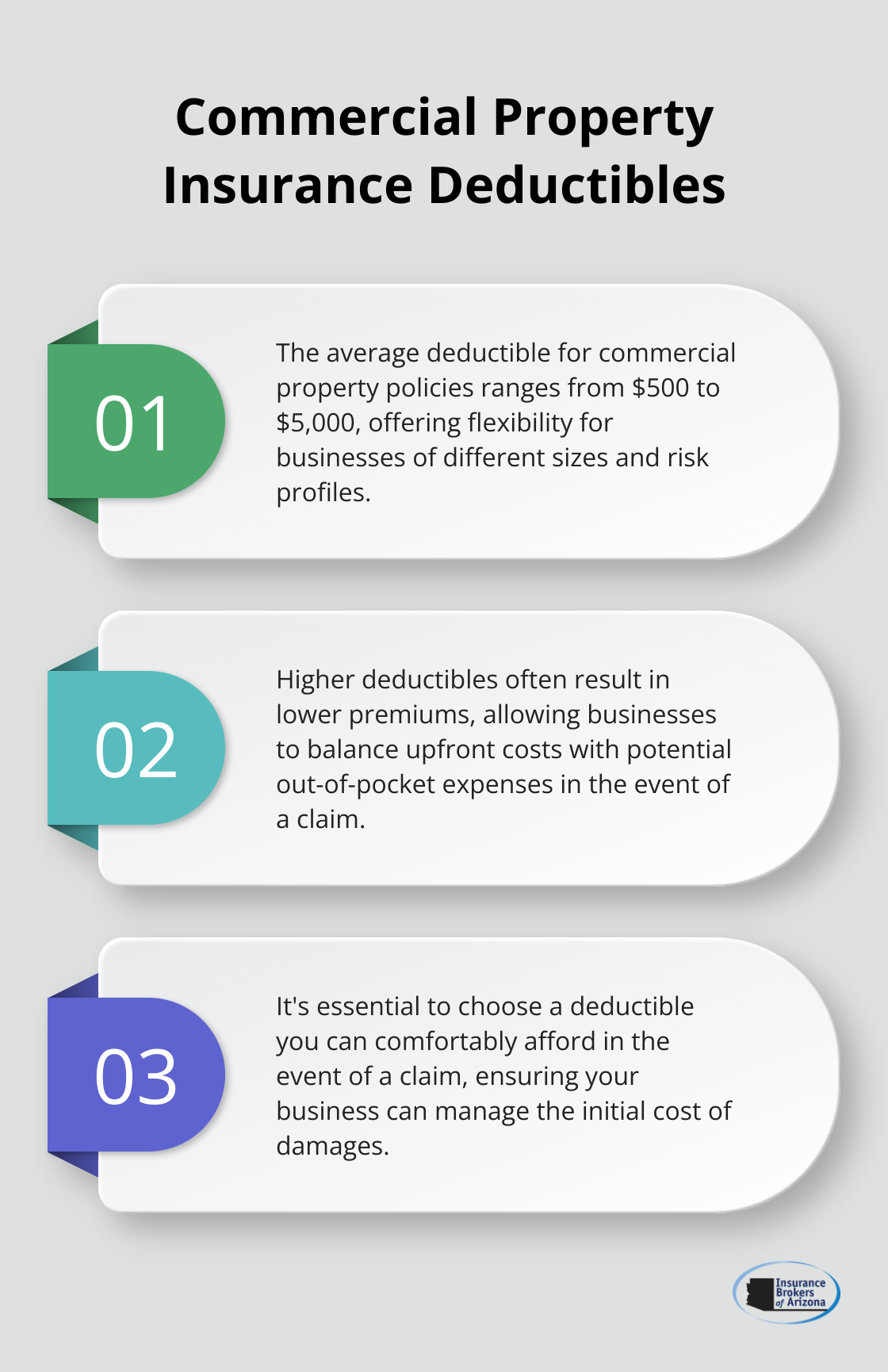
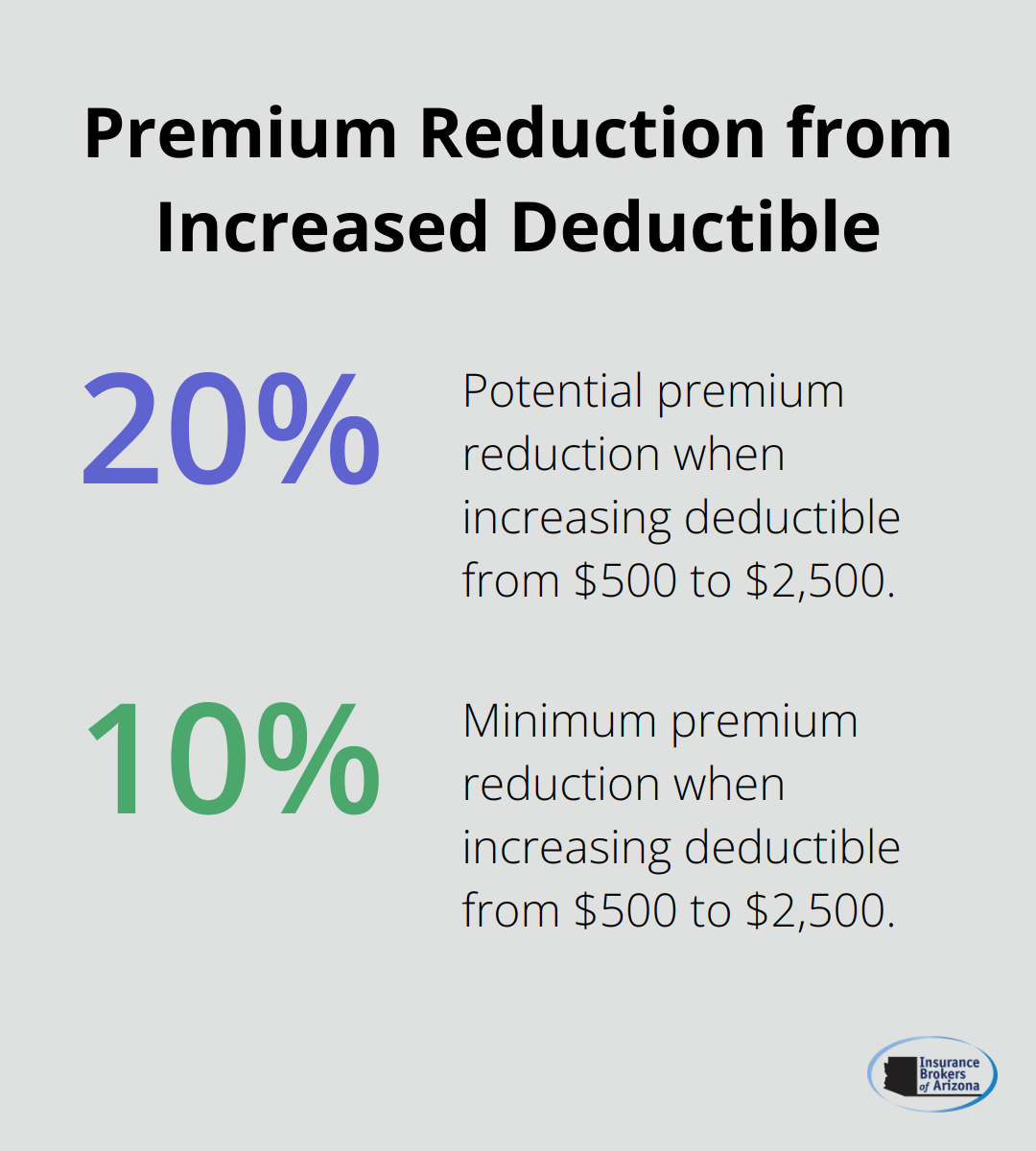
One strategy involves choosing higher deductibles. An increase in your deductible from $500 to $1,000 could potentially lower your premium by 10% to 20%. However, ensure your business can comfortably cover the higher out-of-pocket expense in case of a claim.

Leverage Policy Bundling

Many insurance providers offer discounts when you bundle multiple policies together. A combination of your commercial auto insurance with other business coverages (like general liability or property insurance) could save up to 15% on your total insurance costs.

Invest in Vehicle Maintenance

Regular vehicle maintenance not only extends the life of your fleet but also reduces the likelihood of accidents due to mechanical failures. The U.S. Department of Transportation estimates that about 12% of crashes involve vehicle-related factors.

To maintain your vehicles effectively:

  1. Implement a strict maintenance schedule for all your vehicles.
  2. Include regular oil changes, tire rotations, and brake inspections.
  3. Address any issues promptly.
  4. Keep detailed records of all maintenance activities (some insurance providers offer discounts for well-maintained fleets).

These strategies can significantly reduce your commercial auto insurance costs while maintaining robust coverage. The key is to work closely with your insurance provider to find the right balance between cost savings and adequate protection.

Final Thoughts

Commercial auto insurance costs more than personal coverage due to increased risks and higher liability limits. Businesses face greater financial exposure, which justifies the higher premiums. The question of how much more expensive commercial auto insurance is depends on various factors specific to each business.

Companies can reduce their insurance costs without sacrificing protection. Implementing safety programs, optimizing coverage, and maintaining vehicles regularly will help lower premiums. These strategies allow businesses to balance comprehensive coverage with affordable rates.

Insurance Brokers of Arizona® offers expert guidance to navigate commercial auto insurance complexities. Our team works with over 40 carriers to find competitive options tailored to your needs (ensuring the best protection for your business). We strive to secure optimal coverage at the most favorable rates for our clients.

Commercial property insurance coverage forms are the backbone of protecting your business assets. At Insurance Brokers of Arizona®, we understand that navigating these forms can be challenging for many business owners.

This guide will break down the different types of coverage forms, their key elements, and how to choose the right one for your company’s unique needs.

Four types of commercial property insurance forms: Basic Form, Broad Form, Special Form, and Difference in Conditions Form

Types of Commercial Property Insurance Forms

Commercial property insurance forms provide various levels of protection for business assets. Understanding these forms is essential for selecting the right coverage for your company’s needs.

Basic Form Coverage

Basic form coverage offers the most straightforward and limited type of commercial property insurance. It typically protects against common perils such as:

  • Fire
  • Lightning
  • Windstorm
  • Vandalism

While it’s the least expensive option, it may leave your business exposed to many risks. Basic form policies often exclude coverage for theft or water damage unless specifically added.

Broad Form Coverage

Broad form coverage expands on the basic form by including additional perils. This type of policy usually covers everything in the basic form plus risks like:

  • Falling objects
  • Weight of snow or ice
  • Accidental water damage

However, broad form policies still have exclusions. They might not cover damage from earthquakes or floods.

Special Form Coverage

Special form coverage (also known as all-risk coverage) offers the most comprehensive option available. Instead of listing covered perils, this form covers all risks except those specifically excluded in the policy. According to the Insurance Information Institute, special form policies are the most common type of commercial property insurance due to their extensive coverage.

Difference in Conditions Form

The Difference in Conditions (DIC) form fills gaps left by other policies. It’s particularly useful for businesses with unique risks or those located in areas prone to specific perils. For example, a company in California might use a DIC policy to cover earthquake damage (often excluded from standard policies).

Selecting the right commercial property insurance form requires consideration of your business’s specific risks, location, and budget. The cheapest option isn’t always the best in the long run. A thorough risk assessment with a knowledgeable insurance professional can help you make an informed decision that protects your business assets effectively.

As we move forward, let’s examine the key elements that make up these commercial property insurance coverage forms.

Understanding Commercial Property Insurance Forms

Commercial property insurance forms define the scope of your coverage. These documents contain several key elements that shape your policy’s protection. Let’s explore these components to help you make informed decisions about your business insurance.

Named Perils vs. Open Perils

The distinction between named perils and open perils forms the foundation of your policy. Named peril policies cover only specific risks listed in the policy. For instance, a policy might cover fire damage but not flood damage unless explicitly stated. Open peril policies cover all risks except those specifically excluded.

The National Association of Insurance Commissioners reports that open peril policies typically result in fewer claim denials. However, they often come with higher premiums. When choosing between the two, you should consider your business’s risk tolerance and budget.

Exclusions and Limitations

Every commercial property insurance form has exclusions and limitations. Common exclusions include wear and tear, nuclear hazards, and war. Some policies also exclude certain types of property (such as money and securities).

The Insurance Information Institute found that misunderstanding exclusions is a leading cause of claim denials. You should review your policy’s exclusions carefully with your insurance broker to avoid surprises when filing a claim.

Valuation Methods

Insurance companies use different methods to determine the value of your property in the event of a loss. The most common are:

  1. Replacement Cost Value (RCV): Pays to replace damaged property with new property of similar quality.
  2. Actual Cash Value (ACV): Pays the depreciated value of the property at the time of loss.
  3. Functional Replacement Cost: Pays to replace the property with less costly materials that serve the same purpose.

The Insurance Services Office reports that RCV policies typically cost about 10% more than ACV policies but provide more comprehensive coverage. When selecting a valuation method, you should consider the age and condition of your property, as well as your ability to cover potential gaps in coverage.

Three common valuation methods for commercial property insurance: Replacement Cost Value, Actual Cash Value, and Functional Replacement Cost - commercial property insurance coverage forms

Coinsurance Clauses

Coinsurance clauses require you to insure a minimum percentage of your property’s value, usually 80% to 90%. If you don’t meet this requirement, you may face penalties in the event of a partial loss.

For example, if your property is valued at $1,000,000 and your policy has an 80% coinsurance clause, you need to insure it for at least $800,000. If you only insure it for $600,000 and suffer a $100,000 loss, the insurance company may only pay $75,000 (less your deductible), leaving you to cover the remaining $25,000.

Understanding these key elements will help you navigate the complexities of commercial property insurance forms. The next section will guide you through the process of choosing the right coverage form for your business, taking into account your unique risks and requirements.

How to Select the Best Coverage Form

Evaluate Your Risk Profile

You must conduct a thorough risk assessment of your business. This involves identifying potential threats to your property and operations. A restaurant faces different risks than a retail store or a manufacturing plant. The Insurance Information Institute reports that 40% of businesses never reopen after a disaster, which underscores the importance of accurate risk assessment.

Consider factors such as:

  • Location (e.g., flood zones, high-crime areas)
  • Industry-specific hazards
  • Value of property and equipment
  • Business interruption potential

Understand Industry Requirements

Different industries often have specific insurance requirements. The construction industry typically requires broader coverage due to the high-risk nature of their work. The Associated General Contractors of America suggests that construction firms should consider special form coverage to protect against a wide range of potential losses.

Analyze Cost vs. Coverage

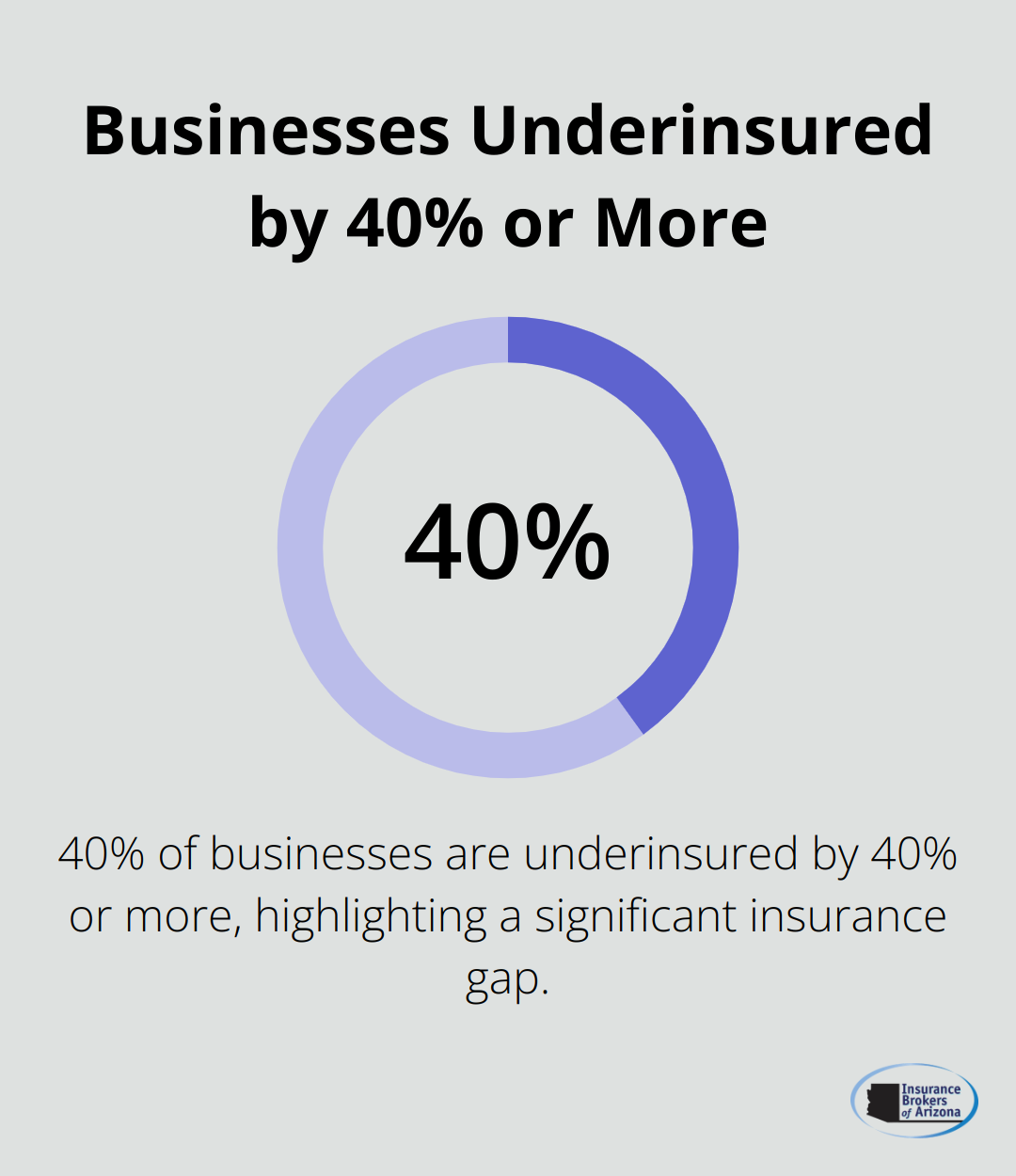
Don’t opt for the cheapest option, as this can become a costly mistake in the long run. The National Association of Insurance Commissioners found that businesses with inadequate coverage were 40% more likely to fail after a major loss event.

40% of businesses never reopen after a disaster - commercial property insurance coverage forms

Focus on value instead. Compare the cost of premiums against the potential financial impact of uncovered losses. A slightly higher premium for comprehensive coverage can save you millions in the event of a catastrophic loss.

Consult with Insurance Professionals

The complexities of commercial property insurance forms require expertise. Insurance professionals can:

  • Interpret policy language
  • Identify coverage gaps
  • Negotiate better terms with insurers
  • Provide industry-specific insights

The Independent Insurance Agents & Brokers of America reports that businesses working with independent agents are more likely to have adequate coverage and experience fewer claim denials.

Insurance Brokers of Arizona® offers access to over 40 reputable carriers, which allows them to find the best coverage options for your specific needs. Their team can provide valuable insights into selecting the right commercial property insurance coverage form for your business.

Final Thoughts

Commercial property insurance coverage forms provide the foundation for protecting business assets. These forms offer varying levels of protection, from Basic to Special, with each type addressing different risks and needs. Understanding the key elements of these forms, such as perils, exclusions, and valuation methods, will help you make informed decisions about your coverage.

Selecting the right coverage form requires a thorough evaluation of your risk profile and industry requirements. You must balance cost and coverage to ensure adequate protection for your business. Working with experienced insurance professionals can provide valuable insights and help you navigate the complexities of commercial property insurance.

At Insurance Brokers of Arizona®, we specialize in tailoring commercial property insurance to meet the unique needs of businesses across Arizona. Our team’s expertise ensures you understand your policy details, helping you make informed decisions about your business protection. Take the time to understand your options, assess your risks, and secure the protection your business deserves.

At Insurance Brokers of Arizona®, we often get questions about the differences between professional liability insurance and commercial general liability coverage.

These two types of insurance serve distinct purposes and protect businesses against different risks.

Understanding the nuances between professional liability insurance vs commercial general liability is essential for ensuring your business has the right protection.

In this post, we’ll break down the key features of each type of insurance and help you determine which one your business needs.

What Is Professional Liability Insurance?

Definition and Purpose

Professional liability insurance (also known as errors and omissions insurance) protects businesses that provide professional services or advice. This coverage shields against claims of negligence, mistakes, or failure to perform professional duties that cause financial losses for clients.

Who Needs This Coverage?

A broad spectrum of professionals requires this insurance:

  • Traditional professions: Doctors, lawyers, accountants, architects
  • Consultants and advisors
  • IT professionals
  • Real estate agents
  • Freelance writers

A 2023 American Bar Association survey revealed that 34% of law firms faced at least one malpractice claim in the previous year, highlighting the widespread need for this protection.

34% of law firms faced at least one malpractice claim in the previous year, according to a 2023 American Bar Association survey. - professional liability insurance vs commercial general liability

Key Components of Professional Liability Policies

These policies typically cover:

  • Legal defense costs
  • Settlements
  • Judgments arising from covered claims

Professional liability policies operate on a claims-made basis, which means they only cover incidents that occur and are reported while the policy is active.

The Importance of Retroactive Dates

The retroactive date in a professional liability policy determines how far back in time the policy will cover incidents. For example, a policy with a January 1, 2020 retroactive date will cover claims from incidents on or after that date (as long as the claim is made during the policy period).

Tailoring Coverage to Specific Needs

Professional liability needs vary significantly between industries (and even individual businesses within the same field). A software developer might need coverage for data breaches, while a financial advisor would require protection against claims of poor investment advice.

Understanding these nuances is essential to secure the right coverage for your business. Working with an experienced broker can help you assess your specific risks and tailor a policy accordingly.

As we move forward, let’s examine another critical form of business protection: Commercial General Liability Insurance.

What Is Commercial General Liability Insurance?

Definition and Scope

Commercial General Liability (CGL) insurance forms the foundation of business protection. It shields companies from financial losses due to third-party claims of bodily injury, property damage, and advertising injury.

Coverage Areas

CGL policies typically cover a wide range of incidents:

  1. Bodily Injury: A customer slips and falls in your store? CGL can cover medical expenses and potential legal costs.
  2. Property Damage: An employee accidentally damages a client’s equipment on a job site? CGL has you covered.
  3. Advertising Injury: This protects against claims of libel, slander, copyright infringement, and invasion of privacy in your advertising.

The Insurance Information Institute reports the average cost of a slip and fall claim at around $20,000 (a stark reminder of the importance of adequate CGL coverage).

Key facts about Commercial General Liability (CGL) insurance coverage, including the average cost of a slip and fall claim. - professional liability insurance vs commercial general liability

Who Needs CGL Insurance?

Almost every business benefits from CGL insurance. Retailers, contractors, manufacturers, and service providers all face risks that CGL mitigates. Even home-based businesses should consider this coverage (homeowners insurance often excludes business-related incidents).

A 2022 National Association of Insurance Commissioners survey found that 40% of small businesses will likely experience a property or liability loss within the next 10 years. This statistic underscores the widespread need for CGL protection across various industries.

40% of small businesses will likely experience a property or liability loss within the next 10 years, according to a 2022 National Association of Insurance Commissioners survey.

Policy Limitations

It’s important to note that CGL policies have limits. They don’t cover:

  • Employee injuries (that’s what workers’ compensation is for)
  • Damage to your own property
  • Professional errors or negligence (professional liability insurance covers this)

Understanding these limitations proves crucial for comprehensive risk management.

Tailoring Your Coverage

Every business has unique risks. A retailer faces different challenges than a construction company. That’s why it’s essential to work with an experienced insurance broker who can help you assess your specific risks and tailor a policy accordingly.

As we move forward, let’s examine the key differences between Professional Liability and Commercial General Liability Insurance to help you determine which type (or combination) best suits your business needs.

How Professional and Commercial General Liability Insurance Differ

Coverage Focus

Professional Liability insurance protects against financial losses from errors or omissions in professional services. For example, an accountant’s mistake on a client’s tax return would fall under Professional Liability coverage.

Commercial General Liability (CGL) insurance addresses physical injuries and property damage. It covers incidents like customer slip-and-falls or employee-caused damage to client property.

Policy Activation

These policies activate differently. Professional Liability uses a claims-made basis, covering only incidents that occur and are reported while the policy is active. This necessitates continuous coverage.

CGL policies typically operate on an occurrence basis. They cover incidents that happen during the policy period, regardless of when the claim is filed (providing long-term protection even after policy expiration).

Industry-Specific Considerations

Different industries face unique risks, influencing coverage needs. Software developers might prioritize Professional Liability to protect against coding errors leading to client financial losses. Restaurant owners would likely focus on CGL to cover potential slip-and-fall incidents or food-related illnesses.

The American Medical Association reports that 34% of physicians have faced lawsuits at least once in their careers (highlighting Professional Liability’s importance in high-risk professions). The National Safety Council estimates that falls in public places result in over 8 million emergency room visits annually (underscoring the need for robust CGL coverage in customer-facing businesses).

Policy Limits and Exclusions

Understanding policy exclusions is vital. Professional Liability won’t protect against bodily injury claims, while CGL doesn’t cover professional mistakes or negligence.

CGL policies often exclude coverage for certain high-risk activities or industries. Many CGL policies, for instance, exclude pollution-related incidents (a significant gap for some sectors).

Professional Liability policies may have retroactive dates, limiting coverage to incidents after a specific date. This makes careful review of policy terms essential when switching insurers.

Tailoring Coverage to Business Needs

The right combination of these policies provides comprehensive protection. Businesses should assess their specific risks and tailor coverage accordingly. Working with experienced insurance professionals (like those at Insurance Brokers of Arizona®) can help identify potential gaps and create a robust insurance strategy.

Final Thoughts

Professional liability insurance vs commercial general liability coverage serve distinct purposes in protecting businesses. Your specific business activities and risk exposure determine which policy, or combination of policies, you need. We recommend a thorough assessment of your business needs to identify potential vulnerabilities and ensure comprehensive protection.

An experienced insurance broker can provide valuable guidance in navigating these complex decisions. Insurance Brokers of Arizona® specializes in tailoring insurance solutions for businesses across various industries. Our team strives to offer comprehensive coverage at competitive rates.

Don’t leave your company’s future to chance. Invest in the right insurance coverage today to protect your business for years to come. Contact us to discuss your professional liability and commercial general liability insurance needs.