Commercial auto insurance rates can drain your business budget faster than you think. The average company spends $1,200 per vehicle annually on coverage.

We at Insurance Brokers of Arizona® see businesses overpaying by 30% or more because they don’t know the right strategies. Smart shopping and risk management can cut your premiums significantly.

What Drives Your Commercial Auto Insurance Rates

Your vehicle choices impact your premiums more than any other factor. Insurers charge construction companies with heavy trucks 40% more than consulting firms with passenger cars. The Insurance Information Institute reports that delivery vehicles face rates 25% higher than office commuter cars due to increased road exposure. Businesses save $800 annually per vehicle when they switch from cargo vans to standard sedans for sales teams.

Driver History Sets Your Base Rate

Clean records cut premiums by up to 35%, while accidents within three years increase costs by $1,200 per incident according to NAIC data. Companies with drivers under 25 pay 60% more due to higher accident rates in this age group (statistics show this demographic has triple the crash rate of experienced drivers). Motor vehicle record checks catch violations early – quarterly reviews work better than annual assessments. Businesses that hire only drivers with five-year clean records qualify for preferred rates that average 20% below standard rates.

Chart showing how clean driving records can reduce premiums by 35%, while having drivers under 25 increases premiums by 60% - commercial auto insurance rates

Coverage Choices Control Your Budget

Higher deductibles slash premiums dramatically. Companies that raise deductibles from $500 to $2,500 reduce costs by 25% on average. State minimum liability coverage costs $400 annually while $1 million limits reach $2,800 per vehicle. Location matters significantly – urban Arizona businesses pay 30% more than rural operations due to higher claim frequencies (Phoenix sees twice the accident rate of Flagstaff). Construction and transportation companies face the steepest rates, often double what professional service firms pay for identical coverage limits.

These rate factors work together to create your final premium, but smart businesses know how to manage each element strategically to reduce costs.

How to Cut Your Commercial Auto Insurance Costs

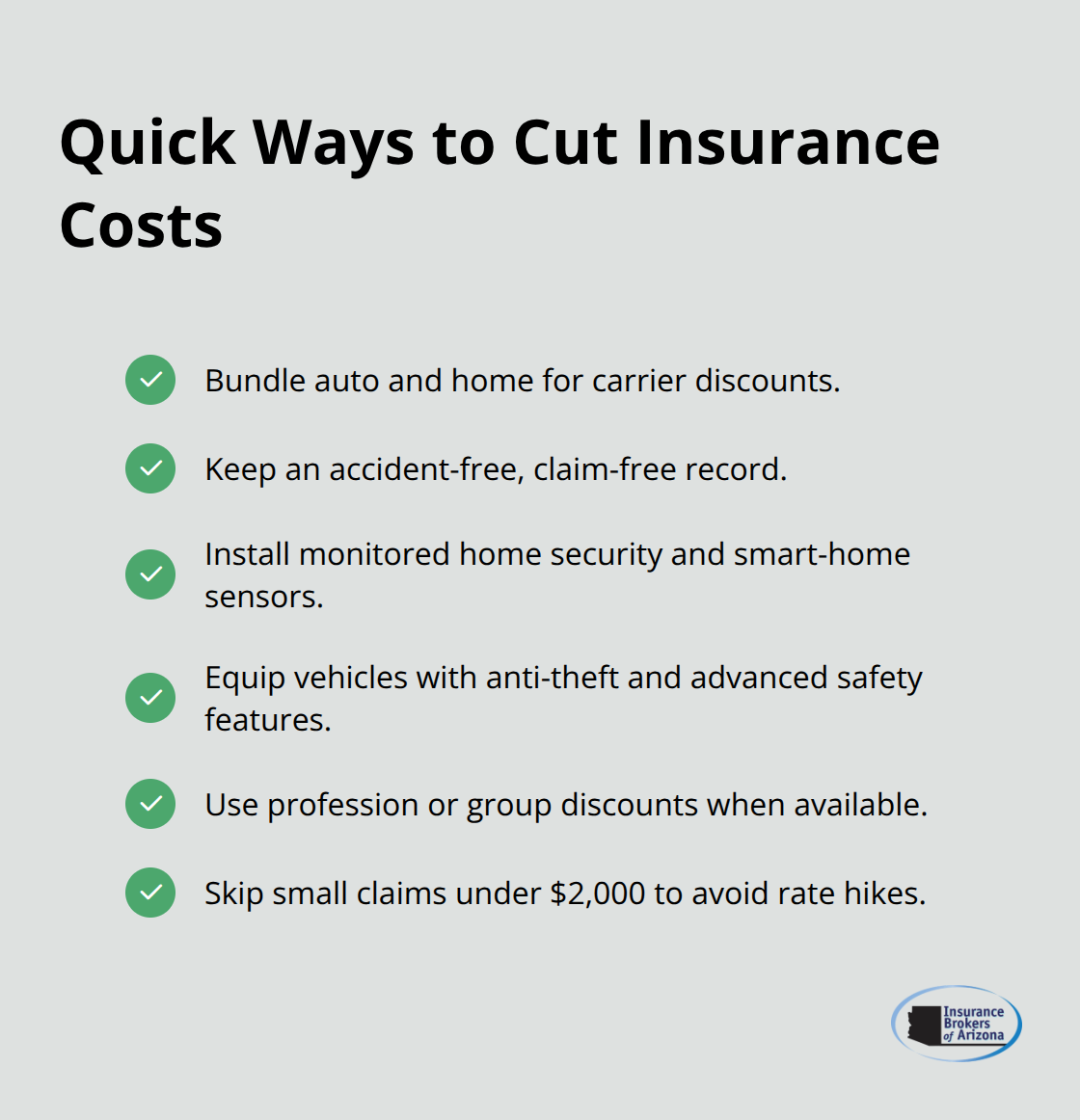
Driver safety programs deliver the fastest premium reductions available to businesses today. Companies that implement formal safety programs see accident rates drop by 40% within the first year, according to Federal Motor Carrier Safety Administration data. Monthly safety meetings cost $200 per driver annually but generate $1,500 in premium savings per vehicle. Quarterly motor vehicle record checks catch violations before renewal time – businesses that monitor drivers monthly pay 15% less than those who check annually. Training new hires for 40 hours reduces first-year accidents by 60% compared to standard orientation programs.

Hub and spoke chart showing the benefits of implementing formal safety programs for commercial auto insurance

Strategic Deductible Management Cuts Premiums Fast

Raising deductibles from $1,000 to $5,000 reduces premiums by 35% immediately. Companies with strong cash flow should consider $10,000 deductibles to save up to 50% on coverage costs. The National Association of Insurance Commissioners reports that businesses with fewer than two claims annually benefit most from higher deductibles. Self-insure minor incidents below $3,000 while you maintain higher deductibles for major losses to create optimal savings.

Fleet Technology Reduces Risk and Costs

Fleet tracking technology reduces accidents by 30% and qualifies businesses for usage-based insurance discounts that average 20% off standard rates. GPS systems with driver behavior monitoring cost $30 monthly per vehicle but generate $400 annual savings through safer driving habits (dash cameras provide accident evidence that speeds claims processing). These systems reduce fraudulent claims by 25% while giving insurers the data they need to offer better rates.

Policy Bundling Creates Compound Savings

Combining commercial auto with general liability and property insurance generates multi-policy discounts that average 12% across all coverage types. Businesses that consolidate five policies with one carrier save 18% more than single-policy purchasers. Annual policy reviews identify coverage gaps and eliminate redundant protection that wastes money. Companies that change carriers every three years maintain competitive rates while those who stay with the same insurer for five years pay 22% above market rates on average.

Smart cost reduction strategies work best when you combine them with effective shopping techniques that compare multiple carriers and coverage options.

How to Shop for Commercial Auto Insurance

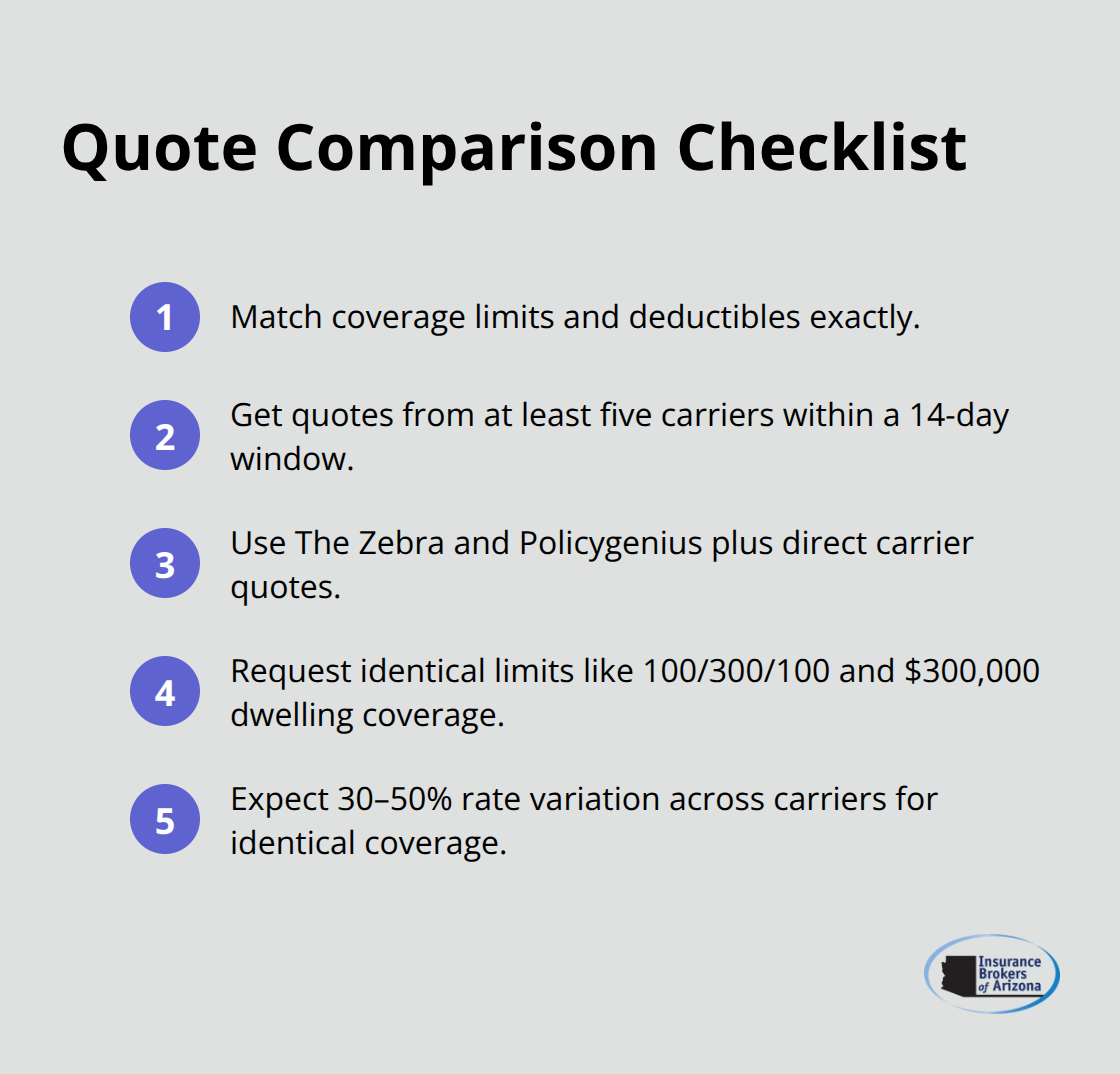
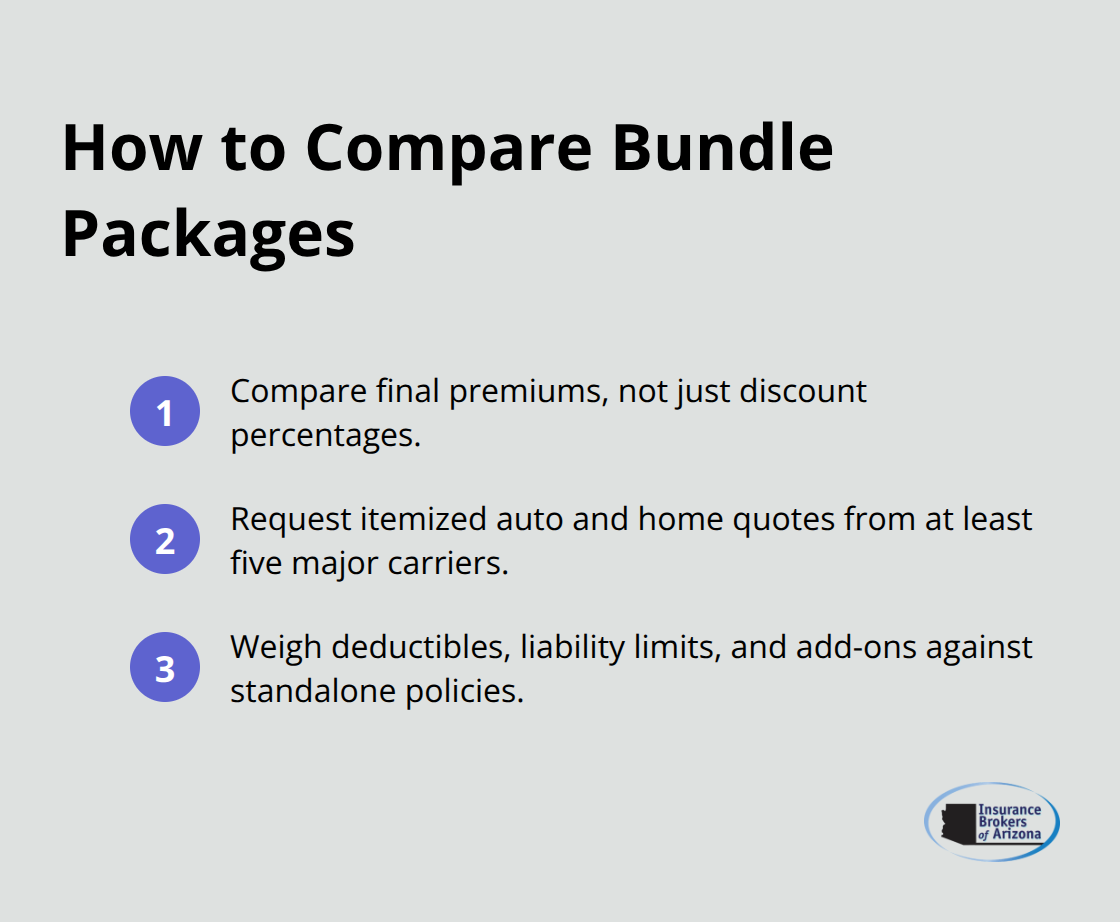
Quotes from at least five carriers reveal price differences of 40% or more for identical coverage, according to National Association of Insurance Commissioners data. Progressive charges construction companies $3,200 annually while State Farm quotes the same business $2,100 for equivalent limits. Request quotes within a 30-day window since rates change monthly based on claims data and market conditions. Submit identical information to each carrier – different details skew comparisons and waste time. The top three carriers by market share control 47% of commercial auto business, but regional insurers often beat their rates by 15% to 25% for local businesses.

Independent Brokers Access More Markets

Independent agents quote 15 to 20 carriers simultaneously while captive agents sell only one company’s products. Insurance Brokers of Arizona® works with over 40 carriers to find optimal rates that direct writers cannot match. Brokers negotiate better terms because they bring volume business to insurers – this leverage saves clients an average of 18% compared to direct purchases. Independent agents also handle claims advocacy, which saves businesses 60 hours annually in paperwork and follow-up calls. Choose brokers who specialize in commercial lines rather than personal insurance generalists since commercial coverage requires specific expertise.

Ordered list chart showing three key strategies for shopping commercial auto insurance effectively - commercial auto insurance rates

Policy Details Determine Real Value

Replacement cost coverage costs 30% more than actual cash value but pays full vehicle replacement without depreciation deductions. Commercial policies with hired and non-owned auto coverage protect against lawsuits when employees use personal vehicles for business – this $200 annual add-on prevents $500,000 exposures. Gap coverage eliminates loan balances that exceed vehicle values (this saves businesses from paying $15,000 deficits after total loss claims). Annual policy reviews catch coverage changes that affect rates – businesses that skip reviews pay outdated premiums that average 12% above current market rates.

Compare Coverage Terms Across Carriers

Different insurers offer varying policy terms that affect your total cost beyond the premium price. Some carriers include roadside assistance at no extra charge while others charge $150 annually for identical service. Deductible options vary significantly – one insurer might offer $500 minimums while another starts at $1,000 (this difference affects both premium costs and out-of-pocket expenses). Review each carrier’s claims process since some require pre-authorization for repairs while others allow direct payment to shops.

Final Thoughts

Commercial auto insurance rates drop significantly when you combine smart risk management with strategic shopping. Driver safety programs and higher deductibles reduce base premiums by 35% or more. Multi-policy discounts with one carrier add another 12% in savings across all coverage types.

Price differences of 40% between insurers make comparison shopping essential within a 30-day window. Regional carriers beat national companies by 15% to 25% for local businesses. Annual policy reviews prevent outdated premiums that average 12% above current market rates (companies that skip reviews miss opportunities to optimize coverage).

Professional guidance delivers optimal protection at competitive rates. Insurance Brokers of Arizona® provides access to multiple carriers and handles claims advocacy. Independent brokers save clients an average of 18% compared to direct purchases while reducing administrative burdens significantly.

Small business general liability insurance cost varies dramatically based on your industry, company size, and coverage needs. Most businesses pay between $400 and $1,500 annually, but high-risk industries can face premiums exceeding $3,000.

We at Insurance Brokers of Arizona® help business owners navigate these costs daily. Understanding the key factors that drive pricing helps you budget effectively and find the right protection for your company.

What Drives Your Liability Insurance Costs

Your liability insurance premium depends on three primary factors that insurers evaluate when they calculate risk. Construction companies face the highest costs and pay an average of $413 monthly according to The Hartford, while business consultants pay just $86 monthly. This massive difference reflects the stark reality that insurers price policies based on actual claim data and loss history within each industry.

Hub and spoke chart showing the three main factors that influence liability insurance costs: Industry Risk Classification, Revenue and Employee Count, and Coverage Limits

Industry Risk Classification Sets Base Rates

Insurers use specific classification codes to categorize your business and assign risk levels. Restaurants average $413 monthly due to slip-and-fall incidents and food poisoning claims, while IT consultants pay significantly less because they rarely face bodily injury lawsuits. Manufacturing businesses pay premium rates because machinery accidents and product liability claims cost insurers an average of $75,000 per business liability claim. Your industry classification locks in your base rate before other factors come into play.

Revenue and Employee Count Drive Premium Calculations

Businesses that earn over $1 million annually pay substantially more than smaller operations because higher revenue correlates with greater liability exposure. Companies with larger payrolls face increased premiums since more employees mean higher accident probability. Workers’ compensation costs average $86 monthly for businesses with under $300,000 in payroll but escalate rapidly as employee counts rise. Insurers view revenue and staff size as direct indicators of potential claim severity and frequency.

Coverage Limits Create Your Premium Range

Most Insureon customers select $1 million per occurrence and $2 million aggregate limits (which represents the industry standard for adequate protection). Higher limits like $2 million per occurrence can double your premium, while lower limits save money but create dangerous gaps in coverage. The average $500 deductible that most businesses choose balances affordable premiums with manageable out-of-pocket costs when claims occur.

These three factors work together to create your final premium quote, but smart business owners can take specific steps to reduce these costs without sacrificing protection.

What Do Different Business Types Actually Pay?

Professional service businesses like consultants and accountants pay the lowest liability insurance premiums in the market. Business consultants average just $86 monthly according to The Hartford data, while professional liability insurance costs around $62 monthly for most service providers. These businesses benefit from low physical risk exposure since they work primarily with information rather than equipment or products that could cause bodily injury.

Ordered list chart showing monthly general liability insurance costs for different business types, from lowest to highest - small business general liability insurance cost

Professional Services Enjoy the Lowest Rates

IT consultants and financial advisors typically fall into this favorable category because their work environments pose minimal slip-and-fall risks. Accounting firms and legal practices also qualify for these reduced rates since they rarely handle hazardous materials or operate dangerous equipment. Professional liability coverage protects these businesses from errors and omissions claims (which average $61 monthly across all professional services).

Retail Operations Face Moderate Premium Costs

Retail businesses occupy the middle ground with general liability premiums that average $68 monthly. Slip-and-fall incidents in retail stores generate average claims between $30,000 and $50,000, which explains why even low-risk retail operations pay substantially more than office-based businesses. Clothing stores, electronics retailers, and similar businesses face consistent customer foot traffic that creates ongoing liability exposure.

Food Service Commands Higher Premium Rates

Restaurants pay significantly more at $413 monthly due to constant customer interaction and food safety risks. Food service establishments face elevated premiums because food poisoning lawsuits and kitchen accidents create severe liability exposure that insurers price aggressively. Fast-food chains and fine restaurants both face similar rate structures since both handle food preparation and serve the public daily.

Construction and Manufacturing Pay Premium Rates

Manufacturing businesses pay the steepest liability insurance costs because machinery accidents and product defects generate claims that average nearly $75,000 per incident. Construction companies face similar premium pressure with monthly costs often exceeding $400 due to workplace injury frequency and property damage potential. These industries cannot escape their high-risk classification regardless of safety measures because historical claim data shows consistent loss patterns.

Smart business owners in all categories can take specific steps to reduce these baseline costs through strategic risk management and policy selection.

How Can You Lower Your Premium Costs

Smart business owners reduce liability insurance premiums through three proven strategies that directly impact their rates. Safety programs cut premiums by 5-15% because insurers reward businesses that actively prevent claims through employee training and hazard reduction protocols.

Checkmark list chart showing three key strategies to reduce liability insurance premium costs - small business general liability insurance cost

Implement Comprehensive Safety Programs

Manufacturing companies that implement comprehensive safety training see the biggest premium reductions since their baseline rates start highest. Construction firms that document safety meetings and maintain clean job sites qualify for preferred rates that can save thousands annually. Restaurant owners who train staff on proper lifting techniques and floor maintenance reduce slip-and-fall incidents that cost insurers between $30,000 and $50,000 per claim.

Bundle Policies for Immediate Savings

Bundled general liability with commercial property insurance creates a Business Owner’s Policy that averages $57 monthly compared to separate policies. The Hartford data shows bundled coverage costs significantly less than individual policies while it provides comprehensive protection. Businesses that add cyber insurance to their bundle save additional money since insurers prefer customers who buy multiple products. Commercial umbrella coverage costs just $75 monthly when bundled but provides an extra $1 million in protection above your base limits.

Work with Experienced Brokers for Better Rates

Independent insurance brokers access wholesale markets that direct-buy customers never see, often finding rates 15-25% below retail prices. Brokers compare quotes from multiple insurers simultaneously while direct customers must shop each company individually. Experienced brokers know which carriers offer the best rates for specific industries and can place high-risk businesses with specialty insurers that standard companies reject. Professional brokers also negotiate payment terms and help structure policies to minimize gaps while they keep costs reasonable for businesses (with partnerships spanning over 40 carriers providing competitive options).

Final Thoughts

Small business general liability insurance cost varies dramatically based on your industry risk level, company size, and coverage limits. Professional services pay as little as $86 monthly while restaurants and construction companies face premiums that exceed $400 monthly due to higher claim frequencies. Manufacturing businesses pay premium rates because machinery accidents average $75,000 per claim, while retail operations fall in the middle range at $68 monthly.

Adequate coverage protects your business from financial devastation when lawsuits occur. Even frivolous claims generate substantial legal defense costs that can bankrupt uninsured businesses. The industry standard $1 million per occurrence and $2 million aggregate limits provide solid protection for most operations (with 91% of businesses choosing these limits according to Insureon data).

We at Insurance Brokers of Arizona® help Arizona businesses find competitive rates through our partnerships with reputable carriers. Our team compares quotes from multiple insurers to match your specific risk profile with the best available rates. Document your business operations, employee count, and revenue to get accurate quotes that reflect your actual risk exposure.

Small business owners frequently ask: how much is general liability insurance for small business? The answer varies dramatically based on your industry, company size, and coverage needs.

We at Insurance Brokers of Arizona® see premiums ranging from $400 to $3,000 annually for most small businesses. Understanding the key cost factors helps you budget effectively and find the right protection for your company.

Factors That Affect General Liability Insurance Costs

Industry Type Creates the Largest Premium Differences

Your industry determines your general liability premiums more than any other factor. Construction companies pay an average of $2,408 annually according to Insureon data, while accounting firms typically pay just $675. Healthcare providers and restaurants face higher premiums due to frequent slip-and-fall claims and professional errors.

Manufacturing businesses with heavy machinery see elevated rates because equipment accidents create expensive bodily injury claims. Professional services like consultants average $780 per year, which reflects their lower physical risk profile. High-risk industries pay substantially more because insurers expect more frequent and costly claims.

Business Size and Annual Revenue

Insurance carriers calculate premiums based on your annual revenue because higher sales volumes correlate with increased claim exposure. Companies that earn under $300,000 annually pay significantly less than those that generate $1 million or more. Insureon research shows businesses with revenues between $500,000 and $1 million face premiums 40-60% higher than smaller operations.

Employee count amplifies this effect – each additional worker increases your liability exposure and premium costs accordingly. More employees mean greater chances of workplace accidents and customer interactions that could lead to claims.

Chart showing how business size affects general liability insurance premiums, with larger businesses paying 40-60% higher premiums

Coverage Limits and Deductible Choices

Standard $1 million per occurrence and $2 million aggregate limits cost around $500-800 annually for most small businesses. When you double these limits to $2 million per occurrence, premiums typically increase by 25-35%. Your deductible choice significantly affects costs – a $2,500 deductible instead of $500 can reduce premiums by 15-20%.

Higher deductibles mean more out-of-pocket expenses when claims occur, so you must balance upfront savings against potential future costs. Most small businesses (according to Insureon data) select $500 deductibles to keep claim costs manageable.

These cost factors work together to create your unique premium rate, but smart business owners can take specific steps to reduce their insurance expenses.

Average General Liability Insurance Costs by Business Type

Professional Services Pay the Lowest Premiums

Professional services and consultants pay the lowest general liability premiums among all business categories. Accounting firms average $675 annually according to Insureon data, while business consultants pay around $780 per year. These low rates reflect minimal physical risks – most claims involve minor property damage or personal injury during client visits.

Technology consultants and marketing firms typically fall within this $600-900 range because their work environments pose limited liability exposure. Law firms and financial advisors also benefit from these reduced rates since their operations rarely involve physical hazards that lead to expensive claims.

Retail Businesses Face Moderate Premium Costs

Retail businesses encounter higher premiums due to constant customer traffic and slip-and-fall risks. Small retail stores pay approximately $1,200-1,800 annually for general liability coverage. Clothing stores and gift shops typically pay less than electronics retailers because expensive merchandise creates higher property damage exposure.

Grocery stores and pharmacies fall into the middle range at $1,400-2,000 annually. These businesses handle more foot traffic than specialty retailers but maintain safer environments than restaurants or bars.

Restaurants Represent High-Risk Retail Operations

Restaurants represent the highest-risk retail category, with average premiums that reach $2,408 per year according to industry data. Food service businesses face frequent slip-and-fall claims, foodborne illness lawsuits, and burns from hot equipment. Fast-casual restaurants typically pay less than full-service establishments because they have fewer servers and simpler operations.

Bars and nightclubs pay even higher premiums (often $3,000-4,500 annually) due to alcohol-related incidents and late-night operations that increase liability exposure.

Ordered list of average annual general liability insurance premiums for different business types, from lowest to highest - how much is general liability insurance for small business

Construction Companies Pay the Highest Rates

Construction and trade contractors face the steepest general liability costs in any industry. General contractors average $2,400-3,500 annually, while specialized trades like plumbers or electricians range from $1,800-2,800. These elevated rates stem from constant injury risks, expensive equipment damage, and potential structural problems that create massive liability exposure.

Roofing contractors pay even higher premiums because falls from heights generate severe injury claims that can exceed $500,000. These significant cost differences highlight why contractors must implement comprehensive safety programs to control their insurance expenses.

Ways to Reduce General Liability Insurance Premiums

Safety Programs Deliver Immediate Premium Reductions

Insurance carriers offer substantial discounts to businesses that implement documented safety programs. Restaurants that install slip-resistant floors and train staff on spill response protocols can reduce premiums by 10-15% according to industry data. Construction companies with OSHA-compliant safety programs and regular toolbox talks often receive 20-25% discounts from carriers like The Hartford and Liberty Mutual.

Workers’ compensation claims directly impact general liability rates because injured employees sometimes file additional liability claims. Manufacturing businesses that reduce their workers’ comp claims by 50% through safety measures typically see general liability premiums drop by 15-20% within two years. Document all safety initiatives with photos, records, and incident reports – insurers require proof of active risk management to approve discounts.

Bundle Policies for Maximum Savings

Business Owner’s Policies that combine general liability with commercial property insurance cost around $684 annually according to Insureon data – significantly less than separate policy purchases. This approach saves most small businesses 20-30% compared to individual policy purchases. Professional liability insurance bundled with general liability creates additional savings of 10-15% for consultants and service providers.

Commercial auto insurance bundled with general liability generates even larger discounts for businesses with vehicles. Insureon research shows that businesses that purchase three or more policies from the same carrier receive average savings of 25% on their total premiums. Pay annual premiums upfront instead of monthly payments to avoid fees that add 8-12% to your total costs.

Aggressive Quote Comparison Cuts Costs

General liability premiums vary by 40-60% between carriers for identical coverage according to industry studies. Businesses pay $1,200 with one insurer and $750 with another for the same $1 million limits. Request quotes from at least five carriers because regional insurers often beat national companies on rates for specific industries. Independent agents who represent multiple carriers can streamline this comparison process and identify the lowest rates quickly.

Newer insurance companies like Next Insurance and Thimble often offer 20-30% lower rates than established carriers to gain market share. However, financial stability ratings matter – stick with carriers rated A- or better by A.M. Best to avoid payment delays during claims.

Hub and spoke chart showing three main strategies to reduce general liability insurance premiums - how much is general liability insurance for small business

Final Thoughts

General liability insurance costs for small businesses range from $400 to $3,000 annually, with industry type creating the largest premium differences. Professional services pay around $675-780 per year, while construction companies face costs of $2,400 or more. Your business size, revenue, coverage limits, and claims history all influence final premiums.

The question “how much is general liability insurance for small business” depends on these specific factors that work together. Safety programs, policy bundling, and aggressive quote comparison can reduce costs by 20-40%. Premium variations of 40-60% between carriers make professional guidance valuable for most business owners.

We at Insurance Brokers of Arizona® help businesses across all industries secure competitive rates through our network of reputable carriers. Start by collecting your business information including annual revenue, employee count, and prior claims history (if any). Request quotes from multiple carriers or contact an experienced broker who can streamline the comparison process and negotiate better rates on your behalf.