
Arizona Auto Insurance: Tips for Smart Shopping

Arizona auto insurance rates vary wildly depending on where you live, what you drive, and your history on the road. Most drivers overpay because they don’t understand what coverage they actually need or what discounts they qualify for.
At Insurance Brokers of Arizona®, we’ve helped thousands of people cut their premiums by shopping smarter. This guide walks you through the exact steps to find better rates and the right protection for your situation.
What Arizona Actually Requires You to Carry
Arizona law mandates minimum liability coverage of $25,000 per person for bodily injury, $50,000 per accident for bodily injury, and $15,000 for property damage. These minimums are low compared to what most financial advisors recommend, and that’s the first problem you’ll face as a smart shopper. The state operates as an at-fault system, meaning whoever causes the accident pays for the damage. If you cause a crash and someone sues you for injuries exceeding your $25,000 per-person limit, your personal assets become vulnerable. Drivers regularly underestimate this risk. A serious accident with multiple injured parties can easily generate $100,000 or more in claims, leaving you personally liable for anything above your policy limits.
Why Minimum Coverage Leaves You Exposed
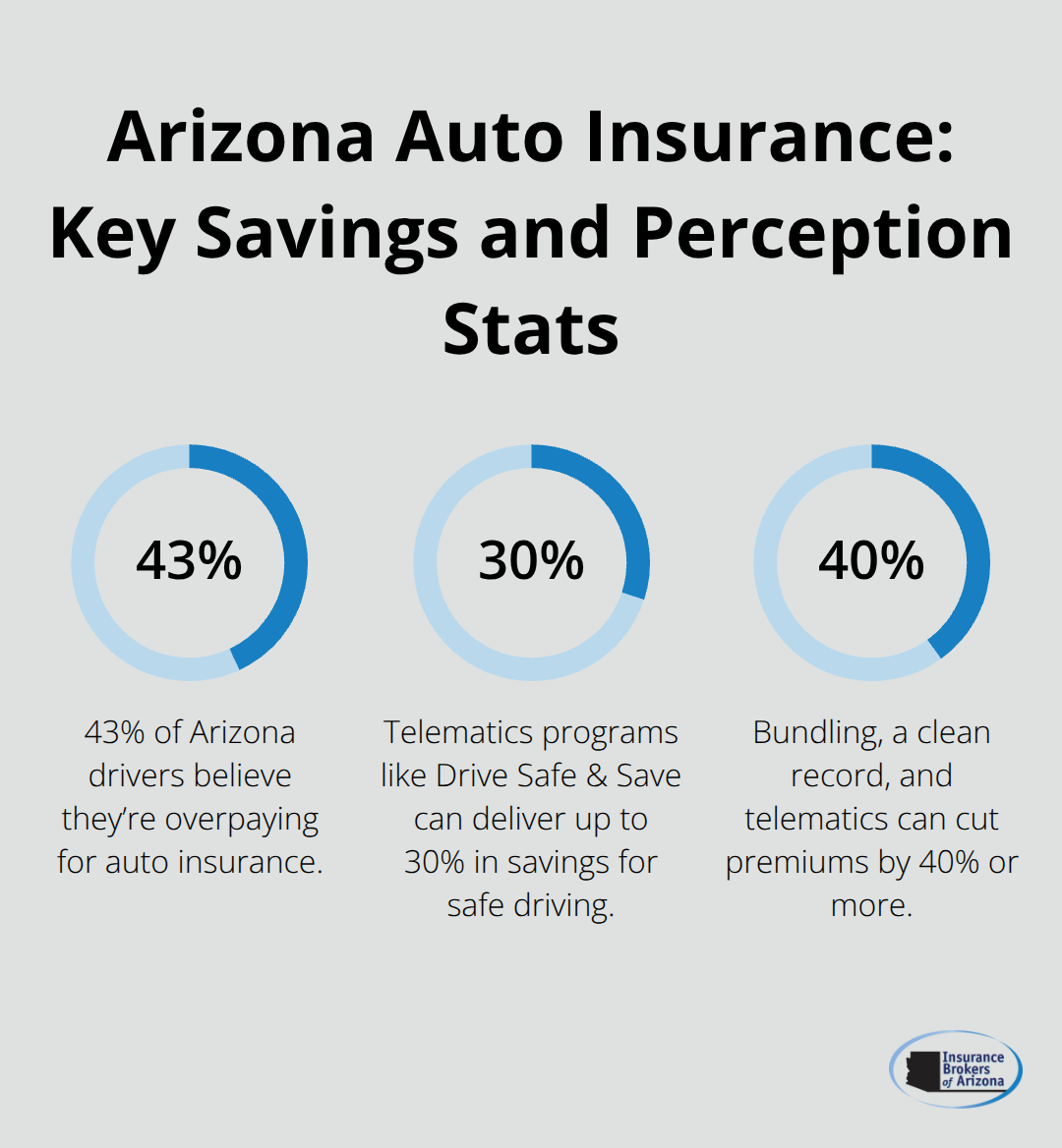
Arizona’s minimums protect the other driver, not you. Your own vehicle damage, medical bills, and lost wages are not covered under liability alone. If someone hits you and their insurance is minimal or nonexistent, you absorb the cost unless you carry uninsured motorist coverage with limits of at least $25,000 per person and $50,000 per accident. About 43% of Arizona drivers think they’re paying too much for insurance, which often leads them to choose minimum coverage and skip optional protections. This false economy backfires when a single accident creates tens of thousands in out-of-pocket expenses.
Collision and comprehensive coverage protect your own vehicle, and if you’re financing or leasing a car, your lender requires both. Even if you own your car outright, skipping these coverages on anything newer than seven years old is financially reckless given Arizona’s high rate of windshield damage from rocks and debris.
The Real Cost of Driving Uninsured
Arizona penalizes uninsured drivers aggressively. A first offense costs $500 in fines plus a three-month license and registration suspension. A second offense jumps to $750 with a six-month suspension, and a third offense reaches $1,000 with a full year of suspension. Beyond fines and license loss, Arizona requires an SR-22 certificate for about two years after any uninsured violation, which proves to the state you maintain required coverage. This certificate raises your premiums significantly during that period, sometimes adding hundreds annually. Getting caught driving uninsured costs far more than simply buying a policy. If you face a temporary budget crunch, contact an agent about short-term options rather than canceling outright.
How Arizona’s At-Fault System Affects Your Wallet
Arizona’s at-fault liability system means the driver responsible for an accident pays for damages through their insurance. This structure creates a direct link between your driving record and your premiums. One at-fault accident can increase your rates substantially for three to five years. If you cause an accident and lack sufficient coverage, you personally cover the gap between your policy limits and the actual damages. Uninsured motorist coverage (with $25,000/$50,000 limits) protects you when the other driver lacks adequate insurance or flees the scene. This optional coverage is not a luxury in Arizona-it’s a practical necessity given the number of uninsured drivers on the road.
What You Need Beyond the Minimum
Smart shoppers in Arizona try higher liability limits ($50,000 per person or more) to match their assets and driving frequency. If you own a home or have significant savings, your liability exposure justifies increased limits. Collision coverage pays for damage to your vehicle in an accident you cause or when hit by an uninsured driver. Comprehensive coverage handles theft, weather, vandalism, and glass damage-particularly important in Arizona where windshield claims are frequent. Medical payments coverage (or Personal Injury Protection where available) covers your own medical expenses regardless of fault, which fills a gap that liability alone cannot address. These layers of protection transform your policy from a legal minimum into genuine financial security.
How to Shop Smart and Cut Your Premium
Match Coverage Across Every Quote You Collect
Getting multiple quotes is the only reliable way to find better rates in Arizona. When you compare quotes, you must match identical coverage types and limits across every carrier-this means the same liability limits, deductible amounts, and optional coverages like uninsured motorist protection. A quote from GEICO at $25,000/$50,000/$15,000 liability with a $500 deductible on collision is not comparable to a State Farm quote at $50,000/$100,000/$25,000 with a $1,000 deductible. Collect at least three quotes, and if you’re serious about finding the best deal, collect six. Arizona drivers pay an average of $65 per month for minimum liability coverage and $169 per month for full coverage as of April 2026, but these averages mask enormous regional variation.
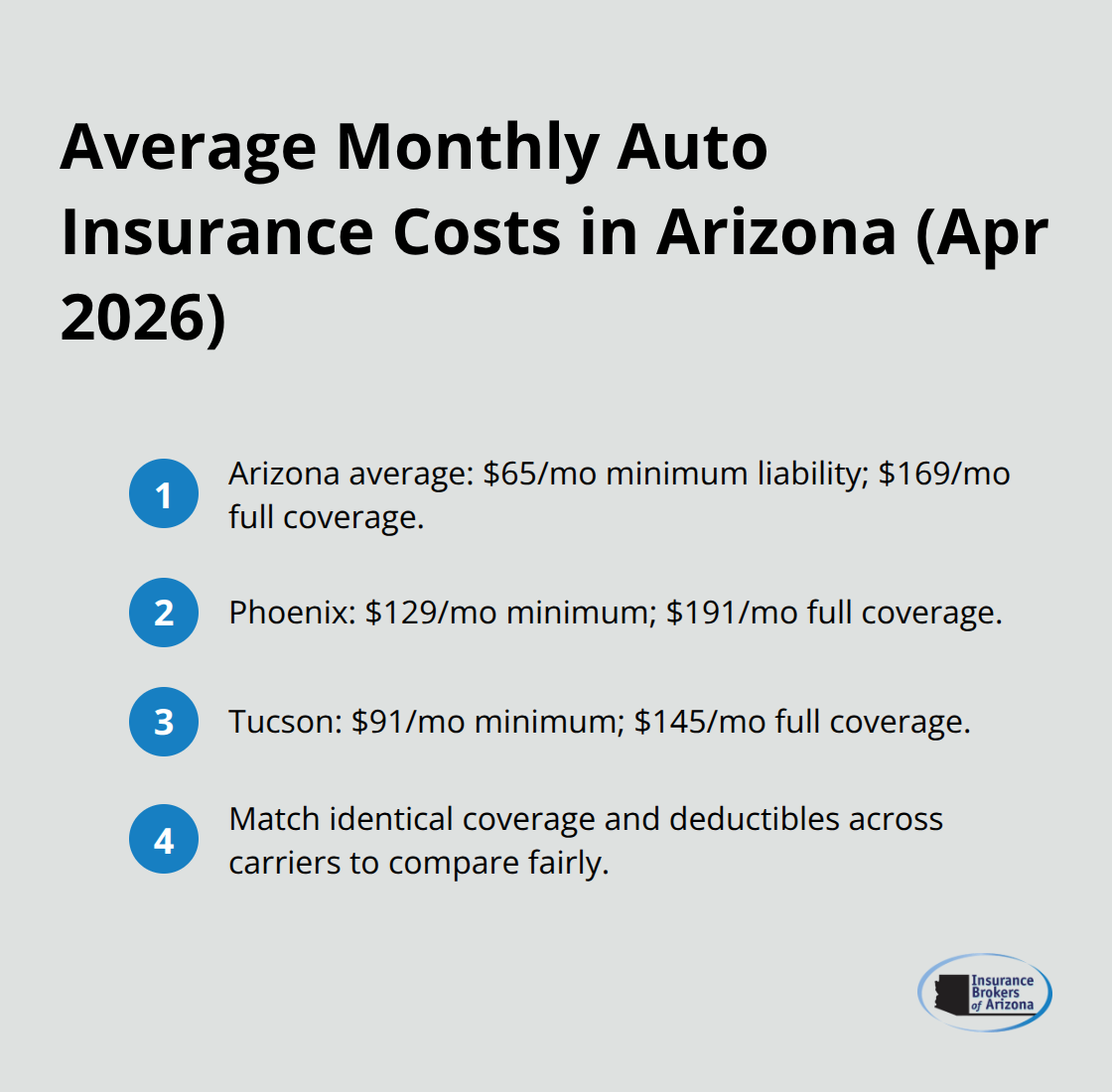
Phoenix drivers typically pay $129 monthly for minimum and $191 for full coverage, while Tucson drivers pay $91 and $145 respectively. A Phoenix driver could save $50 per month simply through a carrier switch, and that same driver might save another $30 per month through relocation to Tucson. The difference between the cheapest and most expensive quotes for identical coverage routinely exceeds $40 per month in major Arizona cities. About 50% of drivers are shopping for new auto insurance due to rising rates, which means carriers are competing harder than ever for your business. Do not settle for the first quote you receive.
Focus on Total Cost, Not Individual Discounts
When you compare, focus on the total cost after all discounts, not on the size of any single discount advertised. A carrier offering a 15% bundling discount might still cost more than a competitor offering 10% because their base rate is lower. Discounts are where most drivers leave money on the table. Common Arizona discounts include safe driver discounts (for drivers without recent claims or violations), bundling your auto policy with home or renters insurance, insuring multiple vehicles with the same carrier, and good student discounts if you’re under 25 with a B average or better.
Some carriers offer telematics-based programs like Drive Safe and Save, which can deliver up to 30% in savings for safe driving habits, though these programs vary by insurer and state. A few carriers offer zero-deductible glass coverage, which matters in Arizona where windshield damage from rocks is common-Auto Owners and The Hartford are frequently cited for this option, though availability varies by policy and state. Combining multiple discount types compounds your savings. A driver who bundles auto with home insurance, maintains a clean driving record, and enrolls in a telematics program might reduce their premium by 40% or more compared to a driver with no discounts.
Leverage Credit History and Annual Reviews
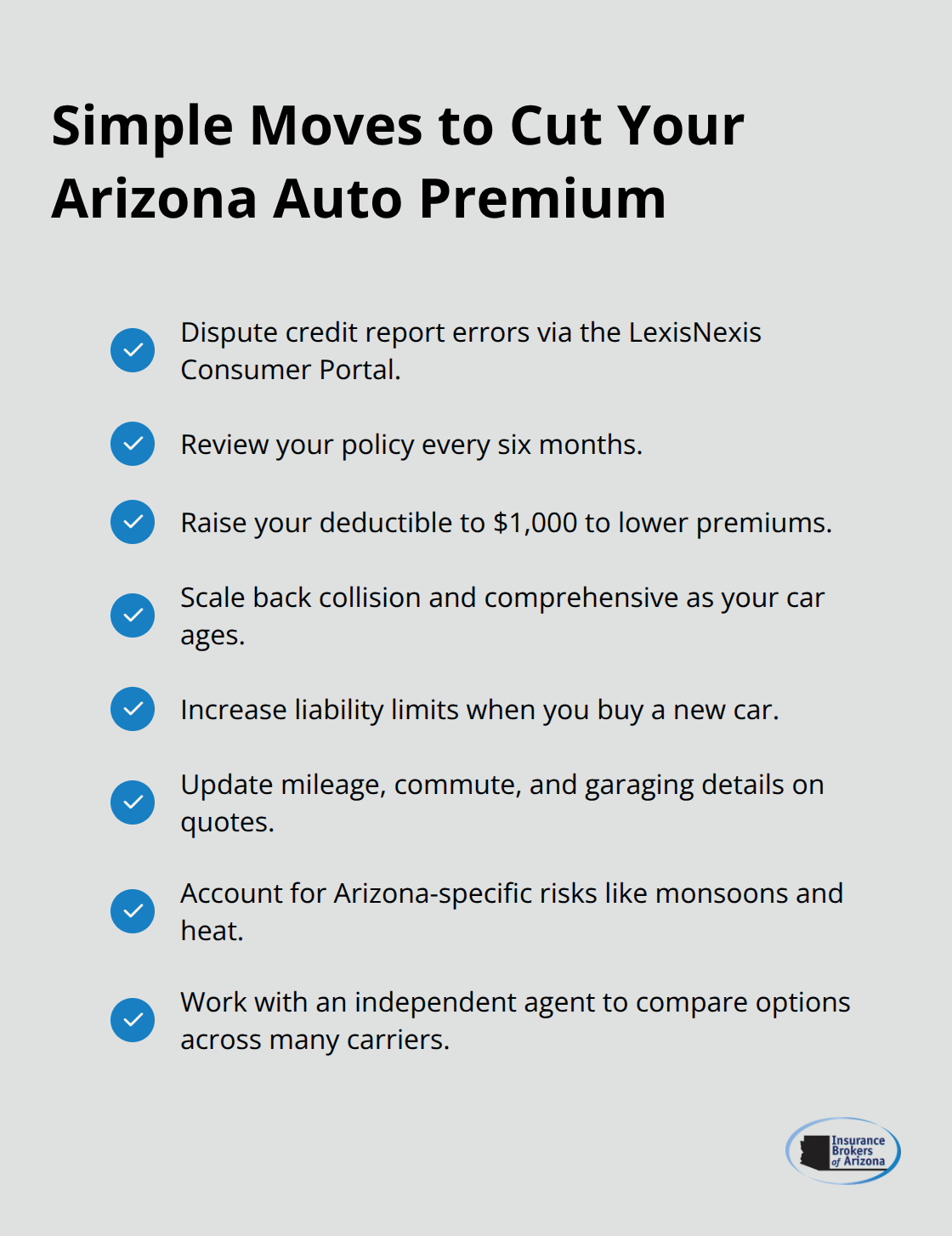
Your credit history can affect rates in Arizona, as many insurers use credit-based insurance scores in their pricing models. If your credit report contains errors, you can dispute them through the LexisNexis Consumer Portal to potentially lower your rates. Annual policy reviews catch rate increases and shifting coverage needs that you might otherwise miss. As your car ages, full coverage (collision and comprehensive) becomes less economical because repair costs approach or exceed the vehicle’s actual cash value. Raising your deductible from $500 to $1,000 reduces your premiums substantially and can save you $464 to $525 annually.
Conversely, if you purchase a new car, your lender requires full coverage, and you should increase liability limits to at least $50,000 per person given the vehicle’s value and your potential exposure. Review your policy every six months, especially after any life changes like a new job location, additional drivers in your household, or significant mileage changes. Life in Arizona means you face unique risks like monsoon season hail, extreme heat affecting older vehicles, and high uninsured motorist rates-your coverage should reflect these realities rather than generic national recommendations. An independent agent can help you navigate these decisions across multiple carriers in one place, potentially saving you time and money while ensuring your coverage actually fits your situation.
What Really Drives Your Arizona Auto Insurance Rate
Your Driving Record Sets the Price
Your driving record is the single largest factor determining what you pay for auto insurance in Arizona, and the math is brutal if you have accidents or violations on your history. One at-fault accident increases your premiums by 20-40% for three to five years, depending on the carrier and severity of the claim. A minor violation like speeding adds 5-15% to your rate, while a DUI or reckless driving conviction can double your premiums or result in outright rejection by standard carriers. Arizona insurers pull your complete driving history, including traffic tickets, at-fault accidents, and insurance claims going back typically three to seven years. An accident from five years ago still affects your quote today, even if you thought it was behind you. One moment of poor judgment costs thousands in extra premiums over years. If you currently pay high rates due to past violations, your best strategy involves driving cleanly for the next 12-24 months, then shopping aggressively for new quotes-carriers often offer better rates once your violation ages beyond two years.
Vehicle Type and Age Reshape Your Premium
Vehicle type and age dramatically reshape your premium because insurers know which cars cost more to repair and which attract thieves. A Jeep Grand Cherokee costs $200 monthly for full coverage in Arizona, while a Toyota Camry runs $171 for identical coverage as of current pricing data. Luxury vehicles, sports cars, and models with expensive parts compound this effect. Older vehicles drop in value, making collision and comprehensive coverage less economical once your car exceeds seven years old-at that point, raising your deductible to $1,000 or dropping physical damage coverage entirely makes financial sense if you own the car outright. Arizona’s extreme heat, dust storms, and monsoon season create unique vehicle risks that standard national pricing doesn’t capture. Glass damage from blowing debris occurs so frequently that zero-deductible glass coverage has become a priority for smart shoppers, though you may need to add it as a separate endorsement rather than receive it automatically.
Location and Local Conditions Matter More Than You Think
Location within Arizona matters more than most drivers realize. Phoenix residents pay roughly $191 monthly for full coverage while Tucson drivers pay $145 for the same protection-a $46 monthly difference that compounds to $552 annually just from living in a different city. Scottsdale, Glendale, and Tempe each carry different rate structures based on local traffic density, theft rates, and claims frequency. If you’re considering a job change or relocation, factor in how your address shift affects insurance costs. Arizona’s uninsured motorist problem directly impacts what you pay because carriers know your likelihood of hitting an uninsured driver is higher here than in most states. This reality should push you toward higher liability limits and uninsured motorist coverage, which paradoxically costs less when you bundle them into your quote from the start rather than add them as afterthoughts.
Usage Patterns and Mileage Unlock Savings
Usage patterns influence rates significantly. Drivers who commute 50+ miles daily face higher premiums than those working from home, and insurers now track this through telematics programs like Drive Safe & Save, which can reduce your rate by up to 30% if you drive safely and log fewer miles. Low-mileage drivers should explicitly ask about alternative programs or discounts-some carriers offer specific low-mileage policies that save hundreds annually if you drive under 10,000 miles yearly. When you shop for quotes, request them with identical mileage, commute distance, and garaging address. Small variations in these details create quote variations that obscure the true price difference between carriers.
Final Thoughts
Smart shopping for Arizona auto insurance requires you to compare quotes across multiple carriers with identical coverage, identify which discounts actually apply to your situation, and review your policy annually as your circumstances shift. Most Arizona drivers overpay because they accept the first quote or chase individual discounts without comparing total costs, yet about 50% of drivers now switch carriers specifically because they recognize the savings opportunity. Your driving record, vehicle type, location, and mileage patterns set your baseline rate, but your choices about coverage limits and deductibles determine whether you truly protect your assets or merely stay legally compliant.
The gap between minimum coverage and adequate protection matters enormously in Arizona’s at-fault liability system, where a $25,000 per-person liability limit exposes your personal assets in any serious accident. Raising that limit to $50,000 or higher costs far less than most drivers expect, and bundling auto with home insurance, maintaining a clean driving record, and enrolling in telematics programs can reduce your premium by 40% or more. These savings appear only when you actively pursue them rather than hope they arrive automatically.
We at Insurance Brokers of Arizona® work with over 40 carriers, which allows us to compare options across the entire market in one place rather than force you to visit dozens of websites. Contact us to review your situation and identify the specific discounts and coverage adjustments that fit your needs, then visit Insurance Brokers of Arizona® to start with a personalized quote today.
Disclaimer: The information provided in this blog is for general informational purposes only and does not constitute legal, financial, or insurance advice. Coverage options, terms, and availability may vary. Please consult with a licensed professional for advice specific to your situation.


