
General Contractor Insurance Arizona: A Small Business Guide
Running a contracting business in Arizona means navigating specific insurance requirements that protect both your operations and your bottom line. General contractor insurance in Arizona isn’t optional-it’s a legal requirement that directly impacts your ability to bid on projects and operate legally.
We at Insurance Brokers of Arizona® help contractors understand exactly what coverage they need and how to avoid costly gaps. This guide walks you through the policies that matter, the state requirements you must meet, and how to find the right coverage at the right price.
What Arizona Actually Requires From Contractors
Licensing and the Qualifying Party
Arizona’s Registrar of Contractors regulates over 60,000 residential and commercial contractors statewide, and licensing is non-negotiable before you bid on a single project. The ROC requires that every contractor appoint a qualifying party-a regularly employed supervisor with the necessary experience and exam certifications-and this person must pass both the Statutes and Rules Exam and a trade-specific exam before your license issues. Your license belongs to your business entity, not to you personally, which matters when naming your insurance policies and understanding who carries liability. The ROC processes applications online through their Customer Portal, and the agency offers free educational seminars and YouTube videos that walk you through common application mistakes-watching these before submitting saves weeks of delays. A license bond is mandatory, and you’ll need government-issued photo IDs for everyone named on your application.
General Liability: The Coverage Clients Demand
Arizona doesn’t technically mandate general liability insurance for licensing itself, but here’s the reality: nearly every client, municipal project, and commercial lease requires proof of coverage before work begins. Without a policy in hand, you won’t win bids. Standard policy limits run $1 million per occurrence and $2 million aggregate, with medical payments covering up to $5,000 per incident. Many small contractors cut corners by lowering limits to save money, but this leaves them exposed when a subcontractor gets injured or a homeowner’s property gets damaged. Annual general liability premiums vary by payroll tier-contractors with zero payroll pay $790–$1,050 yearly, while those with $100,000+ payroll pay $1,965 or more. The cost depends heavily on your specific trade classification, gross receipts, subcontractor costs, and location within Arizona.
Workers’ Compensation and Vehicle Coverage
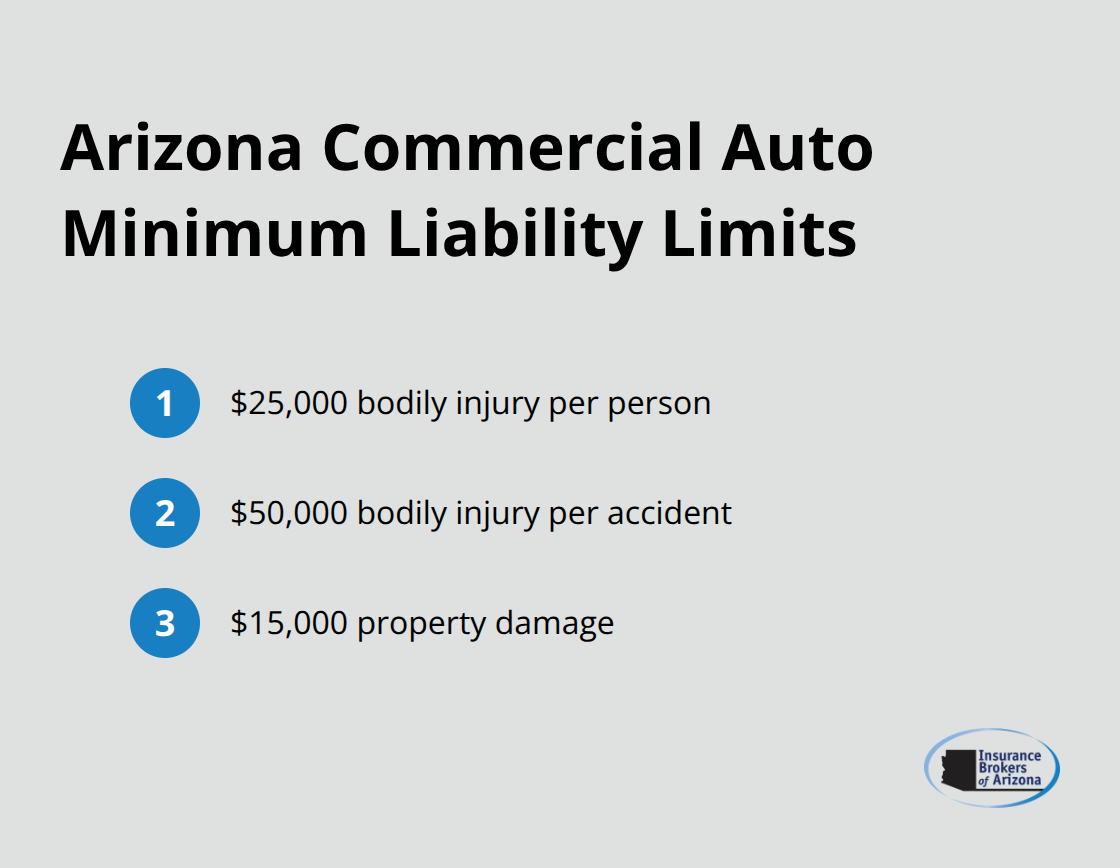
The state mandates workers’ compensation insurance for any business with employees, with no exceptions for small operations. Arizona sets minimum commercial auto limits at $25,000 bodily injury per person, $50,000 per accident, and $15,000 property damage-these aren’t suggestions, they’re the floor. If you use personal vehicles for work, standard personal auto policies exclude business use, so you’ll need hired and non-owned auto coverage to stay compliant.
Premium audits at policy renewal adjust your final bill based on actual payroll and expenses, so accuracy in your initial application prevents billing surprises.
The Three Policies You Cannot Skip
Workers’ Compensation: Your Legal Foundation
Arizona mandates workers’ compensation insurance the moment you hire your first employee, and the law applies to all business structures-sole proprietors, LLCs, and corporations alike. You cannot operate legally without it. Insureon data shows average monthly costs around $59, though your actual premium varies significantly based on trade classification and payroll size. A roofer pays substantially more than a general contractor because roofing carries higher risk. When your policy renews, Arizona requires a premium audit that adjusts your final bill based on actual payroll and job classifications you reported. Underreporting wages to save money upfront backfires when the audit reveals the discrepancy and you owe back premiums plus interest.
If you operate as a sole proprietor with no employees, a ghost policy lets you prove workers’ comp coverage to win bids and meet jobsite mandates without the full expense of a standard policy. This matters because many general contractors and property managers now demand proof of workers’ comp before allowing subcontractors on site, regardless of whether Arizona legally requires it.
General Liability: What Clients Actually Require
Arizona doesn’t technically mandate general liability insurance for licensing itself, but here’s the reality: nearly every client, municipal project, and commercial lease requires proof of coverage before work begins. Without a policy in hand, you won’t win bids. Standard policy limits run $1 million per occurrence and $2 million aggregate, with medical payments covering up to $5,000 per incident.
General liability averages $45 monthly for small contractors, though your specific premium depends on trade, location, and payroll size. Many small contractors cut corners by lowering limits to save money, but this leaves them exposed when a subcontractor gets injured or a homeowner’s property gets damaged. Adding an additional insured endorsement to your policy costs nothing extra and extends coverage to your clients, which they’ll often require anyway.
Tools and Equipment: Protecting Your Assets
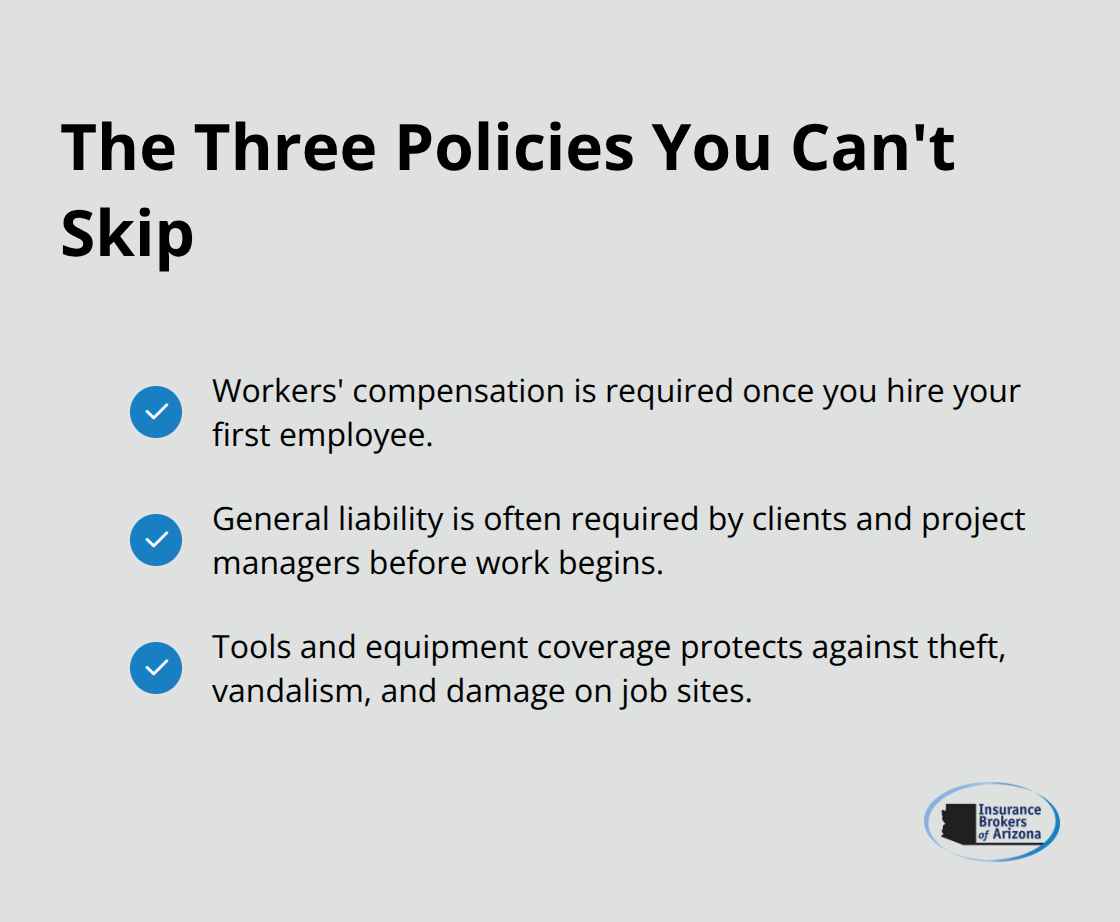
Tools and equipment coverage prevents catastrophic downtime by insuring both large equipment and small tools against theft, vandalism, and damage on job sites. A contractor without this protection faces replacing a stolen $8,000 compressor or $3,000 in hand tools entirely from pocket. The financial hit stops your operations cold until you replace the equipment.
The combination of these three policies-workers’ comp, general liability, and tools coverage-creates the baseline protection that Arizona contractors actually operate under in practice, whether required by law or demanded by clients and project managers who understand the real risks of construction work. Your next step involves finding the right carrier and comparing quotes to lock in competitive rates for your specific trade and location.
Finding the Right Carrier for Your Arizona Contracting Business
Compare Quotes From Multiple Carriers
Shopping for contractor insurance in Arizona demands more than accepting the first quote that lands in your inbox. You need to compare actual numbers from multiple carriers, understand what drives your specific premium, and recognize which coverage limits actually protect your operation versus which ones leave you exposed. Start with quotes from at least three carriers before signing anything. Many providers now offer online quote tools that take 10–15 minutes to complete, and you’ll see immediate rate comparisons. Gaslamp Insurance specializes in Arizona contractor coverage with tailored options for tools, equipment, vehicles, and employees, while CCIS serves multiple western states and advertises same-day coverage activation. Insurance Brokers of Arizona®® offers partnerships with over 40 reputable carriers, providing competitive options across auto, business, and specialty insurance with personalized service focused on securing the best rates for your specific needs. Don’t rely on a single agent’s recommendation; different carriers price risk differently based on your trade classification, location within Arizona, and claims history.
Understand How Location and Trade Affect Your Premium
A roofer in Phoenix pays substantially different premiums than a general contractor in Flagstaff, even for identical coverage limits, because insurers weight geographic and occupational risk distinctly. Your premium calculation hinges on factors you directly control and some you don’t. Payroll size drives workers’ compensation costs dramatically-Insureon data shows average monthly premiums around $59, but a $100,000 annual payroll contractor pays significantly more than a solo operator. Subcontractor costs matter too because insurers treat them as an extension of your liability exposure. Gross receipts from the prior year influence general liability pricing, which averages $45 monthly for small contractors but scales upward as revenue grows. Location within Arizona affects rates because some regions carry higher claim frequencies than others.
Adjust Deductibles and Limits Strategically
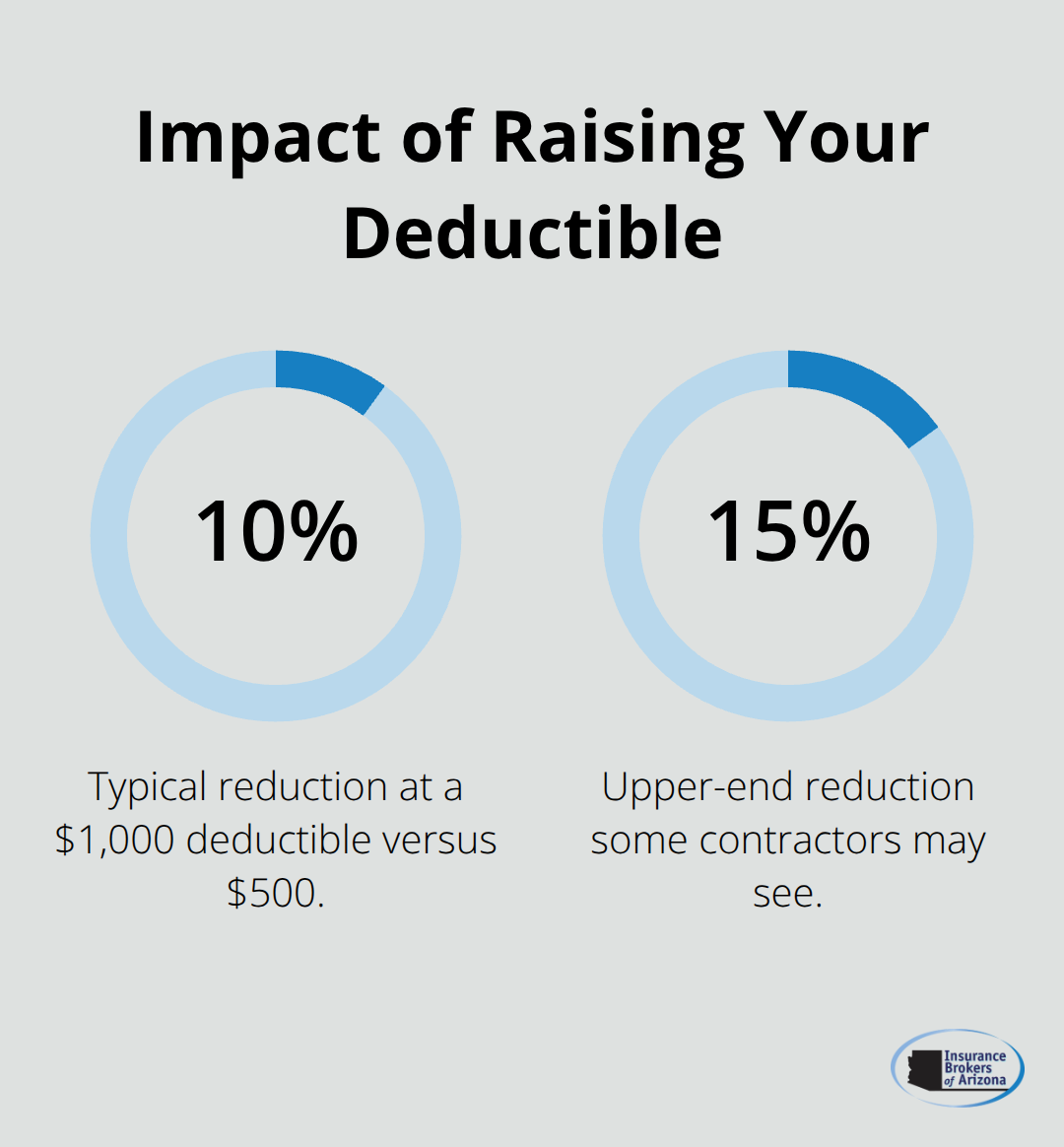
When evaluating deductibles, understand that raising your deductible from $500 to $1,000 typically reduces your annual premium by 10–15 percent, but only choose this option if you can actually absorb that out-of-pocket cost without crippling cash flow. Many small contractors mistakenly lower liability limits from the standard $1 million per occurrence to $500,000 to cut premiums, but this creates real exposure when a single incident exceeds your limit.
The additional insured endorsement costs nothing extra and should be automatic on your general liability policy since clients demand it anyway (most project managers require this protection before allowing work to begin).
Secure Certificates Before You Need Them
Request certificates of insurance from your carrier before you need them; most providers issue them same-day once your policy activates, eliminating delays when a project manager demands proof of coverage before you start work. This simple step prevents project delays and demonstrates professionalism to clients who expect documentation immediately.
Final Thoughts
General contractor insurance in Arizona protects far more than your immediate operations-it safeguards your ability to bid on projects, win client trust, and recover from unexpected incidents that could otherwise end your business. The three core policies we’ve covered (workers’ compensation, general liability, and tools and equipment coverage) form the foundation that Arizona contractors actually operate under, whether mandated by law or demanded by clients who understand construction risk. Without them, you face personal liability that no business can absorb.
Gather quotes from multiple carriers and compare actual premiums and coverage limits side by side rather than accepting the first option that arrives in your inbox. Understand how your specific trade classification, location within Arizona, and payroll size drive your costs, then adjust deductibles and limits strategically based on what you can realistically afford out of pocket. Request certificates of insurance before you need them so project delays never happen because documentation wasn’t ready.
We at Insurance Brokers of Arizona® work with over 40 reputable carriers to deliver competitive options tailored to your specific contracting needs. Our team focuses on securing the best rates for your trade and location while ensuring your coverage actually matches the risks you face on job sites. Contact us today to build a general contractor insurance Arizona plan that protects your business and positions you for sustainable growth.
Disclaimer: The information provided in this blog is for general informational purposes only and does not constitute legal, financial, or insurance advice. Coverage options, terms, and availability may vary. Please consult with a licensed professional for advice specific to your situation.


