
Electrician Contractor Insurance Arizona: Essential Protections
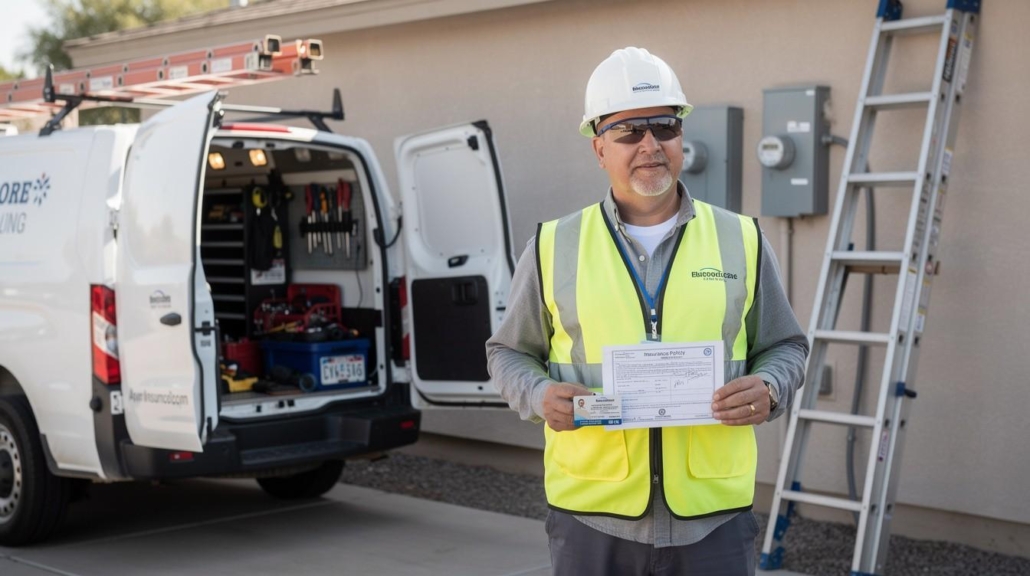
Electrical work in Arizona comes with real hazards-from electrocution risks to property damage claims that can shut down your business overnight. Without proper electrician contractor insurance in Arizona, a single accident could wipe out years of profits.
At Insurance Brokers of Arizona®, we’ve seen too many contractors operate without adequate coverage, only to face devastating losses when something goes wrong. This guide walks you through the protections you actually need.
What Coverage Your Electrical Business Actually Needs
General liability insurance protects your business when a client suffers bodily injury or property damage on the job site. The median annual wage for electricians in Arizona was $62,350 in May 2024, according to the U.S. Bureau of Labor Statistics, which means you have real income to protect.
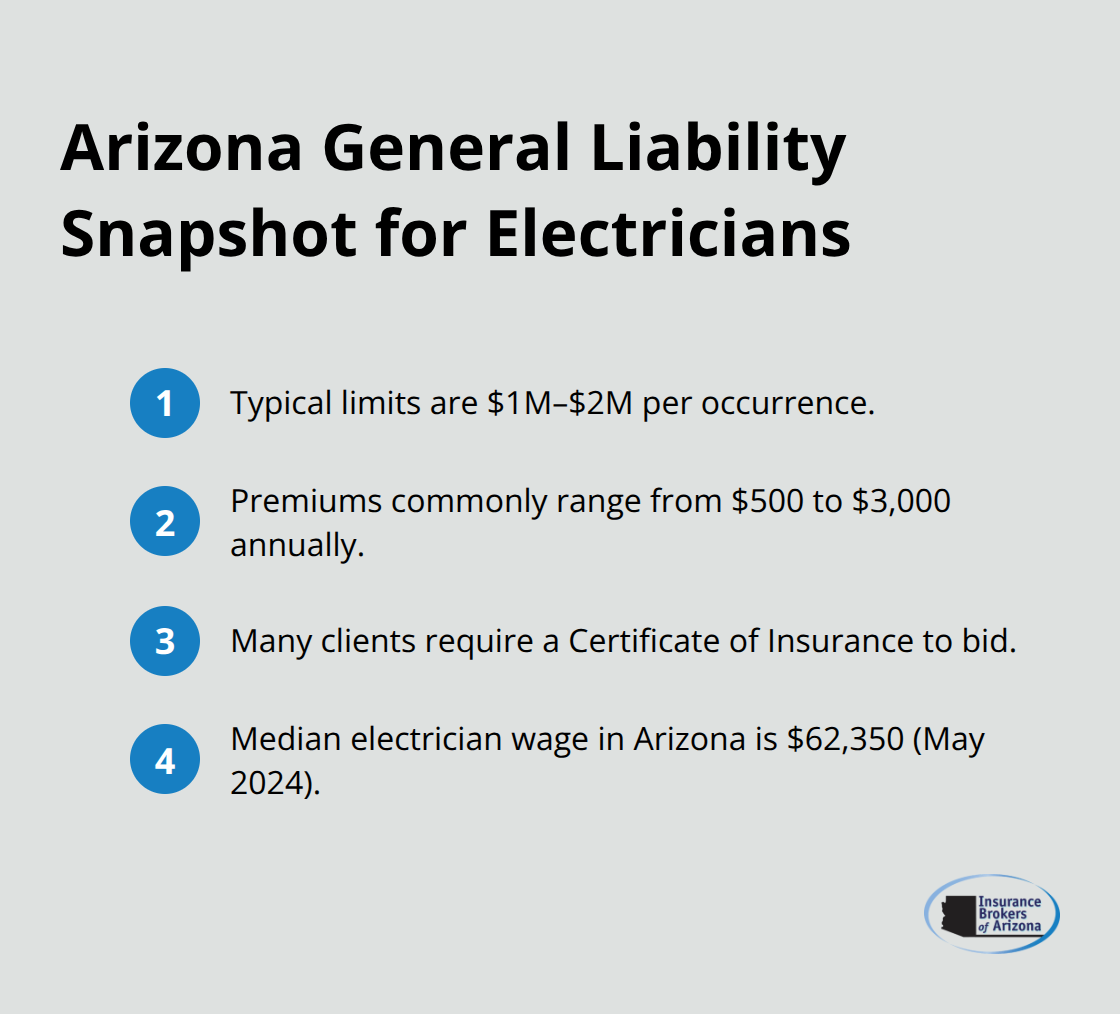
A single liability claim can exceed your annual revenue, which is why Arizona electricians typically carry $1 million to $2 million in general liability coverage. General liability premiums in Arizona commonly range from $500 to $3,000 per year, depending on your coverage limits and risk profile. This coverage is non-negotiable if you want to bid on projects-most clients require a Certificate of Insurance before hiring any contractor.
Workers’ Compensation and Commercial Auto Coverage
Workers’ compensation is mandatory in Arizona if you have even one employee, and the state requires coverage through a private carrier. The cost varies based on your payroll and the nature of your work, but high-risk electrical tasks drive higher premiums than routine maintenance. If you operate as a sole proprietor without employees, Arizona allows you to waive workers’ compensation, but the moment you hire someone, coverage becomes legally required.
Commercial auto insurance covers vehicles and vans used for business, including tool storage and equipment transport. Many electricians overlook this coverage and then face massive out-of-pocket costs after a work vehicle accident.
Arizona’s Specific Regulatory Demands
Arizona requires you to hold a contractor license through the Arizona Registrar of Contractors in one of three classifications: Residential (R-11), Commercial (C-11), or Dual (CR-11). Your license classification directly determines your insurance requirements and bond amounts. Surety bonds are mandatory for every active ROC license-residential bonds typically range from $4,250 to $10,000, while commercial work can require significantly higher amounts depending on your projected annual gross volume.
The state’s eight-year construction defect statute of repose means completed operations coverage protects you because claims can surface years after you finish a project. Arizona jurisdictions vary in which NEC code they adopt, so a project in Glendale may follow different electrical standards than one in Mesa. This variation affects your liability exposure and insurance needs. Professional liability insurance protects you against claims of errors or negligence in design or installation, especially important as low voltage systems become more complex with smart home and data network integration.
Risk Factors Unique to Arizona’s Market
Arizona’s rapid growth in solar installations, data centers, and semiconductor manufacturing creates specialized insurance needs. Solar work introduces roof-penetration and water intrusion liability that standard policies may exclude, so you must confirm your coverage explicitly includes these exposures. Data center and semiconductor projects in the Phoenix region often demand higher general liability limits-$2 million to $5 million per occurrence-plus endorsements for computer equipment protection.
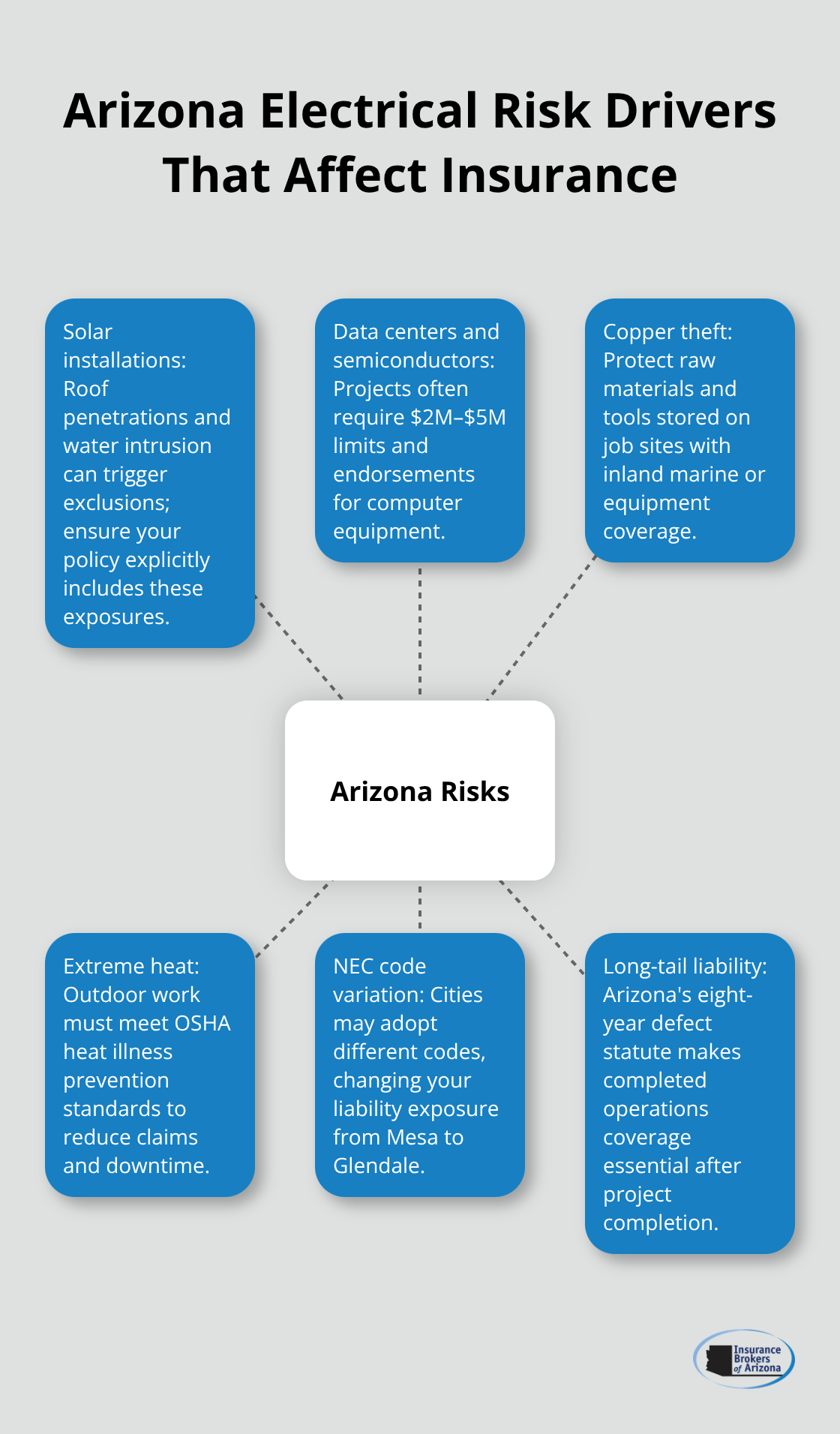
Copper theft on construction sites is a real problem in Arizona, and your inland marine or equipment coverage needs to protect raw materials and tools stored on job sites. Outdoor electrical work in Arizona carries heat-related risk, and OSHA heat illness prevention standards apply to your operations. The Phoenix-Mesa-Scottsdale area has shown the strongest electrician employment growth among U.S. metros, adding over 1,000 electricians between 2017 and 2022, which means competitive bidding requires proof of comprehensive coverage. Documented safety training programs and arc flash assessments are viewed favorably by underwriters and can improve your pricing and market access.
Finding the Right Coverage for Your Specific Work
Your insurance needs depend on the type of projects you pursue and the clients you serve. Residential work typically requires lower general liability limits than commercial installations, but solar and data center projects demand significantly higher protection. When you select a carrier, look for one with electrical trade expertise and the ability to customize endorsements for your specific exposures. The right provider will help you avoid coverage gaps that could leave you exposed on high-value projects.
The Three Insurance Pillars Every Arizona Electrician Must Have
General Liability: Your Foundation Coverage
General liability insurance protects you when a client suffers bodily injury or property damage during your work-a fall from a ladder, damaged drywall from your equipment, or electrocution from faulty wiring you installed. Arizona electricians typically carry $1 million to $2 million in general liability coverage, though data center and semiconductor projects in the Phoenix region often demand $2 million to $5 million per occurrence because the equipment damage exposure is so much higher. General liability premiums in Arizona range from $500 to $3,000 annually, but this varies dramatically based on your classification, project types, and claims history.
The critical detail most contractors miss is that general liability does not cover professional liability-errors in design or installation. As low voltage systems become more complex with smart home integration and data networks, professional liability insurance protects you against claims that your work failed to meet specifications or caused system malfunction. If you design or consult on electrical installations, this coverage is essential, not optional.
Completed Operations and Long-Tail Liability
Arizona’s eight-year construction defect statute means claims can surface years after project completion, so completed operations coverage must extend through that entire window. Many contractors wrongly assume their general liability policy automatically includes this tail coverage, but you must verify it explicitly with your carrier. This protection matters especially for solar installations, where water intrusion claims often emerge long after you finish the work.
Workers’ Compensation and Vehicle Coverage
Workers’ compensation in Arizona is mandatory if you have even one employee, and the state allows only private carriers-there is no state fund option. The cost depends entirely on your payroll classification and the nature of the work; high-risk electrical tasks carry significantly higher premiums than routine maintenance or inspections. If you operate as a sole proprietor without employees, Arizona allows you to waive coverage, but this decision disappears the moment you hire your first employee.
Commercial auto insurance covers vehicles and vans used for business, including tool storage and equipment transport, and this is where many electricians face serious gaps. A work van accident can generate medical bills, vehicle damage, and liability claims that exceed $100,000 quickly, yet contractors often operate with minimal or no commercial auto coverage.
Equipment and Tools Protection
Tools and equipment need separate inland marine or equipment coverage because general liability excludes coverage for your own property. In Arizona, copper theft on construction sites is a genuine problem, so your inland marine policy must specifically protect raw materials and tools stored on job sites. If you do solar installations, confirm that your inland marine coverage includes roof-mounted equipment and materials staged for installation.
The combination of general liability, workers’ compensation, commercial auto, and equipment coverage creates a comprehensive program that protects your business from the exposures that actually generate claims in Arizona’s electrical contracting market. Your next step involves selecting a carrier that understands electrical work and can customize these protections to match your specific operations.
Selecting the Right Carrier for Electrical Work
Start with Your Actual Exposures, Not Just Price
Most electricians shop for insurance the wrong way. They call three carriers, compare premiums, pick the cheapest option, and move on.
This approach leaves you exposed because price means nothing if your policy excludes solar work, lacks proper completed operations tail coverage, or caps your limits too low for data center projects. Start by identifying your actual exposures, then find carriers that specialize in electrical contracting rather than treating you as a generic commercial customer. Carriers with electrical trade expertise understand that a residential R-11 license creates different risks than a commercial C-11 classification, and they price accordingly.
When you request quotes, provide detailed information about your specific work-the percentage of residential versus commercial projects, whether you do solar installations, your typical project values, and your location within Arizona. Vague requests generate vague quotes that often exclude critical coverage. General liability premiums for Arizona electricians range from $500 to $3,000 annually, but this variation reflects real differences in risk exposure and coverage quality, not just carrier pricing models.
Request Quotes That Address Your Specific Exposures
A $600 annual premium from a carrier that excludes water intrusion liability costs infinitely more than a $1,500 premium from a carrier that includes it, because one claim can exceed your annual revenue. Request quotes that explicitly address your specific exposures: completed operations coverage extending through Arizona’s eight-year construction defect statute, professional liability if you design systems, solar exclusion removal if applicable, and endorsements for computer equipment if you work on data center projects.
The difference between a cheap quote and a useless quote often comes down to what the carrier actually covers. Ask each carrier to confirm in writing whether they cover your specific work type before you commit to anything.
Read Policy Language, Not Just Premiums
Evaluating quotes requires reading the actual policy language, not just the premium. Many electricians never discover coverage gaps until they file a claim and learn their policy excludes the exact situation that caused the loss. Deductibles directly impact your out-of-pocket costs after a claim, and increasing your deductible from $500 to $2,500 can reduce your premium significantly, but only if you have cash reserves to cover that larger deductible when needed.
A $1,000 deductible represents a reasonable middle ground for most Arizona electrical contractors because it balances affordable premiums with manageable financial exposure. Review each quote’s coverage limits carefully: Arizona electricians typically carry $1 million to $2 million in general liability per occurrence, but data center and semiconductor projects demand $2 million to $5 million because the equipment damage exposure is substantially higher. If you bid on projects requiring $2 million coverage but only carry $1 million, you cannot compete for those contracts, period.
Leverage Bundling and Broker Expertise
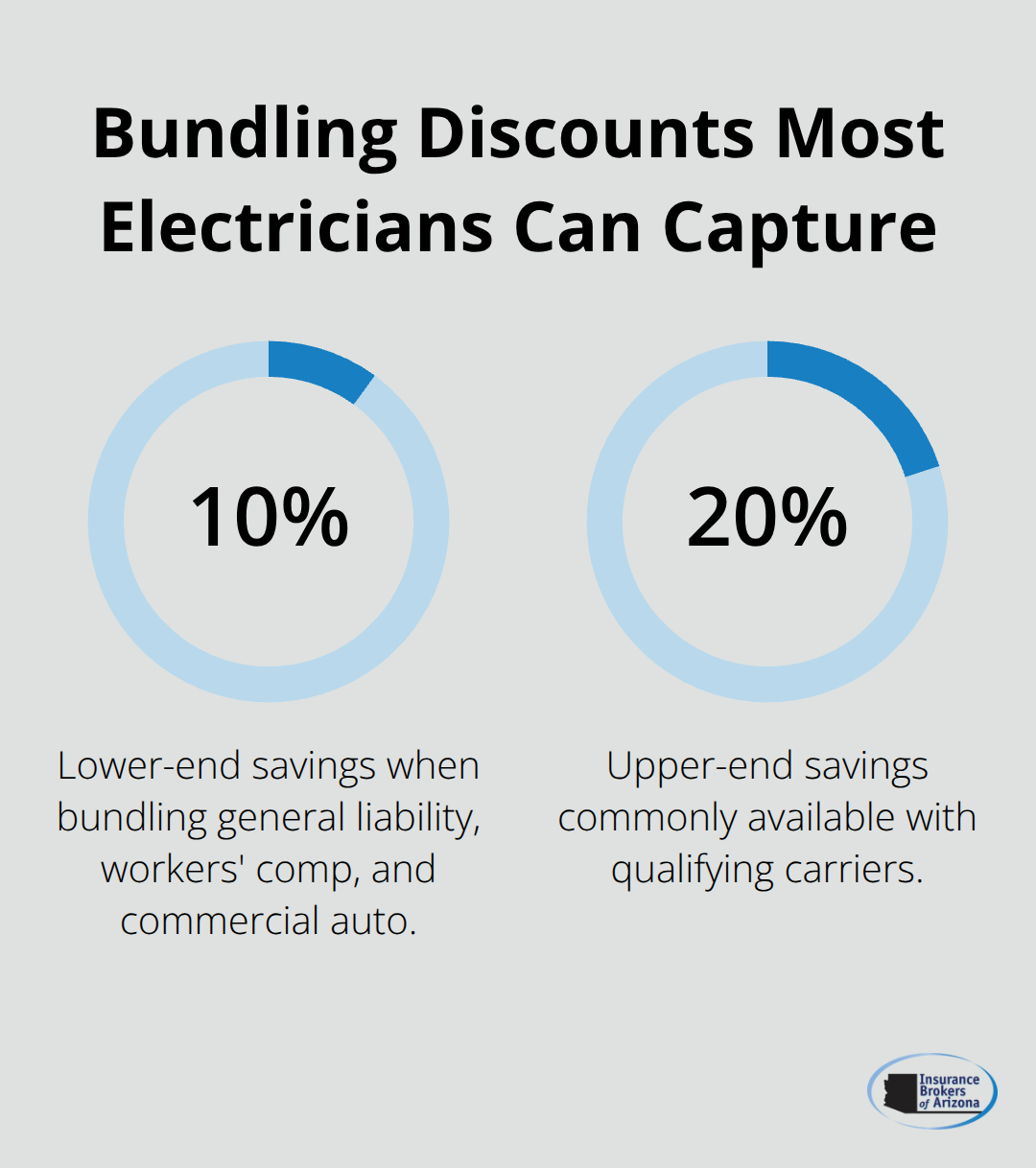
Check whether the carrier offers bundling discounts if you purchase general liability, workers’ compensation, and commercial auto together, because bundling commonly reduces your total annual cost by 10 to 20 percent. A broker who understands electrical contracting matters far more than working with a carrier directly because brokers access multiple carriers simultaneously and negotiate on your behalf. Insurance Brokers of Arizona® partners with over 40 reputable carriers, which means they can compare options across the market rather than pushing you toward one insurer’s limited product.
A broker reviews your specific operations, identifies coverage gaps, and presents options that actually match your needs rather than forcing you into generic commercial policies that miss electrical-specific exposures.
Final Thoughts
Electrician contractor insurance in Arizona protects your business from the financial damage that accidents create on job sites. A single liability claim, workers’ compensation injury, or equipment loss eliminates years of profit, which is why comprehensive coverage matters far more than finding the cheapest premium. The contractors who survive and grow in Arizona’s competitive market treat insurance as a business asset that enables them to bid on higher-value projects and win client trust.
Your coverage foundation must include general liability protecting against bodily injury and property damage claims, workers’ compensation for any employees you hire, commercial auto insurance for work vehicles, and equipment coverage for tools and materials. Arizona’s eight-year construction defect statute means completed operations coverage extends your protection years after project completion, which proves especially critical for solar installations where water intrusion claims emerge long after you finish the work. Professional liability insurance protects you against design or installation errors as low voltage systems become more complex with smart home and data network integration.
Selecting the right carrier requires identifying your specific work types and project values before requesting quotes, then comparing policies based on coverage quality rather than premium alone. A cheaper quote that excludes your actual work creates zero value when a claim surfaces. Contact us at insurancebrokersofaz.com to discuss your electrician contractor insurance in Arizona needs and receive quotes that address your exposures rather than leaving gaps that could cost you everything.
Disclaimer: The information provided in this blog is for general informational purposes only and does not constitute legal, financial, or insurance advice. Coverage options, terms, and availability may vary. Please consult with a licensed professional for advice specific to your situation.


