
Homeowners Insurance Arizona: What You Should Know
Arizona homeowners face unique insurance challenges that most people don’t anticipate until it’s too late. From extreme heat to monsoon seasons, your home faces risks that standard policies might not fully cover.
We at Insurance Brokers of Arizona® know that navigating homeowners insurance in our state requires understanding both state requirements and the specific threats Arizona properties face. This guide walks you through everything you need to know to protect your home properly.
What Arizona Homeowners Actually Need to Know About Coverage
Understanding Your Baseline Coverage
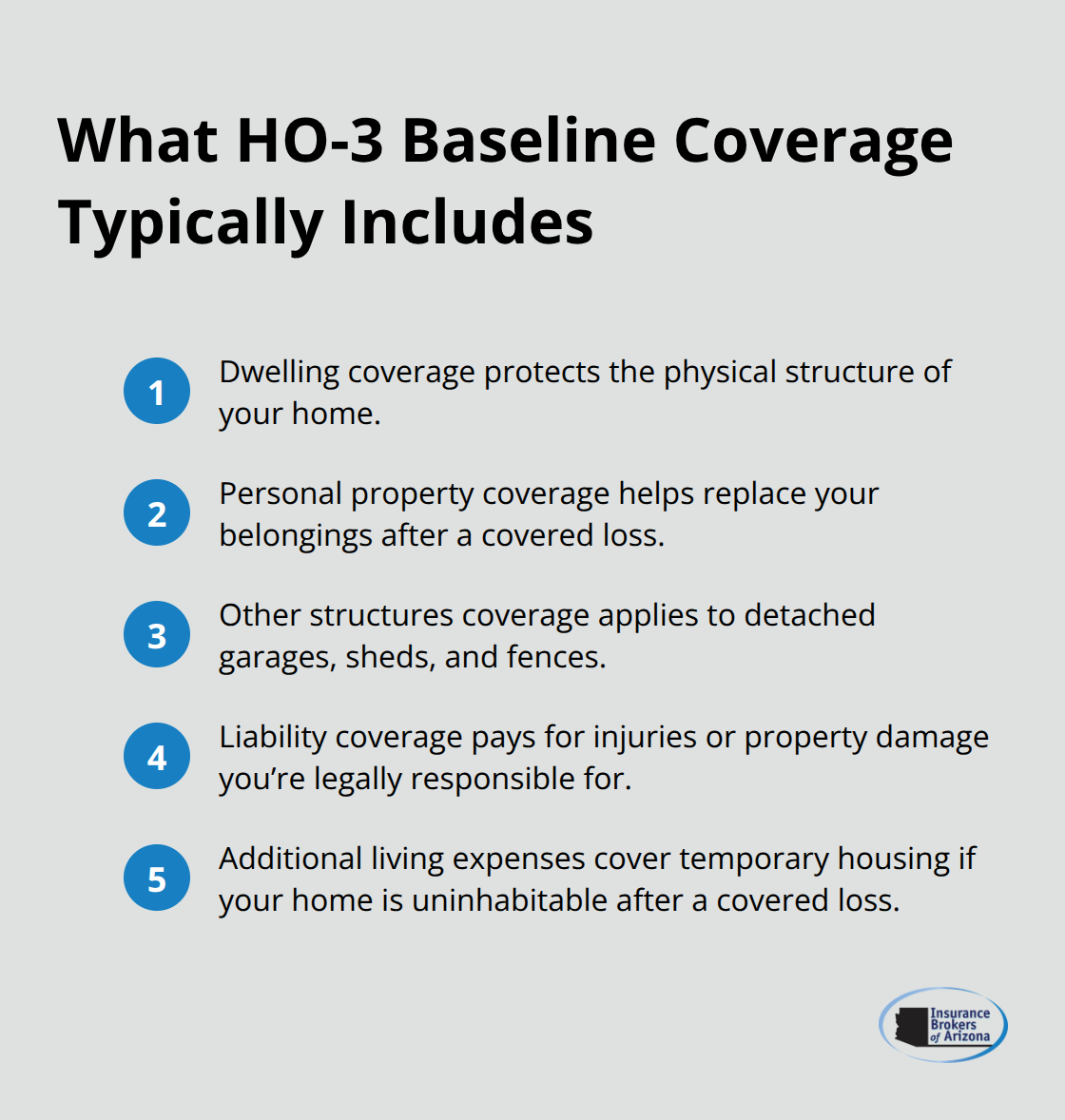
Arizona homeowners insurance isn’t legally required, but your mortgage lender will demand it. What matters more than the legal requirement is understanding what you actually need to protect your home. In Arizona, the standard policy is an HO-3, which covers your dwelling, personal property, other structures like detached garages, liability protection, and additional living expenses if your home becomes uninhabitable after a covered loss. This baseline coverage forms the foundation, but Arizona’s specific risks mean you must think carefully about what that foundation actually protects.
The Real Cost of Rebuilding in Arizona
Phoenix homeowners saw insurance costs skyrocket from $914 in 2021 to $2,392 in 2024, driven almost entirely by rising reconstruction costs rather than changes in home values. Construction costs in Arizona jumped 6 percent just between September 2022 and September 2023 alone, according to Verisk data. Your premium reflects what it would cost to rebuild your home today, not what you paid for it. This distinction shapes every premium quote you receive.
Actual Cash Value vs. Replacement Cost
Your choice between actual cash value coverage and replacement cost coverage directly impacts both your premium and what you’ll receive after a loss. If you choose actual cash value coverage, your payout gets reduced by depreciation, meaning a ten-year-old roof or appliances will be worth less when you file a claim. Replacement cost coverage eliminates that depreciation penalty and pays what you actually need to rebuild with similar materials and quality. This choice deserves real thought based on your home’s age and condition.
Arizona’s Weather Creates Real Coverage Challenges
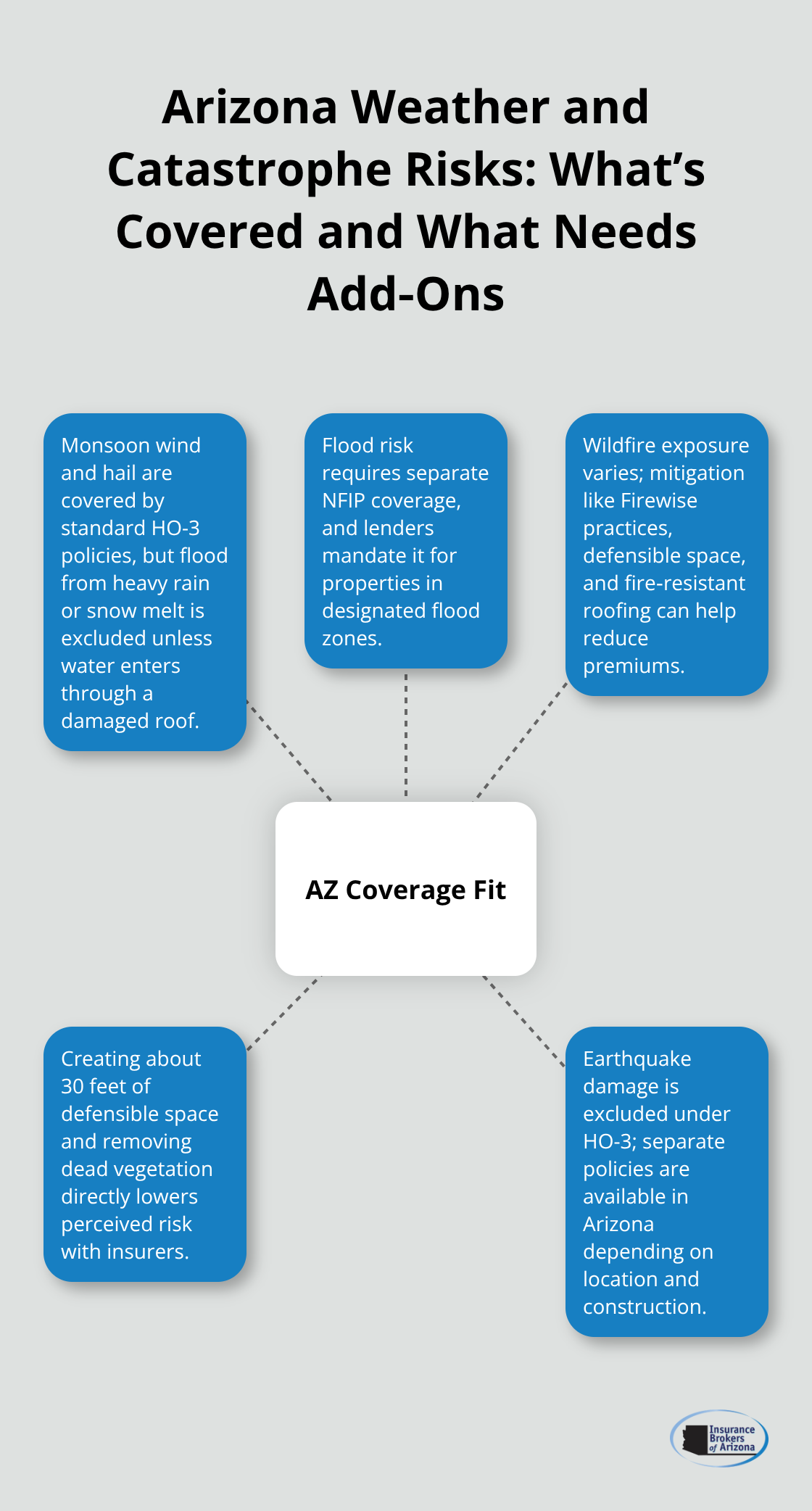
Arizona’s monsoon season, extreme heat, and wildfire risk shape what coverage you actually need. Standard HO-3 policies cover wind and hail damage from monsoons, but they explicitly exclude flood damage from heavy rain or snow melt unless water enters through a damaged roof. This distinction matters enormously if you live near washes or in flood-prone areas. The National Flood Insurance Program offers separate flood coverage, and if your property is in a flood zone, your lender will require it.
Wildfire Risk and Your Premium
Wildfire risk varies significantly across Arizona, with 38 communities rated Class 8B or worse on the ISO Public Protection Classification scale, meaning higher premiums for residents in those areas. If your property is in a high-risk fire zone, ask your insurer about Firewise USA certification or defensible space improvements, which can lower your premiums. Creating 30 feet of defensible space around your home, using fire-resistant roofing materials, and removing dead vegetation directly reduce your risk profile in the eyes of insurers. Earthquake coverage is less critical in most of Arizona than in California, but certain parts of the state do face seismic activity, so check with your agent about availability and cost if you’re concerned.
Understanding these weather-specific risks positions you to select coverage that actually protects your Arizona home rather than leaving gaps that could cost you thousands after a loss.
Finding the Right Policy Without Overpaying
What Actually Drives Your Arizona Premium
Your home’s rebuild cost, construction type, and claims history form the foundation of what you’ll pay for homeowners insurance in Arizona, but these factors interact with dozens of personal variables that most homeowners overlook when shopping for coverage. The distance from your home to the nearest fire department, whether you have a swimming pool or trampoline, your insurance-based credit history, and even whether you run a business from home all influence your final premium. Age matters too-a home built in 1970 will cost more to insure than an identical home built in 2020 because older homes typically have outdated electrical systems and plumbing that increase loss risk. When you request quotes, insurers analyze all these variables simultaneously, which means two homes that look identical on the surface can have dramatically different premiums.
How Your Deductible Choice Shapes Your Costs
Your deductible choice amplifies these differences significantly. Raise your deductible from $1,000 to $2,500, and you can cut your annual premium by 15 to 25 percent, but only if you can afford that out-of-pocket cost when a claim happens. The math is straightforward-higher deductibles reduce what insurers pay out, so they charge you less upfront. However, you must choose a deductible you can actually afford after a loss, or the entire purpose of having insurance collapses.
Why Shopping Multiple Carriers Matters in Arizona
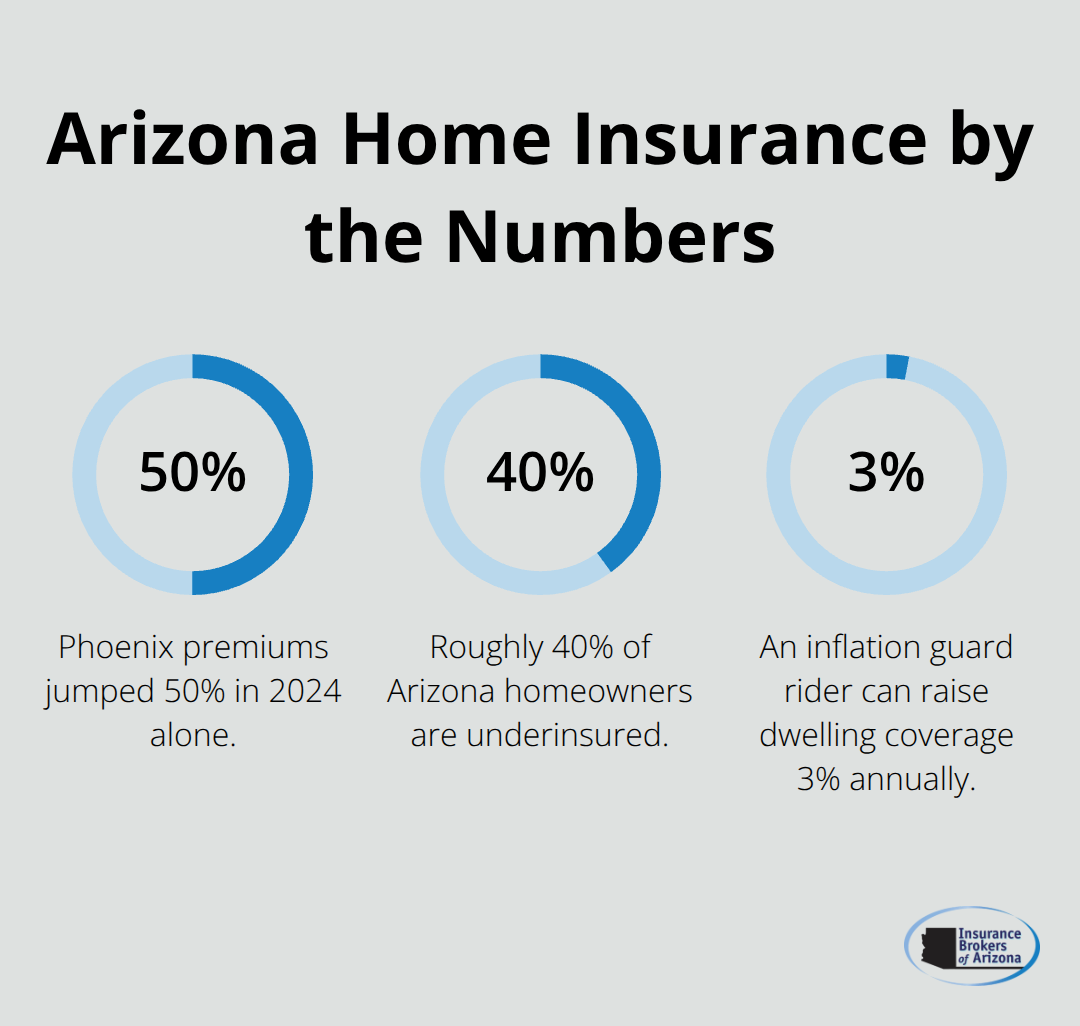
Comparing quotes is not optional if you want competitive rates in Arizona’s current market. Phoenix premiums jumped 50 percent in 2024 alone, and insurance loyalty backfires consistently-carriers raise rates year after year regardless of whether you file claims. Shoppers who switch carriers annually often save $500 to $1,200 compared to those who stay put, according to industry data. When you compare quotes, ignore the premium price initially and examine coverage limits, deductibles, and how each carrier handles payouts first. A policy $200 cheaper per year means nothing if it pays claims 20 percent slower or excludes coverage you need.
Unlocking Savings Through Safety Features and Bundling
Safety features and bundling create real savings that compound over time. Install smoke detectors, fire alarms, and burglar alarms, and you typically qualify for 5 to 15 percent discounts. A newer roof or fire-resistant roofing materials can earn additional reductions because they reduce loss frequency. Bundle your homeowners policy with auto insurance from the same carrier, and you often save 10 to 25 percent on your total premium. We at Insurance Brokers of Arizona® work with over 40 carriers, which positions us to identify which combination of coverage and deductible saves you the most money while actually protecting your home against Arizona’s specific risks.
The Hidden Cost of Settling for Cheap Quotes
Many homeowners waste time comparing two or three quotes and settle for the cheapest option, missing the fact that a slightly higher premium from a different carrier would provide better coverage or faster claim handling. Understanding what coverage you need and which gaps still exist even after you’ve selected the right policy is critical-because standard Arizona homeowners insurance leaves several critical exposures unprotected.
What Your Standard Arizona Policy Actually Leaves Unprotected
Flood Damage: The Coverage Gap That Surprises Most Homeowners
Standard homeowners insurance in Arizona protects against fire, wind, hail, theft, and liability, but it explicitly excludes flood damage-a gap that catches most Arizona homeowners off guard because they assume comprehensive coverage means everything. The National Flood Insurance Program exists precisely because standard policies refuse to cover flood damage, and if your property sits in a designated flood zone, your lender will require separate NFIP coverage before closing your mortgage. Flood damage from heavy monsoon rain, water backing up through drains, or snow melt entering through your basement counts as flood damage under insurance definitions, not as water damage from a damaged roof, which would be covered.
This distinction is brutal in practice. A homeowner in Phoenix experiences $15,000 in water damage from a burst pipe and their HO-3 covers it completely. Another homeowner experiences $15,000 in damage from monsoon flooding and receives nothing without a separate flood policy. The NFIP charges roughly $500 to $2,000 annually depending on your flood risk zone, and it carries a mandatory 30-day waiting period before coverage activates, meaning you cannot purchase flood insurance after a storm warning appears.
Earthquake Coverage: A Risk Most Arizona Homeowners Underestimate
Earthquake coverage presents a different problem. Most Arizona homeowners dismiss earthquake risk because they live in California’s shadow, but certain parts of Arizona-particularly near Flagstaff and in the Phoenix metropolitan area-experience genuine seismic activity. The 1887 Sonora, Mexico earthquake caused significant damage in southern Arizona, and smaller tremors occur regularly. Standard HO-3 policies exclude earthquake damage entirely, though separate earthquake policies cost between $150 and $400 annually in Arizona depending on your location and home construction.
Underinsurance: The Invisible Threat That Affects 40 Percent of Arizona Homeowners
Underinsurance poses an even more insidious threat than these gaps because it happens invisibly. Your home’s rebuild cost increases 6 to 8 percent annually in Arizona due to rising construction labor and materials, but most homeowners lock in a coverage limit and never adjust it. A home you insured for $400,000 in 2020 now costs $480,000 to rebuild in 2026, yet your policy still caps payouts at $400,000. This means after a total loss, you absorb $80,000 of the reconstruction cost yourself.
Review your coverage limits annually and use online rebuild cost calculators or request updated appraisals from your insurer to verify your dwelling coverage keeps pace with actual reconstruction expenses. An inflation guard rider automatically increases your dwelling coverage by 3 percent annually, which tracks Arizona’s actual reconstruction cost growth and prevents the gradual drift into underinsurance that affects roughly 40 percent of Arizona homeowners.
Final Thoughts
Arizona homeowners must act on three priorities to protect their finances and their homes. Your dwelling coverage needs to keep pace with reconstruction costs, which climb 6 to 8 percent yearly in Arizona, so an inflation guard rider automatically increases your coverage 3 percent annually and prevents the slow drift into underinsurance. Flood insurance and earthquake coverage require separate policies, and if you live in a flood zone, your lender will demand NFIP coverage before closing your mortgage.
Shopping for competitive rates matters more now than ever because Phoenix premiums jumped 50 percent in 2024 alone, and carriers raise rates year after year regardless of your claims history. Homeowners who switch carriers annually save $500 to $1,200 compared to those who stay loyal to one insurer. When comparing quotes, examine coverage limits and deductibles before looking at price, because a policy $200 cheaper annually means nothing if it excludes coverage you need.
We at Insurance Brokers of Arizona® work with over 40 carriers to identify which combination of coverage, deductible, and carrier saves you the most money while protecting your home against Arizona’s specific risks. Contact us today to get personalized recommendations based on your home’s actual rebuild cost, your risk tolerance, and your budget. Your homeowners insurance in Arizona should match Arizona’s real threats, not leave you exposed to gaps that standard policies exclude.
Disclaimer: The information provided in this blog is for general informational purposes only and does not constitute legal, financial, or insurance advice. Coverage options, terms, and availability may vary. Please consult with a licensed professional for advice specific to your situation.


