
General vs. Professional Liability Insurance: What’s the Difference?

At Insurance Brokers of Arizona®, we often encounter confusion about the differences between general and professional liability insurance. These two types of coverage play distinct roles in protecting businesses from various risks.
Understanding the nuances between general and professional liability insurance is vital for ensuring your business has the right protection. This post will break down the key differences and help you determine which coverage your business needs.
What is General Liability Insurance?
The Foundation of Business Protection
General liability insurance serves as a cornerstone of business protection. This type of coverage shields companies from common risks that can result in financial losses. At Insurance Brokers of Arizona®, we understand the critical role this insurance plays in safeguarding businesses against unexpected claims.
Core Components of General Liability Coverage
General liability insurance covers third-party claims of bodily injury, property damage, and personal injury that occur due to your business operations. For instance, if a customer falls in your store, this policy would cover their medical expenses and potential legal fees if they decide to sue.
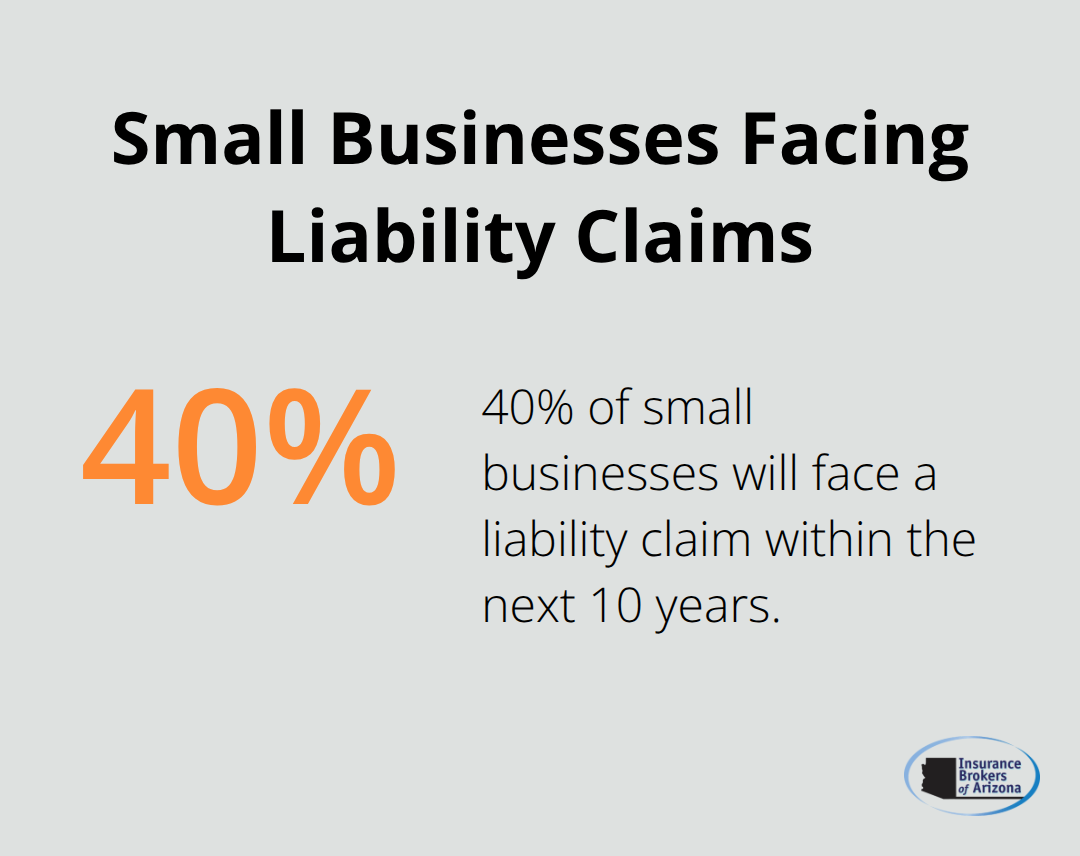
The Insurance Information Institute reports that nearly 40% of small businesses will face a liability claim within the next 10 years. This statistic highlights the necessity of adequate coverage for businesses of all sizes.
Incidents Typically Covered
General liability insurance usually protects against:
- Bodily injury to customers or visitors
- Property damage to others’ belongings
- Personal and advertising injury (e.g., libel or slander)
- Legal defense costs
A real-world scenario we’ve encountered involved a contractor who accidentally damaged a client’s expensive artwork while working in their home. The general liability policy covered the replacement cost of the artwork, which saved the contractor from a significant out-of-pocket expense.
High-Risk Industries
While all businesses can benefit from general liability insurance, some industries face higher risks and should prioritize this coverage:
- Construction and contracting
- Retail and hospitality
- Manufacturing
- Professional services
Construction businesses, for example, face a higher risk of property damage claims, while retail stores are more susceptible to slip-and-fall incidents.
The Small Business Administration reports that 36% to 53% of small businesses become involved in litigation annually. This high percentage underscores the need for robust general liability coverage across various sectors.
As we move forward to discuss professional liability insurance, it’s important to note that while general liability covers a broad range of incidents, it doesn’t protect against all types of business risks. Professional liability insurance addresses a different set of concerns, which we’ll explore in the next section.
What Does Professional Liability Insurance Cover?
The Essence of Professional Liability Coverage
Professional liability insurance (also known as errors and omissions insurance) protects businesses that provide professional services or advice. This coverage shields professionals from financial losses due to claims of negligence, misrepresentation, or failure to deliver promised services.
Key Differences from General Liability
Unlike general liability, which focuses on physical injuries and property damage, professional liability addresses financial losses resulting from professional services. This distinction makes it an essential component of risk management for service-based businesses.
Common Claims Scenarios
Professional liability claims often arise from:
- A financial advisor’s investment recommendations leading to significant client losses
- An architect’s design flaw resulting in costly structural issues
- A software developer’s coding error causing data loss for a client
Industries That Need Professional Liability Insurance
While many professions benefit from this coverage, it’s particularly important for:
- Healthcare providers (doctors, nurses, therapists)
- Legal professionals
- Financial advisors and accountants
- IT consultants and software developers
- Architects and engineers
- Real estate agents
The Growing Need for Professional Liability Coverage
Recent trends highlight the increasing importance of professional liability insurance:
- The American Medical Association reports that 1 in 3 physicians face malpractice lawsuits in their careers.
- Legal malpractice claims have increased by 13% in the past five years (CNA Legal Malpractice Study).
- 28% of IT professionals face claims related to service delivery (Advisen E&O Market Trends).
These statistics underscore the necessity of professional liability coverage across various industries. The cost of defending against a professional liability claim can exceed $100,000 (even if you’re not at fault), emphasizing the potential financial impact of such claims.

As we explore the key differences between general and professional liability insurance in the next section, you’ll gain a clearer understanding of how these two types of coverage complement each other to provide comprehensive protection for your business.
How Do General and Professional Liability Insurance Differ?
Coverage Focus: Physical vs. Financial Risks
General liability insurance addresses physical risks. It covers bodily injuries that occur on your premises or as a result of your operations. For example, if a customer slips and falls in your store, general liability would cover their medical expenses and potential legal costs.
Professional liability insurance focuses on financial risks stemming from your professional services or advice. If you’re an accountant and a calculation error leads to financial losses for your client, professional liability would cover the resulting claim.
Claim Types: Tangible vs. Intangible Damages
The nature of claims covered by these policies differs significantly. General liability typically handles tangible damages – physical injuries or property damage. For instance, if your employee accidentally damages a client’s property while working, your general liability policy would cover the repair or replacement costs.
Professional liability deals with intangible damages, usually financial losses resulting from errors, omissions, or negligence in your professional services. A real estate agent facing a lawsuit for failing to disclose important property information would rely on their professional liability coverage.
Policy Triggers: When Coverage Kicks In
General liability policies are usually occurrence-based. This means they cover incidents that occur during the policy period, regardless of when the claim is filed. If a customer is injured in your store in 2023, but doesn’t file a claim until 2024, your 2023 policy would still cover it.
Professional liability policies are typically claims-made. They only cover claims filed during the policy period, regardless of when the incident occurred. This makes maintaining continuous coverage important for professionals.
Cost and Claim Amounts
The Insurance Information Institute reports that the average cost of a slip-and-fall claim is around $20,000. For professional liability, claims can easily exceed $100,000, especially in fields like healthcare or law. These figures underscore the importance of having adequate coverage limits for both types of insurance.

Real-World Examples
A small retail business faced a $50,000 claim from a customer who was injured in their store. Their general liability policy covered the entire amount, saving the business from a potentially devastating financial hit.
In another case, a financial advisor faced a $200,000 lawsuit for alleged negligent investment advice. Their professional liability insurance covered the legal defense costs and settlement, protecting their personal assets and business reputation.
Understanding these distinctions is important for ensuring your business has comprehensive protection. While many businesses need both types of coverage, the specific needs can vary greatly depending on your industry and operations. A thorough risk assessment (conducted by a qualified insurance professional) can help determine the right mix of coverage for your unique situation.
Final Thoughts
General and professional liability insurance protect businesses from different risks. General liability covers physical injuries and property damage, while professional liability addresses financial losses from service errors. Your industry, services, and potential risks determine which coverage you need.
A comprehensive insurance strategy combines both types of coverage for optimal protection. We at Insurance Brokers of Arizona® specialize in tailoring insurance solutions for various industries. Our partnerships with over 40 carriers allow us to offer competitive options for general and professional liability insurance.
Don’t leave your business vulnerable to potentially devastating claims. Take time to review your insurance needs and consult with a professional. The right insurance coverage will protect your business financially and provide peace of mind, allowing you to focus on running and growing your business.


