What Does Commercial General Liability Insurance Cover?
At Insurance Brokers of Arizona®, we often get asked: What does commercial general liability insurance cover?
This essential coverage protects businesses from financial losses due to third-party claims of bodily injury, property damage, and personal and advertising injury.
In this post, we’ll break down the key components of CGL insurance and explain why it’s a critical safeguard for many businesses.
What Is Commercial General Liability Insurance?
The Foundation of Business Protection
Commercial General Liability (CGL) insurance serves as a fundamental shield for businesses against financial losses from third-party claims. It acts as the first line of defense against lawsuits and claims that could potentially bankrupt a company.
Core Components of CGL Coverage
CGL insurance typically covers three main areas:
- Bodily injury
- Property damage
- Personal and advertising injury claims
For instance, if a customer slips and falls in your store, or if your employee accidentally damages a client’s property while on a job, your CGL policy would cover legal fees and potential settlements.
The Insurance Information Institute reports that the average cost of a slip and fall claim is approximately $20,000. Without CGL insurance, businesses would need to pay these costs out of pocket, which could prove devastating for small to medium-sized enterprises.
The Necessity of CGL Insurance
Accidents happen, and in today’s litigious society, even unfounded claims can result in significant legal expenses. CGL insurance provides a financial safety net, which allows businesses to operate confidently.
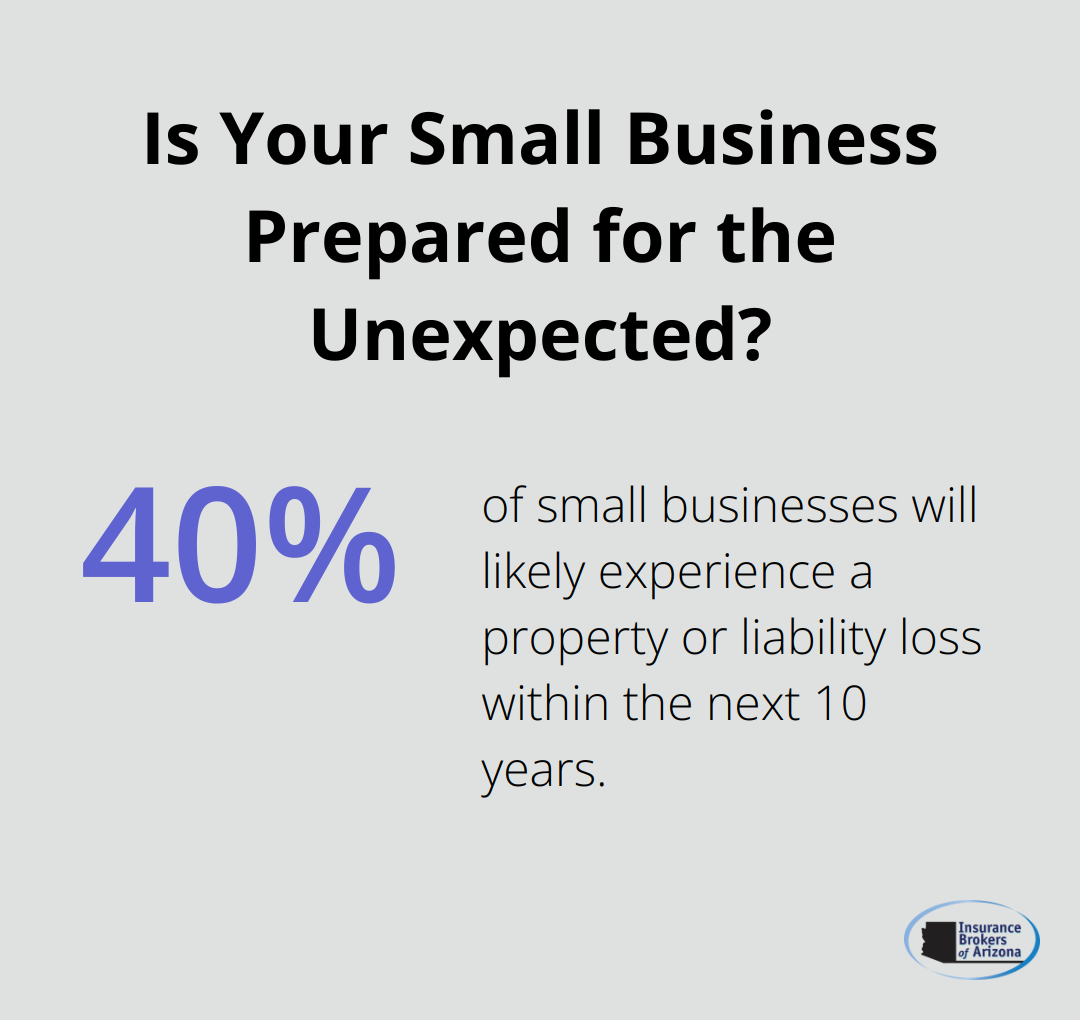
A study by The Hartford found that 40% of small businesses will likely experience a property or liability loss within the next 10 years. This statistic highlights the importance of robust CGL coverage.
High-Risk Industries for CGL Coverage
While CGL insurance benefits most businesses, certain industries face higher risks and therefore gain even more from this coverage:
- Construction: High risk of property damage and bodily injury on job sites
- Retail: Frequent customer interactions increase the likelihood of slip and fall incidents
- Food Service: Risk of foodborne illnesses and customer injuries
- Manufacturing: Product liability risks and potential for workplace accidents
- Professional Services: Advertising injury claims and potential property damage at client sites
Tailoring CGL to Your Business Needs
Every business has unique risks, and a one-size-fits-all approach to CGL insurance often falls short. Working with experienced insurance professionals can help ensure your CGL policy addresses your specific industry risks and business operations.
As we move forward, let’s examine the key coverage areas of Commercial General Liability Insurance in more detail, providing a comprehensive understanding of how this essential policy protects your business.
What Does CGL Insurance Cover?
Commercial General Liability (CGL) insurance protects businesses from a wide range of potential risks. Let’s explore the key areas that CGL insurance typically covers.
Bodily Injury and Property Damage
CGL insurance primarily covers bodily injury and property damage claims. If a customer slips and falls in your store, your policy will cover their medical expenses and any legal fees if they sue. Similarly, if your employee accidentally damages a client’s property while working, your CGL policy will cover the repair or replacement costs.
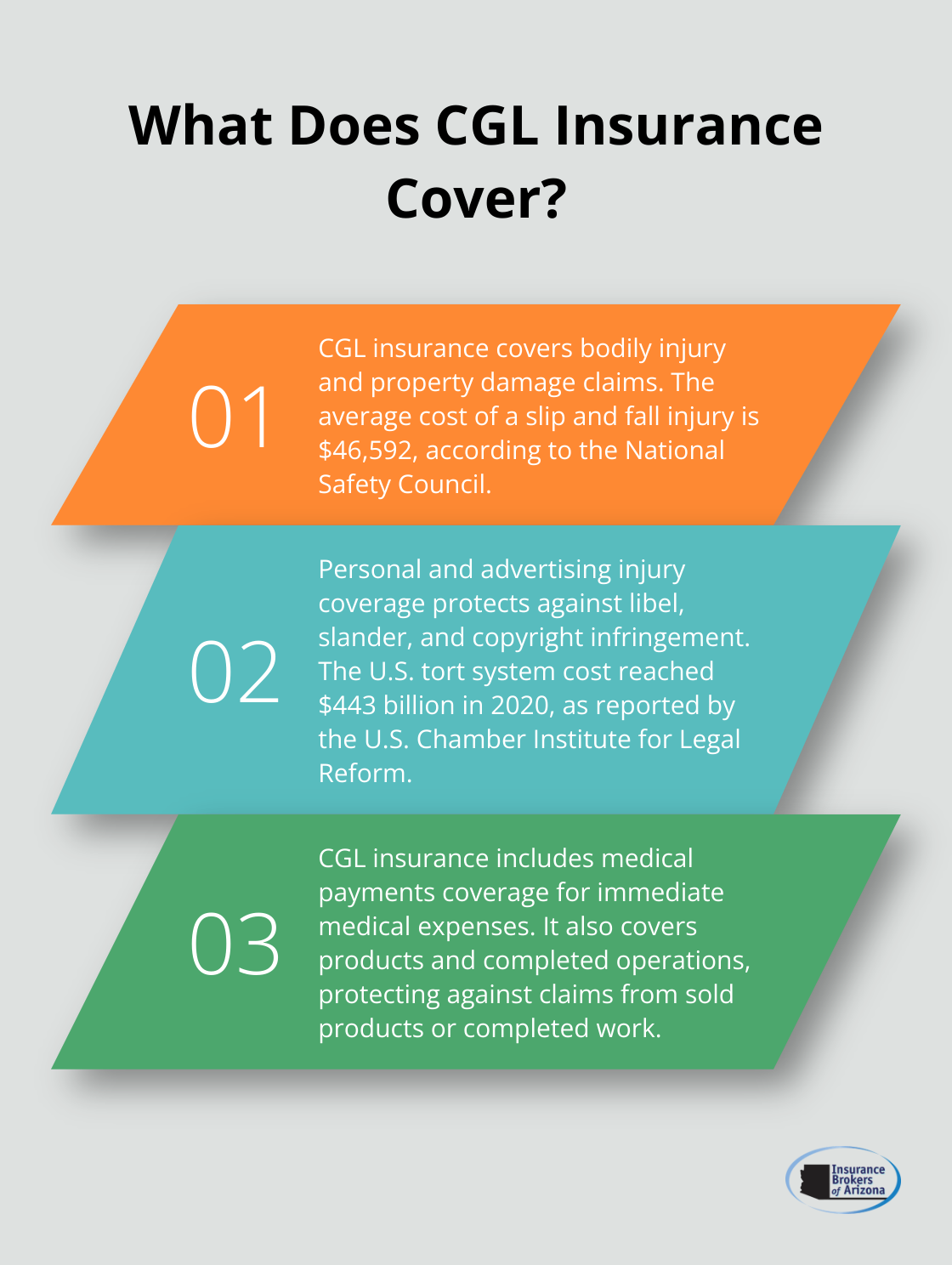
The National Safety Council reports that the average cost of a slip and fall injury is $46,592. Without adequate coverage, such an incident could devastate a small business.
Personal and Advertising Injury
This coverage protects your business from claims related to libel, slander, copyright infringement, and invasion of privacy. If your marketing campaign unintentionally uses copyrighted material, your CGL policy will cover the legal expenses and potential settlements.
The U.S. Chamber Institute for Legal Reform reports that the cost of the U.S. tort system reached $443 billion in 2020, highlighting the importance of this coverage in our litigious society.
Medical Payments
CGL insurance often includes a medical payments provision. This covers immediate medical expenses for injuries sustained on your business premises, regardless of fault. It’s a goodwill gesture that can prevent minor incidents from escalating into lawsuits.
If a customer trips in your store and needs a few stitches, your policy will cover their emergency room visit, potentially avoiding a more costly claim down the line.
Products and Completed Operations
This aspect of CGL coverage protects your business from claims arising from products you’ve sold or work you’ve completed. If a product you manufacture causes injury or property damage, or if a completed job leads to unforeseen issues, your CGL policy will cover the resulting claims.
The Consumer Product Safety Commission reported over 226,000 product-related injuries treated in emergency rooms in 2021. For businesses selling or manufacturing products, this coverage is essential.
Every business faces unique risks, and a one-size-fits-all approach to CGL insurance often falls short. Working with experienced insurance professionals (like those at Insurance Brokers of Arizona®) can help ensure your CGL policy addresses your specific industry risks and business operations. As we move forward, let’s examine the exclusions and limitations of CGL insurance to provide a comprehensive understanding of this essential policy.
What Are the Limits of CGL Insurance?
Commercial General Liability (CGL) insurance provides essential protection for businesses, but it does not cover every possible risk. Understanding its limitations is key for effective risk management.
Common Exclusions in CGL Policies
CGL policies do not cover employee injuries (which fall under workers’ compensation insurance). They also exclude intentional acts, professional errors, and auto-related incidents. The Insurance Information Institute confirms these exclusions as standard across the industry.
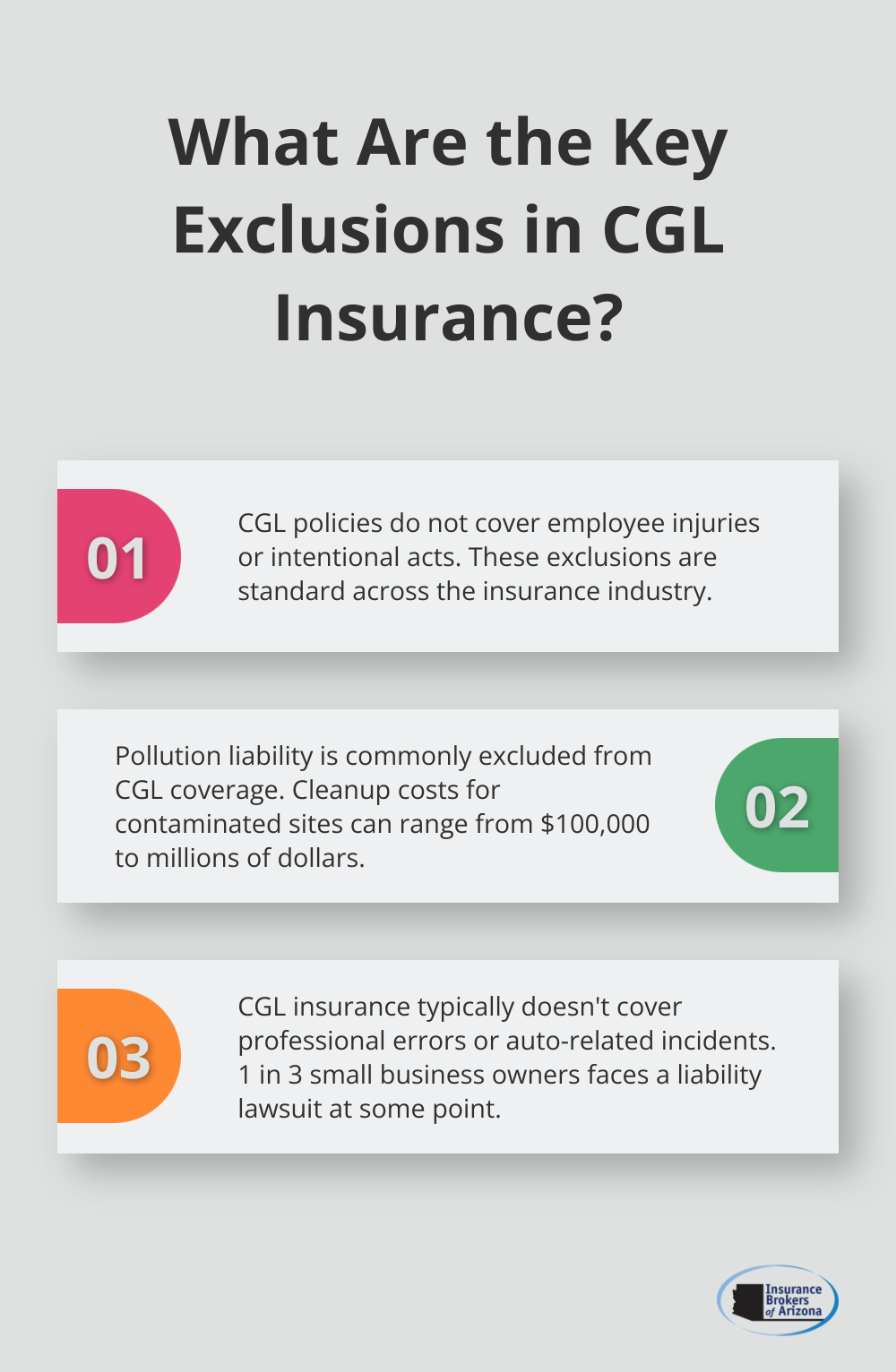
Pollution liability represents another common exclusion. The Environmental Protection Agency reports that cleanup costs for contaminated sites can range from $100,000 to millions of dollars. This fact underscores the need for specialized coverage for businesses with environmental risks.
Additional Policies to Fill Coverage Gaps
To address these limitations, businesses often need supplementary policies. Professional liability insurance (also known as errors and omissions coverage) protects against claims of negligence or inadequate work. A survey by Hiscox found that 1 in 3 small business owners faces a liability lawsuit at some point.
Cyber liability insurance has become increasingly important. The FBI’s Internet Crime Complaint Center reported 791,790 cybercrime complaints in 2020, with losses exceeding $4.1 billion. This type of coverage protects against data breaches and cyber attacks (which CGL policies typically do not cover).
The Value of Professional Guidance
The complexities of insurance coverage necessitate expert advice. Knowledgeable professionals can help businesses identify potential gaps in their coverage and find cost-effective solutions to address them.
A thorough review of your CGL policy with an experienced agent can reveal hidden exclusions and help tailor your coverage to your specific business needs. This proactive approach can protect businesses from costly surprises when claims arise.
Industry-Specific Considerations
Different industries face unique risks that standard CGL policies might not address. For example:
- Construction companies might need additional coverage for structural damage.
- Technology firms could require specialized protection for intellectual property disputes.
- Food service businesses might benefit from coverage for foodborne illness claims.
Insurance professionals can provide industry-specific insights to ensure comprehensive protection.
If you’re using your drone for commercial purposes, it’s important to ask your agent about a CGL insurance policy that includes drone usage, as standard policies may not cover this specific risk.
Final Thoughts
Commercial General Liability (CGL) insurance protects businesses from financial losses due to third-party claims. It covers bodily injury, property damage, personal and advertising injury, and products and completed operations liability. These protections shield companies in today’s litigious environment, where even minor incidents can lead to significant legal expenses.
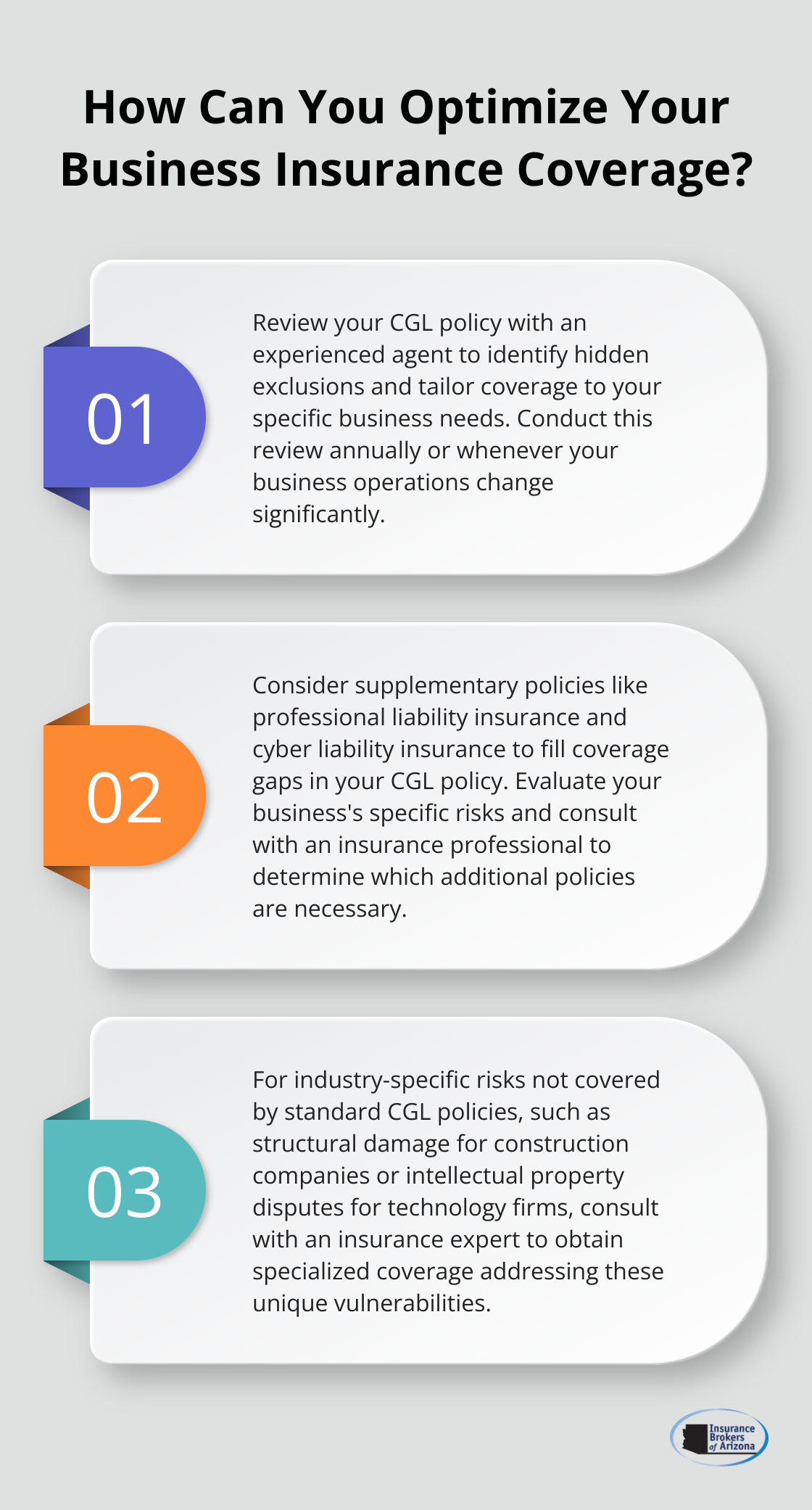
Every business faces unique risks, so a tailored approach to CGL insurance is essential. Companies should consider additional policies to fill coverage gaps or adjust limits to ensure adequate protection. Understanding what commercial general liability insurance covers allows businesses to make informed decisions about their insurance needs.
Insurance Brokers of Arizona® specializes in helping businesses find the right CGL policy for their needs. Our team works with over 40 reputable carriers to provide competitive options and personalized coverage. We take the time to understand your business, assess your risks, and recommend a comprehensive insurance solution that addresses your unique challenges.


