General Liability Insurance for Nonprofits: Essential Coverage
Nonprofits face unique challenges, and protecting their mission is paramount. At Insurance Brokers of Arizona®, we understand the critical role general liability insurance plays in safeguarding these organizations.
General liability insurance for nonprofits provides essential coverage against common risks, including bodily injury, property damage, and legal expenses. This blog post will explore why this coverage is vital and how to tailor it to your nonprofit’s specific needs.
What Is General Liability Insurance for Nonprofits?
The Foundation of Nonprofit Protection
General liability insurance forms the cornerstone of financial protection for nonprofit organizations. This essential coverage shields against monetary losses from third-party claims of bodily injury, property damage, and personal injury. Insurance Brokers of Arizona® has witnessed how this coverage can save nonprofits from unexpected legal challenges.
The Scope of General Liability Coverage
A typical general liability policy covers legal fees, settlements, and judgments related to covered claims. For instance, if a visitor falls at your nonprofit’s event, this policy will cover their medical expenses and any legal costs if they sue. It also protects against claims of libel, slander, and copyright infringement in promotional materials.
The Necessity of Coverage for Nonprofits
Nonprofits often operate with limited budgets, which makes them vulnerable to financial setbacks from lawsuits. The Nonprofits Insurance Alliance reports that the average cost of a slip and fall claim is $20,000. Without insurance, such an incident could jeopardize your organization’s mission and deplete its resources.
Furthermore, many grants and contracts require nonprofits to have general liability insurance. The absence of this coverage could result in missed funding opportunities or partnerships (which are often critical for organizational growth and impact).
Common Risks in the Nonprofit Sector
Nonprofits encounter various risks in their operations, including:
- Volunteer injuries: Volunteers might seek compensation if they get hurt while working for your organization.
- Property damage: Your nonprofit could become liable for damage to rented spaces or equipment.
- Reputational harm: Accusations of defamation or privacy violations can lead to expensive lawsuits.
- Food-related illnesses: If your nonprofit serves food at events, you might face claims if attendees become ill.
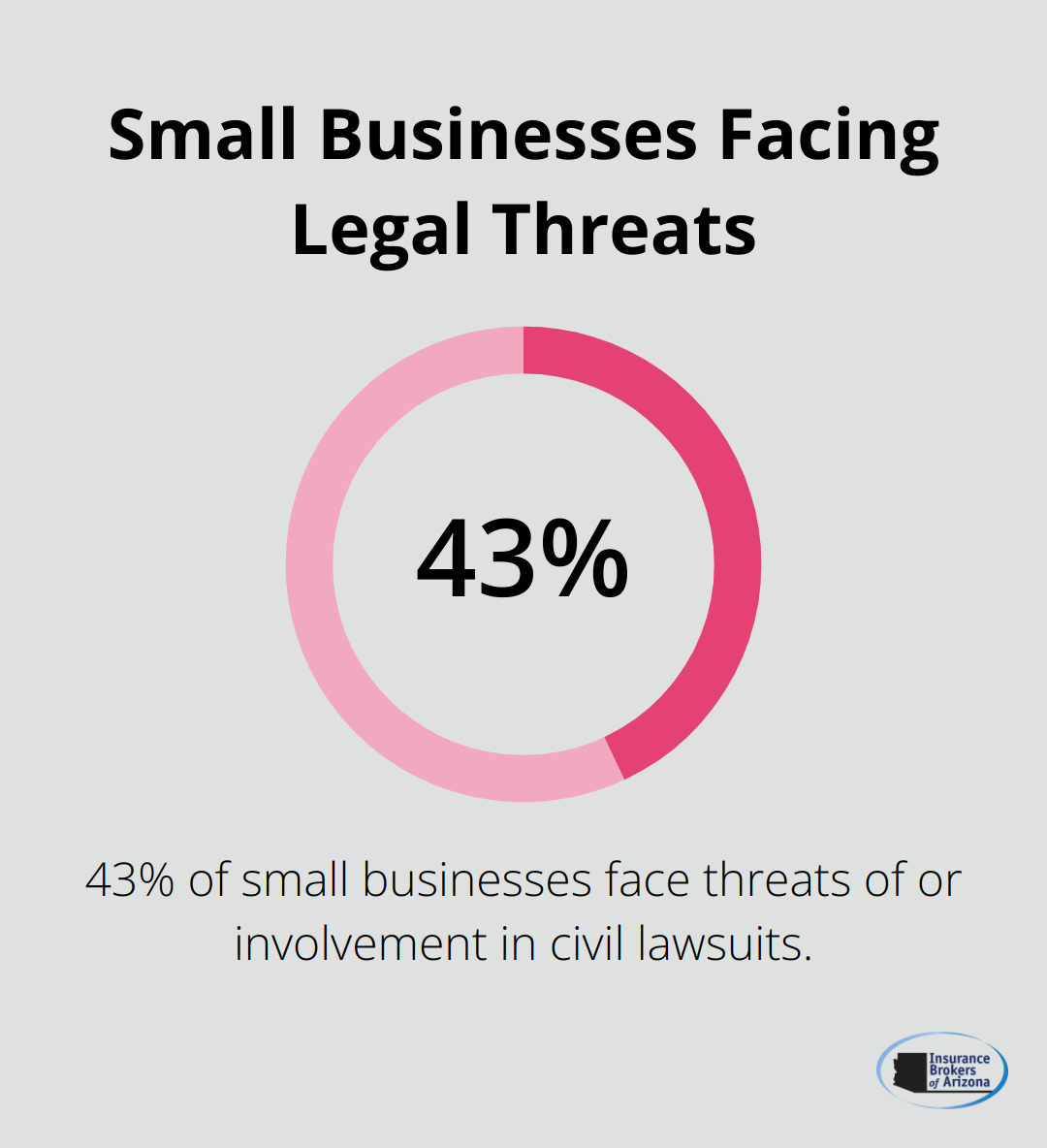
The U.S. Chamber of Commerce states that 43% of small businesses face threats of or involvement in civil lawsuits. Nonprofits are not exempt from this trend and require robust protection.
Customizing Coverage for Your Organization
Every nonprofit has unique risks based on its activities, size, and location. A small local charity will have different insurance needs compared to a large international NGO. It’s important to work with an experienced insurance broker who understands the nonprofit sector and can help you assess your specific risks.
As we move forward, let’s explore the key components of general liability insurance that nonprofits should consider when selecting their coverage.
What Does General Liability Insurance Cover for Nonprofits?
General liability insurance serves as a vital shield for nonprofit organizations, protecting them from a range of potential financial setbacks. This coverage can be a lifeline for nonprofits facing unexpected claims.
Bodily Injury and Property Damage Protection
The core of general liability insurance protects against bodily injury and property damage claims. If a visitor slips and falls at your nonprofit’s event, or if a volunteer accidentally damages a donor’s property during a fundraiser, your policy will cover the resulting expenses. The Insurance Information Institute reports that the average cost of a slip and fall claim is around $20,000 (a figure that underscores the importance of this coverage).
Safeguarding Against Personal and Advertising Injury
Nonprofits often engage in public communications and marketing efforts, which can inadvertently lead to claims of libel, slander, or copyright infringement. General liability insurance covers these personal and advertising injury claims. For example, if your organization faces accusations of using copyrighted material in a fundraising campaign without permission, your policy would cover legal defense costs and any resulting settlements.
Medical Payments Coverage
Many general liability policies include medical payments coverage, which can pay for immediate medical expenses if someone suffers an injury on your premises, regardless of fault. This coverage can prevent small incidents from escalating into larger claims. The National Safety Council states that the average cost of a nonfatal injury is $44,000 (a statistic that highlights the potential financial impact of even minor accidents).
Legal Defense and Settlement Costs
One of the most valuable aspects of general liability insurance is coverage for legal defense and settlement costs. The U.S. Chamber Institute for Legal Reform reports that the cost of the U.S. tort system reached $443 billion in 2020, with small businesses bearing 53% of the cost. For nonprofits operating on tight budgets, the ability to offset these potentially crippling legal expenses proves invaluable.

While general liability insurance provides broad protection, it doesn’t cover everything. Nonprofits should work with experienced insurance professionals to identify any gaps in coverage and consider additional policies such as directors and officers liability insurance or professional liability insurance. These additional coverages create a comprehensive risk management strategy that addresses the unique needs of nonprofit organizations.
As we move forward, let’s explore how to tailor general liability insurance to your nonprofit’s specific needs and operations.
How to Customize General Liability Insurance for Your Nonprofit
Assess Your Nonprofit’s Risk Profile
The first step to customize your general liability insurance involves a thorough risk assessment. Evaluate your organization’s activities, events, and potential exposures. A nonprofit that organizes large public events faces different risks compared to one that primarily operates online.
The National Council of Nonprofits recommends the creation of a risk matrix to identify and prioritize potential threats. This tool helps organizations visualize their risk landscape and make informed decisions about insurance coverage.
Determine Adequate Coverage Limits
The selection of appropriate coverage limits requires a balance between protection and affordability. The Nonprofit Risk Management Center suggests that organizations consider factors such as annual revenue, number of employees and volunteers, and the nature of their activities when they determine coverage limits.
Many nonprofits start with a $1 million per occurrence limit and a $2 million aggregate limit. However, organizations with higher risk profiles or significant assets may need higher limits. An annual review of these limits proves essential as your nonprofit grows and evolves.
Explore Additional Endorsements
Standard general liability policies may not cover all the risks your nonprofit faces. Additional endorsements can fill these gaps and provide more comprehensive protection. Some endorsements to consider include:
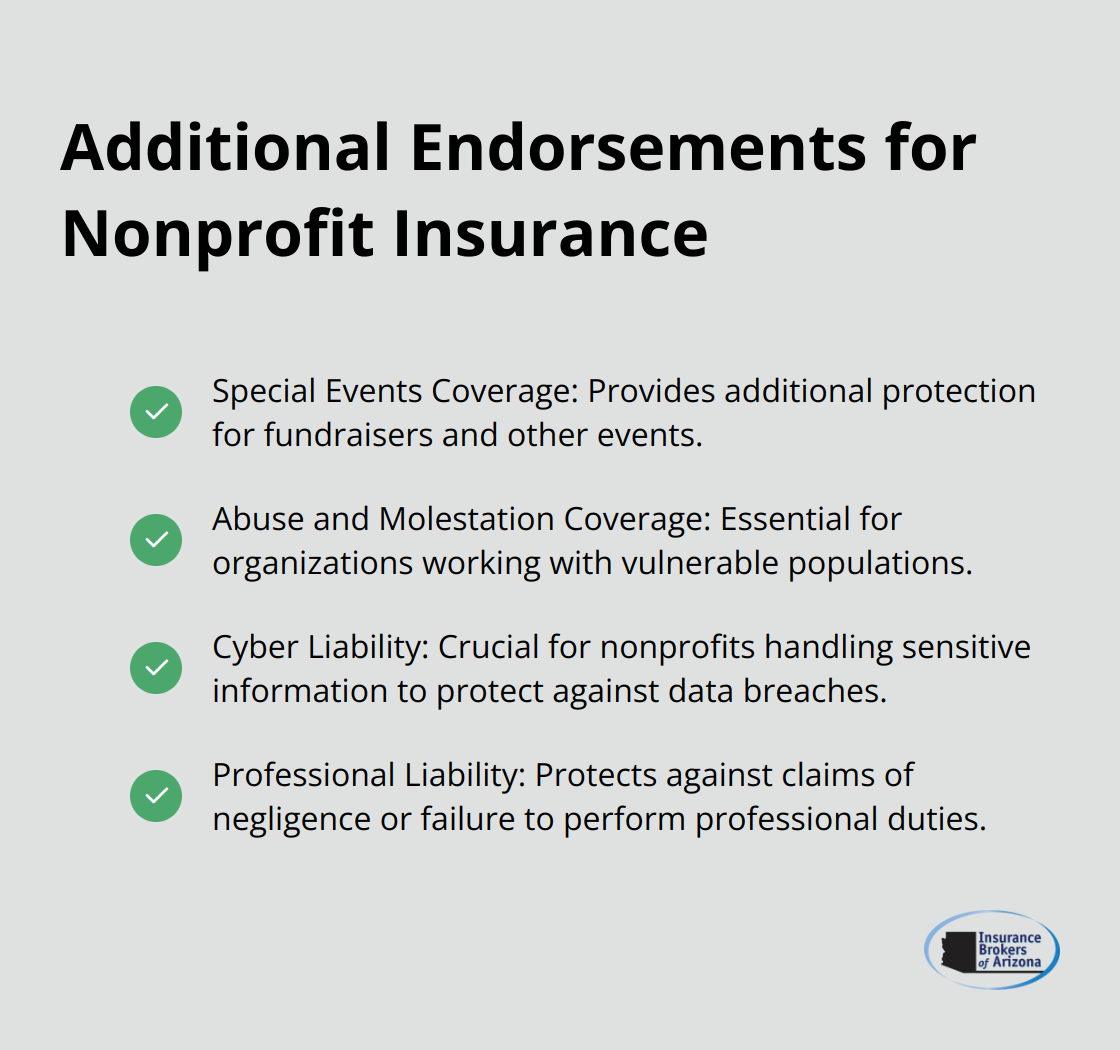
The Nonprofits Insurance Alliance reports that 27% of their members have added at least one endorsement to their general liability policy (which highlights the importance of these additional coverages).
Partner with an Experienced Insurance Broker
The complexities of nonprofit insurance require expertise. An experienced insurance broker can provide valuable insights, help you understand policy terms, and advocate on your behalf with insurance carriers.
When you select a broker, look for one with a track record in the nonprofit sector. They should explain complex insurance concepts in simple terms and provide examples of how they’ve helped similar organizations.
Insurance Brokers of Arizona® specializes in nonprofit insurance and can guide you through the process of customizing your general liability coverage. Our team stays up-to-date with the latest trends and risks that affect nonprofits, which ensures you receive the most relevant and effective insurance solutions.
Your general liability insurance should evolve with your organization. Regular reviews and updates to your coverage will ensure that your nonprofit remains protected as it grows and changes over time.
Final Thoughts
General liability insurance forms a vital shield for nonprofit organizations. This coverage protects against common risks, such as bodily injury, property damage, and legal expenses that could impede an organization’s mission. It allows nonprofits to concentrate on their core objectives without constant worry about potential lawsuits or claims.
Adequate insurance contributes to organizational sustainability and preserves a nonprofit’s reputation. It also opens doors to new opportunities, as many grants and contracts require proof of coverage. Nonprofit leaders who want to secure appropriate general liability insurance for nonprofits should partner with an experienced broker who understands the unique challenges faced by charitable organizations.
Insurance needs evolve as organizations grow and change. Regular reviews of coverage ensure that nonprofits remain protected against emerging risks. Insurance Brokers of Arizona® specializes in nonprofit insurance solutions and can guide you through the process of assessing your risks and determining appropriate coverage limits.


