Commercial Property Insurance Claims: A Practical Guide
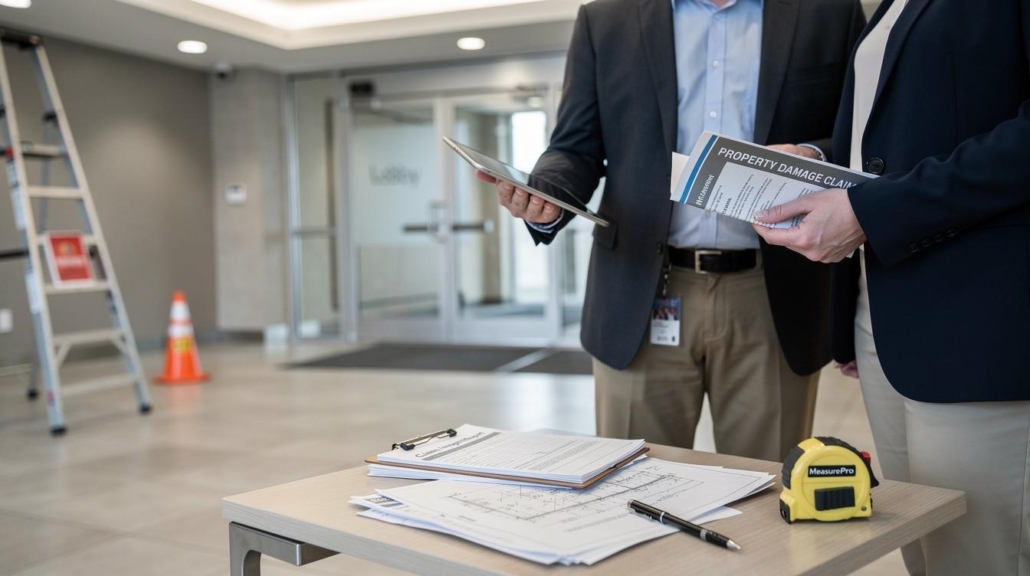
Commercial property insurance claims can feel overwhelming when damage strikes your business. The process involves multiple steps, documentation requirements, and decisions that directly impact your recovery.
We at Insurance Brokers of Arizona® have helped countless business owners navigate these claims successfully. This guide walks you through the types of claims you might file, the process itself, and the mistakes that could cost you money.
What Your Commercial Property Insurance Actually Covers
When fire, weather, or theft strikes your business, you need to know exactly what your policy pays for. Most commercial property insurance falls into three distinct coverage areas, and understanding the differences between them prevents costly surprises when you file a claim.
Building Structure and Physical Assets
Building structure coverage protects the physical structure itself-walls, roof, foundation, built-in fixtures, and permanent improvements. Business personal property coverage protects movable assets you own, including equipment, inventory, furniture, and machinery. Many business owners mistakenly assume one covers the other, then discover gaps when damage occurs.
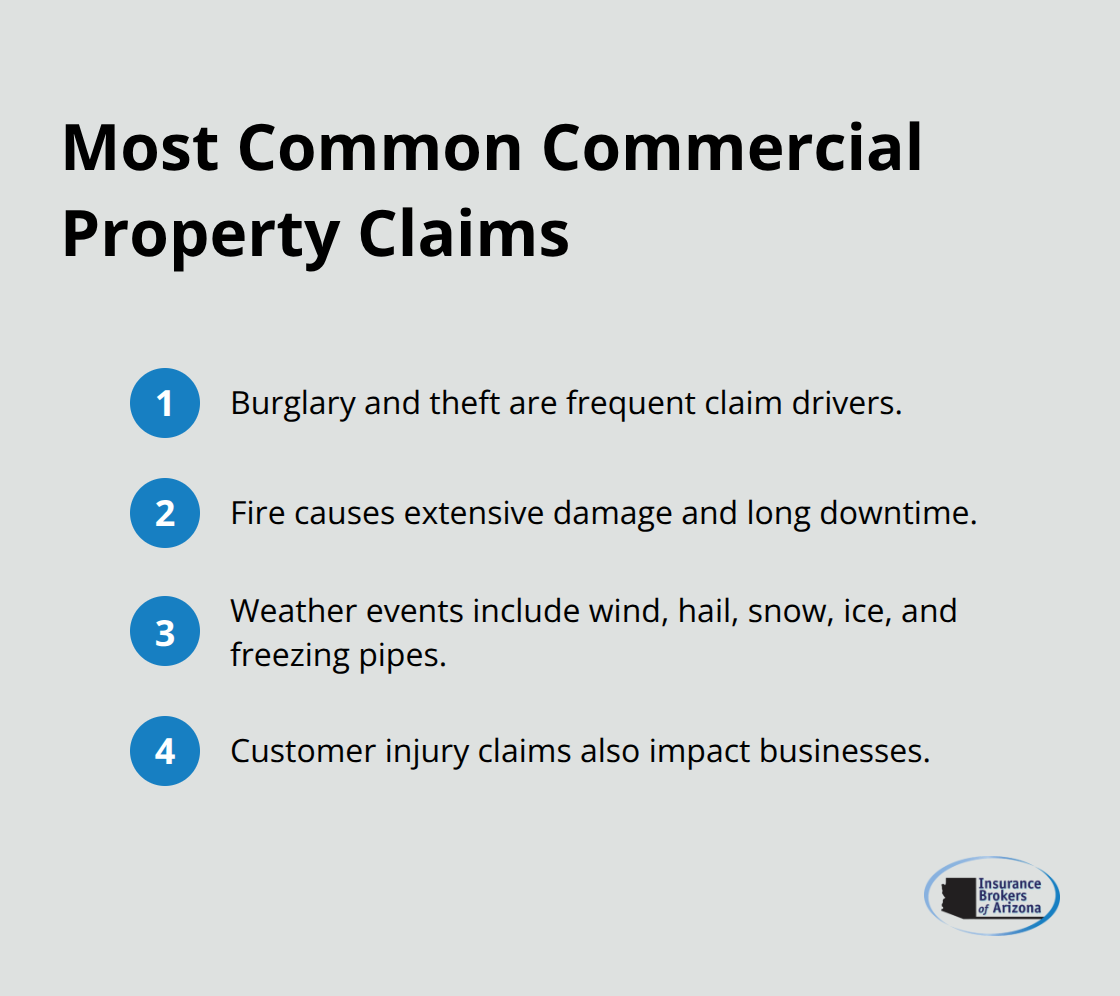
The four most common commercial property claims are burglary and theft, fire, weather damage, and customer injury, according to industry data. Fire causes rapid, extensive property damage and lengthy downtime for small businesses, making structural coverage critical. Weather damage from wind, hail, snow, ice, and freezing pipes shuts businesses down, with about half of restaurant owners reporting weather-related closures.
Valuation Methods and Coinsurance Penalties
Your policy’s valuation method matters significantly. Actual Cash Value policies pay depreciated amounts, while Replacement Cost policies reimburse what it costs to rebuild or replace items at current prices. Agreed Value options eliminate coinsurance penalties entirely, protecting you if property values fluctuate.
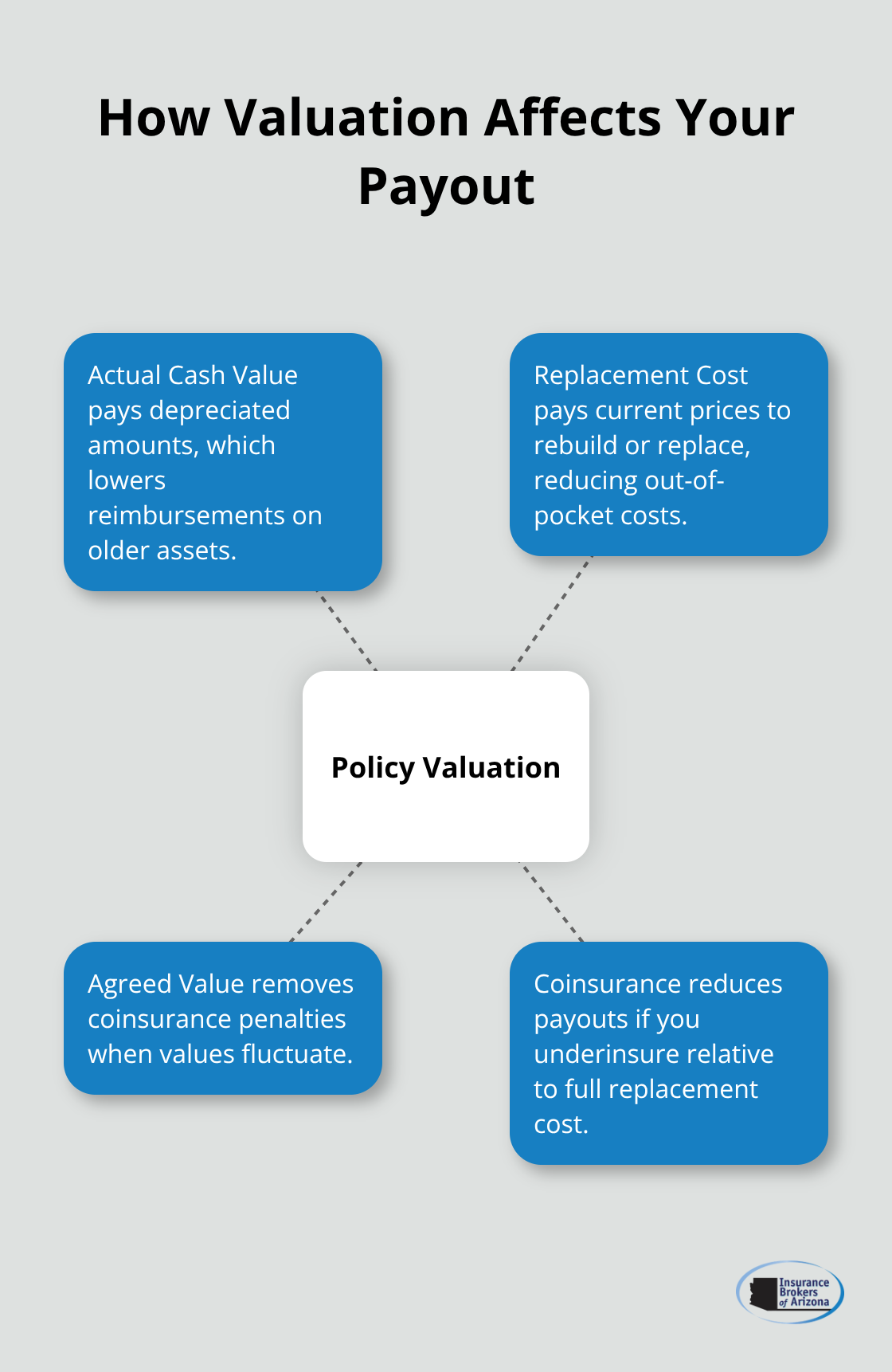
A coinsurance clause can reduce your payout substantially if you fail to insure property to its full replacement value. For example, if your building is worth $500,000 but you insure it for only $400,000, a $100,000 loss might be paid at only 80 percent of its value due to the coinsurance penalty. This gap between coverage and actual value creates significant financial exposure.
Income Protection When Operations Stop
Business interruption coverage pays your lost net income and ongoing operating expenses when a covered loss forces you to temporarily close. This coverage is often undervalued because business owners focus on physical damage first. The period of restoration-how long it takes to repair and reopen-becomes a major dispute point in claims.
Document delays caused by permits, supply chain issues, or construction slowdowns because insurers scrutinize whether the restoration period extended beyond reasonable estimates. Extra expense coverage reimburses costs to operate from an alternate location or accelerate repairs, which can significantly reduce your downtime. Many policies limit business interruption to 12 to 18 months, so understanding your specific coverage window prevents gaps if recovery takes longer.
Additional Coverage for Specialized Exposures
Business personal property in your care, custody, or control-such as customer equipment, rented items, or property you hold for others-may require separate inland marine coverage. Standard policies often exclude or limit this exposure. When filing a claim involving business interruption, insurers will scrutinize your historical revenue, profit margins, seasonal trends, and operating expenses closely. Prepare detailed financial documentation to support net income losses and prove which expenses continued during closure.
Equipment breakdown coverage protects machinery and systems not covered under standard property policies, including inspection and maintenance costs in some policies. If your business depends on HVAC systems, refrigeration, boilers, or specialized machinery, this endorsement prevents significant coverage gaps. Understanding these coverage layers now positions you to file stronger claims later and avoid the mistakes that delay payments.
How to File a Commercial Property Claim Successfully
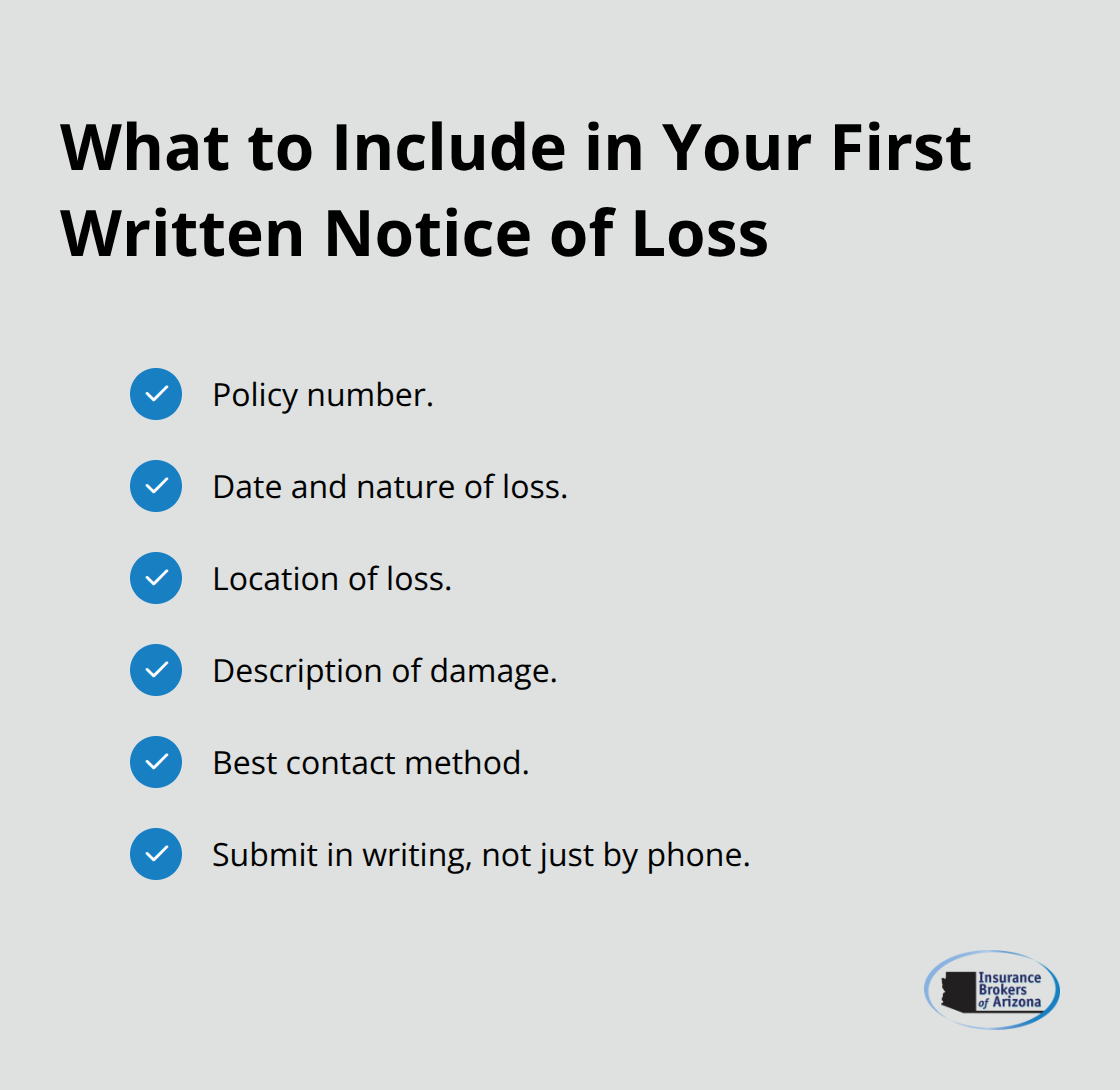
Notify your insurer immediately after damage occurs-it’s contractually required and directly affects how quickly you recover. File notification in writing, not just by phone, and include your policy number, the date and nature of loss, the location, a description of damage, and your best contact method. This written record protects you because insurers must acknowledge claims promptly under unfair claim settlement practices laws.
North Carolina law, for instance, allows policyholders to pursue treble damages and attorney fees if an insurer fails to acknowledge or investigate reasonably. Before the adjuster arrives, obtain and review your full policy (not just the declarations page), including endorsements, schedules, and forms. Understand whether you have an all-risk policy or a named-perils policy and identify key exclusions like flood, earth movement, or wear and tear. This preparation prevents surprises when the adjuster evaluates your claim.
Document Damage Immediately and Thoroughly
Prioritize safety and document damage right away with time-stamped photos and videos from all angles covering exterior, interior, equipment, inventory, and water damage. Advanced documentation methods like 3D LiDAR or drone imaging capture details that standard photos miss, especially for significant losses. Preserve damaged property and do not discard items unless they pose a health or safety hazard-photograph and catalogue items first so the insurer can inspect them pre-disposal. Maintain a detailed written log of all damage, temporary repairs, conversations with the insurer, and all incurred expenses because this log becomes invaluable if disputes arise later.
Perform Only Temporary Repairs
Perform only temporary, emergency repairs to mitigate further loss; permanent repairs too early can undermine your claim because insurers may argue you inflated costs or repaired items beyond their actual damage. Keep all receipts and document delays caused by permits, supply chain issues, or construction slowdowns, as these directly affect your business interruption payout if the restoration period extends beyond initial estimates.
Submit a Complete Proof of Loss
Submit a thorough sworn proof of loss within your policy’s required timeframe, typically 60 days unless extended by written agreement. Provide category-specific breakdowns for structural damage, equipment, inventory, business personal property, debris removal, temporary repairs, and business income, attaching supporting estimates and records to each section. Ensure accuracy and avoid overstating amounts because inflated claims invite challenges or outright denial. Request a written extension if you need more time and obtain written confirmation of the extension.
Present Your Case During the Claims Inspection
Attend the claims inspection with the adjuster and walk the property to highlight all damage. Bring your own contractor or engineer to present independent estimates or assessments, which strengthen your position. Do not sign documents such as a proof of loss, release, or settlement agreement until you have carefully reviewed them and confirmed they cover all losses-avoid language stating losses are undisputed or payments are full and final because these phrases can prevent future recovery. Do not provide recorded statements or undergo examinations under oath without counsel, though you must cooperate with reasonable insurer requests.
Challenge Denials and Protect Your Rights
If the insurer denies your claim, demand a written denial that cites the specific policy provisions or legal basis; vague or unsupported denials should be challenged, especially when multiple coverage parts may apply to your loss. Understanding your rights during the claims process positions you to recover what your policy promises. The next step involves navigating settlement negotiations and ensuring the insurer’s offer reflects the full scope of your documented losses.
Mistakes That Cost You Money in Claims
Underestimating Coverage Limits and Coinsurance Penalties
Most business owners underestimate what they actually need to insure until damage forces a reckoning. This pattern repeats constantly: a business owner files a claim only to discover coverage limits fall thousands of dollars short, or a coinsurance penalty slashes the payout because the owner failed to insure property to full replacement value. The coinsurance clause is not theoretical-it directly reduces what you recover. If your building is worth $500,000 but you insure it for only $400,000, a $100,000 loss might pay just $80,000 due to coinsurance. This gap exists because insurers expect you to carry coverage equal to the property’s full replacement cost.
Conduct an annual property valuation with your broker and adjust limits upward as construction and equipment costs rise. Many Arizona business owners skip this step and pay the price when inflation erodes their coverage adequacy. The fix is straightforward: work with your broker to establish replacement values that match current market conditions, not outdated estimates from years past.
Incomplete Documentation That Invites Denials
Insurers scrutinize claims closely, and vague or incomplete damage records invite denials or reduced payouts. Time-stamped photos and videos from all angles-exterior, interior, equipment, inventory-create an undeniable record. Advanced methods like drone imaging or 3D LiDAR capture details standard photos miss, especially for large or complex losses. One restaurant owner in Phoenix documented water damage with drone footage that revealed hidden damage in the attic space, adding $15,000 to an otherwise incomplete claim.
Maintain a detailed written log of all damage, temporary repairs, conversations with your insurer, and expenses incurred. This log becomes invaluable if disputes arise. Do not discard damaged items unless they pose a safety hazard; photograph and catalogue them first so the insurer can inspect them before disposal. Permanent repairs made too early can undermine your claim because insurers may argue you inflated repair costs or repaired items beyond their actual damage.
Notification Delays and Missed Deadlines
Notification delays breach your contract and signal to the insurer that you may not be serious about the claim. File written notification immediately after damage occurs, including your policy number, the date and nature of loss, the location, and a description of damage. Phone calls alone are insufficient-written notice creates a documented record. Similar protections exist in most states to guard against unfair claim practices.
Proof of loss submissions must arrive within 60 days unless you obtain a written extension beforehand. Missing this deadline gives insurers grounds to deny your claim outright. Additionally, many business owners delay preparing their proof of loss because they assume the adjuster will handle everything. This passive approach costs money.
Weak Proof of Loss Submissions
Your proof of loss should provide category-specific breakdowns for structural damage, equipment, inventory, business personal property, debris removal, temporary repairs, and business income, with supporting estimates and receipts attached to each section. Insurers scrutinize business interruption claims intensely, examining historical revenue, profit margins, seasonal trends, and operating expenses. If you lack detailed financial documentation, the insurer will lowball your lost income calculation.
Period of restoration disputes arise frequently because business owners fail to document delays caused by permits, supply chain issues, or construction slowdowns. These delays extend your recovery time and your business interruption payout; without written evidence of delays, the insurer assumes restoration occurred faster than it actually did. Prepare detailed financial records that support your net income losses and prove which expenses continued during closure.
Acting Too Quickly on Permanent Repairs
Perform only temporary, emergency repairs to mitigate further loss; permanent repairs made too early can undermine your claim. Insurers may argue you inflated repair costs or repaired items beyond their actual damage. Keep all receipts and document delays caused by permits, supply chain issues, or construction slowdowns, as these directly affect your business interruption payout if the restoration period extends beyond initial estimates. Wait for the adjuster’s assessment before committing to permanent repairs that could complicate your claim recovery.
Final Thoughts
Commercial property insurance claims succeed when you prepare before damage strikes. Your coverage limits must match your actual property values, and coinsurance penalties punish underinsurance directly by reducing payouts when you fail to carry adequate limits. Annual valuations with your broker catch inflation and equipment upgrades before they become claim problems, while business interruption coverage deserves equal attention because lost income often exceeds physical damage costs.
Documentation separates successful commercial property insurance claims from disputed ones. Time-stamped photos, detailed logs of damage and expenses, and preserved property create an undeniable record that speeds settlement. The proof of loss you submit must include category-specific breakdowns with supporting estimates and financial records attached, as vague submissions invite denials or reduced payouts.
Timing matters throughout the process-written notification immediately after damage occurs protects your contractual rights, proof of loss submissions within 60 days prevent automatic denials, and temporary repairs only prevent arguments about inflated costs. We at Insurance Brokers of Arizona® help business owners navigate commercial property insurance claims by coordinating with adjusters and guiding you through documentation and settlement to maximize your recovery. Contact us today to review your coverage limits and prepare your business for whatever comes next.
Disclaimer: The information provided in this blog is for general informational purposes only and does not constitute legal, financial, or insurance advice. Coverage options, terms, and availability may vary. Please consult with a licensed professional for advice specific to your situation.


