
Auto Insurance Coverage Arizona: Understanding Your Policy

Auto insurance coverage in Arizona isn’t one-size-fits-all. Arizona law requires specific minimums, but your actual needs depend on your vehicle, driving habits, and financial situation.
We at Insurance Brokers of Arizona® help drivers cut through the confusion. This guide walks you through coverage types, state requirements, rate factors, and how to build a policy that actually protects you.
Understanding Auto Insurance Coverage Types
Liability Coverage: The Foundation of Your Policy
Liability coverage is non-negotiable in Arizona and forms the foundation of every auto policy. It splits into two parts: bodily injury liability pays for injuries you cause to others, while property damage liability covers damage you inflict on someone else’s vehicle or property. Arizona mandates minimums of $25,000 per person and $50,000 per accident for bodily injury, plus $15,000 for property damage.
These minimums sound reasonable until you realize a serious accident can easily exceed them. A single hospitalization costs $100,000 or more. If you cause that accident and only carry minimum coverage, you become personally liable for the difference. We recommend carrying at least $100,000 in bodily injury coverage per person, especially if you have assets to protect. Your liability limits should reflect what you could lose in a worst-case scenario, not just what the law requires.
Collision and Comprehensive: Protecting Your Own Vehicle
Collision and comprehensive coverage protect your own vehicle, which matters differently depending on what you drive. Collision covers damage from accidents you cause or are involved in, while comprehensive handles theft, fire, vandalism, weather, and animal strikes. If you financed or leased your vehicle, your lender requires both.
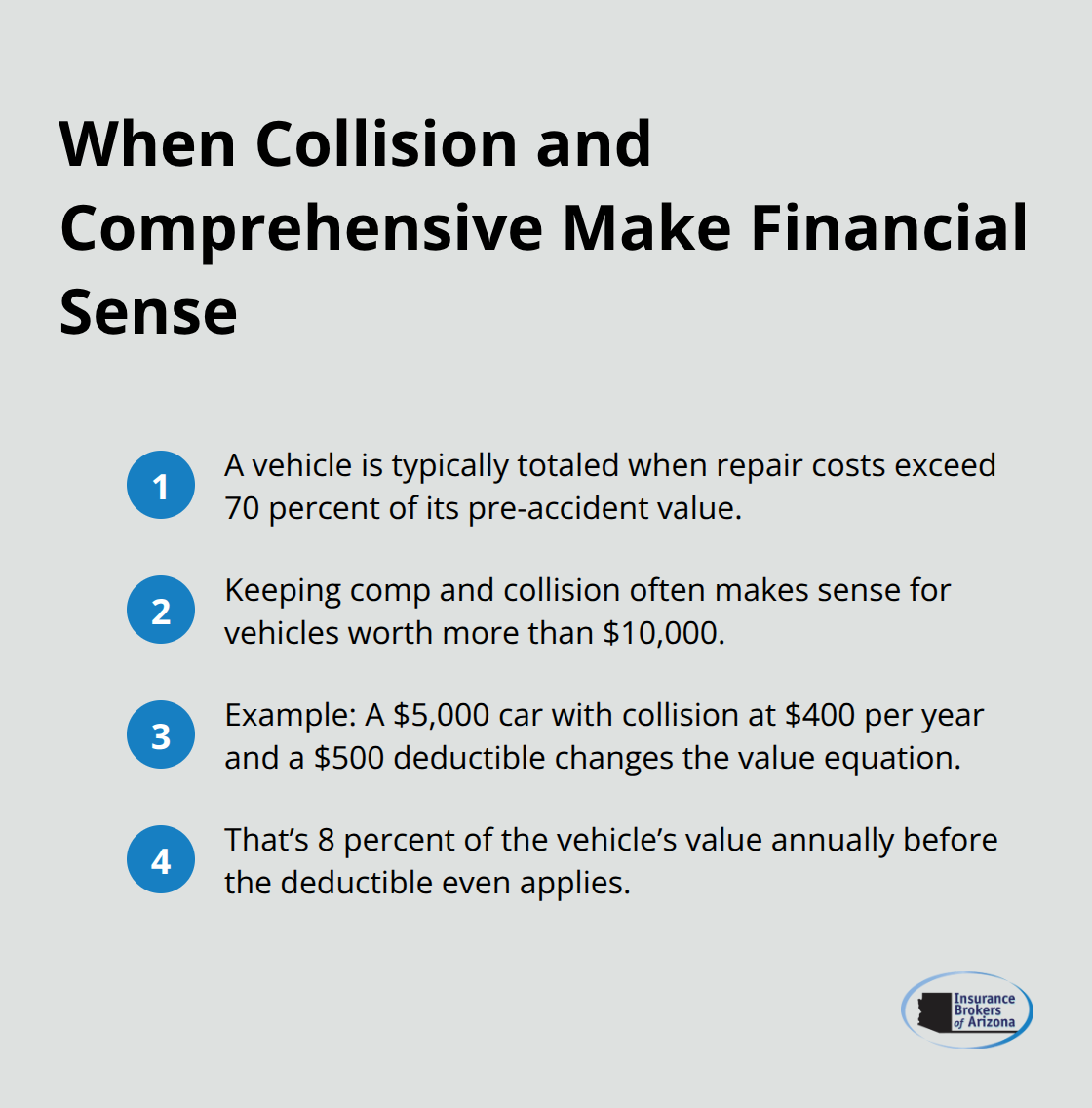
If you own it outright, the decision becomes financial. In Arizona, a car is typically totaled when repair costs exceed 70 percent of its pre-accident value, meaning comprehensive and collision make sense for vehicles worth more than $10,000. For older vehicles, the math changes. If your car is worth $5,000 and collision costs $400 annually with a $500 deductible, you pay 8 percent of the vehicle’s value yearly for protection that only activates after you absorb the deductible.
Uninsured and Underinsured Motorist Coverage: Closing the Gap
Uninsured and underinsured motorist coverage fills a gap most drivers overlook. UM coverage protects you if an uninsured driver hits you, while UIM covers you when the at-fault driver’s liability limits are too low. Arizona allows you to set UM and UIM limits at $25,000 per person and $50,000 per accident minimum, but carrying the same limits as your liability coverage makes practical sense.
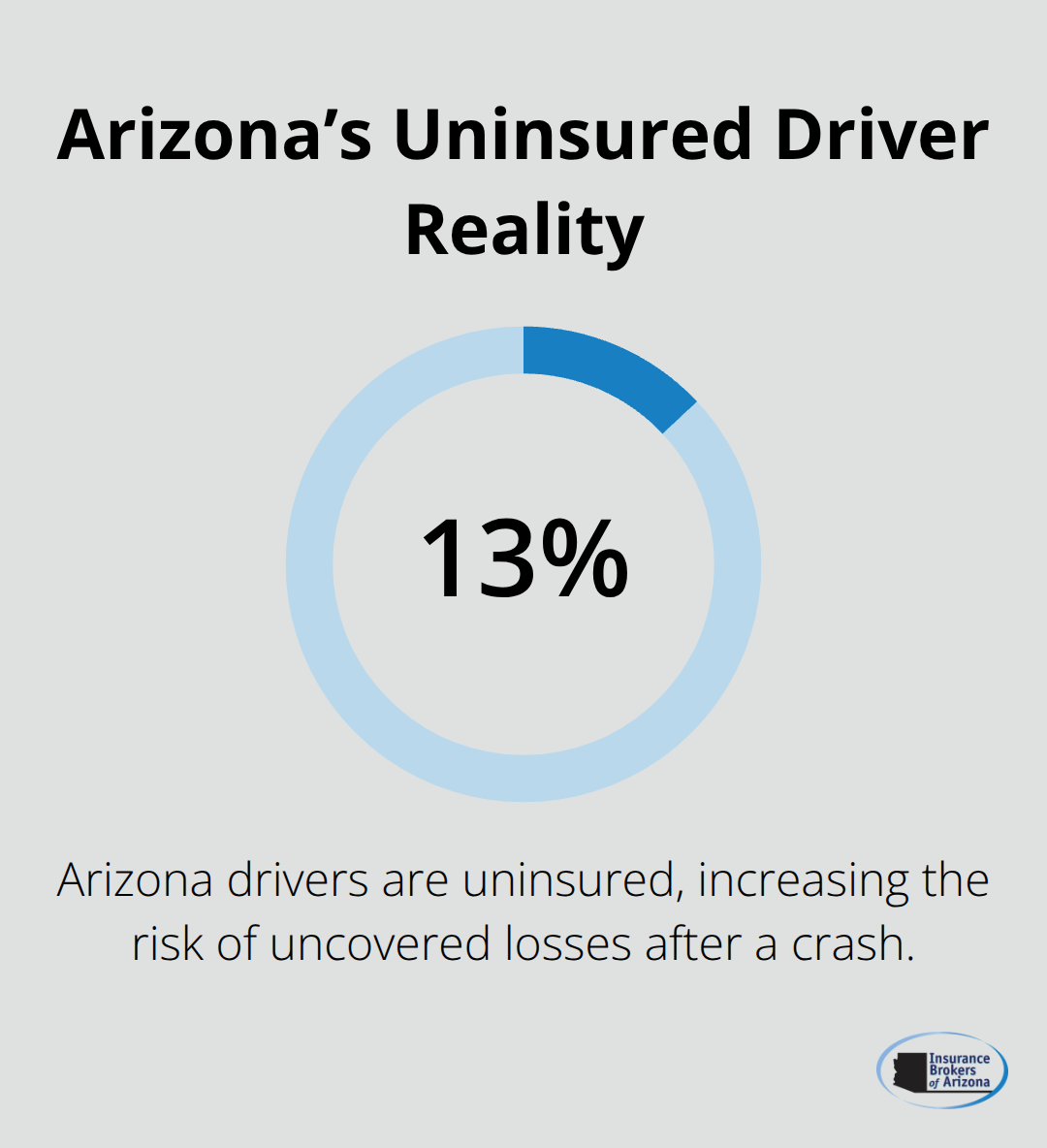
Studies show roughly 13 percent of Arizona drivers are uninsured, which means one in eight vehicles on the road could leave you unprotected if you only rely on their liability coverage. This protection becomes especially important when you consider that an underinsured driver with minimum coverage cannot pay for serious injuries. Your UM and UIM limits act as your safety net when other drivers fail to carry adequate protection.
Understanding these three coverage types positions you to make informed decisions about what your policy should actually include. The next section examines Arizona’s specific legal requirements and how they compare to other states.
Arizona-Specific Auto Insurance Requirements and Laws
Minimum Coverage Requirements in Arizona
Arizona law mandates that every vehicle operated on public roadways carries liability insurance-no exceptions and no grace periods. The minimums are straightforward: $25,000 bodily injury per person, $50,000 bodily injury per accident when two or more people are injured, and $15,000 property damage per accident. These requirements apply to passenger cars, motorcycles, mopeds, and even golf carts when driven on roads. Your insurer must be authorized to do business in Arizona, and coverage must be active when you drive.
The Arizona Department of Transportation tracks this through your vehicle registration, so lapses matter immediately. You have 30 days after registering a vehicle to submit proof of insurance, or compliance issues follow. If your vehicle sits unused, you can temporarily de-insure it through AZ MVD Now, but you must reinstate coverage before driving again.
How Arizona’s Fault-Based System Works
Arizona uses a fault-based system, meaning the at-fault driver’s liability coverage pays for damages. This approach differs sharply from no-fault states like Michigan or Florida, which require Personal Injury Protection regardless of who causes an accident. The fault-based model creates a critical gap: if an uninsured or underinsured driver hits you, their liability limits become your problem.
Arizona law allows household members to be excluded from bodily injury coverage on your own policy, a loophole that affects families with teenage drivers. You need to ask your insurer directly about this and consider higher limits if household exclusions apply to your situation.
Penalties for Driving Without Insurance
Driving without active insurance triggers registration suspension, and police can seize your license plate on the spot if you cannot show proof. Reinstatement requires an SR22 certificate proving you meet minimum liability requirements for up to three years. If you cannot provide proof of insurance that was active before suspension, you pay a $50 reinstatement fee plus current proof of coverage. Non-drivers can obtain a non-owner SR22 to satisfy requirements after serious traffic violations.
Your Rights Under Arizona Law
Arizona law prohibits insurers from raising your premiums after an accident you did not cause or did not significantly contribute to, per Arizona Revised Statutes Section 20-263(A)-a protection many drivers don’t know exists. If your policy gets canceled after 60 days, it can only happen for specific reasons, and you have the right to appeal to the Director of Insurance within 10 days or file complaints with the Consumer Protection Division if the cancellation seems unjust.
These state-specific rules shape how your coverage works and what happens when things go wrong. What you pay for that coverage, however, depends on factors that vary widely from driver to driver-and understanding those factors helps you avoid overpaying for protection you need.
Factors That Affect Your Auto Insurance Rates in Arizona
Driving History: Your Most Expensive Record
Your driving history stands as the single most powerful factor determining what you pay for auto insurance in Arizona, and insurers scrutinize it ruthlessly. A motor vehicle report covers roughly three years of driving history, capturing at-fault accidents, traffic violations, and claims you’ve filed. Bankrate reports the average Arizona driver pays about $2,737 annually for full coverage, but that figure masks enormous variation based on your record. One at-fault accident can increase your premium by 20 to 40 percent depending on severity and your insurer’s underwriting rules.
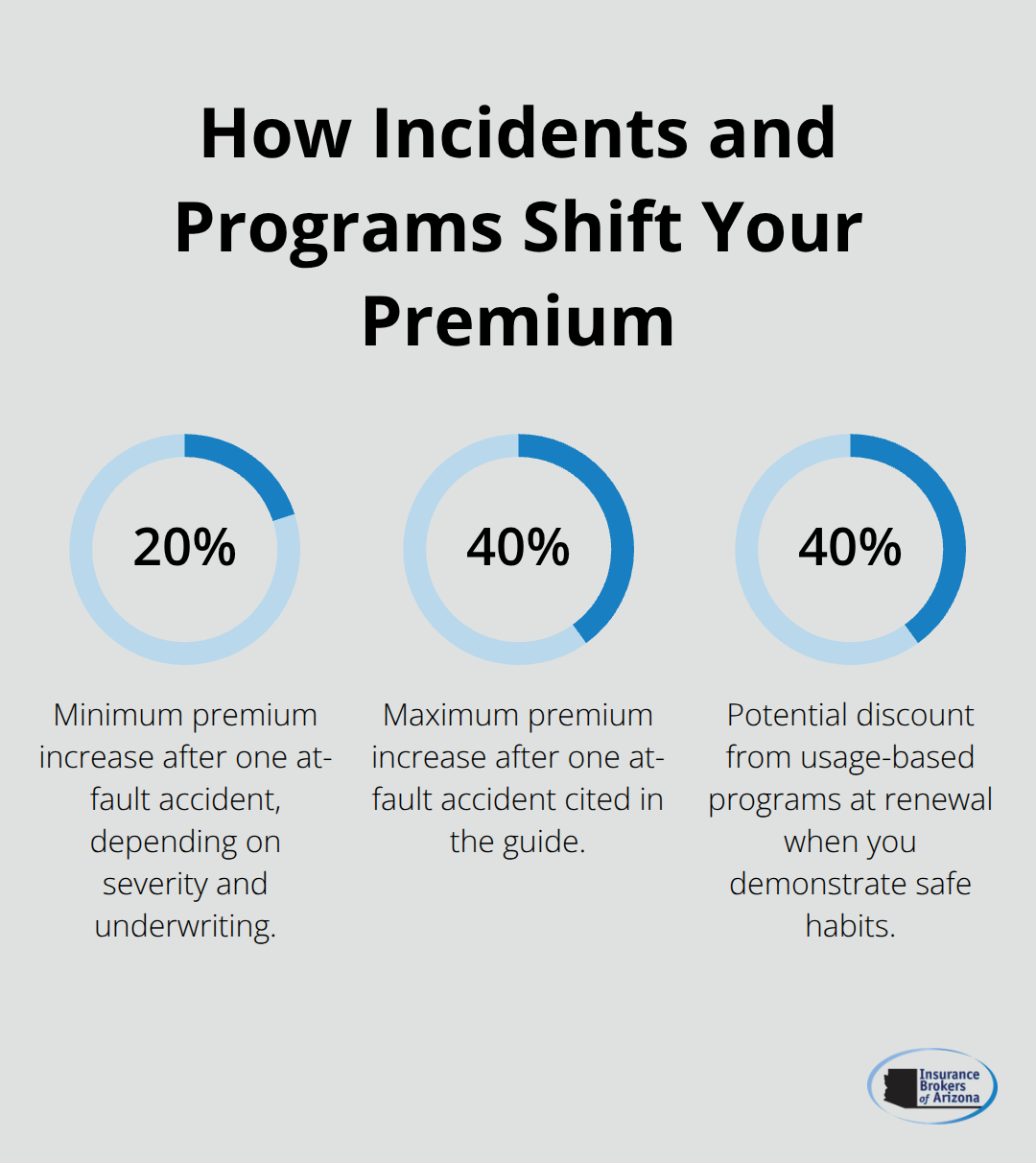
Arizona law prohibits premium increases after accidents you did not cause or did not significantly contribute to, which means you can challenge unfair surcharges through the Director of Insurance if your carrier tries to penalize you for something that wasn’t your fault. If you’ve had violations or claims, some insurers offer accident forgiveness programs or usage-based insurance like MercuryGo, which monitors your actual driving behavior and can reduce your premium by up to 40 percent at renewal if you demonstrate safe habits.
Credit Score and Financial Responsibility
Credit score matters more than most drivers realize. Insurers use credit-based insurance scores to price policies, and a lower score can cost you hundreds annually even if your driving record is spotless. Check your credit reports through AnnualCreditReport.com for errors before requesting quotes, since correcting inaccuracies directly improves your insurability and rates.
Vehicle Type, Location, and Age
Vehicle type, age, and where you live in Arizona create dramatic rate differences that have nothing to do with your driving ability. Urban areas like Phoenix and Tucson push premiums higher because increased traffic density and claim frequency drive up risk exposure compared to rural Arizona. A sports car will cost substantially more to insure than a sedan because repair costs and theft risk are higher, while vehicles with advanced safety features often qualify for discounts that offset some costs.
Your vehicle’s value also determines whether collision and comprehensive coverage makes financial sense. Bankrate data shows minimum coverage in Arizona averages $864 annually, but bundling your auto policy with homeowners or renters coverage can reduce that significantly. Mercury offers bundling discounts ranging from 5 to 20 percent depending on the combination, meaning a driver paying $1,200 for auto alone might drop that to $960 or less by adding home coverage.
Age plays a role too. Drivers under 25 pay substantially more because insurance data shows this age group has higher accident rates, while drivers over 65 sometimes face surcharges if their medical history suggests increased risk.
Coverage Limits and Premium Impact
The coverage limits you select directly impact your premium, which creates a tempting trap: choosing minimum $25,000 bodily injury coverage saves money upfront but exposes you to personal liability that can devastate your finances if a serious accident occurs. Carrying $100,000 in bodily injury coverage costs perhaps 15 to 20 percent more annually but protects your assets if you cause injuries exceeding the state minimum.
Final Thoughts
Auto insurance coverage in Arizona requires you to balance legal minimums against your actual financial exposure. The state mandates $25,000 bodily injury per person and $50,000 per accident, but these floors leave you vulnerable if you cause serious injuries. Carrying higher limits costs relatively little compared to the personal liability you avoid, and adding uninsured motorist protection addresses the reality that roughly 13 percent of Arizona drivers carry no insurance at all.
Your rates depend heavily on factors you control and factors you don’t. Driving history shapes your premium more than anything else, but credit score, vehicle type, and location in Arizona also matter significantly. If you’ve had accidents or violations, usage-based programs can reward safer driving with discounts up to 40 percent. Bundling auto with home or renters coverage cuts costs through discounts ranging from 5 to 20 percent, making it worth exploring even if you haven’t considered it before.
The practical next step involves reviewing your current declarations page to confirm your coverage limits match your actual needs. Check whether your vehicle’s value justifies collision and comprehensive coverage, and verify that your liability limits reflect what you could lose in a worst-case accident. We at Insurance Brokers of Arizona® work with over 40 carriers to match you with competitive options tailored to your situation, and our team focuses on securing the best rates while your coverage actually protects your assets and finances.
Disclaimer: The information provided in this blog is for general informational purposes only and does not constitute legal, financial, or insurance advice. Coverage options, terms, and availability may vary. Please consult with a licensed professional for advice specific to your situation.


