Commercial Property Insurance Coverage Forms Explained

Commercial property insurance coverage forms are the backbone of protecting your business assets. At Insurance Brokers of Arizona®, we understand that navigating these forms can be challenging for many business owners.
This guide will break down the different types of coverage forms, their key elements, and how to choose the right one for your company’s unique needs.

Types of Commercial Property Insurance Forms
Commercial property insurance forms provide various levels of protection for business assets. Understanding these forms is essential for selecting the right coverage for your company’s needs.
Basic Form Coverage
Basic form coverage offers the most straightforward and limited type of commercial property insurance. It typically protects against common perils such as:
- Fire
- Lightning
- Windstorm
- Vandalism
While it’s the least expensive option, it may leave your business exposed to many risks. Basic form policies often exclude coverage for theft or water damage unless specifically added.
Broad Form Coverage
Broad form coverage expands on the basic form by including additional perils. This type of policy usually covers everything in the basic form plus risks like:
- Falling objects
- Weight of snow or ice
- Accidental water damage
However, broad form policies still have exclusions. They might not cover damage from earthquakes or floods.
Special Form Coverage
Special form coverage (also known as all-risk coverage) offers the most comprehensive option available. Instead of listing covered perils, this form covers all risks except those specifically excluded in the policy. According to the Insurance Information Institute, special form policies are the most common type of commercial property insurance due to their extensive coverage.
Difference in Conditions Form
The Difference in Conditions (DIC) form fills gaps left by other policies. It’s particularly useful for businesses with unique risks or those located in areas prone to specific perils. For example, a company in California might use a DIC policy to cover earthquake damage (often excluded from standard policies).
Selecting the right commercial property insurance form requires consideration of your business’s specific risks, location, and budget. The cheapest option isn’t always the best in the long run. A thorough risk assessment with a knowledgeable insurance professional can help you make an informed decision that protects your business assets effectively.
As we move forward, let’s examine the key elements that make up these commercial property insurance coverage forms.
Understanding Commercial Property Insurance Forms
Commercial property insurance forms define the scope of your coverage. These documents contain several key elements that shape your policy’s protection. Let’s explore these components to help you make informed decisions about your business insurance.
Named Perils vs. Open Perils
The distinction between named perils and open perils forms the foundation of your policy. Named peril policies cover only specific risks listed in the policy. For instance, a policy might cover fire damage but not flood damage unless explicitly stated. Open peril policies cover all risks except those specifically excluded.
The National Association of Insurance Commissioners reports that open peril policies typically result in fewer claim denials. However, they often come with higher premiums. When choosing between the two, you should consider your business’s risk tolerance and budget.
Exclusions and Limitations
Every commercial property insurance form has exclusions and limitations. Common exclusions include wear and tear, nuclear hazards, and war. Some policies also exclude certain types of property (such as money and securities).
The Insurance Information Institute found that misunderstanding exclusions is a leading cause of claim denials. You should review your policy’s exclusions carefully with your insurance broker to avoid surprises when filing a claim.
Valuation Methods
Insurance companies use different methods to determine the value of your property in the event of a loss. The most common are:
- Replacement Cost Value (RCV): Pays to replace damaged property with new property of similar quality.
- Actual Cash Value (ACV): Pays the depreciated value of the property at the time of loss.
- Functional Replacement Cost: Pays to replace the property with less costly materials that serve the same purpose.
The Insurance Services Office reports that RCV policies typically cost about 10% more than ACV policies but provide more comprehensive coverage. When selecting a valuation method, you should consider the age and condition of your property, as well as your ability to cover potential gaps in coverage.

Coinsurance Clauses
Coinsurance clauses require you to insure a minimum percentage of your property’s value, usually 80% to 90%. If you don’t meet this requirement, you may face penalties in the event of a partial loss.
For example, if your property is valued at $1,000,000 and your policy has an 80% coinsurance clause, you need to insure it for at least $800,000. If you only insure it for $600,000 and suffer a $100,000 loss, the insurance company may only pay $75,000 (less your deductible), leaving you to cover the remaining $25,000.
Understanding these key elements will help you navigate the complexities of commercial property insurance forms. The next section will guide you through the process of choosing the right coverage form for your business, taking into account your unique risks and requirements.
How to Select the Best Coverage Form
Evaluate Your Risk Profile
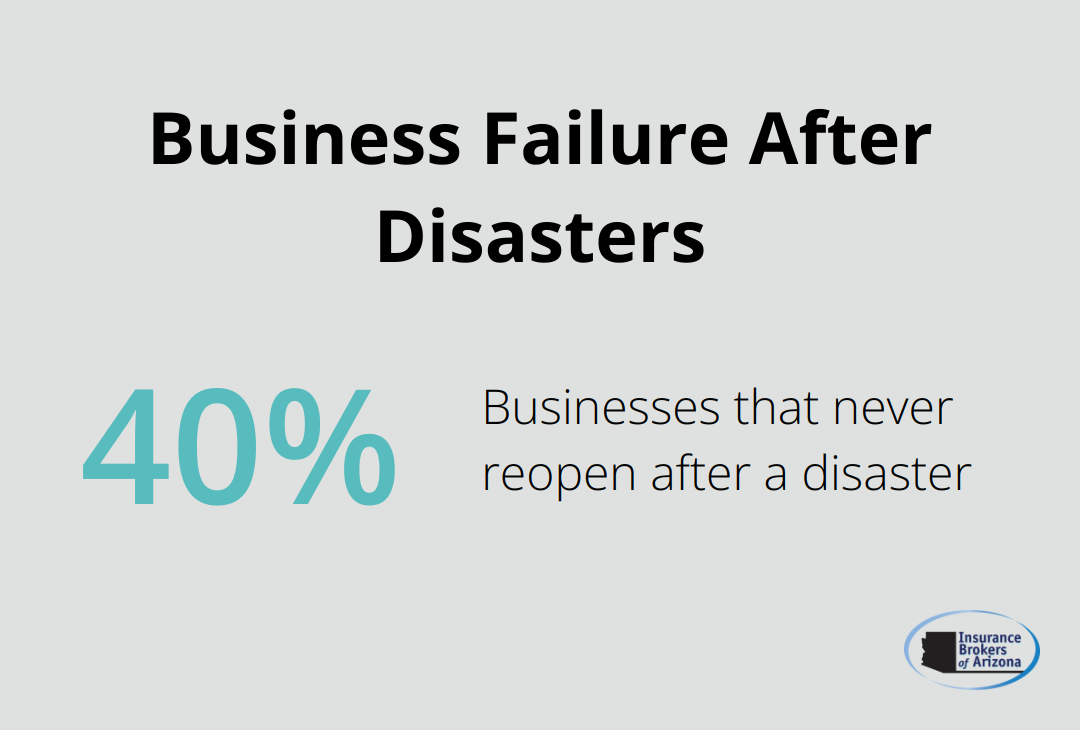
You must conduct a thorough risk assessment of your business. This involves identifying potential threats to your property and operations. A restaurant faces different risks than a retail store or a manufacturing plant. The Insurance Information Institute reports that 40% of businesses never reopen after a disaster, which underscores the importance of accurate risk assessment.
Consider factors such as:
- Location (e.g., flood zones, high-crime areas)
- Industry-specific hazards
- Value of property and equipment
- Business interruption potential
Understand Industry Requirements
Different industries often have specific insurance requirements. The construction industry typically requires broader coverage due to the high-risk nature of their work. The Associated General Contractors of America suggests that construction firms should consider special form coverage to protect against a wide range of potential losses.
Analyze Cost vs. Coverage
Don’t opt for the cheapest option, as this can become a costly mistake in the long run. The National Association of Insurance Commissioners found that businesses with inadequate coverage were 40% more likely to fail after a major loss event.
Focus on value instead. Compare the cost of premiums against the potential financial impact of uncovered losses. A slightly higher premium for comprehensive coverage can save you millions in the event of a catastrophic loss.
Consult with Insurance Professionals
The complexities of commercial property insurance forms require expertise. Insurance professionals can:
- Interpret policy language
- Identify coverage gaps
- Negotiate better terms with insurers
- Provide industry-specific insights
The Independent Insurance Agents & Brokers of America reports that businesses working with independent agents are more likely to have adequate coverage and experience fewer claim denials.
Insurance Brokers of Arizona® offers access to over 40 reputable carriers, which allows them to find the best coverage options for your specific needs. Their team can provide valuable insights into selecting the right commercial property insurance coverage form for your business.
Final Thoughts
Commercial property insurance coverage forms provide the foundation for protecting business assets. These forms offer varying levels of protection, from Basic to Special, with each type addressing different risks and needs. Understanding the key elements of these forms, such as perils, exclusions, and valuation methods, will help you make informed decisions about your coverage.
Selecting the right coverage form requires a thorough evaluation of your risk profile and industry requirements. You must balance cost and coverage to ensure adequate protection for your business. Working with experienced insurance professionals can provide valuable insights and help you navigate the complexities of commercial property insurance.
At Insurance Brokers of Arizona®, we specialize in tailoring commercial property insurance to meet the unique needs of businesses across Arizona. Our team’s expertise ensures you understand your policy details, helping you make informed decisions about your business protection. Take the time to understand your options, assess your risks, and secure the protection your business deserves.


