
Arizona Car Insurance: Rates, Discounts, and Coverage

Arizona car insurance costs vary wildly depending on where you live and who you are. Your age, driving record, and location can swing your premium by hundreds of dollars each year.
We at Insurance Brokers of Arizona® help drivers cut through the confusion. This guide breaks down what you’ll actually pay, which discounts you can grab, and what coverage protects you on Arizona roads.
What You’ll Actually Pay for Arizona Car Insurance
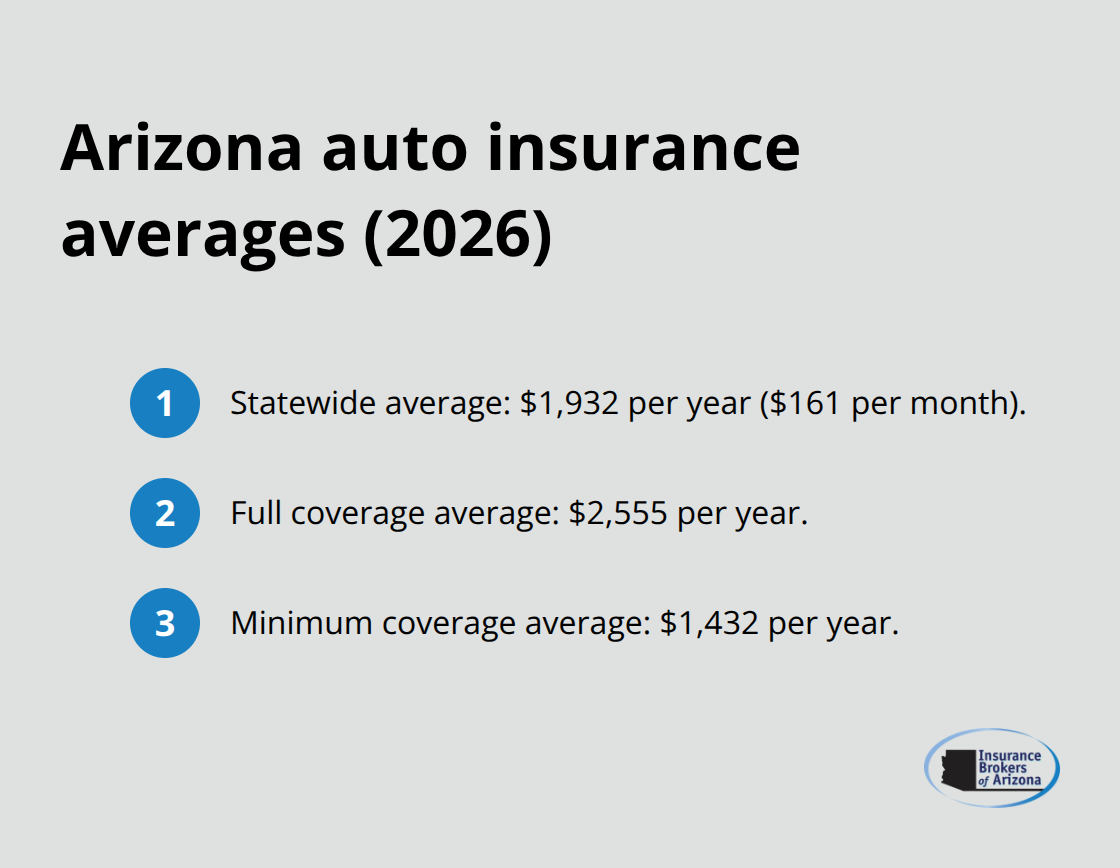
Arizona’s average car insurance cost sits around $1,932 per year, or about $161 per month, according to Experian data from 2026. Full coverage runs closer to $2,555 annually, while minimum coverage averages $1,432. These numbers matter because they give you a baseline to judge whether your quotes are competitive or inflated.
Your actual premium depends on factors that insurers weight differently, and understanding which ones moves the needle helps you make smarter decisions about coverage and deductibles.
Where You Live Shapes Your Rate
Location within Arizona creates dramatic rate swings. A driver in one Phoenix ZIP code might pay $125 monthly for full coverage with State Farm, while someone in Mesa or Glendale sees different quotes from the same carrier. This happens because insurers track claims data, theft rates, and accident frequencies by neighborhood. The Phoenix metro area generally sees full-coverage premiums between $100 and $160 per month, but your specific address-not just your city-influences where you land in that range. If you shop for quotes, request them for your exact address, not just your city, because ZIP code differences are real and substantial.
Your Driving History Determines the Biggest Swings
A clean record averages around $1,764 per year in Arizona. One accident or violation pushes that to roughly $2,336 to $2,359, according to Experian. Multiple incidents or violations spike costs even higher.
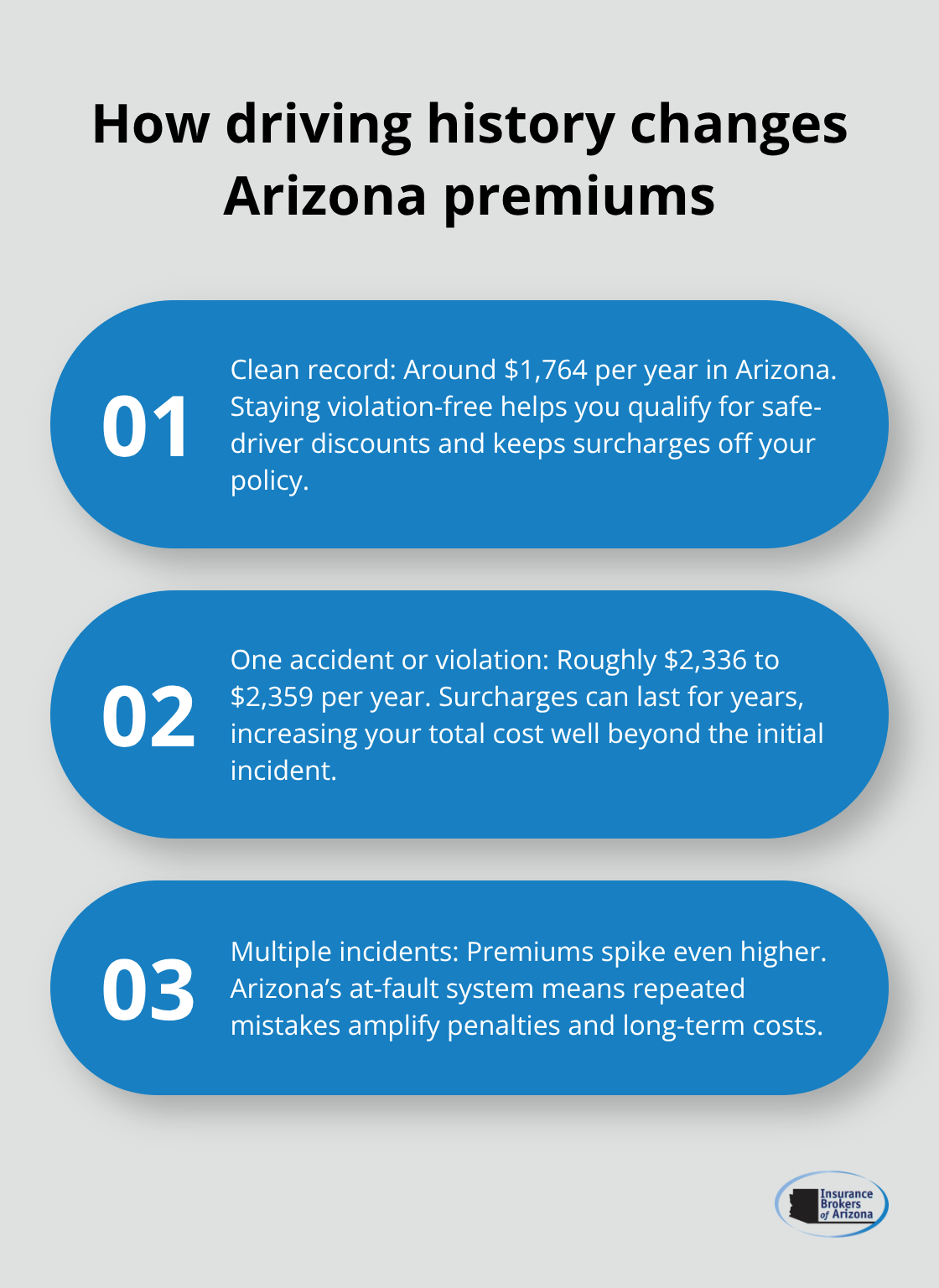
This matters because Arizona’s at-fault system holds you responsible for damages you cause, and insurers penalize you for years afterward. Arizona law prevents insurers from charging premium increases for accidents you didn’t cause or didn’t materially contribute to. If someone else hit you, your rate should stay flat. That protection doesn’t apply to your own mistakes, so safe driving pays off in real dollars year after year.
Credit, Age, and Gender Also Move Rates
Insurers use credit-based insurance scores in Arizona, meaning your payment history and debt levels affect your premium alongside your driving record. Improving your credit score can lower your rate. Age matters too: younger drivers pay significantly more because they statistically have more accidents. Men in Arizona average about $1,995 per year while women average $1,852, reflecting Insurance Information Institute data showing women have fewer serious accidents and DUIs. These factors interact with your vehicle choice, annual mileage, and how you use the car (so no single factor tells the whole story). The combination of all these elements determines whether you receive a quote of $1,400 or $3,500 annually.
How Carriers Price Differently
The same driver can receive wildly different quotes from different insurers. Travelers currently offers the lowest average Arizona rate among major carriers at about $1,734 annually, while other companies quote $2,200 or higher for identical coverage. This variation exists because each insurer applies its own risk models, claims experience, and underwriting standards. Some carriers reward safe driving through telematics programs (Progressive’s Snapshot and State Farm’s Drive Safe and Save track your habits and lower rates for safe drivers). Others emphasize bundling discounts or loyalty rewards. Understanding that price variation is normal and substantial means you should compare quotes across multiple carriers rather than accept the first offer you receive.
How to Stack Discounts and Cut Your Arizona Premium
Bundling Creates Immediate Savings
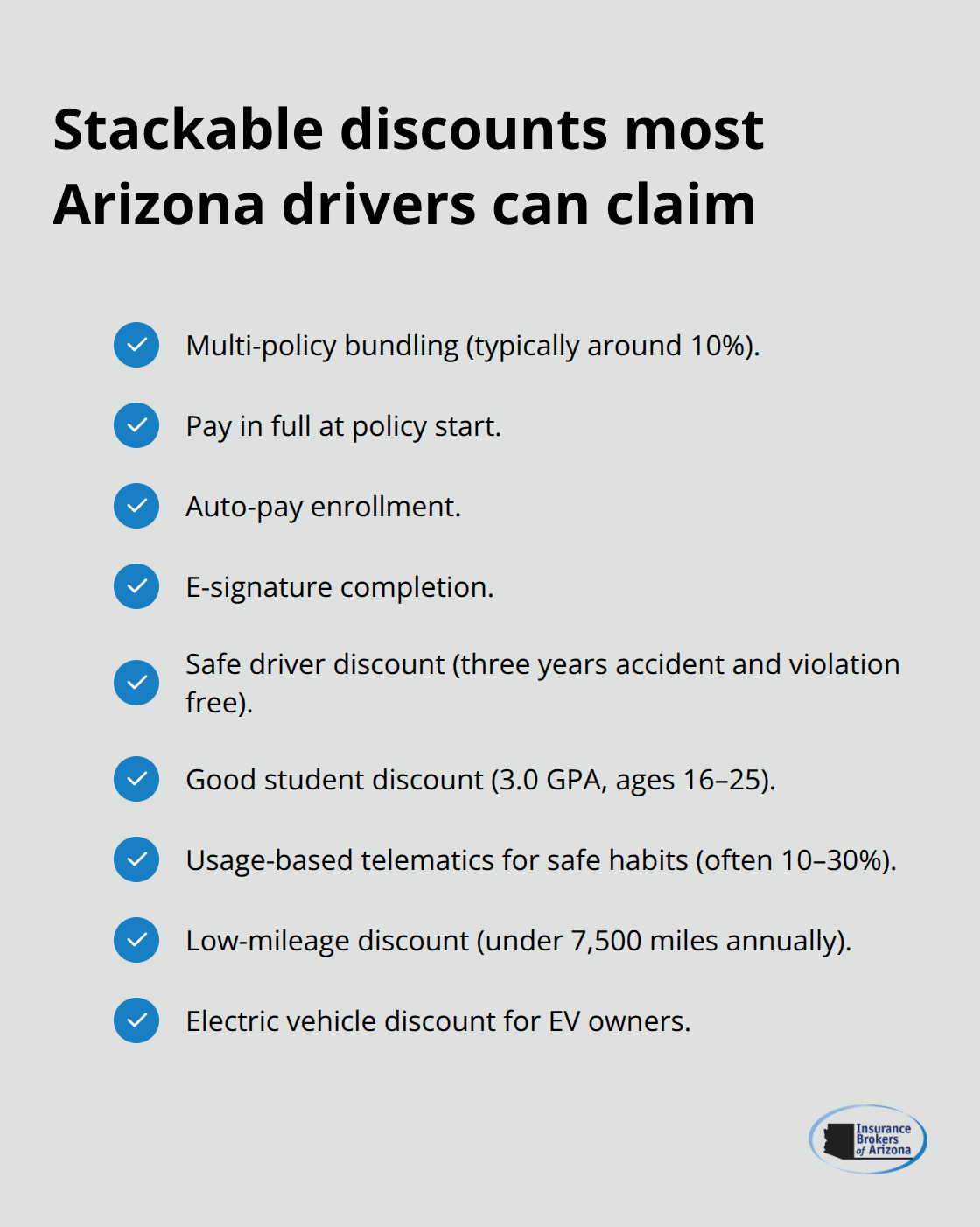
Discounts compound when you stack them together. A single discount saves you money, but combining three or four discounts can slash 30 to 40 percent off your annual premium. Most drivers qualify for multiple discounts simultaneously but claim only two, leaving hundreds of dollars on the table. Multi-policy bundling stands out as the fastest way to cut costs. Bundle your auto policy with homeowners or renters coverage, and you’ll typically save around 10 percent according to industry data, sometimes more. USAA members report bundling savings that exceed 10 percent when they combine auto with other products. If you rent, adding renters insurance to your auto policy costs less than buying each separately and protects your belongings if your apartment floods or burns.
Paying your auto premium in full upfront rather than splitting it into monthly payments triggers an additional discount on many policies. This approach works especially well when combined with bundling and other available discounts. The savings accumulate across multiple discounts, creating substantial reductions in your total annual cost.
Safe Driving and Academic Performance Discounts
Safe driver discounts and good student discounts reward behavior rather than penalizing mistakes. A clean driving record over three years qualifies you for the three-year accident and violation-free discount in Arizona. Good student discounts apply to drivers aged 16 through 25 who maintain a 3.0 GPA or higher, reflecting the correlation between academic responsibility and driving safety. These discounts recognize that responsible behavior in one area often translates to responsible behavior behind the wheel.
Usage-Based Programs Lower Rates for Safe Drivers
Usage-based programs like Progressive’s Snapshot or State Farm’s Drive Safe and Save monitor your actual driving habits through a mobile app, rewarding safe acceleration, smooth braking, and low-risk driving times. These programs can lower your rate by 10 to 30 percent depending on your driving patterns. Low-mileage discounts apply if you drive fewer than 7,500 miles annually, which matters for remote workers, retirees, or anyone using public transit. The electric vehicle discount in Arizona rewards EV owners, helping offset higher repair and battery replacement costs.
Administrative Discounts Add Up Quickly
Auto-pay discounts apply when you enroll in automatic monthly payments, and e-signature discounts reward you for completing documents electronically. These discounts require minimal effort but deliver real savings. Most drivers qualify for three to five discounts immediately without changing their behavior or circumstances.
Finding Your Best Rate Requires Comparison
Start by listing which discounts apply to your situation-good student, clean driving record, bundling, auto-pay, and any others. Then compare quotes from at least three carriers while mentioning every discount you qualify for. Rate differences shrink significantly once you stack every discount you qualify for. The next section covers the coverage types that protect you on Arizona roads and how to choose the right limits for your situation.
What Coverage Actually Protects You in Arizona
Arizona’s minimum liability requirement of $25,000 per person and $50,000 per accident for bodily injury, plus $15,000 for property damage, leaves most drivers dangerously underprotected. This legal floor exists because Arizona is an at-fault state, meaning whoever causes an accident pays for damages. If you hit someone and cause $75,000 in medical bills, your $25,000 limit covers only one-third of the actual cost. The injured person can pursue your wages and assets for the remainder.
Why Minimum Coverage Falls Short
Insurance experts recommend upgrading to at least $100,000 per person and $300,000 per accident for bodily injury, plus $100,000 for property damage. This higher limit costs roughly 15 to 25 percent more annually but protects your financial future if you cause a serious crash. Your lender or lease company may require even higher limits, so verify your loan documents before selecting coverage. The difference between minimum and recommended limits can mean the difference between keeping your home and losing it after a major accident.
Collision and Comprehensive: When to Keep Them
Collision coverage pays for damage to your vehicle from crashes regardless of fault, while comprehensive coverage handles theft, weather, and vandalism. If your car is financed or leased, your lender mandates both. For paid-off vehicles, the math changes: if your car’s value is $4,000 and collision costs $600 annually, dropping it saves money only if you can absorb a total loss. Many Arizona drivers make the mistake of dropping collision to save money on older cars, then face a $3,000 bill after an accident that would have cost $250 in deductibles.
Increasing your deductible from $250 to $1,000 cuts your collision and comprehensive premiums by 40 percent or more, making this the smartest way to reduce costs while keeping coverage intact. This strategy works especially well for drivers who maintain emergency savings and can cover a higher out-of-pocket expense if needed.
Uninsured and Underinsured Motorist Protection
Uninsured motorist and underinsured motorist coverage protects you when the other driver lacks adequate insurance or carries none. Arizona law requires your UM/UIM limits to match your bodily injury limits unless you sign a written waiver declining it, according to the Arizona Department of Insurance. More than half of Arizona drivers carry no insurance, making this coverage essential rather than optional. If an uninsured driver hits you and causes $50,000 in injuries, your UM coverage pays what their liability would have covered. Underinsured motorist protection fills the gap when the at-fault driver has some insurance but not enough.
Medical payments coverage pays for your own medical expenses and funeral costs regardless of fault, even if you have health insurance. This coverage helps with deductibles and co-pays that your health insurance won’t cover. Most Arizona drivers skip medical payments coverage because they assume health insurance covers everything, but it doesn’t pay for accident-related treatment gaps. The cost runs $10 to $20 monthly and prevents surprise out-of-pocket expenses after a crash.
Comparing Rates Across Carriers
When shopping for coverage, obtain quotes showing the same liability limits and deductible amounts across multiple carriers. Travelers currently offers the lowest average rate in Arizona at $1,734 annually for full coverage. Compare that against Progressive, GEICO, and Mercury to see how much variation exists for identical protection. The cheapest option often isn’t the best if it skimps on customer service or claims handling, so read customer reviews alongside pricing.
Final Thoughts
Arizona car insurance rates reflect factors you control and factors you don’t, but understanding both helps you pay less while staying protected. Your location, driving history, age, and credit score shape your baseline premium, while bundling policies, stacking discounts, and choosing appropriate coverage limits determine whether you overpay or get genuine value. The gap between Arizona’s minimum liability requirement of $25,000 per person and the recommended $100,000 per person isn’t just a number-it’s the difference between financial security and potential disaster after a serious crash.
Start by identifying every discount you qualify for: bundling, auto-pay, good student status, clean driving records, and usage-based programs. These discounts compound, often reducing your annual cost by 30 to 40 percent when combined. Next, decide on coverage limits that match your financial situation, and if you have assets to protect, upgrade from minimum to recommended limits (this costs roughly 15 to 25 percent more annually but shields your wages and home from liability claims).
Shopping for Arizona car insurance requires comparing quotes across multiple carriers because rate variation is substantial and real. We at Insurance Brokers of Arizona® partner with over 40 carriers, meaning we access competitive options most drivers never see on their own, and our team handles the comparison work for you while securing the best rates and tailoring coverage to your specific needs. Contact Insurance Brokers of Arizona® to get personalized quotes and stop leaving money on the table with inadequate coverage or missed discounts.
Disclaimer: The information provided in this blog is for general informational purposes only and does not constitute legal, financial, or insurance advice. Coverage options, terms, and availability may vary. Please consult with a licensed professional for advice specific to your situation.


