
Mixed Commercial Residential Property Insurance Guide

Mixed commercial residential property insurance is a complex but essential aspect of protecting your investment in multi-use buildings. At Insurance Brokers of Arizona®, we understand the unique challenges these properties present.
From retail-apartment combinations to live-work units, each mixed-use property requires a tailored insurance approach. This guide will help you navigate the key coverages and considerations for safeguarding your mixed-use property investment.
What Are Mixed Commercial Residential Properties?
Definition and Characteristics
Mixed commercial residential properties, also known as mixed-use buildings, combine multiple functions within a single development. These structures blend residential units with commercial spaces, creating dynamic, multi-purpose environments. The integration of various uses in one property aims to maximize space utilization and foster vibrant communities.
Common Types of Mixed-Use Buildings
Retail-Residential Combinations
One of the most prevalent examples of mixed-use properties is the retail-residential combination. These buildings typically feature ground-floor shops or restaurants with apartments or condominiums on the upper levels. A 2022 report by the National Association of Realtors revealed that nearly 20% of new apartment buildings in major U.S. cities now incorporate retail spaces.
Office-Residential Complexes
Another popular mixed-use configuration is the office-residential complex. These properties cater to the growing demand for live-work-play environments, especially in urban areas. A study by the Urban Land Institute found that such developments can increase property values by up to 30% compared to single-use buildings.
Live-Work Units
Live-work units represent a unique subset of mixed-use properties. These spaces (often favored by artists, entrepreneurs, and small business owners) seamlessly integrate living quarters with workspace. The National Association of Home Builders reports that the demand for live-work units has grown by 15% annually since 2020.
Unique Risks of Mixed-Use Properties
Mixed-use properties face distinct challenges that set them apart from single-use buildings. These risks require careful consideration when selecting insurance coverage.
Increased Foot Traffic
One primary concern is the increased foot traffic, which can lead to higher wear and tear and a greater likelihood of accidents. Data from the Insurance Information Institute shows that slip-and-fall incidents are 25% more common in mixed-use buildings compared to single-use properties.
Fire Risk
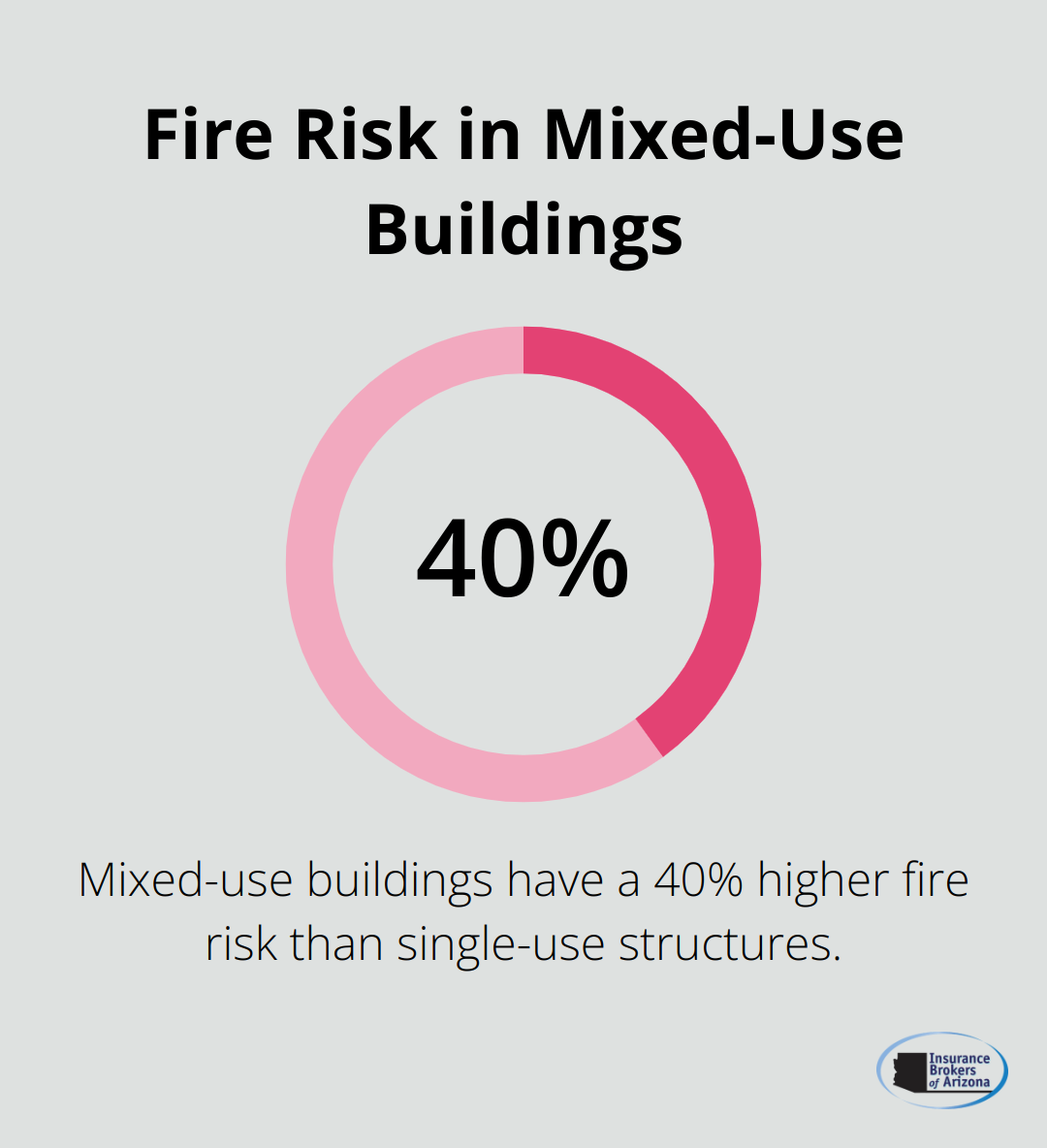
Fire risk is another significant concern. The combination of residential cooking activities and commercial operations can increase the likelihood of fire outbreaks. The National Fire Protection Association reports that mixed-use buildings have a 40% higher fire risk than purely residential or commercial structures.
Complex Regulatory Requirements
Mixed-use properties often face more complex regulatory requirements. Zoning laws, building codes, and safety regulations can vary significantly between residential and commercial spaces. This complexity can lead to higher compliance costs and potential legal issues if not managed properly.
These unique risks highlight the importance of tailored insurance solutions for mixed-use properties. The next section will explore the key insurance coverages essential for protecting your mixed-use investment.
What Insurance Do Mixed-Use Properties Need?
Property Insurance: The Foundation of Protection
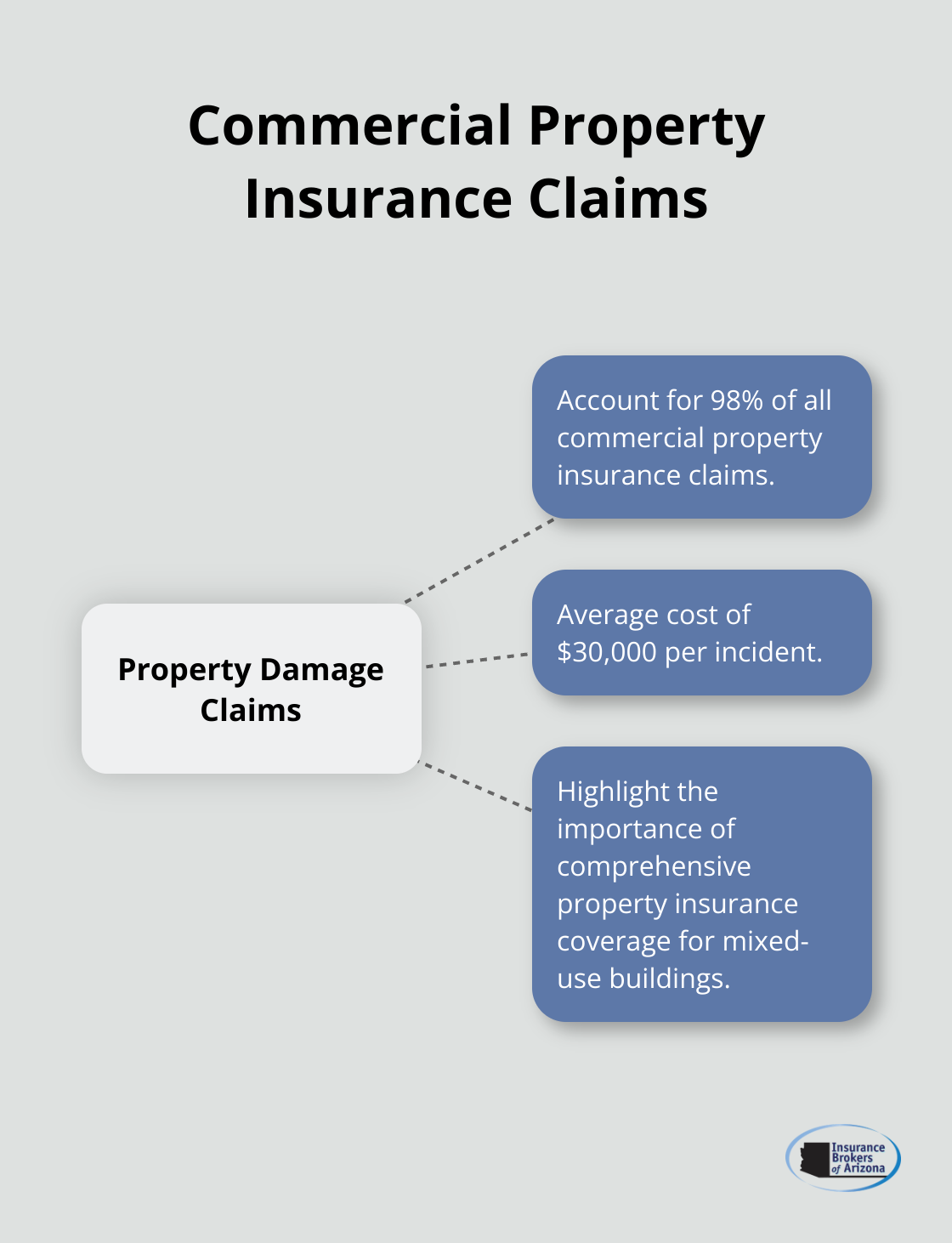
Property insurance forms the cornerstone of mixed-use building protection. This coverage safeguards the physical structure and its contents against perils such as fire, theft, and natural disasters. The Insurance Information Institute reports that property damage claims account for 98% of all commercial property insurance claims, with an average cost of $30,000 per incident.
For mixed-use properties, owners must ensure that both commercial and residential areas receive adequate coverage. This often necessitates higher policy limits than standard commercial or residential policies. A professional appraisal will determine the full replacement cost of your property, including specialized features (like commercial kitchen equipment or high-end residential finishes).
Liability Coverage: Protecting Against Legal Challenges
Liability coverage is essential for mixed-use property owners. This insurance protects against claims of bodily injury or property damage that occur on your premises. The U.S. Chamber Institute for Legal Reform states that the average cost of a slip-and-fall claim is $20,000, while more severe incidents can lead to multi-million dollar lawsuits.
Mixed-use properties face heightened liability risks due to increased foot traffic and diverse usage. Property owners should consider umbrella liability policies, which provide additional coverage beyond standard liability limits. These policies typically start at $1 million in coverage and can increase based on the property’s specific needs.
Business Interruption Insurance: Safeguarding Your Income
Business interruption insurance often goes overlooked but can save mixed-use property owners from financial ruin. This coverage compensates for lost income and ongoing expenses if your property becomes uninhabitable due to a covered event. The National Association of Insurance Commissioners reports that 40% of businesses never reopen after a disaster, highlighting the importance of this coverage.
For mixed-use properties, business interruption insurance should account for both lost rental income from residential tenants and lost business income from commercial spaces. Property owners should calculate their potential losses carefully and select a policy that covers their needs for at least 12 months, as rebuilding or repairs can take longer than expected.
Specialized Coverage for Unique Risks
Mixed-use properties often require specialized coverage to address their unique risks. These may include:
- Equipment Breakdown Coverage: This protects against failures in critical systems like HVAC, elevators, or electrical systems.
- Ordinance or Law Coverage: This helps cover the costs of bringing a damaged building up to current building codes during repairs.
- Cyber Liability Insurance: With the increasing reliance on technology in property management, this coverage protects against data breaches and cyber attacks.
As we move forward, we’ll explore how to tailor these insurance options for specific mixed-use scenarios, ensuring comprehensive protection for your unique property configuration. Understanding the factors affecting commercial property insurance cost can help you make informed decisions about your coverage needs.
How to Customize Insurance for Different Mixed-Use Properties
Retail and Apartment Combinations
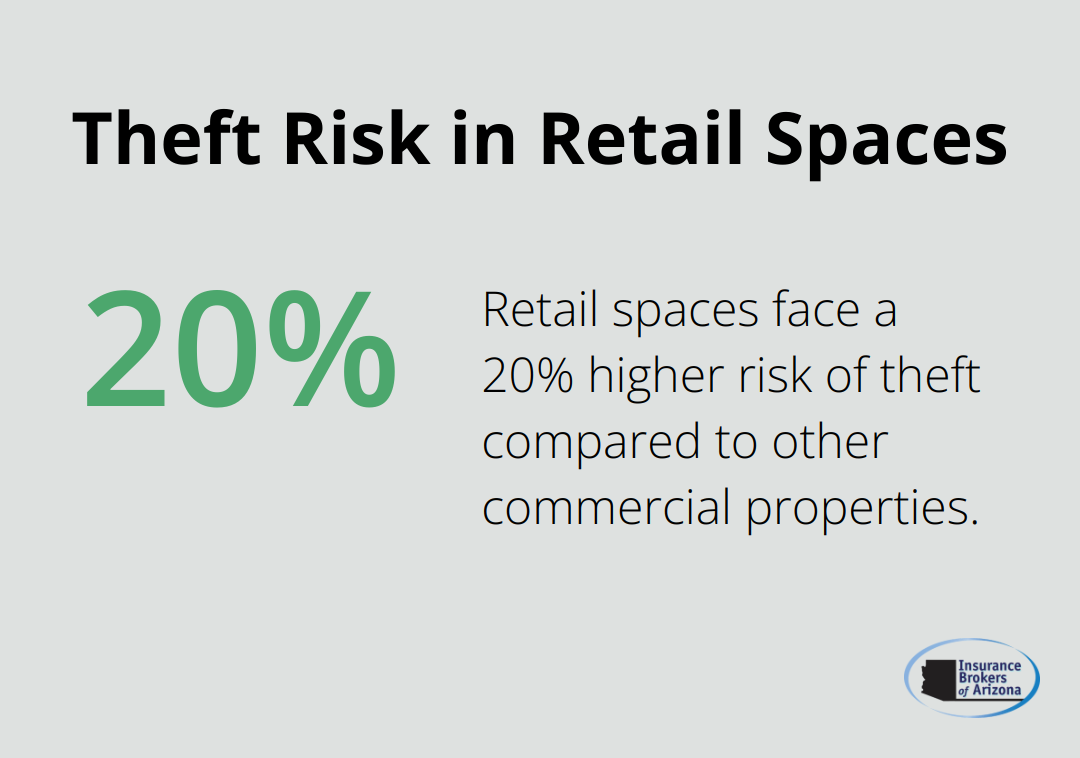
Retail-apartment buildings present distinct challenges. The National Retail Federation reports that retail spaces face a 20% higher risk of theft compared to other commercial properties. Property owners should consider enhanced security coverage. This might include reimbursement for security system upgrades or coverage for inventory loss due to break-ins.
For the residential component, water damage is a common concern. The Insurance Information Institute states that water damage claims are the second most frequent type of homeowners insurance claim. In mixed-use buildings, a leak in an upper-floor apartment can quickly become a costly disaster for the retail space below. Comprehensive water damage coverage (including protection against sewer and drain backups) is essential.
Office and Residential Complexes
Office-residential complexes require a nuanced approach to insurance. One key consideration is liability coverage for shared spaces. The Building Owners and Managers Association International reports that slip-and-fall accidents in common areas account for 25% of liability claims in mixed-use buildings.
Another critical aspect is business interruption insurance. In office-residential complexes, a disaster affecting one part of the building can disrupt both commercial and residential tenants. Your policy should account for potential lost income from both office leases and residential rents. The Small Business Administration recommends coverage that lasts at least 12-18 months, as rebuilding often takes longer than expected.
Live-Work Units
Live-work units present unique insurance challenges due to their dual nature. One important consideration is the clear separation of business and personal property in your policy. The National Association of Insurance Commissioners advises that standard homeowners policies often exclude business-related claims, leaving gaps in coverage for live-work unit owners.
Professional liability insurance is another key component for live-work units, especially for those operating service-based businesses from their homes. The American Bar Association reports that 5-6% of all attorneys face malpractice claims each year, highlighting the importance of this coverage for professionals working from home.
Tailored Solutions for Complex Properties
When insuring mixed-use properties, it’s important to work with an agency that understands these unique challenges. While many providers offer generic policies, specialized agencies craft tailored solutions for complex property configurations. Their expertise ensures that your mixed-use property receives comprehensive coverage, addressing the specific risks associated with your unique combination of commercial and residential spaces.
Understanding the factors affecting commercial property insurance cost can help property owners make informed decisions when customizing their insurance policies for different mixed-use properties.
Final Thoughts
Mixed commercial residential property insurance protects multi-use buildings against unique risks. Property owners must identify potential vulnerabilities in both commercial and residential areas. A customized insurance package, developed with a knowledgeable broker, will address these specific risks effectively.
Insurance professionals play a vital role in navigating the complexities of mixed-use property coverage. They can spot gaps in current policies and recommend appropriate coverage levels based on specific property configurations. Regular policy reviews ensure coverage evolves with property changes and insurance trends.
We at Insurance Brokers of Arizona® specialize in tailored insurance solutions for complex property configurations (including mixed-use buildings). Our team can help you navigate the nuances of mixed commercial residential property insurance. With our selection of insurance products and carrier partnerships, we can craft a comprehensive coverage plan that meets your unique needs.


