
Contractor Liability Insurance Arizona: What You Should Know
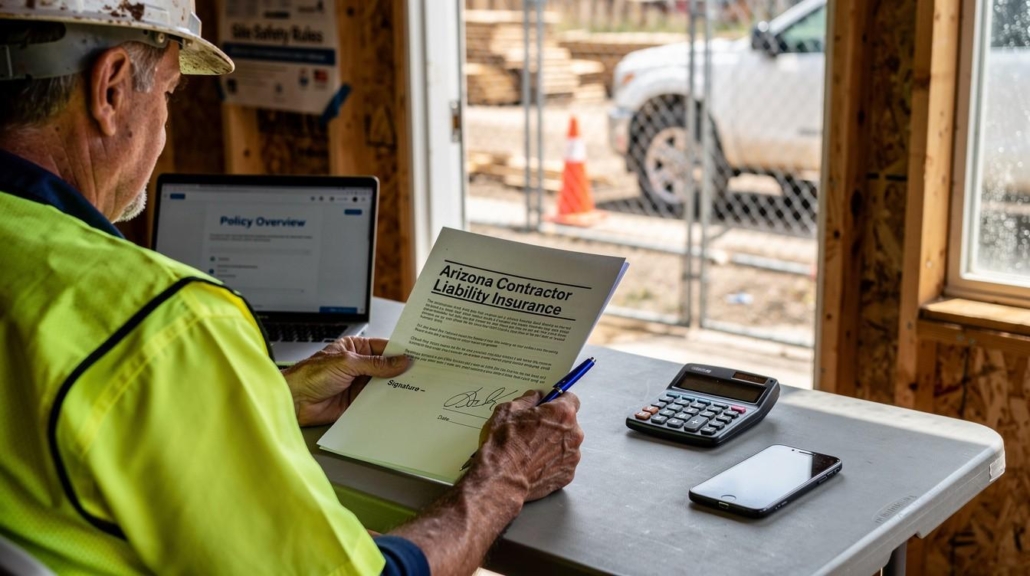
Running a contracting business in Arizona means managing real risks every day. One accident or injury on a job site can lead to lawsuits that threaten your entire operation.
Contractor liability insurance in Arizona isn’t optional-it’s a business essential. We at Insurance Brokers of Arizona® help contractors understand their coverage options and find policies that actually protect their bottom line.
Why Liability Insurance Matters for Arizona Contractors
Arizona’s construction industry operates under strict regulatory oversight, and liability insurance sits at the center of that framework. The Arizona Registrar of Contractors licenses over 60,000 contractors across the state, and while general liability insurance isn’t technically required to obtain a license, nearly every client worth working with demands proof of coverage before you step foot on their property. This isn’t bureaucratic theater-it’s a practical requirement that separates contractors who win bids from those who get passed over. Without a Certificate of Insurance in hand, you won’t land commercial projects, residential renovations for homeowners with mortgages, or any job where a property owner’s lender has a say in the work. The moment a client asks for an ACORD certificate and you can’t provide one, you’ve lost that contract.
Real costs of going uninsured
A single accident on your job site can bankrupt an uninsured contractor in Arizona. When a worker or property owner suffers a bodily injury-a fall, a cut from your equipment, or damage caused by your materials-the medical bills arrive first. General liability insurance covers these third-party injuries and the property damage your operations cause, which means it pays for the injured person’s medical expenses, your legal defense, and any settlement or judgment against you. The Hartford reports that construction businesses pay an average of about $1,351 per year for general liability coverage, or roughly $113 per month. For that investment, you get protection against lawsuits that would otherwise wipe out your savings and force you to sell business assets. Arizona contractors typically carry $1 million per occurrence and $2 million aggregate limits-the standard that about 99 percent of policies sold in the state meet. If a client’s property suffers damage during your work, or if someone gets hurt at your job site, that million-dollar limit covers the fallout.
What liability insurance actually covers
General liability protects you against three distinct categories of claims that arise constantly in contracting work. Bodily injury claims cover medical costs when someone gets hurt on your job site-whether it’s the homeowner, their family member, a passerby, or even a client’s employee. Property damage claims pay when your work or materials damage the client’s home, their belongings, or neighboring properties. Personal and advertising injury coverage handles claims like libel or slander that might emerge from your business communications.
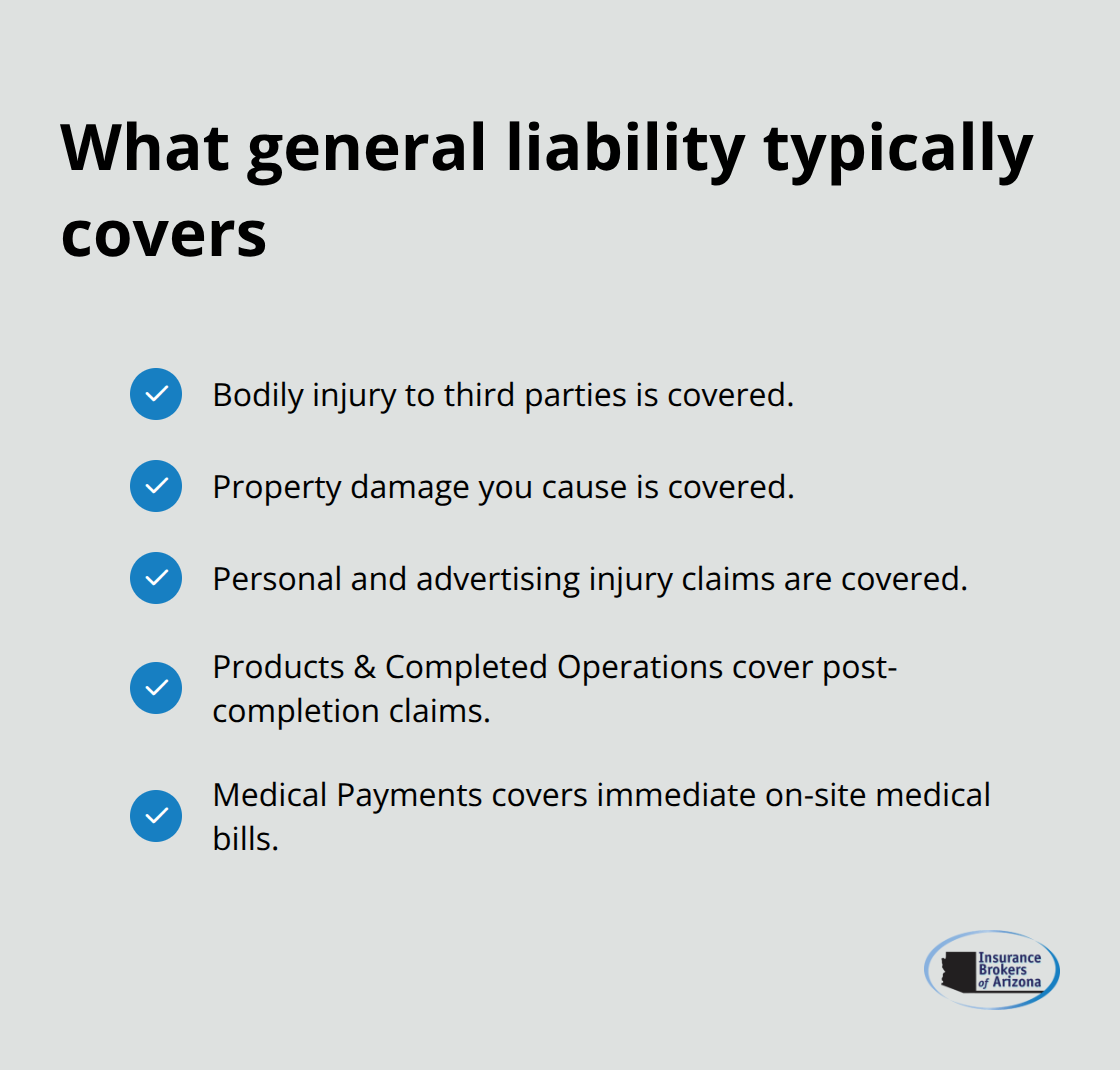
Products and Completed Operations coverage protects claims that surface after you’ve finished the job, as long as the incident occurs within your policy period. This matters tremendously because defects or injuries tied to your completed work can appear months or even years later. Medical Payments coverage, typically capped at $5,000, handles immediate medical expenses for on-site injuries without requiring the injured party to file a claim or prove fault-you just pay the bill and move forward.
Why standard limits matter in Arizona
The $1 million per occurrence and $2 million aggregate structure that dominates Arizona’s contractor market exists for a reason. These limits reflect the real exposure contractors face on residential and commercial projects. A serious injury claim can easily exceed $100,000 in medical costs alone, and property damage claims add up fast when you’re working inside someone’s home or on a commercial property. Most clients (and their lenders) won’t accept anything less than these standard limits, which means you can’t compete for quality work without them. If your projects involve higher-value properties or larger scopes of work, you may want to explore Excess Liability coverage, which extends your protection beyond the standard limits and provides an additional safety net for catastrophic claims.
How coverage costs break down in Arizona
Your premium depends on several factors specific to your trade and operation. The Hartford’s data shows that contractors with no payroll pay roughly $790 to $1,050 per year, while those with $100,000 or more in annual payroll pay $1,965 or higher.
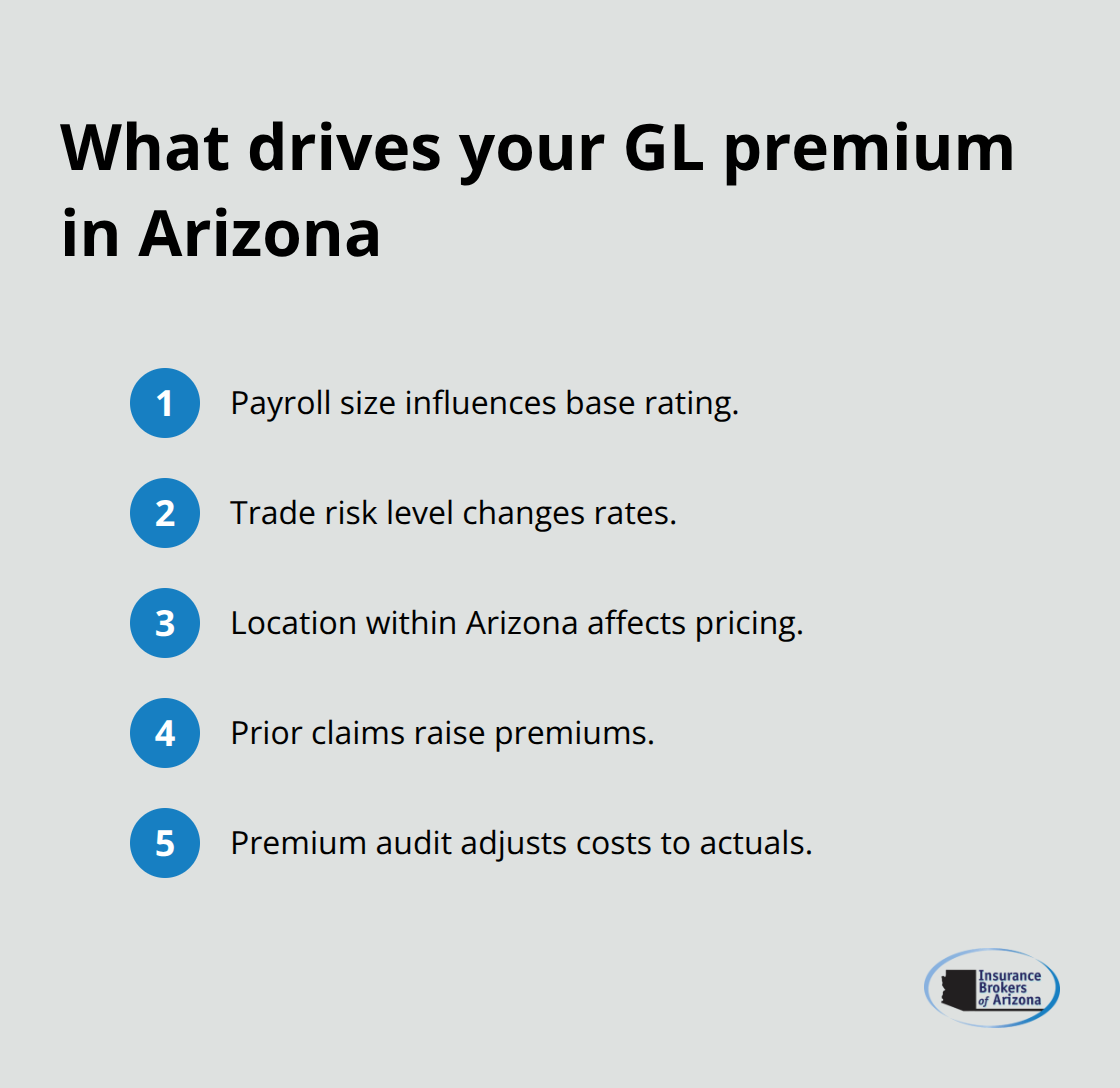
Your specific trade matters-electricians, plumbers, roofers, and HVAC contractors face different risk profiles than painters or landscapers. Location within Arizona, your claims history, and the specific services you offer all influence what you’ll pay. A premium audit typically occurs at the end of your policy period, which means your actual costs may shift based on your real payroll and expenses. This keeps your coverage aligned with your actual business size and risk exposure.
Moving forward with the right coverage
Understanding what liability insurance covers is only half the battle. The next step involves assessing your specific business risks and comparing the coverage options available to you, so you can select limits and deductibles that match your operation’s actual exposure.
Types of Contractor Liability Coverage Available
General liability insurance forms the foundation of any contractor’s risk management strategy in Arizona, but it’s only one piece of the puzzle. You also need workers’ compensation coverage to protect your employees, and depending on your services, professional liability insurance covers errors in your work. Most contractors treat these as separate, disconnected policies rather than viewing them as an integrated system that covers different gaps in your operation.
General liability wins contracts and protects your business
General liability protects against third-party bodily injury and property damage claims, which is why clients and lenders demand it before approving any project. Arizona contractors typically carry $1 million per occurrence and $2 million aggregate limits-the standard that about 99 percent of policies in the state meet. Your premium depends on your payroll, trade, location, and claims history. A contractor with no payroll pays roughly $790 to $1,050 annually, while those with $100,000 or more in payroll pay $1,965 or higher. The Hartford reports that construction businesses average about $1,351 per year for general liability.
Products and Completed Operations coverage included in standard policies protects claims that surface after you finish work. Defects discovered months later can still trigger lawsuits, so this protection matters tremendously. Medical Payments coverage, typically capped at $5,000, pays immediate medical bills for on-site injuries without requiring fault determination. You handle minor incidents without claim friction and move forward with your project.
Workers’ compensation protects your employees and your business
Arizona requires workers’ compensation insurance for any business with at least one employee, making this non-negotiable once you hire staff. This coverage pays medical expenses, rehabilitation costs, and wage replacement for workers injured on the job, protecting both your employees and your business from devastating liability. If you operate as a sole proprietor with no employees, you can obtain a ghost policy that demonstrates workers’ compensation compliance without actual employee coverage. This helps you win jobs where clients or local regulations mandate proof of coverage.
The key difference from general liability is scope: workers’ comp covers your employees, while general liability covers third parties like homeowners and their families. Both operate independently, so you need both to have complete protection across your operation.
Professional liability addresses errors in specialized contracting work
If your contracting services include design, consulting, or installation work where mistakes could cause financial loss to clients, professional liability insurance addresses gaps that general liability misses. This coverage handles errors, omissions, and negligence claims, including legal defense and settlement costs up to your policy limits. Not every contractor needs this coverage, but if you perform specialized services like HVAC design, electrical system planning, or structural modifications where your professional judgment directly affects the project outcome, professional liability protects you when clients claim your work fell short of industry standards or caused damage through faulty workmanship.
The combination of these three coverage types creates a comprehensive shield against the most common liability exposures contractors face in Arizona. Selecting the right limits and deductibles for each policy type requires understanding your specific business risks and comparing what different carriers offer.
How to Choose the Right Contractor Liability Policy
Start with your actual project exposure
Standard $1 million per occurrence and $2 million aggregate limits work for most Arizona contractors, but they’re not universal. If you handle small interior renovations or painting jobs, these limits provide more than adequate protection. However, larger commercial projects, new construction, or work on high-value residential properties demand higher limits. A single structural defect claim or serious injury at a multi-million-dollar commercial site can easily exceed $1 million in damages and legal costs.
This is where Excess Liability coverage enters the conversation. Rather than risk a catastrophic claim, adding a $1 million or $2 million excess policy above your general liability costs roughly $200 to $400 more annually. The Hartford data shows that contractors with higher-risk profiles and larger payrolls already factor this into their risk management strategy.
Evaluate your deductible strategy
Your deductible choice matters equally to your coverage limits. A $500 deductible means you absorb smaller claims out of pocket, which lowers your premium but increases your actual cash exposure. A $1,000 or $2,500 deductible shifts more risk to you but reduces your annual premium significantly.
For established contractors with strong cash reserves and clean claims histories, higher deductibles make financial sense. For newer contractors or those with tighter margins, the lower premium savings don’t offset the risk of absorbing a $2,500 claim yourself. Calculate what your business can actually afford to pay before selecting a deductible.
Account for your trade classification
Your trade classification directly determines what you’ll pay, so don’t accept a quote that doesn’t specify your exact business activities. An electrician’s premium differs sharply from a painter’s because electrical work carries higher injury and property damage exposure. If you perform multiple trades-say, you’re a general contractor who does framing and some finishing work-you need coverage that explicitly includes all your activities, not just your primary trade.
Many carriers offer multi-trade packages that simplify this, but you must disclose everything you do. Incomplete disclosure creates coverage gaps that leave you exposed when claims arise.
Factor in payroll and claims history
Your payroll and claims history are the final pricing drivers. Arizona contractors with no employees pay $790 to $1,050 annually, while those with $100,000 or more in payroll pay $1,965 or higher according to Hartford’s ranges. A clean claims record keeps your renewal rates stable; even one claim can trigger rate increases of 15 to 40 percent at renewal.
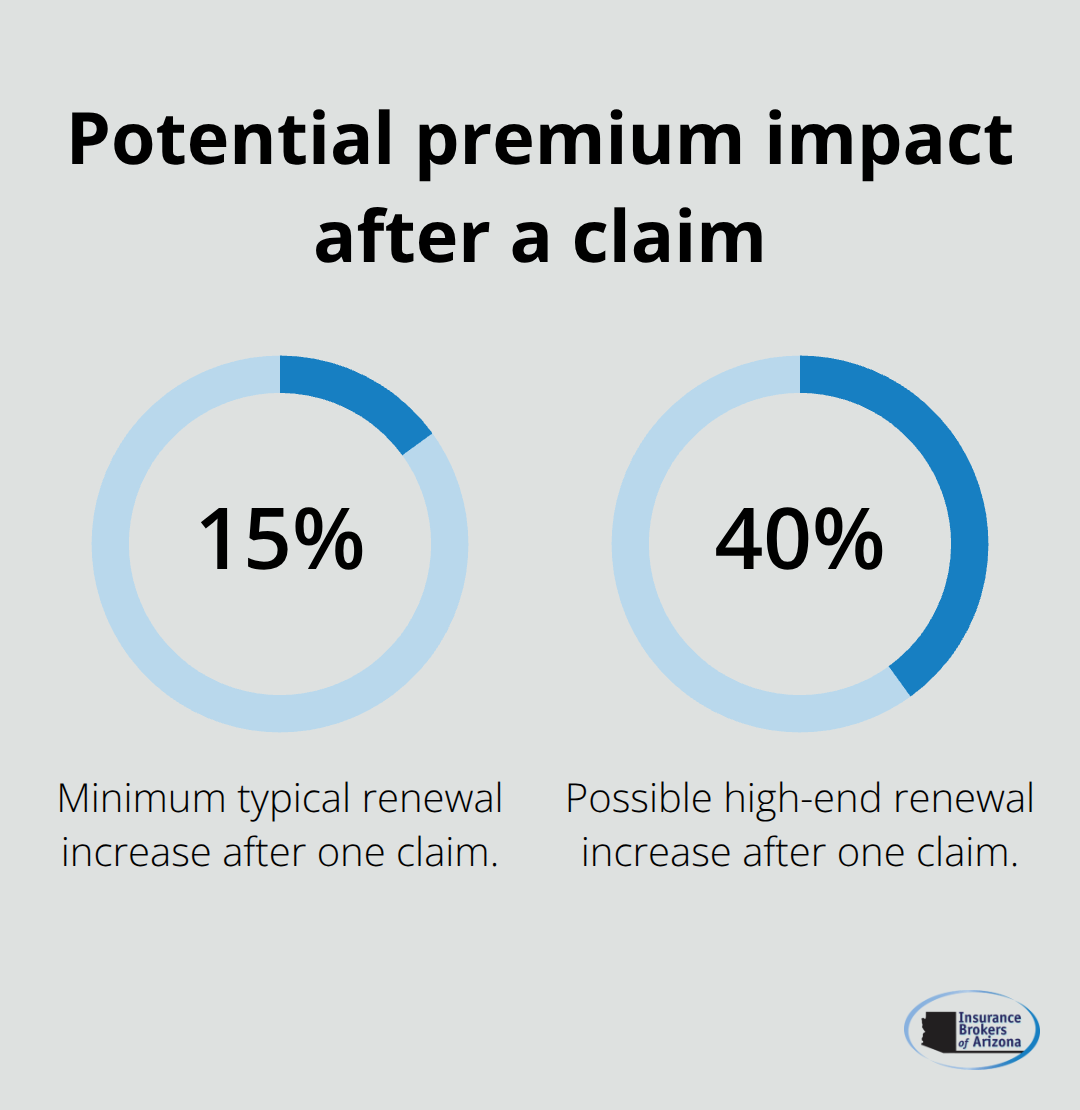
This creates a powerful incentive to prioritize loss prevention and report claims promptly rather than avoiding the insurance system. Your claims history follows you across carriers, so transparency from the start prevents surprises at renewal time.
Compare quotes from multiple carriers
Shopping with a single carrier leaves money on the table. Insurance Brokers of Arizona® partners with over 40 carriers, which means you access quotes from multiple providers simultaneously rather than shopping individually. This approach reveals genuine price differences and identifies carriers that specialize in your specific trade, which often yields better rates than generic contractors’ quotes.
Final Thoughts
Contractor liability insurance in Arizona protects your business from the financial devastation that follows a single accident or injury claim. The standard $1 million per occurrence and $2 million aggregate limits that dominate Arizona’s market exist because they reflect real exposure contractors face on job sites every day. Without this coverage, you cannot win competitive bids, satisfy client requirements, or operate with confidence that a lawsuit won’t destroy everything you’ve built.
Start by assessing your actual project exposure and trade classification, then compare coverage limits and deductibles against what your business can realistically afford to absorb out of pocket. Factor in your payroll, claims history, and the specific services you offer-if you handle higher-value projects or commercial work, add Excess Liability coverage to your standard general liability policy. Pair this with workers’ compensation if you have employees, and professional liability if your services include design or consulting work.
Contractor liability insurance Arizona rates vary dramatically across carriers, and some specialize in your specific trade while others charge generic contractor rates. We at Insurance Brokers of Arizona® partner with over 40 reputable carriers, which means you access competitive options without shopping individually. Contact us today to discuss your specific coverage needs and get quotes that reflect your actual business profile.
Disclaimer: The information provided in this blog is for general informational purposes only and does not constitute legal, financial, or insurance advice. Coverage options, terms, and availability may vary. Please consult with a licensed professional for advice specific to your situation.


