
Commercial Property Insurance Options: Tailoring Coverage for Your Business

One-size-fits-all insurance rarely works for businesses. Your company’s property, location, and operations are unique, which means your commercial property insurance options should be too.
At Insurance Brokers of Arizona®, we help business owners match their coverage to what actually matters. This guide walks you through the types of protection available, how to assess what you need, and ways to keep costs reasonable.
What Property Coverage Actually Protects
Building Coverage and Structural Exposure
Building coverage protects the physical structure of your business location, including walls, roof, foundation, and permanently attached systems like HVAC and electrical wiring. This is where most business owners underestimate their exposure. If your building cost $500,000 to construct but you only insure it for $300,000, you face a coinsurance penalty that can reduce claim payments significantly. The National Association of Insurance Commissioners reports that underinsurance remains one of the most common coverage mistakes in commercial property policies. A professional property appraisal every three to five years catches gaps, especially if you’ve made renovations or upgrades.
Construction materials affect your rates substantially. A concrete block building typically costs less to insure than wood frame construction because it presents lower fire risk. Location also drives building rates; a property in an area with strong fire protection infrastructure and lower crime rates will have lower premiums than one in a rural zone with volunteer fire services.
Business Personal Property and Equipment Limits
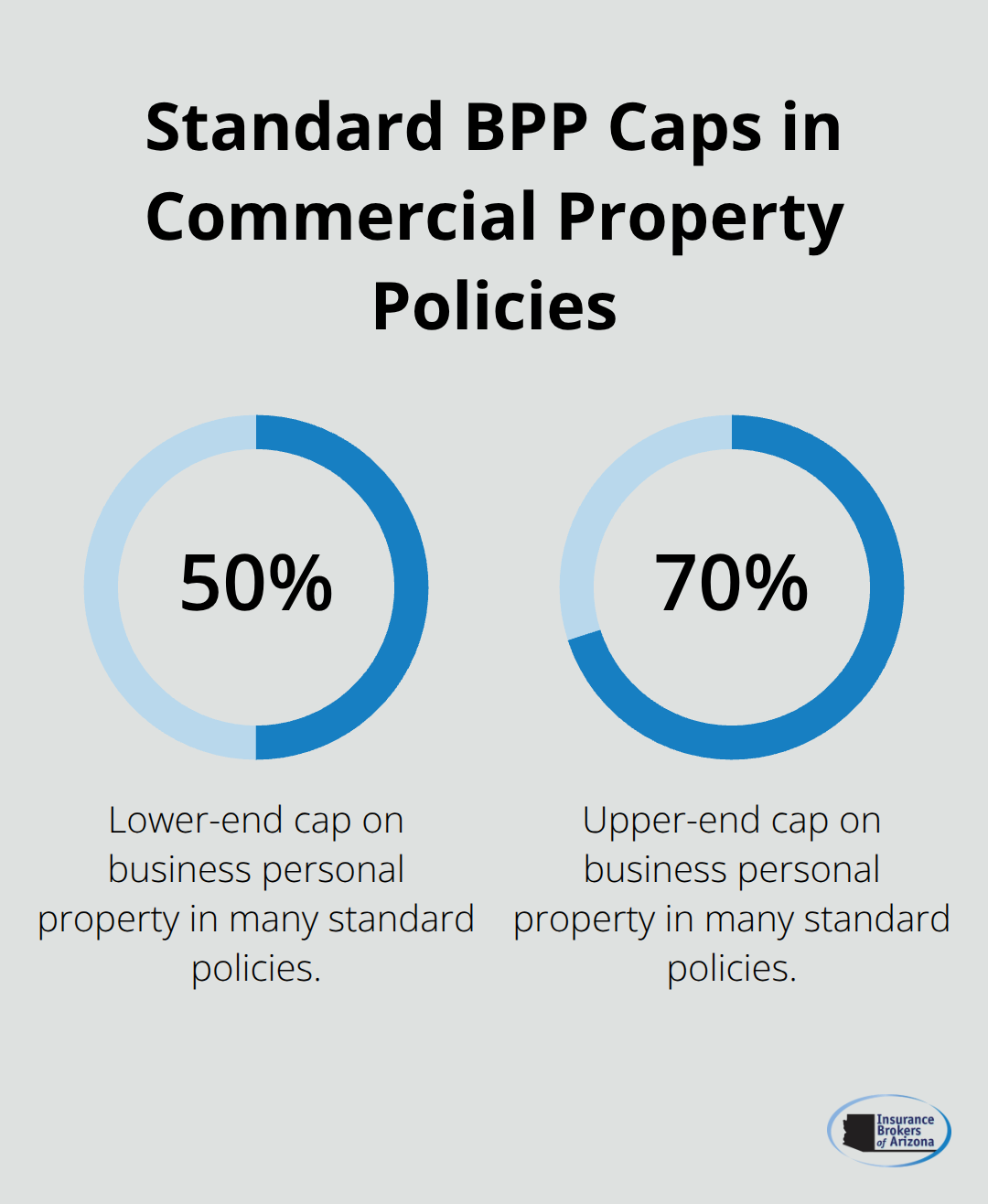
Business personal property coverage protects your equipment, inventory, furniture, and tools-essentially everything not permanently attached to the building. Many owners assume this is automatically included at full value, but standard policies often cap coverage at 50 to 70 percent of building coverage unless you specifically request higher limits. If you operate a restaurant with $150,000 in kitchen equipment and inventory, and your building coverage is $400,000, your equipment might only be covered up to $280,000 under standard terms.
Income Protection During Closures
Loss of income and business interruption coverage compensates you for lost revenue and ongoing expenses when a covered event forces you to temporarily close. This coverage matters because most businesses fail within two years of a major disaster if they cannot produce income during recovery. According to data from the U.S. Small Business Administration, businesses without business interruption coverage rarely survive extended closures. Coverage that extends at least 12 months of your average monthly operating expenses-including rent, payroll, and utilities-provides real protection.
Some policies also include extra expense coverage, which pays for temporary relocation costs or expedited repairs to minimize downtime. The premium for business interruption typically runs 10 to 15 percent of your property premium but can prevent catastrophic financial loss. Understanding these three coverage types positions you to assess what your specific operation actually needs.
Assessing What Your Business Actually Needs to Insure
Start with a Complete Inventory
The gap between what business owners think they own and what they actually insure is where problems start. A manufacturing facility owner insures the building at replacement cost but leaves $200,000 in specialized equipment off the personal property schedule. An office manager assumes the landlord’s policy covers the company’s computers and furniture, only to discover during a claim that tenant improvements and business property are excluded. Getting this right requires moving beyond guesswork.
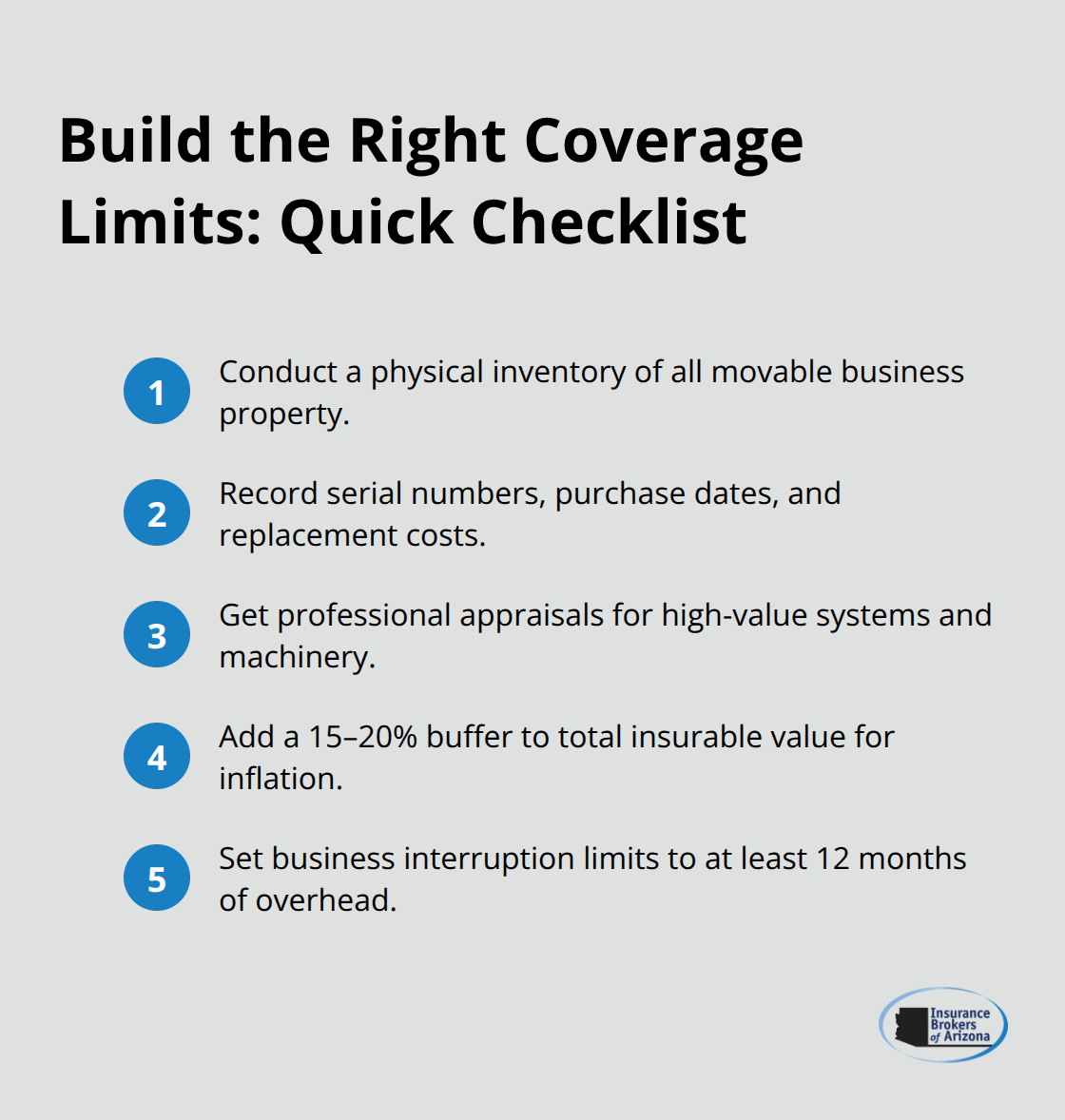
Start with a physical inventory of everything your business owns that isn’t nailed down. Walk through your location and document equipment serial numbers, purchase dates, and replacement costs. For high-value items like HVAC systems, machinery, or technology infrastructure, obtain recent appraisals from qualified professionals. A $500 appraisal now prevents underinsurance penalties that can slash claim payments by 20 to 30 percent later.
Account for Location and Climate Exposure
Location matters far more than most owners realize. A business in downtown Phoenix with municipal fire hydrants and professional fire response faces dramatically different risk than one in a rural area relying on volunteer services or with limited water supply for firefighting. Climate exposure also shifts your needs: Arizona properties face monsoon wind damage and dust storms that require specific endorsements beyond standard coverage.
Industrial areas with high-density occupancy or near hazardous materials storage create additional exposure that standard policies may not address adequately. Your specific location determines which endorsements actually protect your operation rather than which ones sound reasonable on paper.
Match Coverage to Your Industry
Your industry determines what coverage gaps actually exist. A dental practice needs different protection than a construction contractor. Dental offices face data breach and patient record loss exposure that requires cyber coverage and specific equipment breakdown protection for expensive diagnostic tools. Contractors need inland marine coverage for tools and equipment at job sites, plus builders risk during active projects. Restaurants require coverage for spoilage and specialized kitchen equipment that standard policies underinsure.
Talk directly with someone who understands your specific operations and has placed coverage for similar businesses. Generic industry templates miss the exposures that matter to your bottom line.
Calculate Realistic Coverage Limits
The right coverage limit comes from honest math, not industry averages. Calculate your total insurable value by adding building replacement cost plus all business personal property, then add 15 to 20 percent as a buffer for inflation and unforeseen assets. If your building would cost $600,000 to rebuild today and you have $150,000 in equipment and inventory, you need at least $900,000 in combined coverage.
Many owners choose lower limits to save premium, then face coinsurance penalties that wipe out those savings during a claim. The National Association of Insurance Commissioners data shows that businesses with adequate coverage limits recover 40 to 50 percent faster after property loss than underinsured operations.
Business interruption coverage limits should reflect your actual monthly operating expenses, not a guess. Add rent or mortgage, payroll, utilities, insurance premiums, and loan payments for a realistic number. If your monthly overhead runs $35,000, a 12-month business interruption limit of $420,000 provides real protection. Anything less leaves you scrambling to cover expenses while waiting for repairs.
Plan for Arizona-Specific Risks
Arizona’s climate and construction patterns mean you likely need endorsements that go beyond base commercial property coverage. Windstorm coverage for monsoon season, equipment breakdown for HVAC systems that work overtime in summer heat, and potentially earthquake coverage depending on your location are not optional considerations. A broker who understands Arizona-specific exposures rather than someone applying a national template to your situation will identify these gaps before a loss occurs.
What Actually Drives Your Commercial Property Premium
Construction Type Sets Your Rate Foundation
Your premium hinges on three concrete factors: what your building is made of, where it sits, and how seriously you take loss prevention. Construction type matters more than most realize. A concrete block building with a concrete roof costs significantly less to insure than wood frame construction because concrete presents lower fire risk and withstands monsoon winds better. If you’re considering a renovation or expansion, ask your broker how different materials affect your premium before you commit to construction plans-this saves thousands over the policy term. Arizona property owners often overpay because they don’t understand which variables actually move the needle on rates.
Location Determines Risk More Than You Think
Location determines risk in ways that go beyond zip codes. A business near a fire station with hydrants and professional response pays substantially less than one in a rural area relying on volunteer services or without adequate water supply for firefighting. Elevation and flood history matter too; a property on higher ground in Phoenix faces different monsoon exposure than one in a flood-prone wash area. Distance from industrial hazards, proximity to other high-risk occupancies, and local crime statistics all feed into your rate.
The National Association of Insurance Commissioners data shows that location-driven premiums can vary by 40 to 60 percent for identical buildings in different Arizona neighborhoods. Ask your broker for a detailed rate comparison showing how your specific address affects your quote compared to nearby alternatives.
Loss Prevention Investments Lower Your Costs
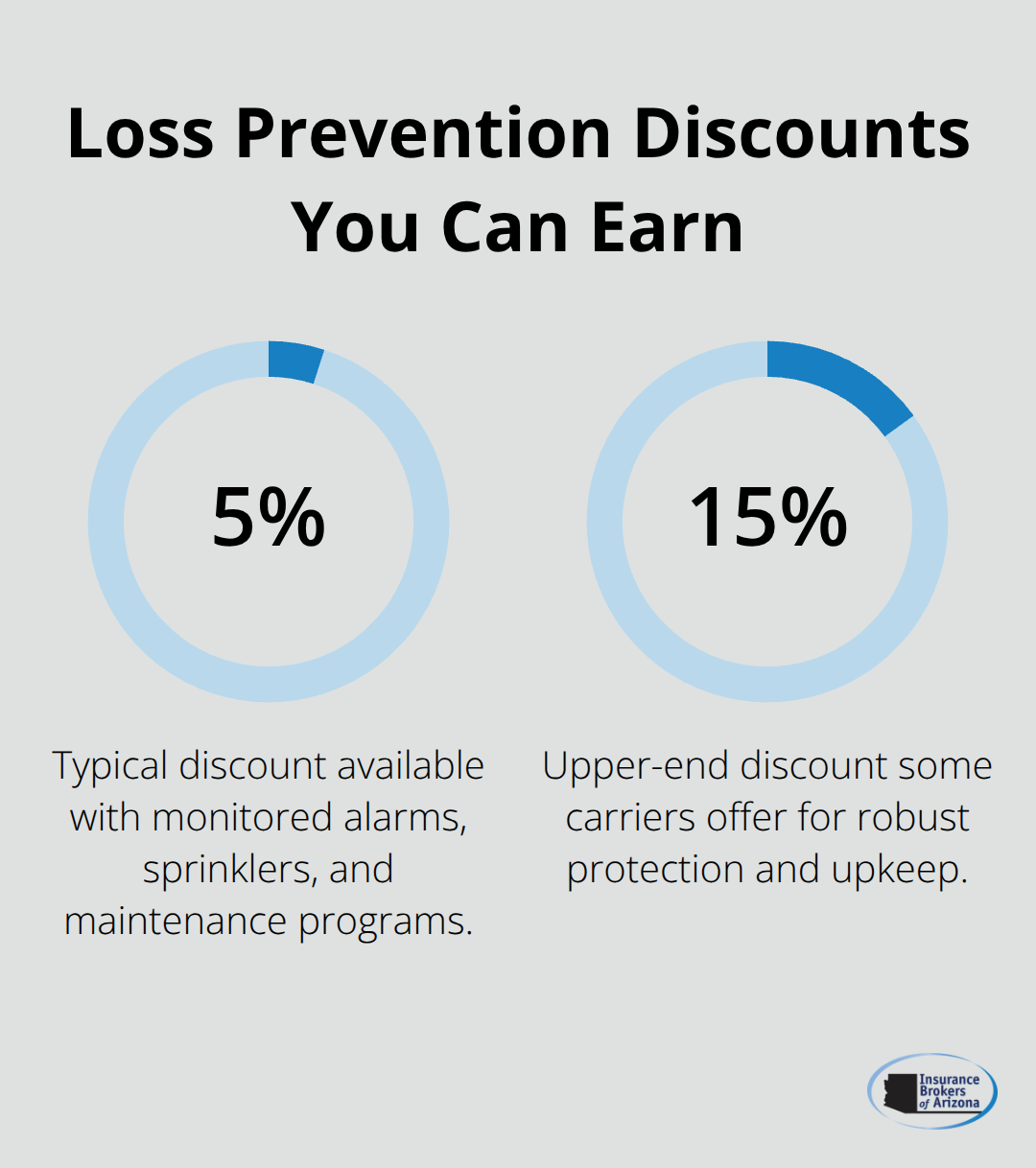
Loss prevention investments directly reduce what you pay. Businesses with monitored alarm systems, sprinkler protection, and regular maintenance schedules qualify for discounts ranging from 5 to 15 percent depending on the carrier and your risk profile. Installing a backup generator for HVAC systems in Arizona heat makes sense operationally and earns you premium reductions because it reduces business interruption exposure.
Fire-rated doors, updated electrical systems, and code-compliant construction all lower rates because they reduce claim frequency and severity. The payback period on these improvements often comes within two to three years through premium savings alone.
Multiple Carriers Price Risk Differently
Shopping multiple carriers reveals how differently insurers price identical risks. One carrier might charge $3,500 annually for your building while another quotes $2,800 for the same coverage because they weight location, construction type, and loss history differently. Getting quotes from at least three carriers, providing identical information to each, and comparing not just price but also coverage terms and deductibles takes four to six hours but typically saves 15 to 25 percent compared to accepting the first quote.
The competitive landscape means your rate from last year may not be competitive this year; annual shopping or at minimum a broker review every two to three years prevents you from overpaying for outdated terms. Insurance Brokers of Arizona® partners with over 40 carriers, which means competitive options exist for your specific risk profile.
Final Thoughts
Commercial property insurance options exist because no two businesses face identical risks. The coverage that protects a manufacturing facility differs fundamentally from what a retail operation needs, and both differ from a professional services firm. Getting this right means matching your actual exposures to the protection you buy, not settling for whatever a national carrier’s template suggests.
Underinsurance costs more than adequate coverage because coinsurance penalties reduce claim payments by 20 to 30 percent when you fall short of replacement value. Location and construction type drive your premium far more than most owners realize, which means understanding these variables before you build or renovate saves thousands. Shopping multiple carriers reveals pricing differences of 15 to 25 percent for identical risks because insurers weight risk factors differently.
Your policy won’t stay relevant on its own. Business interruption coverage that made sense five years ago may fall short if your payroll has grown 40 percent, and equipment you insured at purchase cost needs updating as replacement costs climb. A broker who understands your specific business beats accepting quotes from carriers who see only a risk code, and Insurance Brokers of Arizona® can match your actual exposures to competitive options rather than forcing your risk into a standard template.
Disclaimer: The information provided in this blog is for general informational purposes only and does not constitute legal, financial, or insurance advice. Coverage options, terms, and availability may vary. Please consult with a licensed professional for advice specific to your situation.


