
Contractor Insurance for Artisans: Custom Coverage for Tradespeople

Artisans face unique risks on the job site that standard business insurance simply doesn’t cover. From hand tools worth thousands to liability claims from clients, tradespeople need protection tailored to their specific work.
Contractor insurance for artisans isn’t a luxury-it’s a business necessity. We at Insurance Brokers of Arizona® help skilled tradespeople find the right coverage so they can focus on their craft without worrying about financial disaster.
Why Artisans Need Specialized Contractor Insurance
A single lawsuit from a job site injury drains your savings faster than you can respond. If a client slips on your work site or claims your electrical installation caused a fire, standard business insurance won’t cover you. Artisans operate in high-risk environments where third-party bodily injury claims happen regularly. Commercial General Liability insurance specifically protects you against these claims, covering legal defense costs and damages. Without it, you face personal liability for medical bills, property damage, and court expenses that easily exceed $100,000.
Protecting Your Tools and Equipment
Your hand tools, power equipment, and materials represent your ability to earn income. A theft from your truck or damage to your equipment at a job site isn’t covered by homeowners insurance. Tools and Equipment coverage protects your business assets whether they’re stolen, vandalized, or damaged during transit to jobs. Many artisans carry $10,000 to $50,000 worth of specialized equipment, making this coverage non-negotiable. Without it, replacing a stolen compressor or damaged drill set comes directly from your pocket, forcing you to choose between replacing equipment and paying bills.
Managing Property Damage Liability
Accidents happen on job sites. You might accidentally damage a client’s flooring while installing cabinets, or your crew might cause water damage during a plumbing repair. Clients file property damage claims regularly, and defending yourself without insurance means paying for repairs, legal representation, and potential settlements out of pocket. Installation Floater coverage specifically protects client materials and property during your work, covering damage until the project is complete.
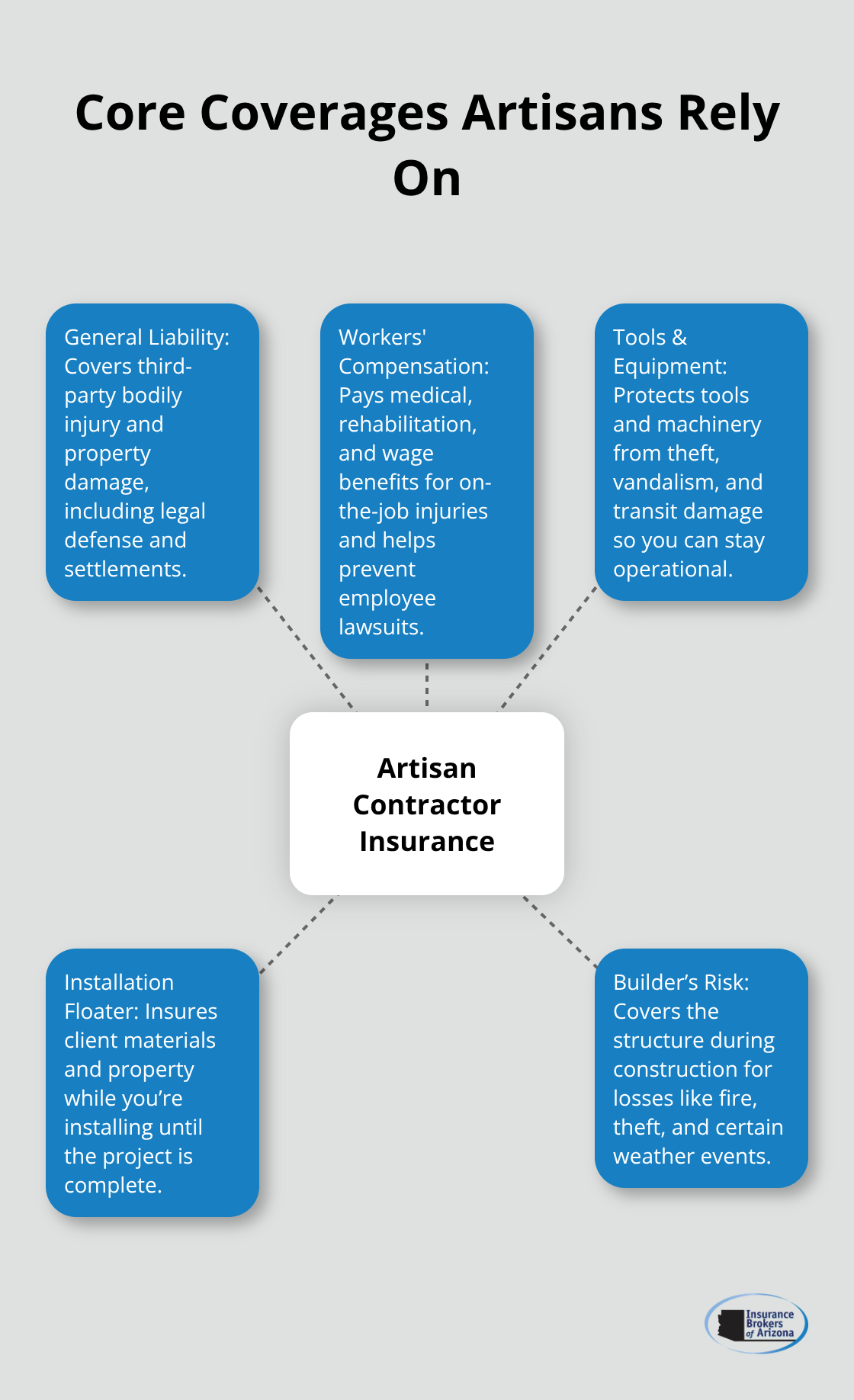
Builder’s Risk coverage extends this protection to the structure itself, covering fire, theft, and weather-related damage at the job site.
Why Coverage Gaps Cost You
One mistake on a job site becomes a financial crisis without the right protection. A property damage claim, equipment theft, or injury lawsuit forces you to pay thousands from your business reserves or personal accounts. These coverages prevent a single incident from forcing you out of business entirely. The cost of insurance premiums pales in comparison to the financial devastation of an uninsured claim.
Understanding what each coverage type protects helps you build a policy that actually matches your trade’s real risks. Different artisan trades face different hazards, which means your coverage needs to reflect the specific dangers you encounter daily.
What Coverage Do Artisans Actually Need
General Liability Insurance Protects Against Third-Party Claims
General Liability Insurance covers third-party bodily injury and property damage claims that arise from your work. If a client trips over your equipment and breaks their leg, or your crew accidentally damages their kitchen cabinets, this coverage pays for medical bills, repairs, and legal defense. Most artisans start with $1 million per occurrence and $2 million aggregate limits, which is the baseline standard across the trades.
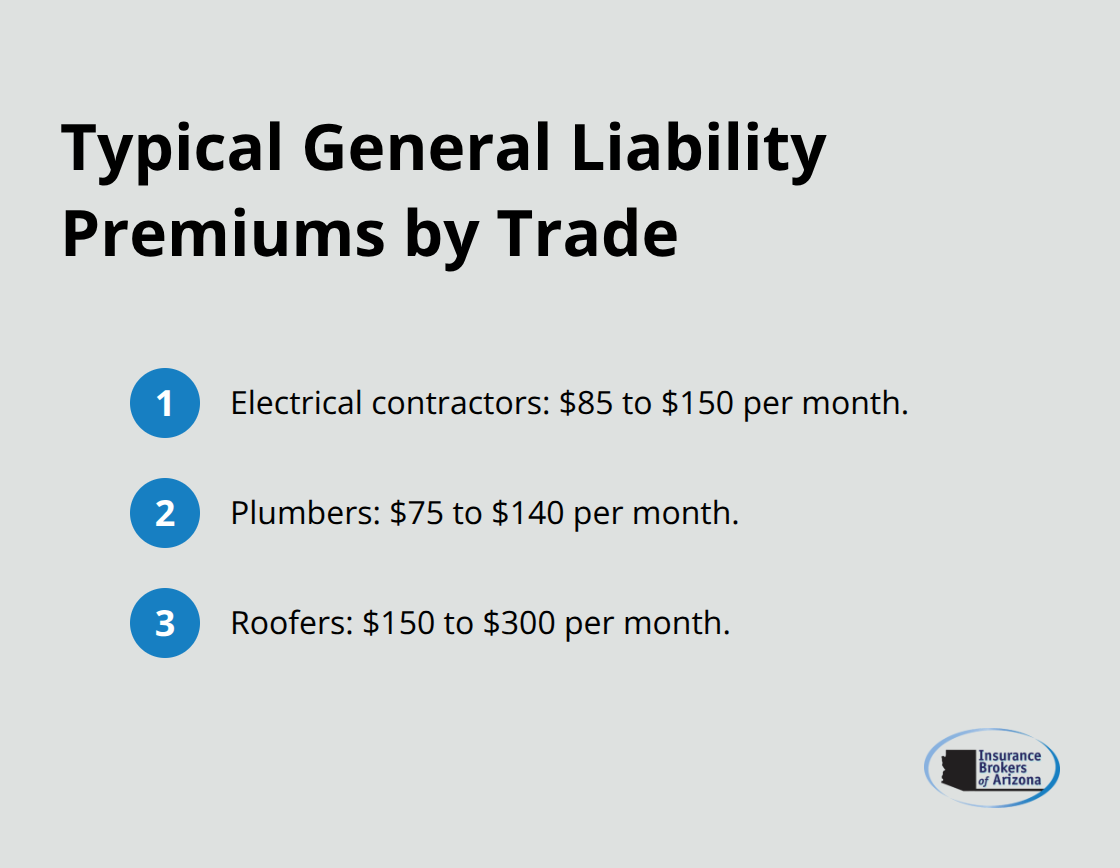
Costs vary significantly by trade. For electrical contractors, general liability runs about $85 to $150 per month for small businesses, while plumbers typically pay $75 to $140 monthly. Roofers face higher premiums, between $150 and $300 per month, because working at heights increases injury risk. Your specific trade, location, and claims history all influence what you’ll pay.
This coverage is non-negotiable because clients often require it before hiring you, and many states mandate it for licensed tradespeople to maintain their credentials.
Workers’ Compensation Shields Your Business and Employees
Workers’ Compensation protects your employees when they suffer injuries on the job, covering medical treatment, rehabilitation, and disability benefits. If you have three or more employees, your state likely requires this coverage by law. For electrical contractors, workers’ compensation averages around $217 per month due to high-risk incidents like ladder falls and electrical shock. Roofers face the steepest workers’ comp costs because falls from height represent the most expensive claims in construction.
This coverage shields your business from lawsuits by injured workers because they cannot sue you directly when workers’ compensation is in place. The protection extends to your bottom line and your peace of mind.
Tools and Equipment Coverage Protects Your Business Assets
Tools and Equipment coverage protects your hand tools, power equipment, and specialized machinery from theft, vandalism, or damage during transit and storage. Most artisans carry between $10,000 and $50,000 in equipment value, making this protection essential. An Installer’s Floater covers your equipment specifically during installation at client premises, while a Tools and Equipment Floater protects items like power drills, hoists, and hand tools wherever you use them.
Without this coverage, a stolen compressor or damaged power saw comes directly from your business income, forcing you to choose between replacing critical equipment and covering payroll. The financial impact of equipment loss hits hard when you operate on thin margins.
Your trade’s specific risks determine which floater types you actually need. Electrical contractors face different equipment hazards than plumbers or carpenters, which means your coverage should reflect those differences. The next section walks through how to assess your particular trade’s exposure and select limits that match your actual business operations.
How to Choose the Right Contractor Insurance for Your Trade
Identify Your Trade’s Specific Hazards
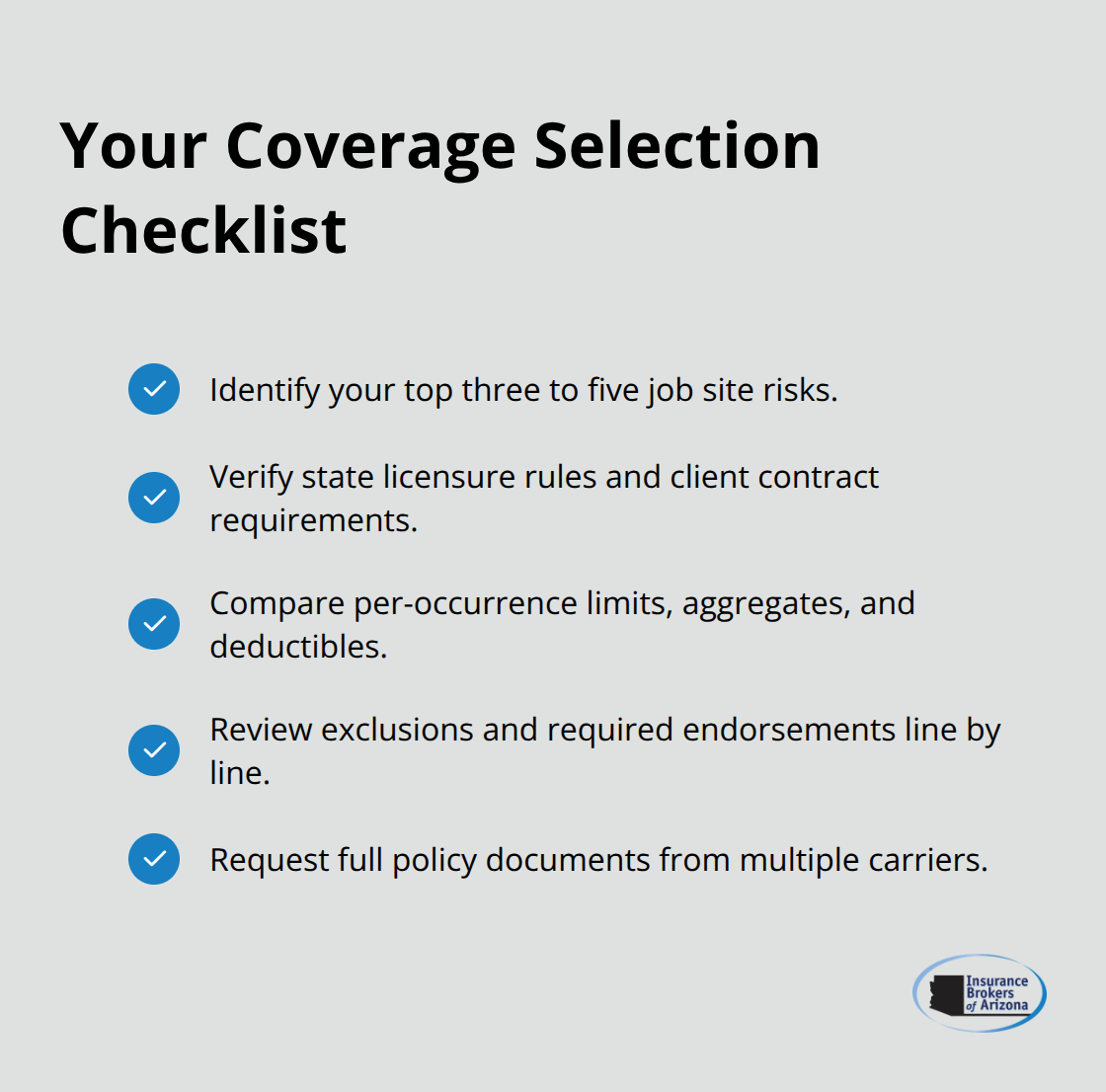
Start with your actual work environment, not a generic contractor profile. Electrical contractors face fire and shock risks that roofers don’t encounter, while plumbers deal with water damage exposure that electricians rarely confront. List the three to five biggest risks you face on job sites: Are you working at heights? Handling client property? Installing equipment in occupied homes? Each risk category demands specific coverage types and limits.
A roofer carrying $1 million in general liability coverage might need $2 million or higher because falls from height generate expensive claims, while a landscaper operating at ground level might find $1 million sufficient. Location shapes your exposure too-Arizona contractors in high-density urban areas face different liability risks than those working in rural regions.
Understand State Requirements and Client Demands
Check what your state requires for licensure, what clients demand in contracts, and what local building codes specify. Many Arizona contractors discover mid-project that their current policy excludes work on certain property types or requires additional endorsements they don’t have. State regulations directly shape what coverage you actually need, so verify requirements before comparing policies.
Compare Coverage Limits and Deductibles Across Carriers
The difference between $1 million and $2 million per occurrence coverage might cost only $30 to $50 monthly, yet it dramatically changes your financial protection if a major claim occurs. Deductibles work the opposite direction: higher deductibles lower your premium but increase your out-of-pocket costs when claims happen. A $500 deductible costs more monthly than a $2,500 deductible, but if you file a claim, you pay less from your business account.
Small artisans with solid safety records often benefit from higher deductibles because they file few claims, making the lower premium more valuable than the theoretical out-of-pocket protection. Shop multiple carriers rather than accepting the first quote.
Review Policy Exclusions and Additional Endorsements
Verify what each policy actually excludes because coverage gaps create disasters. Some general liability policies exclude pollution liability, which means environmental damage from your work isn’t covered even though you’re paying for liability insurance. Installation Floater policies sometimes cap coverage for certain materials or exclude high-value items.
Professional liability coverage for design work costs roughly $50 to $100 monthly extra but protects you if your specifications cause damage. Request detailed policy documents from carriers, not just premium quotes, and compare exclusions side by side. Ask carriers directly whether your specific work activities are covered under their standard policies or require endorsements.
Address Trade-Specific Coverage Gaps
Arizona contractors often need pollution liability endorsements for certain jobs, and subcontractors frequently need Owners and Contractors Protective coverage to meet general contractor requirements. Don’t assume your current policy covers new work types you’re expanding into; each service expansion requires policy review and potentially additional coverage. Your trade’s specific risks determine which floater types and endorsements you actually need, so tailor your selections accordingly.
Final Thoughts
Contractor insurance for artisans protects your income, your equipment, and your reputation when incidents happen on job sites. General Liability Insurance covers third-party bodily injury and property damage claims that arise from your work, while Workers’ Compensation shields your employees and your business from injury-related lawsuits. Tools and Equipment coverage protects the assets that generate your income, and together these three coverage types form the foundation of protection that every tradesperson needs.
The mistake most artisans make is buying generic contractor insurance instead of policies tailored to their specific trade. A roofer’s coverage needs differ dramatically from a plumber’s needs, yet many tradespeople accept whatever policy a national carrier offers without questioning whether it actually matches their daily hazards. Your trade’s specific risks, your state’s licensing requirements, and your clients’ contractual demands all shape what coverage you actually need.
Identify your three to five biggest job site risks, check what your state requires for licensure and what clients demand in contracts, and compare coverage limits and deductibles across multiple carriers rather than accepting the first quote. Review policy exclusions carefully because coverage gaps create financial disasters, and request detailed policy documents from carriers to ask directly whether your specific work activities are covered under their standard policies or require additional endorsements. Contact Insurance Brokers of Arizona® to discuss your specific coverage needs and receive a personalized quote that protects your business without overpaying for unnecessary coverage.
Disclaimer: The information provided in this blog is for general informational purposes only and does not constitute legal, financial, or insurance advice. Coverage options, terms, and availability may vary. Please consult with a licensed professional for advice specific to your situation.


