
How to Choose General Liability Insurance for Contractors
Contractors face unique risks in their day-to-day operations, making general liability insurance a critical safeguard for their businesses. At Insurance Brokers of Arizona®, we understand the complexities of choosing the right coverage to protect your contracting company.
This guide will walk you through the essential factors to consider when selecting general liability insurance for contractors, ensuring you make an informed decision that aligns with your specific needs and budget.
What Is General Liability Insurance for Contractors?
Definition and Purpose
General liability insurance provides essential protection for contractors. It shields them from financial losses due to third-party claims of bodily injury, property damage, or advertising injury. This coverage applies to contractors of all sizes (from solo operators to large construction firms).
Key Coverages
General liability policies typically cover:
- Legal fees
- Settlements
- Medical expenses
These costs result from accidents or injuries at job sites. For example, if a client trips over your tools and gets injured, your policy will cover their medical bills and any potential lawsuit. Property damage coverage protects you if you accidentally damage a client’s property during your work.
Contractor-Specific Risks
Contractors face unique risks that general liability insurance addresses:
- Potential injuries to passersby at construction sites
- Damage to neighboring properties during renovations
- Copyright infringement claims in advertising materials

Industry data shows the average general liability claim for small businesses is around $75,000 (a sum that could devastate a business without proper insurance).
Arizona’s Legal Requirements
Arizona requires contractors to carry general liability insurance to obtain and maintain their licenses. The Arizona Registrar of Contractors mandates a minimum of $500,000 in general liability coverage for most contractors. However, higher limits often prove necessary based on the specific risks associated with different contracting specialties.
These requirements can change, and some municipalities or clients may require higher coverage limits. You should always check the most current regulations and project requirements when reviewing your insurance needs.
As we move forward to discuss the factors to consider when choosing general liability insurance, it’s important to understand how these basic requirements and coverages form the foundation of a comprehensive insurance strategy for contractors.
What Factors Shape Your General Liability Insurance?
Tailoring Coverage to Your Business
Every contracting business has unique needs, which should reflect in your insurance. A roofing contractor faces different risks than an electrician. Your policy should address the specific scenarios you encounter in your work.

Consider the services you offer and the environments you work in. Do you often work in high-rise buildings? Or do you specialize in home renovations? Your policy must address these specific scenarios.
The Numbers Game: Limits and Deductibles
Coverage limits and deductibles play a significant role in your insurance strategy. Arizona requires a minimum of $500,000 in coverage, but many contractors opt for higher limits. Industry data shows the average general liability claim for small businesses is around $75,000, but larger claims can easily exceed $1 million.
When you set your limits, consider your largest projects and potential worst-case scenarios. As for deductibles, higher deductibles can lower your premiums, but make sure you can comfortably pay that amount if a claim arises.
Beyond the Basics: Additional Coverage Options
General liability insurance is just the starting point. Many contractors benefit from additional coverage options. For example, tools and equipment insurance can protect your valuable assets on job sites. The Insurance Information Institute reports that construction site theft costs the industry nearly $1 billion annually.
Workers’ compensation is another critical coverage, especially if you have employees. In Arizona, businesses with one or more employees must carry workers’ comp insurance. This protects both you and your workers in case of on-the-job injuries.
Choosing a Reliable Insurance Partner
The financial stability and reputation of your insurance provider matter. A.M. Best ratings can give you insight into an insurer’s financial health. Look for companies with ratings of A or higher.
Customer service is equally important. When you face a claim, you want an insurer that’s easy to reach and quick to respond. Focus on finding a balance between comprehensive coverage and affordable premiums.
With these factors in mind, let’s move on to the practical steps you can take to obtain the right general liability insurance for your contracting business.
How to Secure the Best General Liability Insurance
Assess Your Business Risks
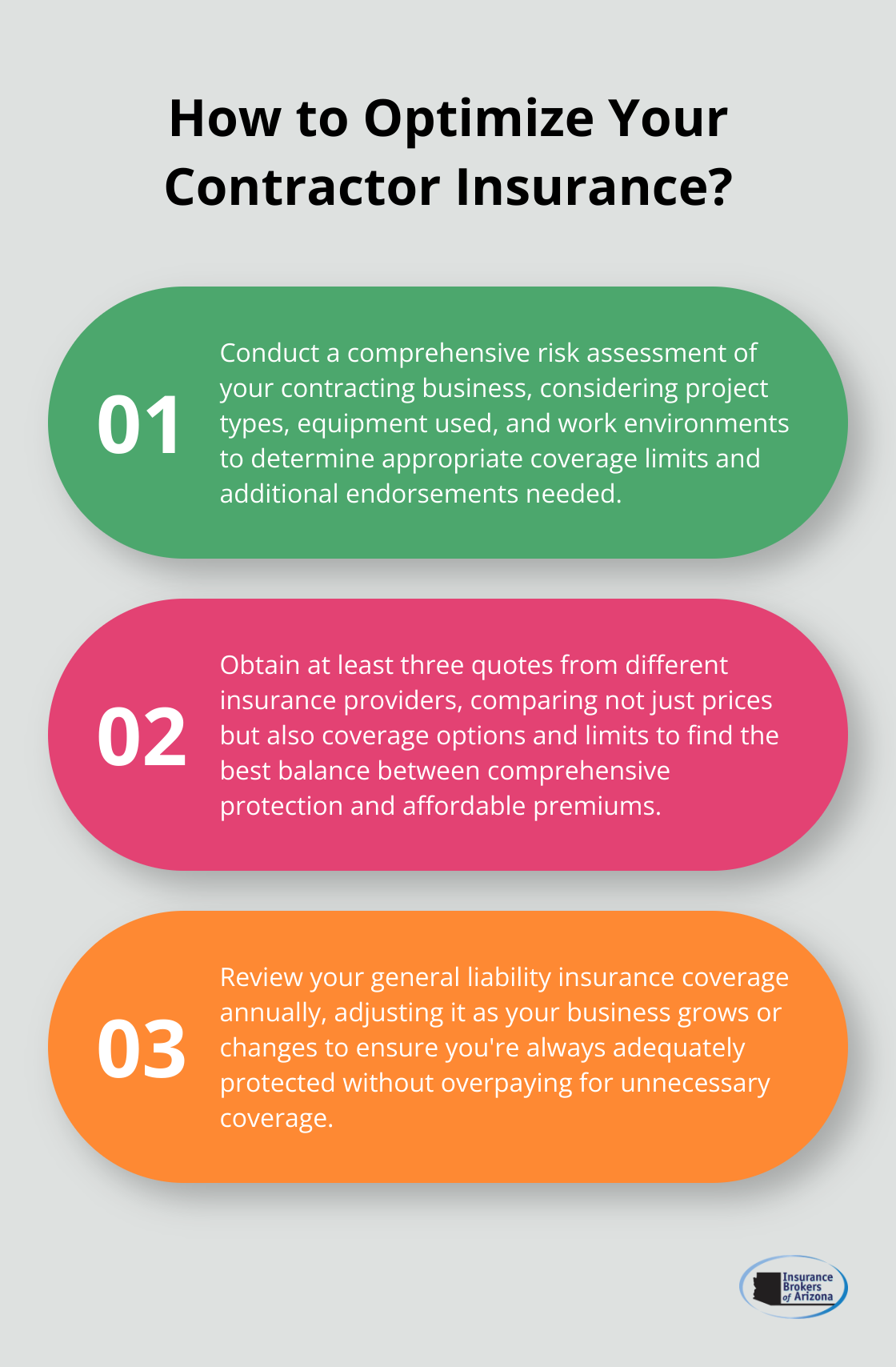
Start with a comprehensive evaluation of your specific business risks. Consider the types of projects you undertake, the equipment you use, and your work environments. A residential painter faces different risks than a commercial electrician. The National Association of Home Builders reports that 69% of contractors have been involved in construction defect litigation at least once. Understanding your risk profile helps determine appropriate coverage limits and additional endorsements you might need.
Compare Multiple Quotes
Don’t settle for the first quote you receive. The Insurance Information Institute recommends obtaining at least three quotes from different providers. This allows you to compare not just prices, but also coverage options and limits. Look for a balance between comprehensive coverage and affordable premiums (the cheapest option isn’t always the best).
Examine Policy Details
After you have a few quotes, examine the policy details closely. Pay attention to exclusions – these are scenarios or incidents that the policy won’t cover. Common exclusions in contractor policies include pollution liability and professional errors. If these are risks you face, you might need additional coverage. Also, check if the policy covers completed operations, which protects you from claims arising after you’ve finished a job.
Work with an Experienced Broker
Navigate the complexities of insurance with the help of an experienced insurance broker. A broker specializing in contractor insurance can guide you through the entire process. They often have access to multiple reputable carriers, allowing them to find the best coverage options for your specific needs. An experienced broker can explain complex policy terms, help you understand your risks, and advocate on your behalf with insurance companies.
Update Your Coverage Regularly
Your insurance needs will change as your business grows and evolves. The Associated General Contractors of America recommends reviewing your coverage annually. If you take on larger projects, expand your services, or hire more employees, you might need to adjust your coverage. Regular reviews ensure you’re always adequately protected without overpaying for unnecessary coverage.

Final Thoughts
Choosing the right general liability insurance for contractors requires careful consideration of your unique risks and business needs. You must compare multiple quotes and examine policy details to secure coverage that truly protects your business. Your insurance requirements will change as your business grows, so you should review your policy regularly to maintain adequate protection.
At Insurance Brokers of Arizona®, we help contractors navigate the complex world of insurance. Our team of experienced brokers can guide you through the process of selecting general liability insurance that aligns with your specific needs and budget. We work with numerous reputable carriers to provide competitive options and tailor coverage to your unique circumstances.
Don’t leave your business vulnerable to potentially devastating financial losses. Take the time to assess your risks, understand your coverage options, and partner with a trusted insurance broker. With the right general liability insurance in place, you can focus on delivering quality work to your clients while having peace of mind that your business is protected against unforeseen events.


