
Fleet Insurance in Arizona: What You Need to Know
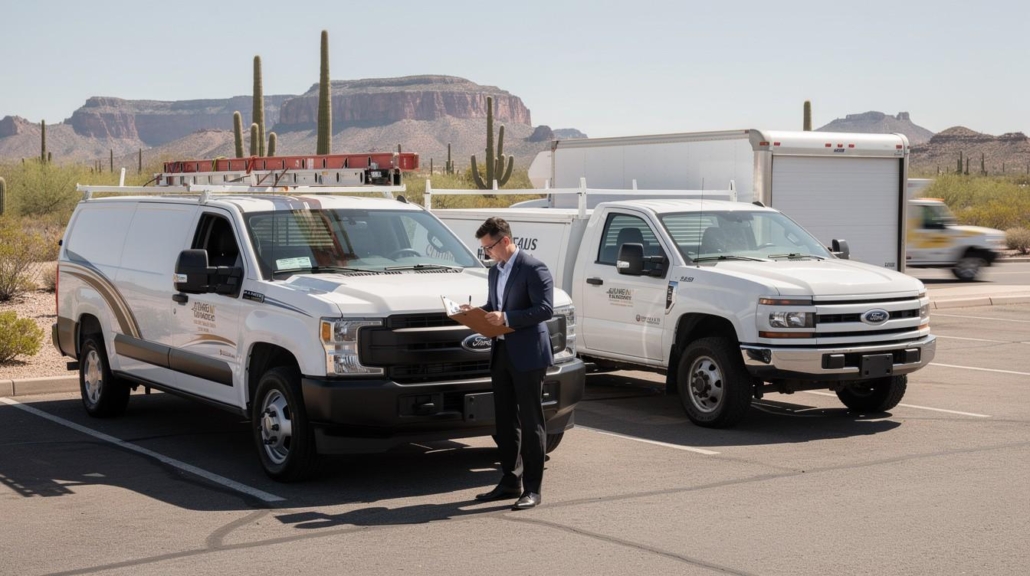
Running multiple vehicles across Arizona comes with real financial and legal risks that most fleet owners underestimate. Fleet insurance in Arizona isn’t just about meeting state requirements-it’s about protecting your business from gaps that could cost thousands.
At Insurance Brokers of Arizona®, we’ve seen too many fleet owners discover coverage holes only after an accident. This guide walks you through what actually matters when securing the right protection for your operation.
What Fleet Insurance Actually Covers in Arizona
Understanding Fleet Insurance Basics
Fleet insurance in Arizona protects your business vehicles under a single policy rather than insuring each vehicle separately. This approach combines commercial auto liability, collision, comprehensive, and uninsured motorist coverage into one streamlined package. Arizona requires minimum liability coverage of 15/30/10, meaning $15,000 per person and $30,000 per accident for bodily injury, plus $10,000 for property damage. However, these minimums are dangerously low for any business operating multiple vehicles.
If one of your drivers causes an accident with serious injuries, you could face personal liability far exceeding these limits. Most fleet operators should carry minimum coverage of at least 100/300/100 for fleet operations, which protects your assets when accidents happen.
Cost Savings and Simplified Management
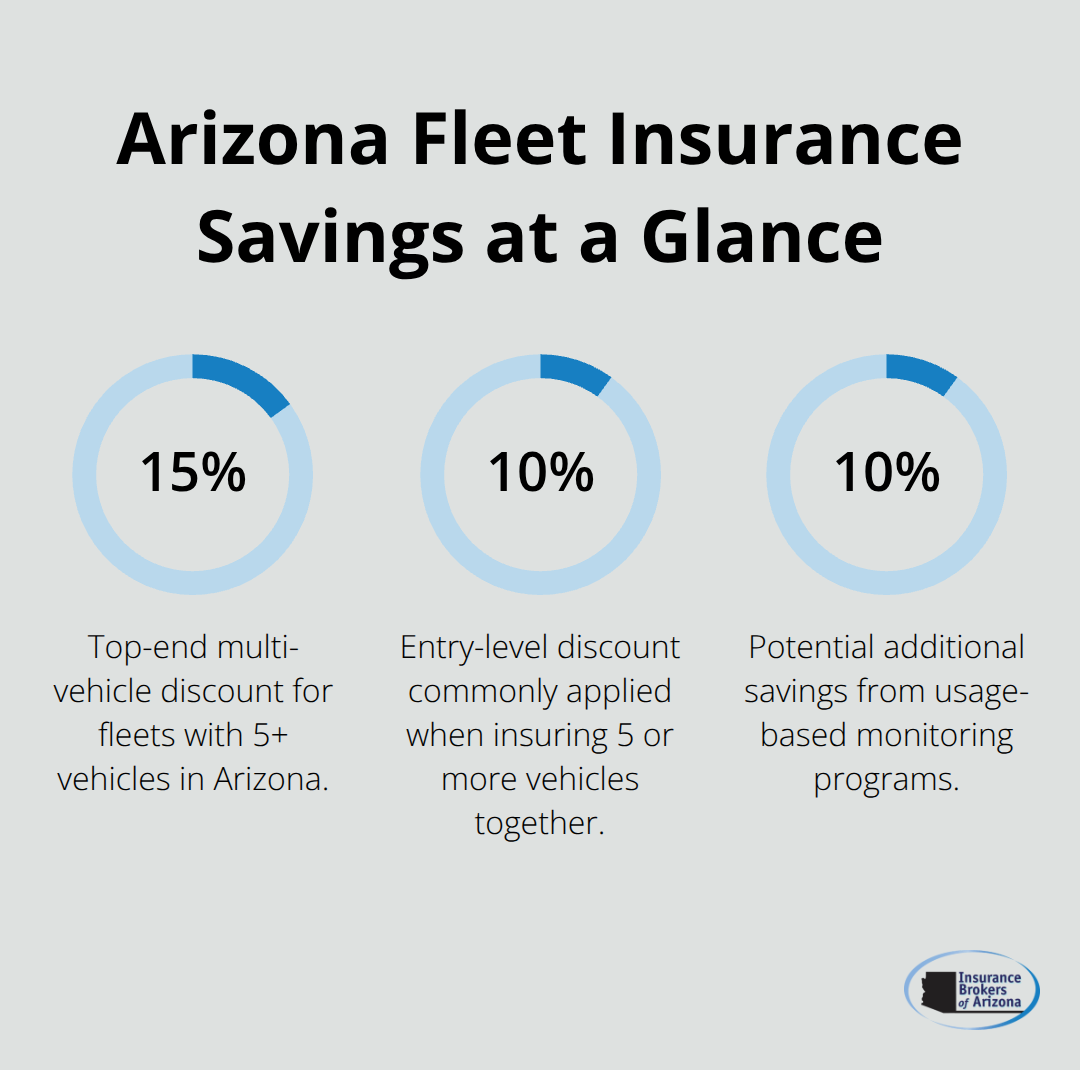
The real advantage of fleet insurance emerges in cost savings and simplified management. Businesses with 5 or more vehicles typically receive 10 to 15 percent discounts compared to insuring each vehicle individually, according to data from the National Association of Insurance Commissioners. Arizona-based fleets also benefit from usage-based monitoring programs that track driver behavior and vehicle performance, potentially lowering premiums by an additional 5 to 10 percent.
Rather than juggling multiple policies with different renewal dates and coverage limits, fleet insurance consolidates everything under one carrier. This matters because fleet owners often miss coverage gaps when managing separate policies.
Coverage Types You Can’t Overlook
Your operation needs protection for hired and non-owned vehicles, hired equipment, and contingent liability if drivers use personal vehicles for business purposes. Arizona’s regulatory environment also requires fleet operators to maintain records of driver training and vehicle maintenance, which insurance carriers increasingly verify during underwriting. These coverage types (hired vehicles, non-owned vehicle protection, and contingent liability) form the backbone of comprehensive fleet protection, yet many operators overlook them entirely.
The gaps in your coverage become apparent only when you face a claim. That’s why identifying which coverage types apply to your specific operation matters before an accident forces the issue.
What’s Actually Costing You Money in Fleet Coverage
The Valuation Trap That Drains Your Budget
Most Arizona fleet owners carry policies that look comprehensive on paper but crumble under real-world conditions. The problem isn’t what’s written into your policy-it’s what gets left out or undervalued when you need it most. The gap between what you think you’re covered for and what you actually are covered for represents the biggest financial risk in fleet insurance today.
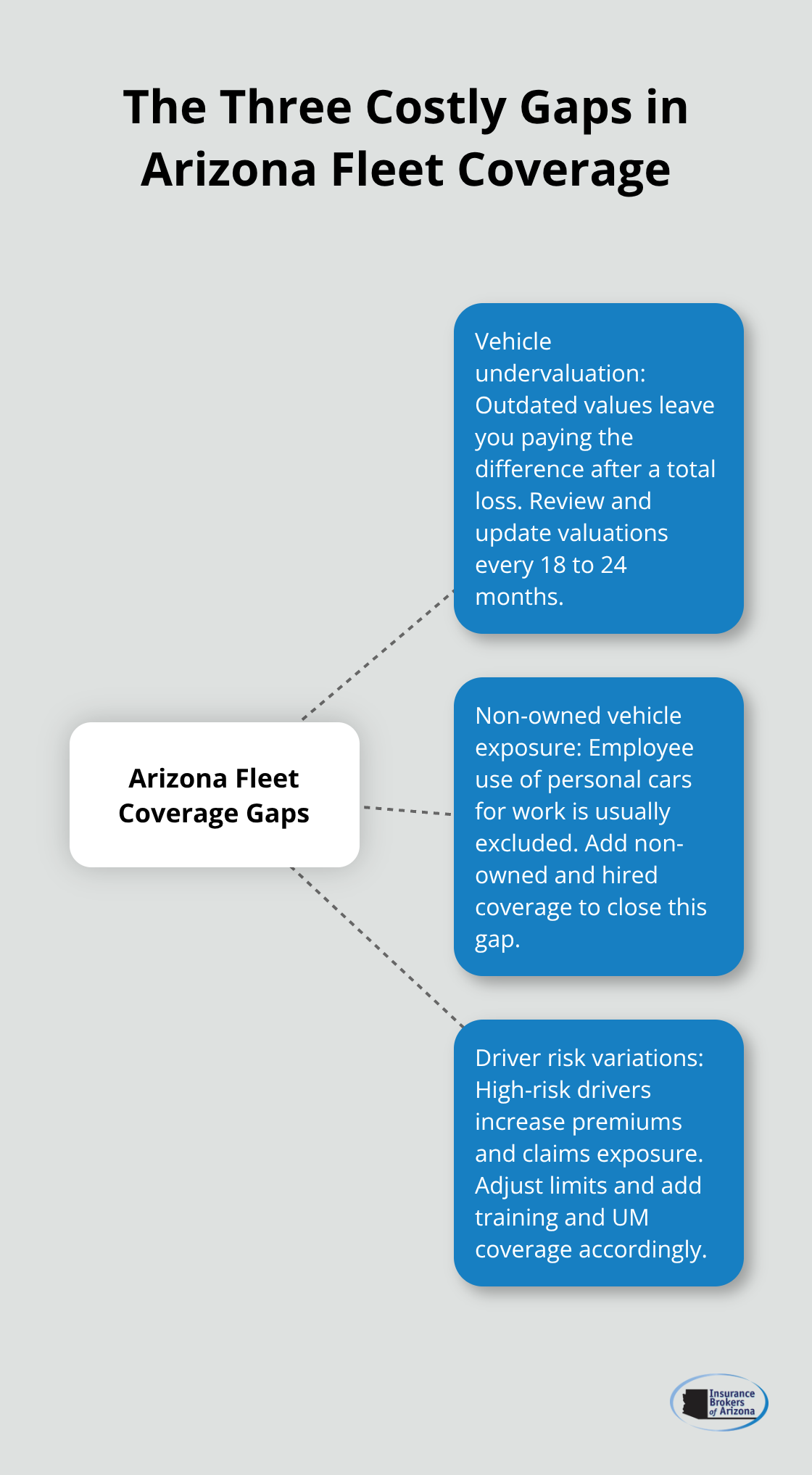
Undervaluing your vehicles catches fleet owners first. Many operators base their coverage limits on what they paid for vehicles years ago, not accounting for inflation or current replacement costs. If you purchased a work van for $35,000 in 2020, that same model costs $42,000 to $45,000 today due to supply chain pressures and manufacturing costs that haven’t come down. When that van gets totaled, your outdated valuation means you absorb the difference. Arizona’s inflation rate hit 3.2 percent annually between 2022 and 2024, which compounds quickly across a multi-vehicle fleet.
Request updated valuations from your carrier every 18 to 24 months, not just at renewal. Ask your insurance agent to run a cost-effectiveness analysis for each vehicle, factoring in model year, mileage, and condition. This single step prevents coverage shortfalls that could run $5,000 to $15,000 per vehicle.
Non-Owned Vehicles: The Liability You Ignore
Non-owned vehicle coverage represents the second critical gap. If your employees occasionally use personal vehicles for business purposes (picking up supplies, visiting client sites, or making deliveries), those trips fall outside your fleet policy’s protection. Arizona courts have consistently held businesses liable for employee actions during work-related activities, regardless of whether the vehicle is company-owned.
One employee accident in a personal vehicle can expose your business to $100,000 or more in liability claims. Your commercial auto policy typically excludes these situations entirely unless you specifically add non-owned and hired vehicle coverage. This coverage costs between $300 and $800 annually for most Arizona operations but pays for itself after a single incident. Document every scenario where employees use personal vehicles for work, then present that list to your broker when reviewing coverage options.
Driver Risk Variations That Spike Your Exposure
Driver risk variations create the third blind spot in fleet coverage. Insurance carriers now use increasingly sophisticated underwriting that accounts for individual driver records, not just fleet averages. A driver with a recent DUI or multiple accidents dramatically increases your premiums and claims exposure, yet many fleet operators don’t adjust coverage or safety protocols accordingly.
The Insurance Institute for Highway Safety reports that drivers with prior violations have claim rates 40 to 50 percent higher than clean-record drivers. If you have high-risk drivers in your fleet, you need higher liability limits and supplemental uninsured motorist coverage to protect against catastrophic scenarios. Beyond coverage adjustments, implement mandatory driver training programs focused on defensive driving. Programs like the National Safety Council’s Defensive Driving Course cost $50 to $100 per driver but qualify you for premium discounts of 5 to 15 percent while reducing accident frequency by measurable amounts.
Moving Forward With Your Coverage Review
These three gaps-vehicle undervaluation, non-owned vehicle exposure, and driver risk variations-form the foundation of most fleet insurance problems in Arizona. Addressing them now prevents expensive surprises later. Your next step involves selecting a policy structure that actually fits your operation rather than forcing your business into a standard template.
Selecting the Right Fleet Policy for Your Arizona Operation
Document Your Fleet Composition First
Fleet size and vehicle composition dictate everything about your insurance structure, yet most Arizona operators treat this decision as secondary. Start by documenting your exact fleet composition: how many vehicles, what types (work trucks, vans, sedans, specialized equipment carriers), model years, and annual mileage per vehicle. Insurance carriers price fleet policies differently based on these specifics. A fleet of five identical 2023 pickup trucks generates different underwriting than a mixed fleet with older models and higher mileage. Request quotes from at least three carriers and provide identical fleet information to each one. Comparing multiple carriers typically reveals premium variations of 20 to 35 percent for identical coverage in Arizona. That difference translates to $2,000 to $8,000 annually depending on your fleet size.
Don’t accept the first quote because carriers weight risk factors differently. Some prioritize driver records heavily while others emphasize vehicle age and maintenance history. One carrier might offer 15 percent discounts for telematics adoption while another offers nothing. These variations compound across your entire fleet, making comparison shopping non-negotiable rather than optional.
Customize Coverage Around Your Actual Operations
The real complexity emerges when you customize coverage around your specific operation because standard fleet packages rarely fit perfectly. Your broker needs to understand your actual business: Do your drivers regularly use personal vehicles for work tasks? Do you occasionally rent or lease additional vehicles during peak seasons? Are any vehicles used for specialized purposes like equipment transport or client transportation?
Generic fleet policies often include coverage you don’t need while excluding protection for your actual risk exposure. Request that your broker calculate the cost difference between adding non-owned vehicle coverage versus excluding it, between higher liability limits versus state minimums, and between comprehensive coverage on older vehicles versus collision only. Most Arizona fleet operators discover they’re overpaying for unnecessary coverage in some areas while dangerously underinsured in others. A broker comparison typically identifies $1,500 to $3,500 in annual savings through targeted customization.
Run Scenario Analyses to Identify Real Threats
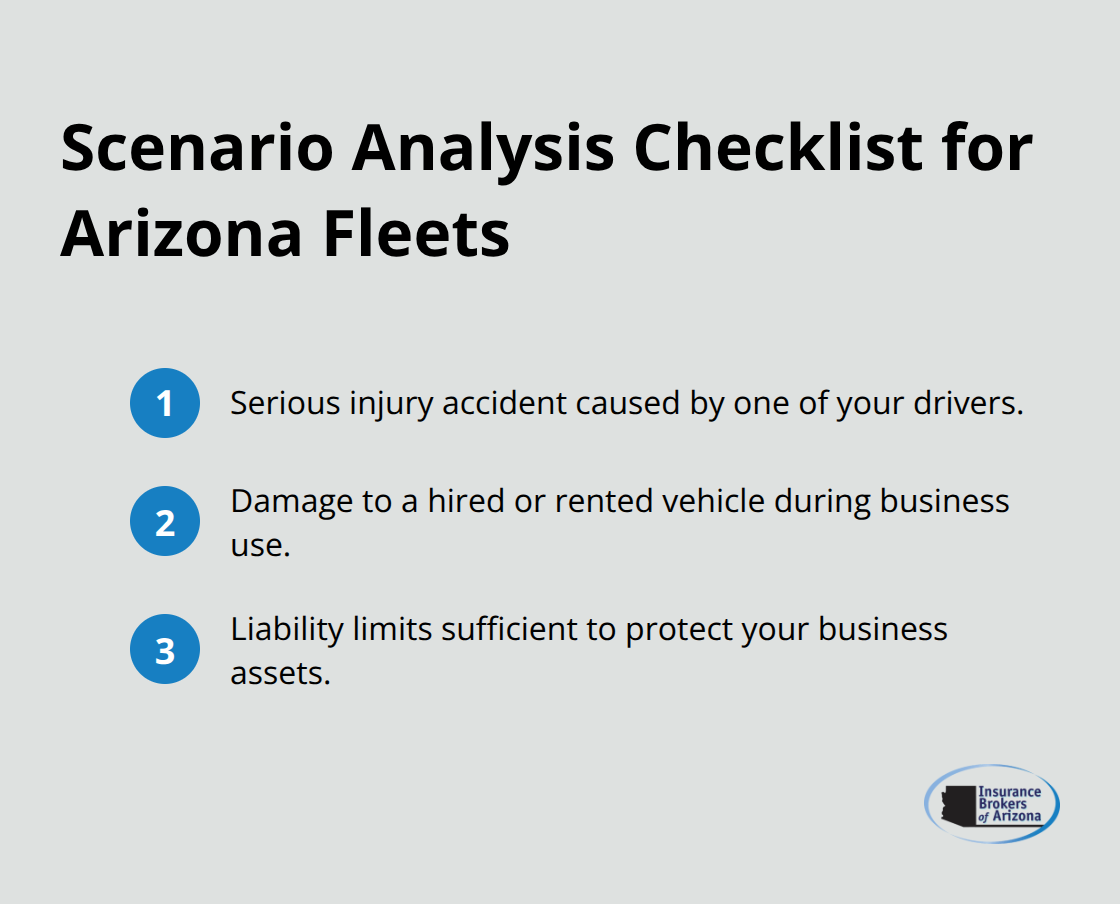
Ask your broker to run scenario analyses: What happens if one of your drivers causes a serious injury accident? What’s your financial exposure if a hired vehicle gets damaged? What liability limits actually protect your business assets? These scenarios reveal which coverage gaps pose genuine financial threats versus which represent theoretical risks you can safely exclude.
Document your broker’s recommendations in writing with specific reasoning for each coverage decision. This documentation protects you during future claims disputes and establishes clear decision-making rationale if regulators ever question your coverage choices.
Final Thoughts
Fleet insurance in Arizona requires three concrete actions before you finalize any policy. First, update your vehicle valuations immediately and schedule reviews every 18 to 24 months to prevent coverage shortfalls that cost thousands when accidents happen. Second, document every scenario where employees use personal vehicles for work, then add non-owned vehicle coverage to your policy rather than gambling on gaps that expose your business to six-figure liability claims. Third, run scenario analyses with your broker to identify which coverage gaps pose genuine financial threats versus theoretical risks you can safely exclude.
Most Arizona fleet owners leave $2,000 to $8,000 annually on the table through poor comparison shopping, while simultaneously carrying dangerous coverage gaps that could bankrupt their operation after a single serious accident. Your driver records, vehicle composition, and actual business operations determine what protection you genuinely need, not what insurance carriers push as standard packages. Professional guidance matters because fleet insurance decisions compound across your entire operation, affecting every vehicle, every driver, and every claim for years.
Contact Insurance Brokers of Arizona® to review your current coverage and identify gaps before they become expensive problems. We partner with over 40 reputable carriers to secure competitive options tailored to your specific fleet needs. One wrong coverage choice affects your entire operation, so let our brokers compare quotes from multiple carriers rather than steering you toward one company’s standard template.
Disclaimer: The information provided in this blog is for general informational purposes only and does not constitute legal, financial, or insurance advice. Coverage options, terms, and availability may vary. Please consult with a licensed professional for advice specific to your situation.


