
Vacant Rental Property Insurance: Coverage Gaps to Close

Most landlords assume their standard homeowners policy covers rental properties sitting empty. That assumption costs them thousands when theft, weather damage, or vandalism strikes an unoccupied home.
At Insurance Brokers of Arizona®, we see this gap repeatedly. Vacant rental property insurance fills the protection holes that leave property owners exposed during extended vacancies.
Coverage Gaps in Standard Homeowners Policies
When Your Policy Stops Protecting You
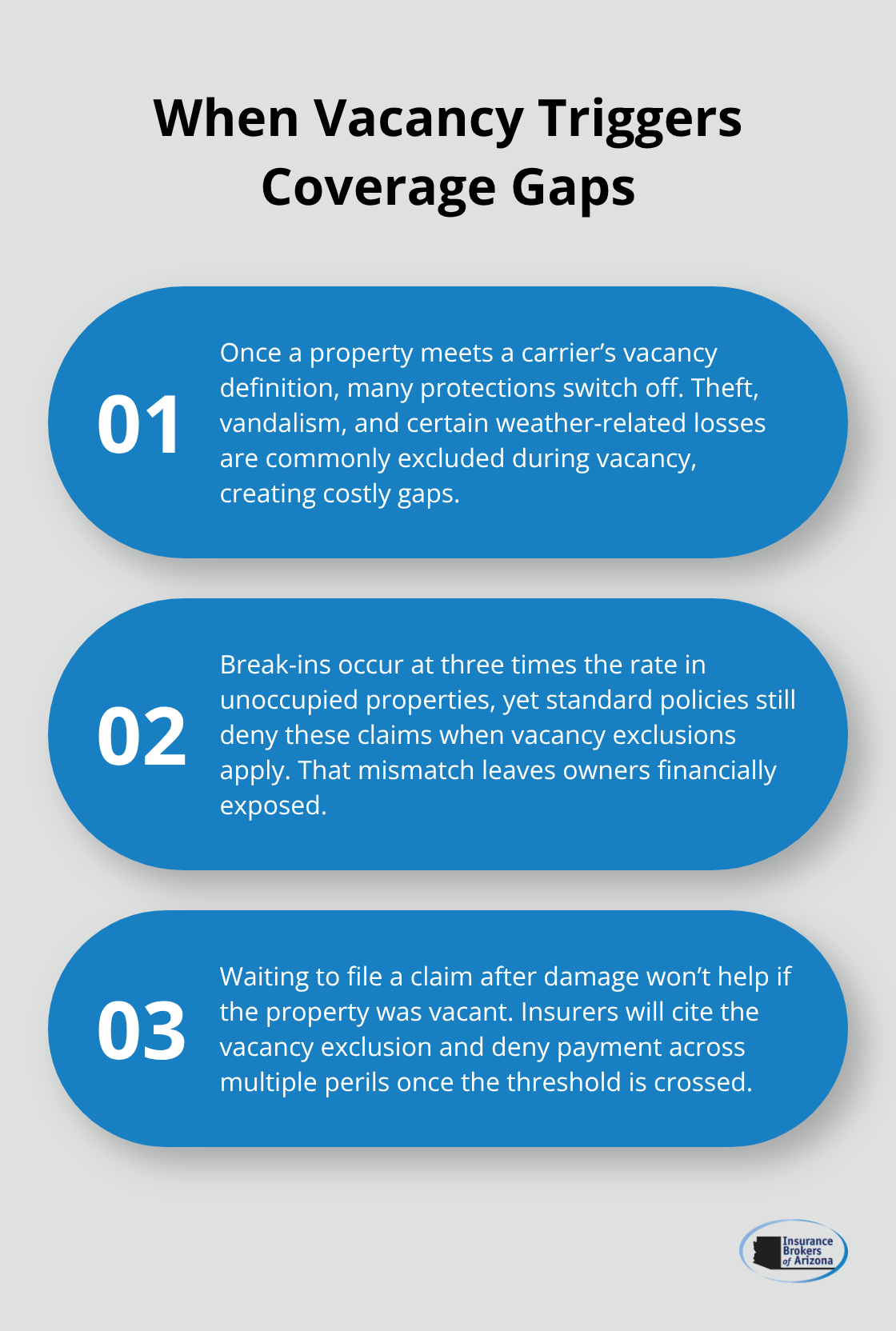
Most landlords assume their standard homeowners policy covers rental properties sitting empty. That assumption costs them thousands when theft, weather damage, or vandalism strikes an unoccupied home. Standard homeowners policies contain explicit exclusions for vacant properties that most landlords never read until it’s too late. Insurance companies classify a property as vacant when it sits unoccupied for 30 to 60 consecutive days, depending on the carrier. Once that threshold passes, your standard policy stops covering theft, vandalism, and weather-related damage.
The Real Cost of Vacancy Exclusions
The Insurance Information Institute reports that unoccupied properties experience break-ins at rates three times higher than occupied homes, yet standard policies deny claims on these exact scenarios. This isn’t a loophole or technicality-it’s written directly into policy language. When you call your insurer after discovering a broken window and missing fixtures at your vacant rental, the claims adjuster will cite the vacancy exclusion and deny your claim.
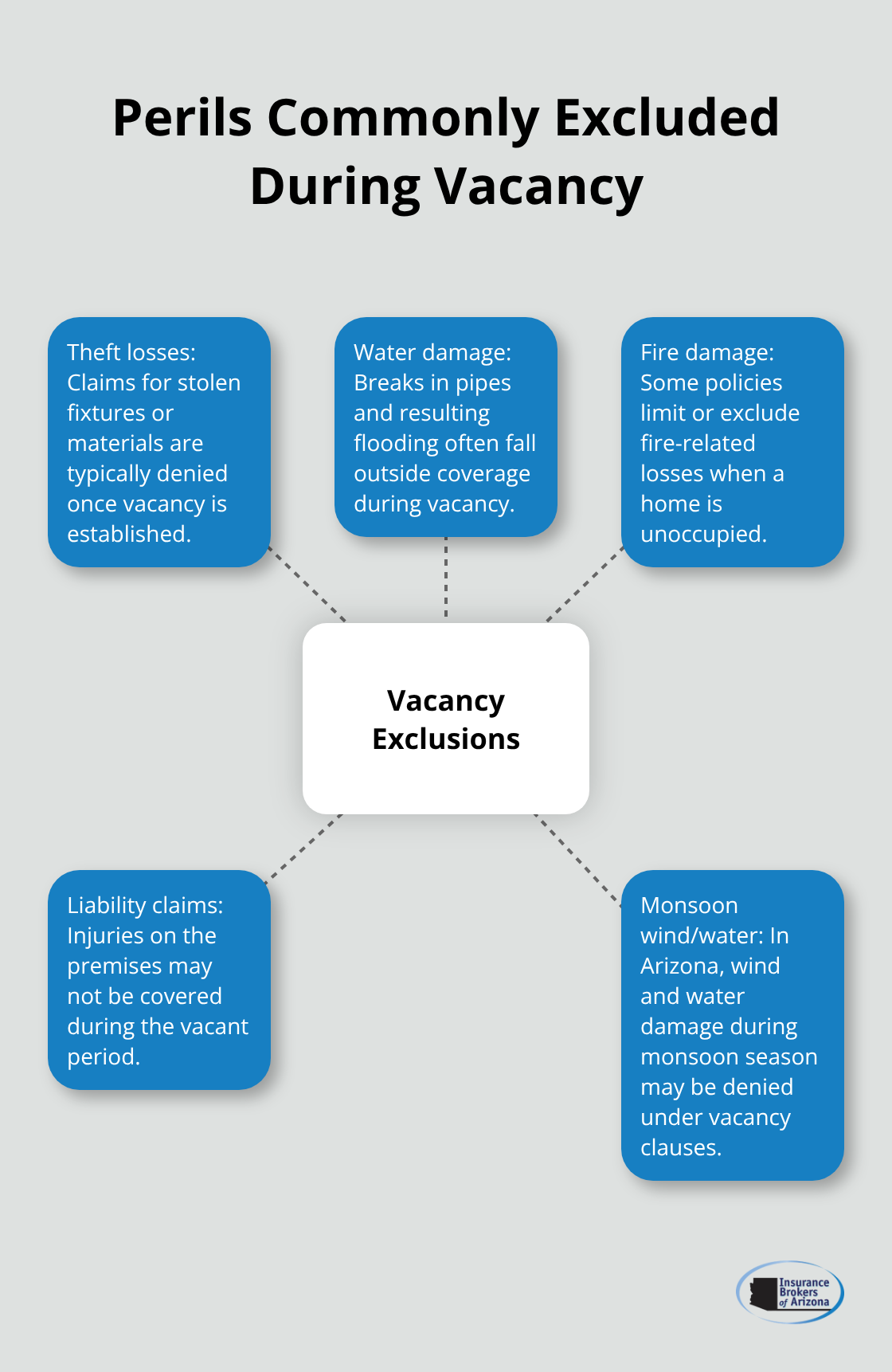
The financial exposure grows quickly because vacancy exclusions typically apply to multiple coverage types simultaneously. Your standard policy won’t cover theft losses, water damage from broken pipes, fire damage, or liability claims during the vacant period. A property sitting empty through Arizona’s monsoon season faces particular risk-wind and water damage claims get denied under the vacancy clause even though the damage resulted from weather, not lack of occupancy.
What Happens When Insurers Discover Vacancies
Some carriers will drop your entire policy if they discover you’re renting a property without disclosing its vacancy status. Others will retroactively deny claims dating back months if they determine the property was vacant when damage occurred. These consequences extend far beyond a single denied claim-they affect your insurability and rates for years afterward.
The solution isn’t hoping your insurer never finds out about extended vacancies. Dedicated vacant property coverage provides the protection your standard policy explicitly denies, and selecting the right coverage requires understanding your specific property risks.
Why Vacant Property Insurance Protects Your Investment
Break-Ins Strike Three Times Harder
Unoccupied rental properties experience break-ins at three times the rate of occupied homes, according to the Insurance Information Institute. Yet standard policies won’t cover these losses. This statistic alone justifies vacant property coverage, but the real argument runs deeper. When a property sits empty for 30 to 60 days, you face complete coverage denial across multiple perils simultaneously. A pipe bursts during winter vacancy and floods the interior-your standard policy denies the claim because the property was unoccupied. Wind tears off roofing during monsoon season-denied again. Vandals strip copper wiring and plumbing fixtures-denied once more. The cumulative financial exposure from these scenarios easily reaches tens of thousands of dollars on a mid-range rental property.
Weather and Theft Create Staggering Losses
Arizona property owners face particular risk during the June through September monsoon season when vacant structures experience significant wind and water damage. A single weather event or break-in can wipe out months of rental income and force expensive repairs. Vacant property insurance eliminates this exposure entirely by providing active coverage during the exact periods when your standard homeowners policy goes silent. You know exactly what’s protected, what isn’t, and what your out-of-pocket exposure looks like if damage occurs.
Financial Certainty Drives Better Decisions
This certainty allows you to make rational decisions about property management and renovation timing instead of hoping nothing goes wrong during vacancy. Properties between tenants, undergoing renovation, or held as investment assets create vacancy periods that could last weeks or months. Vacant property coverage removes the financial anxiety from these transition periods and protects your bottom line as a landlord. Understanding your specific coverage gaps matters more than accepting whatever protection your current policy offers.
Selecting Vacant Property Coverage That Matches Your Situation
Define Your Vacancy Timeline First
Choosing vacant property insurance requires matching coverage to your specific property rather than grabbing the cheapest option available. Start by documenting exactly how long your property will sit empty. Insurance carriers distinguish between short-term vacancies under 30 days and extended vacancies lasting months, with dramatically different premiums and coverage options for each scenario. A property between tenants for two weeks needs different protection than one undergoing a six-month renovation.
Contact Your Current Insurer Immediately
Contact your current insurer first and ask specifically what happens to your coverage the moment a property becomes vacant according to their definition. Most carriers require notification when a property transitions to rental status or sits unoccupied, and failing to report this change gives them grounds to deny future claims. Get this notification requirement in writing before vacancy occurs so you have documentation of what your carrier expects.
Compare Quotes Across Multiple Carriers
Compare how different carriers define and price vacant property coverage because the variation across insurers is substantial. Some carriers offer vacancy endorsements that extend your existing homeowners policy for 30 to 90 days at minimal cost, while others require completely separate vacant property policies with higher premiums. Request quotes from at least three carriers and ask each one the same specific questions: What perils does the vacant coverage include? Does it cover theft and vandalism, or only weather-related damage? What’s the maximum vacancy period allowed?
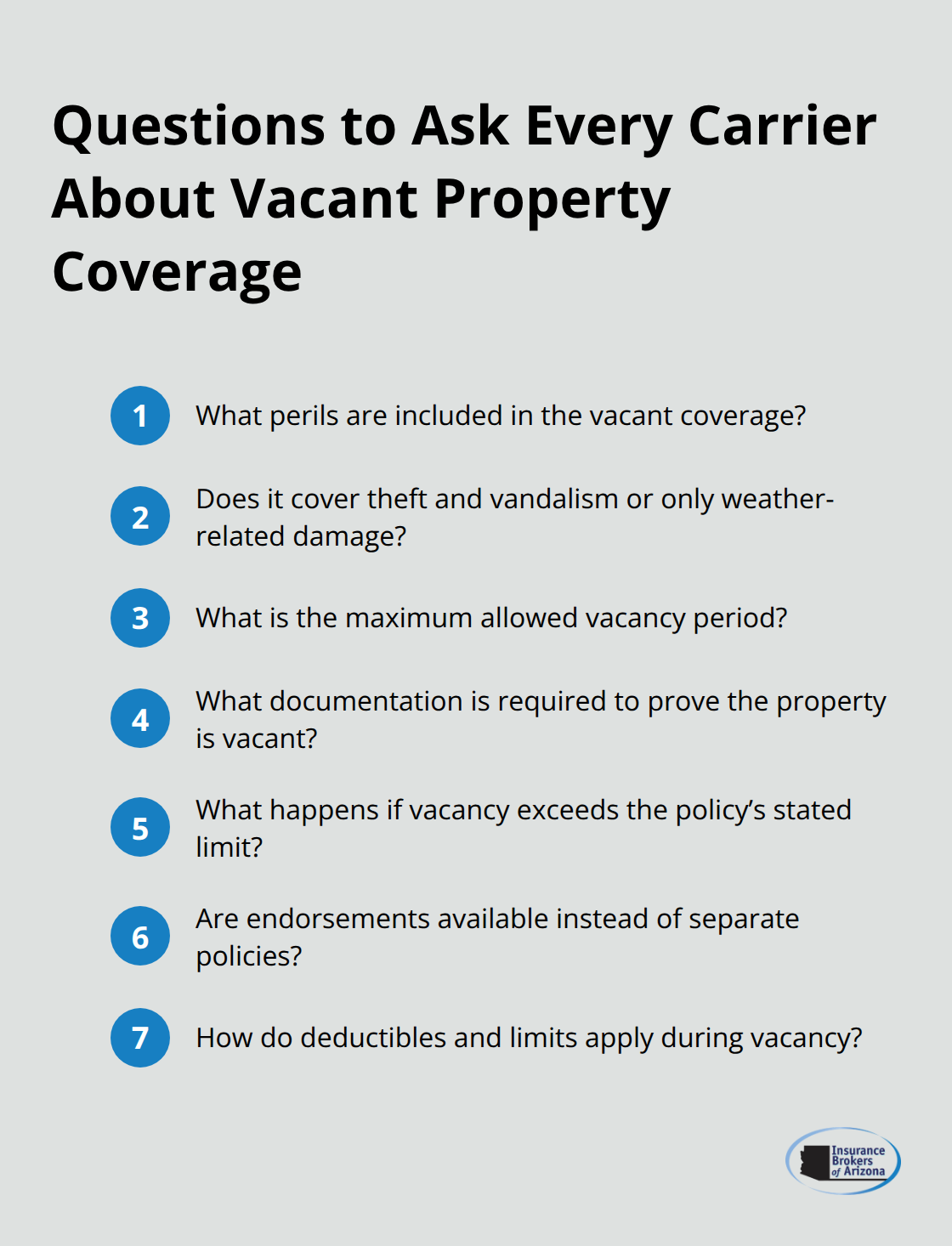
What documentation do you require to prove the property is vacant? What happens if the property sits empty longer than the policy allows?
The answers reveal significant differences in protection and cost. A carrier charging $400 annually for a vacant endorsement might cover theft and vandalism, while another charging $350 might exclude theft entirely, making the cheaper option worthless. Arizona property owners should pay particular attention to wind and water damage coverage since monsoon season creates predictable vacancy risks.
Evaluate Coverage Limits and Deductibles Carefully
Review the specific coverage limits and deductibles in each quote because a policy with a $5,000 deductible provides minimal protection on a $50,000 loss. Calculate your actual out-of-pocket exposure under each option by multiplying potential damage scenarios by the deductible amounts. A property worth $200,000 with a $2,500 deductible provides far better protection than one with a $10,000 deductible, even if premiums are slightly higher.
Document the square footage, construction type, and age of your property when getting quotes since these factors significantly impact pricing and coverage availability. Older properties or those with outdated electrical systems may face higher premiums or coverage restrictions from some carriers. Once you’ve selected a policy, set calendar reminders for when your vacancy period ends so you can notify your insurer and restore your standard homeowners coverage without gaps.
Final Thoughts
Vacant rental property insurance protects your investment when standard homeowners policies explicitly deny coverage during extended vacancies. The Insurance Information Institute’s data showing break-ins occur three times more frequently at unoccupied properties confirms what Arizona landlords experience repeatedly: extended vacancies create financial risk that standard policies won’t address. Your current coverage stops the moment your property sits empty for 30 to 60 consecutive days, leaving you exposed to theft, weather damage, and vandalism at precisely the moments when protection matters most.
Contact your current insurer this week and ask exactly when your coverage stops if a property becomes vacant. Request quotes from at least two additional carriers specifically for vacant rental property insurance coverage, and compare what each policy covers, what it excludes, and what your deductible would be under different damage scenarios (a $5,000 deductible might seem acceptable until you calculate it against potential losses from monsoon season wind damage or a break-in). Document your property’s square footage, construction type, and age before requesting quotes since these details affect both pricing and coverage availability.
We at Insurance Brokers of Arizona® work with over 40 carriers to find vacant property coverage that actually protects your investment rather than leaving you exposed. Our team understands Arizona’s specific risks, from monsoon season weather to the realities of managing rental properties between tenants. Contact us at Insurance Brokers of Arizona® to discuss your vacant property coverage needs and close the gaps in your current protection.
Disclaimer: The information provided in this blog is for general informational purposes only and does not constitute legal, financial, or insurance advice. Coverage options, terms, and availability may vary. Please consult with a licensed professional for advice specific to your situation.


