
Rental Property Insurance Strategies for Landlords

Rental property owners face a constant balancing act between maximizing income and protecting their assets. Most landlords discover gaps in their coverage only after a claim exposes what they’re missing.
We at Insurance Brokers of Arizona® help landlords build rental property insurance strategies that actually work. The right coverage protects your building, your income, and your liability exposure when things go wrong.
The Three Coverage Types That Protect Your Rental Income and Assets
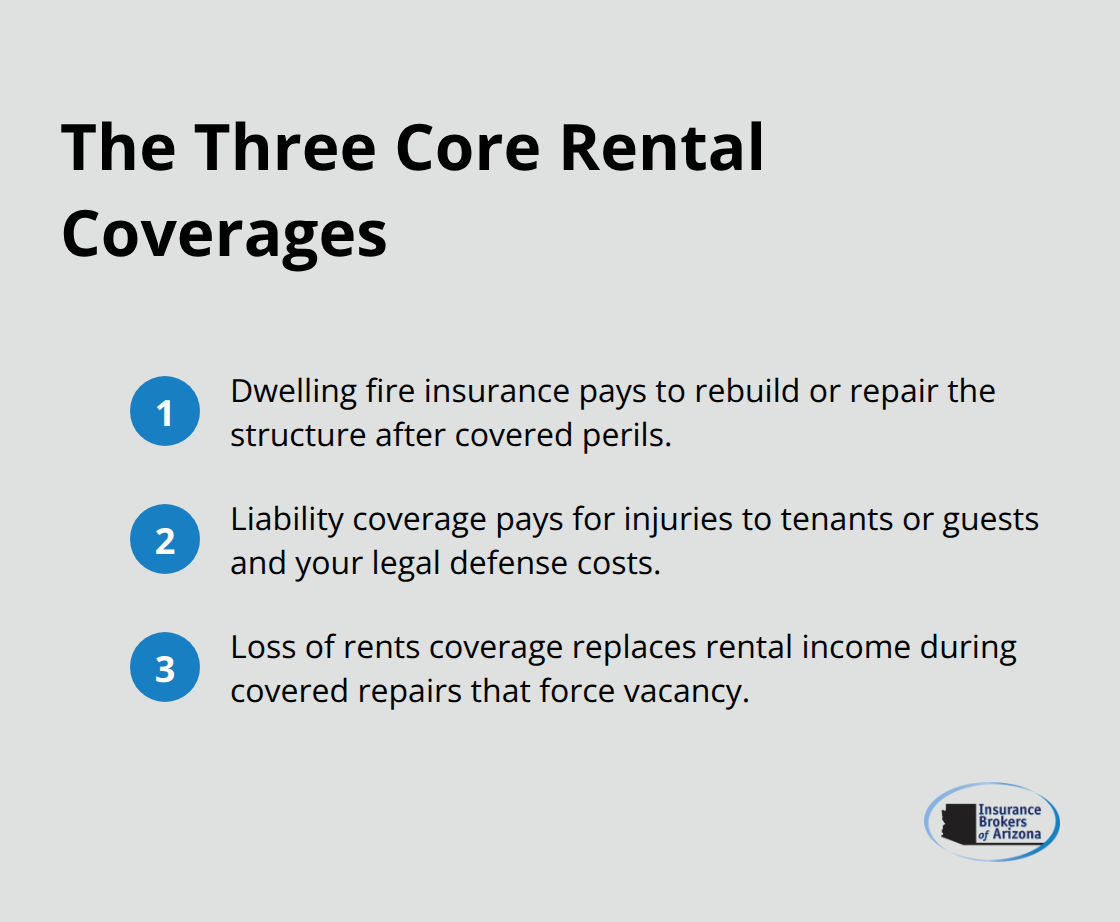
Dwelling fire insurance protects the physical structure of your rental property, but it only covers the building itself-not your tenant’s belongings or liability exposure. This coverage pays to rebuild or repair the walls, roof, foundation, and permanent fixtures if fire, wind, or other named perils damage them. The biggest mistake most landlords make is underestimating replacement costs. Construction costs in Arizona have climbed roughly 5–8% annually over the past three years according to industry data, which means a property you insured five years ago likely needs higher limits today. You should calculate the dwelling limit using actual replacement cost estimates from a contractor, not just the property’s market value. A rental property worth $350,000 might cost $450,000 to fully rebuild after total loss, and underinsuring by $100,000 leaves you absorbing that gap out of pocket.
Liability Coverage Protects You From Tenant and Guest Injuries
Liability coverage is where landlords face the biggest financial exposure, yet many carry limits far too low. If a guest slips on your icy walkway in winter and suffers a serious injury, they can sue you for medical bills, lost wages, and pain and suffering-often totaling $50,000 to $500,000 or more. Standard rental property liability policies typically include $100,000 to $300,000 in coverage, but Arizona courts have awarded judgments exceeding these amounts regularly. You should carry at least $300,000 in liability protection per occurrence, and $500,000 if you own multiple properties or rent to families with children. This coverage also pays your legal defense costs if a tenant or guest sues, which can run $10,000–$30,000 before any settlement or verdict. Property maintenance directly affects your liability risk-a cracked walkway or broken stair becomes a lawsuit waiting to happen.
Loss of Rents Coverage Replaces Your Income During Vacancy
Loss of rents coverage pays your mortgage, property taxes, and other expenses when a covered peril makes the property uninhabitable and you cannot collect rent from tenants. If a fire damages your rental unit and repairs take six months, this coverage keeps your cash flow intact instead of forcing you to cover expenses from savings. Most policies cover 12–24 months of lost rental income, though you should verify the specific period your policy includes. The calculation is straightforward: if your monthly rent is $1,500 and repairs take four months, loss of rents covers $6,000 plus any mortgage or maintenance costs. Without this protection, you absorb every dollar of lost income during repairs personally. One major fire or flood can wipe out years of profit while you wait for reconstruction-which is why many landlords who skip this coverage later regret that decision.
Why These Three Coverages Work Together
Each coverage type addresses a different financial risk you face as a landlord. Dwelling fire insurance protects your asset, liability coverage protects your personal finances, and loss of rents coverage protects your income stream. Together, they create a foundation that keeps a single disaster from destroying your rental business. The gaps appear when landlords carry these coverages but with limits that don’t match their actual exposure (a problem we address next).
Where Your Rental Coverage Actually Falls Short
Most landlords carry the three basic coverage types but fail to stress-test those limits against real-world Arizona claims. Liability coverage exposes this problem first. You might think $300,000 in liability protection sounds adequate until you face a serious injury claim. Arizona courts have awarded judgments exceeding $500,000 for slip-and-fall cases where a landlord failed to maintain walkways or stairs, and medical costs alone for severe injuries now routinely hit $100,000 to $300,000 before any pain-and-suffering component enters the picture. Adding an umbrella liability policy costs $150–$300 annually for an extra $1 million in protection, yet fewer than 20 percent of rental property owners carry one according to insurance industry data. That gap means a single lawsuit can wipe out years of rental income if the judgment exceeds your base policy limits.
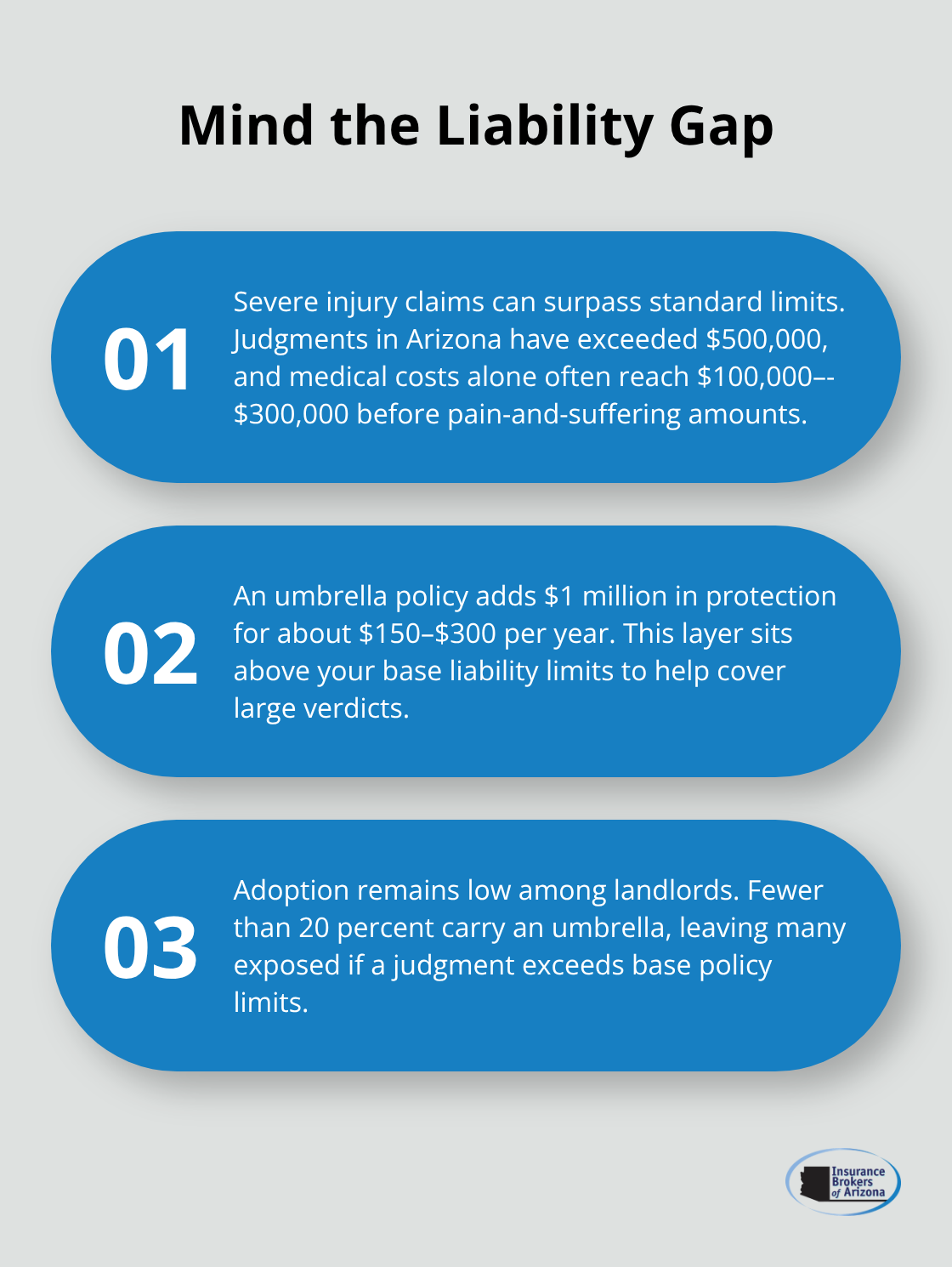
You should carry at least $1 million in total liability coverage across your base policy and an umbrella rider if you own more than one property.
Tenant-Caused Damage Sits Outside Most Standard Policies
Dwelling fire insurance excludes damage caused intentionally or negligently by tenants, which means broken windows, holes punched in walls, or damaged plumbing fixtures fall on you as the owner. Standard policies cover named perils like fire or wind but explicitly exclude tenant negligence or intentional acts. If a tenant punches a hole in drywall, leaves a window open during a rainstorm, or fails to report a water leak that damages the structure, your policy will not cover repairs. Landlord-specific endorsements matter here. Some carriers offer tenant-caused damage riders that extend coverage to include accidental damage caused by occupants, though these typically run an extra $200–$400 annually and may include a deductible of $500 or higher. Arizona rental market data shows tenant turnover averaging 18–24 months, meaning you face significant exposure to damage during each occupancy period. Screening tenants thoroughly and requiring a security deposit help offset this risk, but they do not eliminate it completely.
Replacement Cost Underestimation Leaves You Exposed
The most common gap occurs when landlords insure properties based on purchase price rather than actual replacement cost. A property purchased for $300,000 five years ago might now cost $400,000 to rebuild because Arizona construction costs have risen 5–8 percent annually according to Builder Magazine data tracking regional trends. If you carry a $300,000 dwelling limit on that property and face a total loss, you absorb the $100,000 gap yourself. Inflation continues accelerating these costs, meaning a policy that felt adequate three years ago likely underinsures today. A licensed contractor can provide a current replacement cost estimate in two to three hours, which prevents catastrophic underinsurance. Many landlords skip this step and instead rely on old appraisals or their own guesses, which consistently underestimate what reconstruction actually costs in today’s market.
Loss of Rents Coverage Needs Realistic Income Projections
Loss of rents coverage also suffers from underinsurance when landlords calculate it based on current rent rather than expected rent during the repair period. If your property takes six months to rebuild and rents typically rise 3–5 percent annually in your market, your current rent figure will not cover all lost income during that reconstruction window. You should calculate loss of rents coverage by projecting what rent you could charge during the repair period, not what you charge today. This forward-looking approach accounts for market appreciation and prevents a coverage shortfall when you need it most. The difference between underestimating by one month and overestimating by one month can mean thousands of dollars in out-of-pocket expenses or unnecessary premium costs.
What Happens When Multiple Gaps Align
These gaps rarely appear in isolation. A landlord who underinsures replacement cost, carries low liability limits, and lacks tenant-caused damage coverage faces compounding exposure. One serious injury claim combined with property damage from tenant negligence can exceed your total coverage limits, leaving you personally liable for the difference. The next section addresses how you can reduce claims and strengthen your protection before gaps become financial disasters.
Reducing Claims and Maximizing Protection
Screen Tenants Thoroughly to Minimize Risk
Tenant screening stands as your first line of defense against claims that insurance cannot prevent. Most landlords treat screening as a checkbox exercise, running a basic credit report and calling references without real scrutiny. This approach fails because it misses behavioral patterns that predict future damage and liability problems.
A comprehensive screening process includes a criminal background check through services like LexisNexis that track eviction history, which reveals tenants who have damaged properties or abandoned rentals before. The National Multifamily Housing Council reports that eviction filings in Arizona averaged 3.2 per 1,000 rental units annually from 2022–2024, which means one in every 312 rental units faces eviction risk each year. Contact at least two previous landlords directly and ask specific questions about damage claims, maintenance complaints, and late payments rather than accepting generic references.
A 20-minute phone call with a previous landlord often reveals whether a tenant left a property damaged or well-maintained. Tenants with a pattern of short-term stays under six months combined with damage claims in prior rental history represent significantly higher risk. A higher security deposit does not prevent damage-it only compensates you after the fact. Screening rigorously before signing a lease prevents the damage from occurring in the first place.
Maintain the Property to Prevent Damage Claims
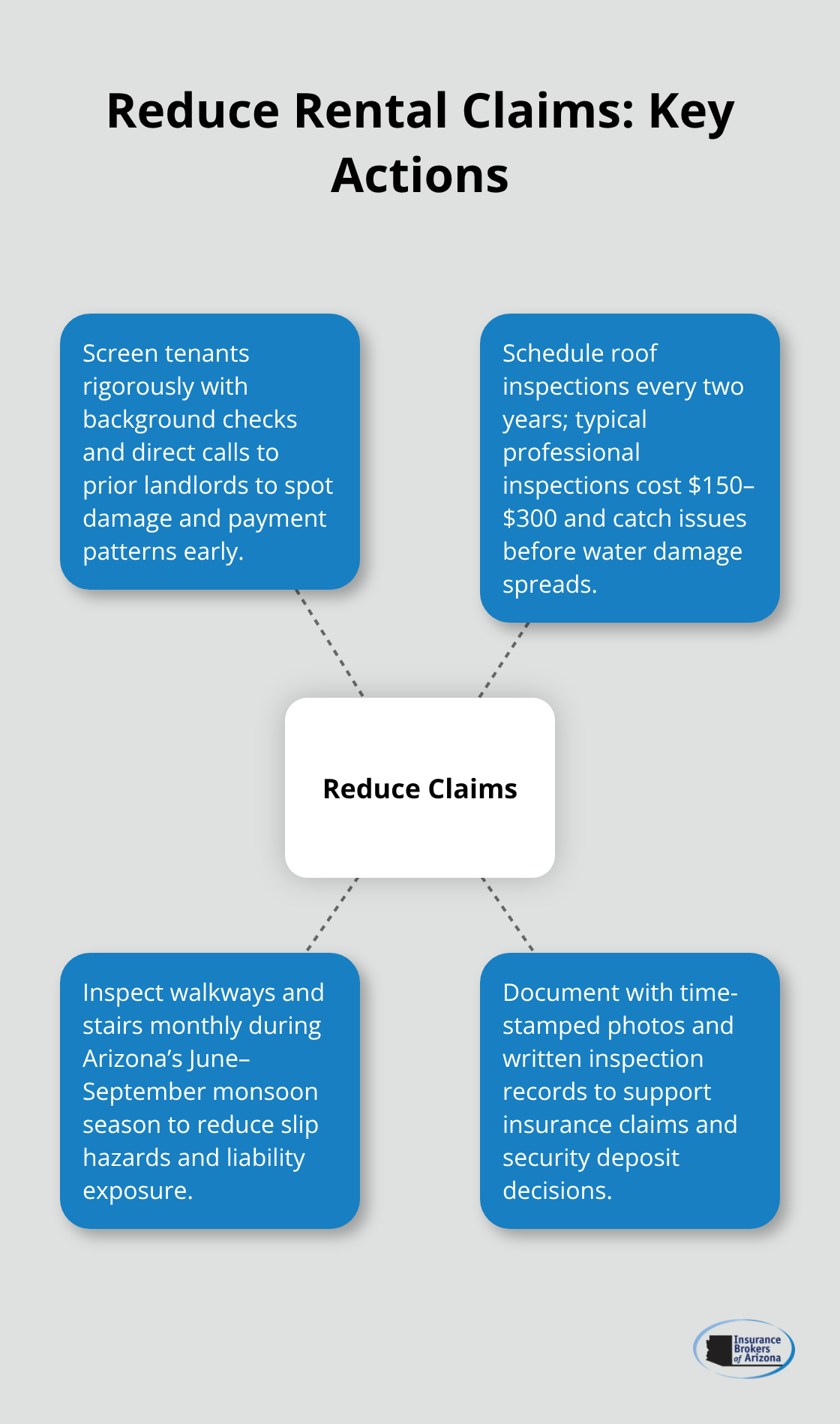
Property maintenance acts as your second defense by eliminating the conditions that trigger both damage claims and liability lawsuits. Arizona’s summer heat accelerates roof deterioration, and a roof inspection every two years catches problems before they cause water damage that spreads through walls and insulation. A professional roof inspection costs $150–$300 and typically reveals issues like pooling water, missing shingles, or deteriorated flashing that lead to interior damage within months if ignored.
Walkway and stair maintenance matters equally because slip-and-fall claims represent the largest liability exposure for rental properties. The Occupational Safety and Health Administration notes that falls account for over 800,000 hospitalizations annually in the United States, and premises liability from falls consistently ranks among the top reasons insurers deny coverage due to landlord negligence. Inspect walkways, stairs, and common areas monthly during Arizona’s monsoon season from June through September when moisture creates slip hazards.
Interior maintenance prevents tenant-caused damage claims by catching small problems before tenants ignore them into major issues. A leaking faucet left unrepaired for weeks becomes water damage that spreads behind walls, and your insurance excludes coverage for maintenance failures. Schedule quarterly inspections with written documentation to prevent disputes about whether damage existed before the tenant moved in.
Document Everything with Photos and Inspection Records
Photograph conditions before and after repairs to establish that you addressed hazards promptly. This documentation protects you when a tenant moves out and disputes the security deposit deduction for damage they claim was pre-existing. Written inspection records create a clear timeline showing when you identified problems and what actions you took to fix them.
Maintain detailed records of all maintenance work, repairs, and inspections in a single file for each property. These records become critical evidence if a tenant claims pre-existing damage or if an insurer questions whether you maintained the property adequately. Photos taken during move-in inspections and after repairs provide visual proof that contradicts tenant disputes about damage responsibility. Insurance companies review maintenance records carefully when evaluating claims, and thorough documentation often determines whether they approve or deny coverage for damage disputes.
Final Thoughts
Rental property insurance strategies require more than buying three basic coverage types and hoping they protect you. The gaps we’ve outlined-underinsured replacement costs, liability limits that fall short, and exclusions for tenant-caused damage-expose landlords to financial losses that insurance cannot cover. Arizona’s rising construction costs and active rental market mean your policy from three years ago likely leaves you vulnerable today.
The foundation of solid rental property insurance starts with accurate replacement cost estimates from a contractor, not guesses based on purchase price. Add umbrella liability coverage to reach at least $1 million in total protection, and consider tenant-caused damage endorsements that extend coverage beyond standard policy exclusions. Loss of rents coverage should reflect projected rent during the repair period, not current rent.
Your second line of defense comes from tenant screening and property maintenance. Thorough screening catches tenants with damage histories before they move in, and regular maintenance eliminates the conditions that trigger both claims and lawsuits. We at Insurance Brokers of Arizona® work with landlords to build rental property insurance strategies that match their actual exposure, and you can contact us to schedule a policy review and ensure your rental properties carry the coverage that actually protects your investment.
Disclaimer: The information provided in this blog is for general informational purposes only and does not constitute legal, financial, or insurance advice. Coverage options, terms, and availability may vary. Please consult with a licensed professional for advice specific to your situation.


