
Comprehensive Auto Coverage Explained: Full Protection, Few Surprises

Most people think full coverage auto insurance means they’re completely protected. The reality is far different-gaps in your policy can leave you exposed to serious financial losses.
We at Insurance Brokers of Arizona® help drivers understand what comprehensive auto coverage actually includes and where the real vulnerabilities hide. This guide walks you through the coverage types that matter, the gaps you need to fill, and how to pick limits that match your actual situation.
What Your Full Coverage Auto Policy Actually Covers
Collision Coverage Protects Your Vehicle in Accidents
Collision coverage pays for damage to your vehicle when you hit another car, object, or guardrail-regardless of who’s at fault. If you finance or lease your vehicle, your lender almost certainly requires this coverage. The average collision claim in Arizona runs around $3,500 to $4,200, depending on vehicle age and repair costs.
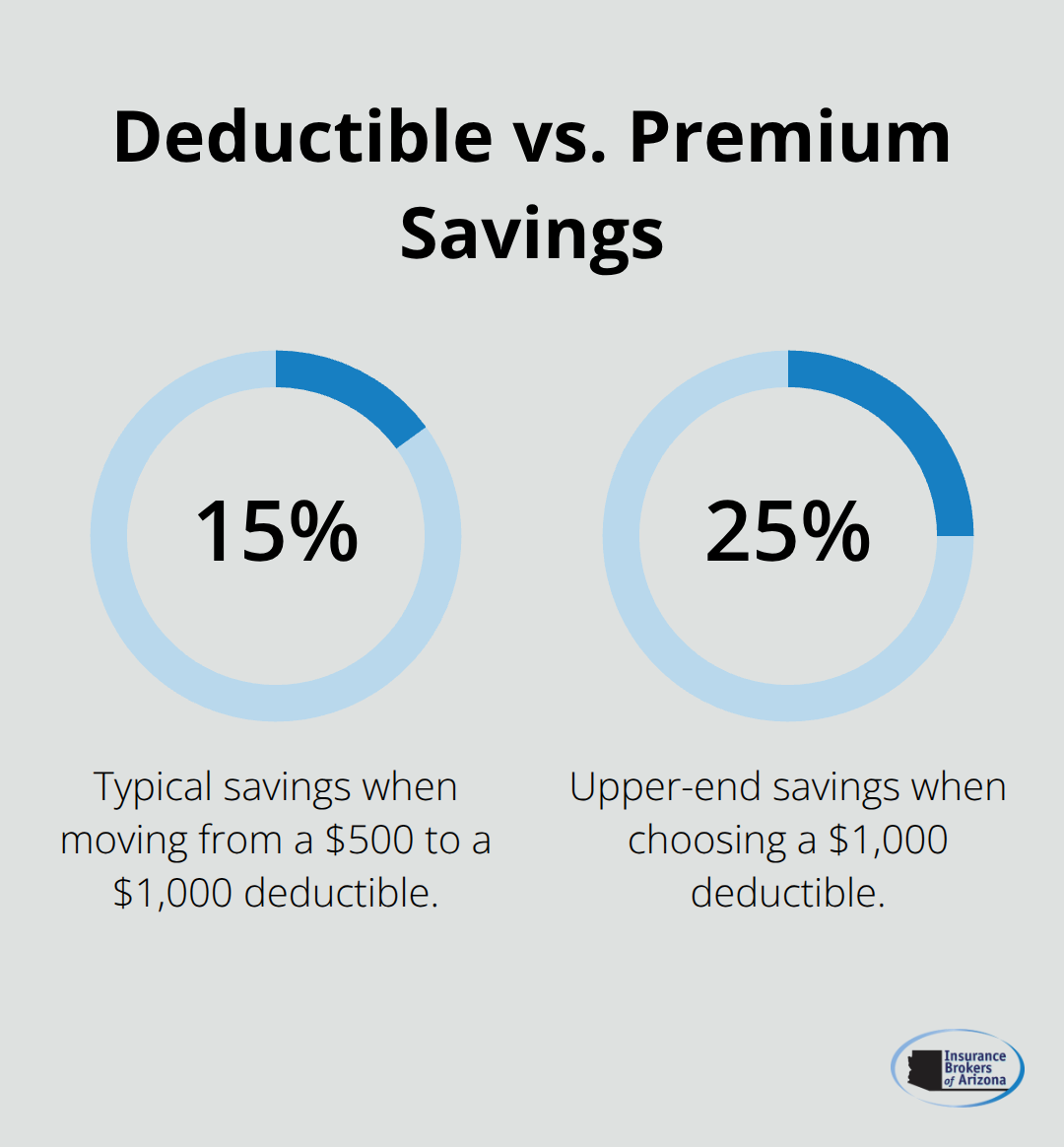
Your deductible directly impacts what you pay out of pocket. Choosing a $1,000 deductible instead of $500 typically saves you 15-25% on your premium, but it means you absorb more cost if an accident happens. This trade-off matters most for drivers with stable finances who can handle larger out-of-pocket expenses.
Comprehensive Coverage Handles Events Beyond Your Control
Comprehensive coverage protects against events you don’t cause, like theft, weather damage, vandalism, or hitting an animal. Comprehensive claims average $1,800 to $2,400 nationally, and they’re growing more common as extreme weather events increase across Arizona. Many drivers skip this coverage thinking they don’t need it, but comprehensive protects your financial security against losses completely outside your control.
Arizona’s increasing hail storms and monsoon seasons make comprehensive coverage particularly valuable. A single weather event can total a vehicle, leaving you responsible for thousands in repairs without this protection.
Liability Coverage Protects Your Financial Future
Liability coverage protects other people and their property when you’re at fault for an accident. Arizona requires a minimum of $15,000 bodily injury liability per person and $30,000 per accident, plus $10,000 property damage liability. These minimums are dangerously low-a serious injury claim can easily exceed $50,000, and medical costs keep rising.
Most drivers should carry liability limits of at least $100,000 per person and $300,000 per accident, especially if you have assets to protect. If your liability coverage maxes out and damages exceed that amount, you’re personally responsible for the difference, which can mean wage garnishment or asset seizure. Your liability coverage also pays for the other driver’s medical bills and vehicle repairs, making it the most important coverage for protecting your financial future.
The cost difference between minimum coverage and adequate coverage is often just $10-20 per month, yet the protection difference is enormous. This small premium increase shields you from catastrophic financial exposure that could follow a serious accident.
The Coverage Gaps Your Policy Won’t Mention
Your standard full coverage policy leaves significant holes that most drivers don’t address until an accident happens. Collision and comprehensive coverage protect your vehicle, and liability protects others, but three critical gaps can cost you thousands in medical bills, vehicle repairs, or legal expenses. These gaps destroy financial security constantly, which is why understanding them matters more than understanding the coverages themselves.
Why Uninsured and Underinsured Motorists Create Real Problems
Arizona has roughly 10-12% of drivers carrying no insurance at all, according to state traffic data. When an uninsured driver hits you, their liability coverage doesn’t exist, so your own insurance must cover your injuries and vehicle damage. Uninsured motorist coverage protects you in exactly this scenario, paying for your medical bills and lost wages when an at-fault driver has no insurance. Without it, you must sue the other driver personally, which rarely produces payment since uninsured drivers typically have no assets. Underinsured motorist coverage fills the gap when the at-fault driver carries minimal coverage that doesn’t match your actual damages. If you’re hit by someone with Arizona’s minimum $15,000 liability limit and your injuries cost $75,000, underinsured coverage pays the difference. Most drivers should carry uninsured and underinsured motorist limits matching their liability coverage, typically $100,000 per person and $300,000 per accident. This coverage costs roughly $15-30 monthly and protects you from financial devastation caused by someone else’s irresponsibility.
Medical Payments Coverage Handles Immediate Bills Without Delays
Medical payments coverage, also called med pay, covers your medical expenses regardless of who caused the accident. Unlike uninsured motorist coverage, med pay pays your bills immediately without waiting for fault determination or lawsuit settlements. Arizona drivers often skip this coverage thinking health insurance will cover accident injuries, but health insurance frequently denies accident-related claims or imposes high deductibles. Med pay typically covers up to $5,000 in medical expenses and costs only $5-15 monthly. If you’re injured in an accident, med pay pays your hospital bills, emergency room visits, and follow-up care directly, keeping you from maxing out your health insurance deductible or facing collection agencies while your liability claim settles. This coverage becomes especially valuable for drivers with high-deductible health plans or no health insurance at all.
Deductibles Determine What You Actually Pay When Claims Happen
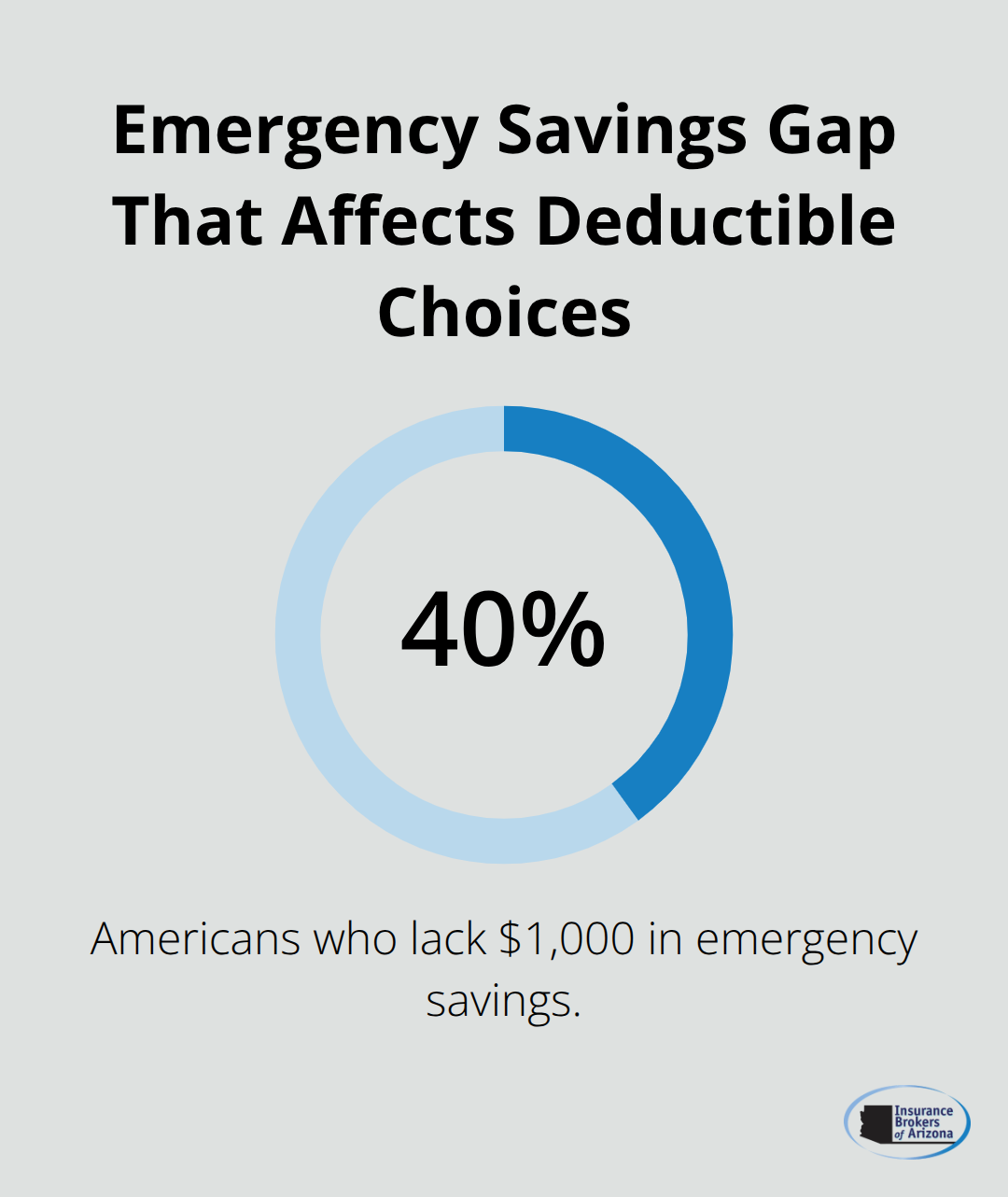
Your deductible directly determines your out-of-pocket cost when you file a claim, yet most drivers choose deductibles based purely on premium savings rather than actual financial capacity. A $500 deductible means you pay $500 when you file a collision or comprehensive claim, while a $1,000 deductible means you pay $1,000. Drivers often assume they can handle a claim out of pocket, but 40% of Americans lack $1,000 in emergency savings according to Federal Reserve data. If you choose a $1,000 deductible to save money but can’t actually pay $1,000 when you need repairs, you’re financially trapped. Try matching your deductible to money you actually have available in savings, not money you think you could find.
For most Arizona drivers, a $500 deductible balances reasonable premium savings with manageable out-of-pocket costs.
These three gaps-uninsured motorist protection, medical payments coverage, and deductible misalignment-account for most of the financial surprises drivers face after accidents. Addressing them now prevents the painful discovery later that your coverage doesn’t actually protect you the way you thought it did. The next step involves selecting coverage limits that actually match your vehicle, your finances, and your real exposure to loss.
How to Choose the Right Coverage Limits for Your Situation
Assess Your Vehicle’s Value and Age
Start with your vehicle’s actual cash value, not what you paid for it or what you think it’s worth. Your vehicle loses 15-20% of its value in the first year alone according to Kelley Blue Book data. If you own a 2020 Honda Civic worth $18,000 today, carrying collision and comprehensive coverage with limits exceeding that amount means you overpay for protection that maxes out at your vehicle’s real value. Use the NADA Guides or Kelley Blue Book to find your vehicle’s current market value, then set your collision and comprehensive limits at or slightly above that number.
For vehicles older than 10 years, the math shifts dramatically. A 2014 sedan might be worth only $8,000 to $10,000, making a $1,000 deductible more sensible than a $500 deductible since your potential claim payout is limited anyway. Older vehicles also cost less to repair in many cases, which means comprehensive and collision premiums drop significantly. If your vehicle is worth less than $5,000, dropping collision coverage entirely becomes financially rational-your potential claim payout wouldn’t justify the monthly premium cost.
Consider Your Financial Situation and Risk Tolerance
Your liability coverage limits should reflect what you actually have to lose, not Arizona’s minimum requirements. Arizona requires only $15,000 bodily injury liability per person, but that covers almost nothing in a serious accident. A single hospitalization can cost $50,000 to $100,000 or more, and if you’re liable, your insurance must cover it up to your policy limit. Anything above your limit comes directly from your personal assets-your paycheck, your home equity, your savings accounts.
If you own a home worth $300,000, try carrying at least $300,000 in liability coverage per accident to match your net worth. Most Arizona drivers with any significant assets should carry $100,000 per person and $300,000 per accident at minimum, which costs roughly $30-50 more monthly than the state minimum but protects you from financial devastation. Your uninsured and underinsured motorist limits should match your liability limits dollar for dollar-if you carry $100,000/$300,000 liability, carry the same in UM/UIM coverage. This ensures consistent protection whether you’re at fault or the other driver is.
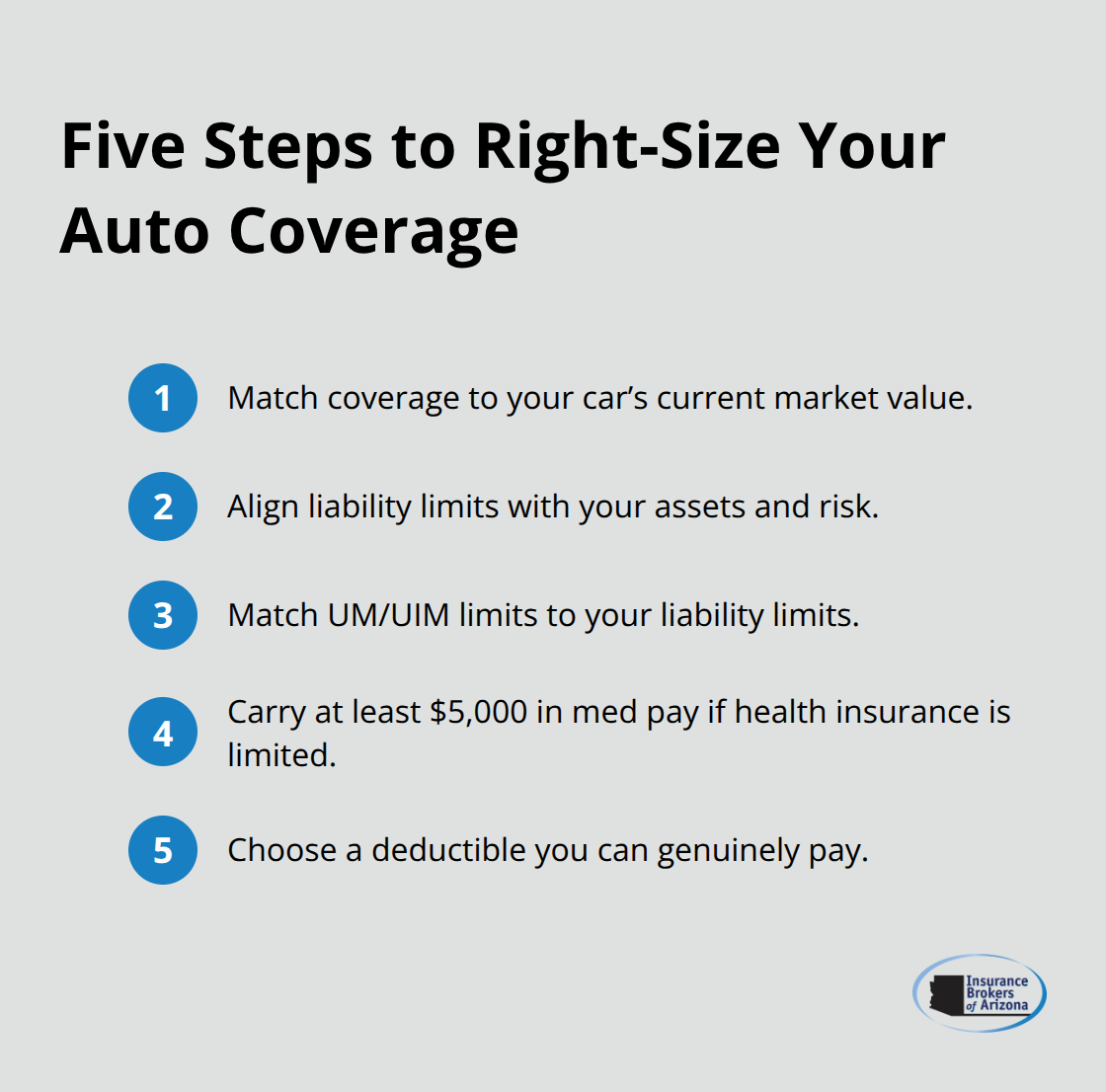
Medical payments coverage should be at least $5,000 for anyone without excellent health insurance, since even a minor accident can generate thousands in immediate medical bills. Your deductible choice matters most when you actually have money in savings. If you have $2,000 in an emergency fund, a $1,000 deductible is reasonable. If you have $500 in savings, that $1,000 deductible will force you to borrow money or skip repairs when you file a claim.
Review State Minimum Requirements and Recommendations
Arizona’s minimum liability requirements ($15,000 per person, $30,000 per accident for bodily injury, and $10,000 for property damage) leave you dangerously exposed. These minimums haven’t increased substantially in years, yet medical costs and vehicle repair expenses have climbed significantly. A serious accident can easily generate damages that exceed these limits by tens of thousands of dollars.
Choose a deductible you can genuinely pay without financial stress, because an accident will happen eventually and you’ll need that money immediately. If you lack emergency savings, a lower deductible ($500) protects you from financial hardship when you file a claim. The premium difference between a $500 and $1,000 deductible typically runs 15-25%, so calculate whether that savings justifies the higher out-of-pocket cost if an accident occurs. Insurance Brokers of Arizona® can help you evaluate your specific situation and select limits that match both your assets and your actual financial capacity to handle claims.
Final Thoughts
Full coverage auto insurance only protects you when you understand what it actually covers and where the gaps hide. Collision and comprehensive coverage protect your vehicle, liability protects others, and the additional coverages we discussed protect your finances when accidents happen. Most drivers carry inadequate limits, skip critical coverages like uninsured motorist protection, or choose deductibles they cannot afford to pay.
Comprehensive auto coverage explained means recognizing that your policy is only as strong as its weakest component. A $15,000 liability limit sounds reasonable until you face a lawsuit for $75,000 in damages, and medical payments coverage seems unnecessary until hospital bills arrive while your liability claim settles. Uninsured motorist coverage feels optional until an uninsured driver hits you and you realize you have no way to recover your losses.
Your vehicle’s value, your financial situation, and your actual assets should drive every coverage decision you make. We at Insurance Brokers of Arizona® work with drivers every day who discover their coverage fails to protect them the way they thought it would, and we partner with over 40 carriers to find options that match your specific situation and financial capacity. Contact us today to review your current coverage and make sure your policy actually protects what matters most.
Disclaimer: The information provided in this blog is for general informational purposes only and does not constitute legal, financial, or insurance advice. Coverage options, terms, and availability may vary. Please consult with a licensed professional for advice specific to your situation.


