
homeowners insurance alternatives: Exploring Your Options

Most homeowners think they have only one choice: a standard insurance policy. That’s not true.
At Insurance Brokers of Arizona®, we know that homeowners insurance alternatives exist and can better fit your specific situation. Whether you own a high-value property, face unique risks, or want more control over your coverage, options are available. This guide walks you through traditional policies, specialty coverage, and self-insurance strategies to help you find what works best for your home.
What Standard Homeowners Policies Actually Cover and Where They Fall Short
The Five Core Components of Standard Coverage
Standard homeowners insurance protects five main areas: your dwelling structure, other structures like garages or sheds, your personal property inside the home, liability protection if someone is injured on your property, and additional living expenses if you cannot stay in your home temporarily. The Insurance Information Institute reports that most policies cap dwelling coverage between $300,000 and $500,000, though this varies significantly based on your home’s age, location, and construction type. Two payout methods exist: replacement cost coverage pays to rebuild at current construction costs, while actual cash value policies deduct depreciation from payouts. If your home burned down today, replacement cost gives you substantially more money than actual cash value, making it the stronger choice for most Arizona homeowners.
How Deductibles Impact Your Wallet
Your deductible directly affects your premium in measurable ways. Increasing your deductible from $500 to $1,000 typically reduces your annual cost by 10 to 15 percent, according to the Insurance Information Institute, but you must have that amount available out of pocket after a claim. This trade-off works well if you have emergency savings set aside, but it backfires if a claim forces you to borrow money or skip other expenses.
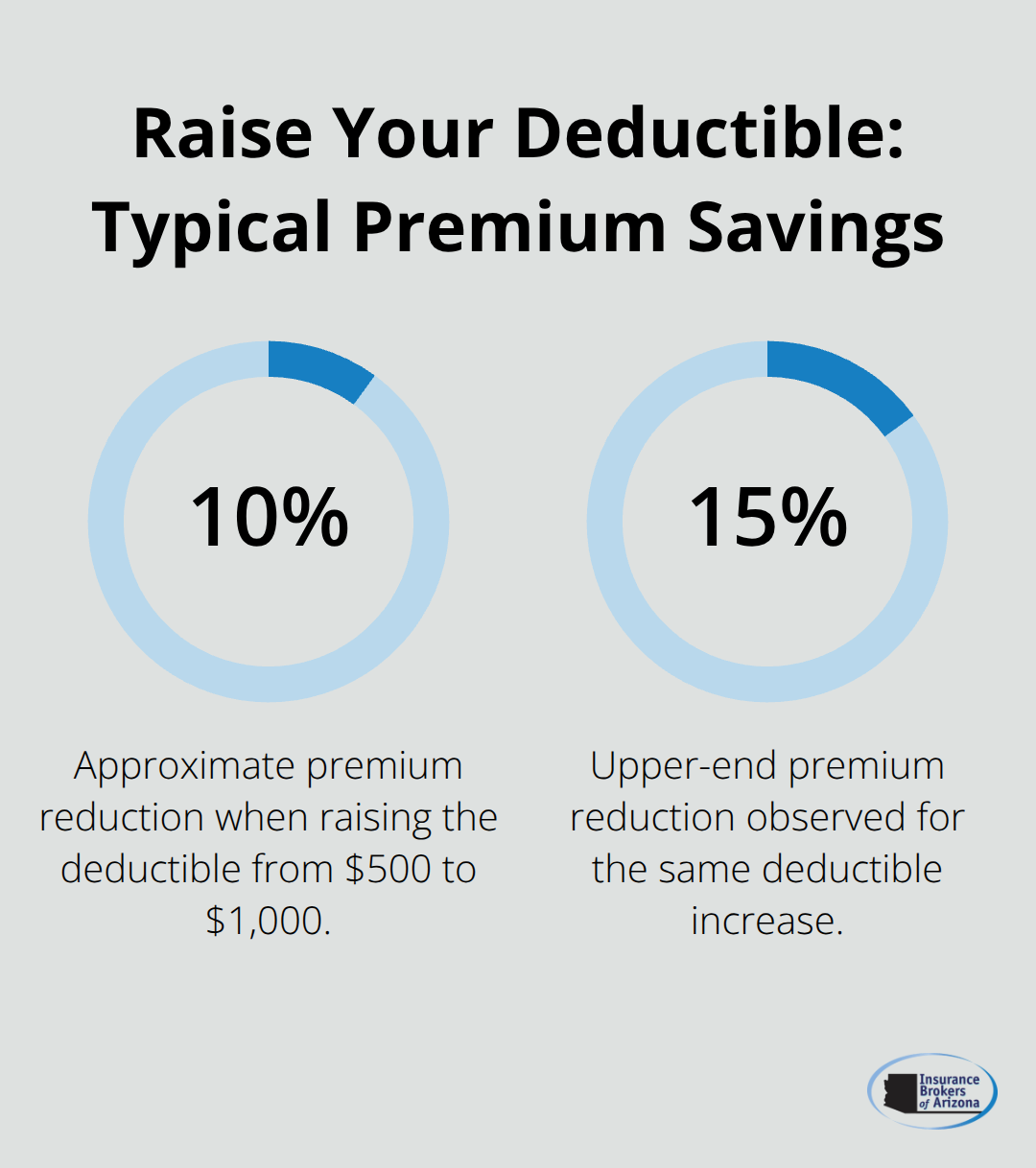
The right deductible balances lower premiums against your ability to pay without financial strain.
The Coverage Gaps That Leave You Exposed
Standard policies explicitly exclude flood damage, earthquake damage, and mold, which means you remain completely unprotected against these risks unless you purchase separate coverage. Arizona faces significant flood risk during monsoon season and along certain waterways, yet FEMA data shows most homeowners do not realize their standard policy will not cover this damage. Earthquake coverage requires a separate rider or standalone policy in Arizona, where seismic activity is lower but still possible.
Your personal property limits also matter enormously. Most policies cap coverage at 50 to 70 percent of your dwelling limit, which leaves high-value items like jewelry, art, or collectibles dramatically underinsured unless you add scheduled endorsements with professional appraisals. Liability coverage typically starts at $100,000 to $300,000, which sounds adequate until a serious accident happens and medical bills exceed that limit. An umbrella liability policy starting around $1 million protects your assets beyond your homeowners policy limits and costs surprisingly little (often $150 to $300 annually for that first million dollars of protection).
Why High-Value Homes Need More Than Standard Coverage
Homes worth $750,000 or more face serious underinsurance risk with standard policies. Replacement cost estimates often fall short of actual rebuilding expenses in today’s market, and personal property limits cap out far below the value of fine art, jewelry, or collectibles many owners possess. Specialty homeowners insurance products address these gaps with higher dwelling limits, enhanced personal property coverage, and broader liability protection-options we explore in the next section.
Beyond Standard Coverage
Specialty Insurance for High-Value Homes
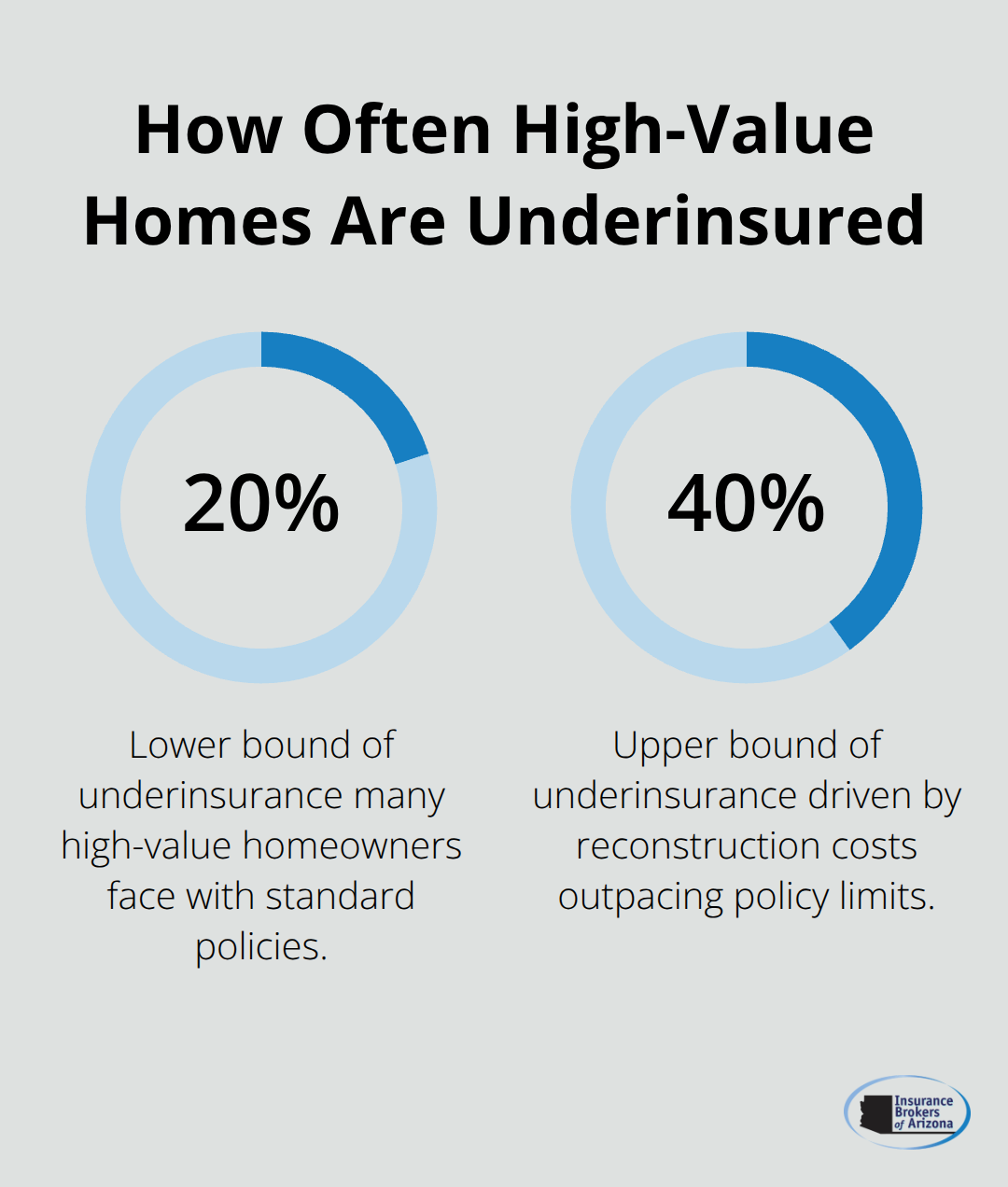
Specialty homeowners insurance exists specifically for properties exceeding $750,000 in value, and it operates fundamentally differently from standard policies. These programs offer dwelling limits that actually match current reconstruction costs rather than capping out at $500,000, personal property limits reaching $500,000 or higher for scheduled items, and liability protection starting at $500,000 instead of $300,000. The Insurance Information Institute notes that high-value homeowners frequently face 20 to 40 percent underinsurance with standard policies because replacement costs have climbed faster than policy limits. If your home requires $1.2 million to rebuild but your standard policy maxes at $500,000, the gap becomes your financial responsibility.
Specialty carriers understand that fine art, jewelry, and collectibles need professional appraisals and scheduled endorsements to receive full replacement value. These insurers tailor coverage to match your actual property value and possessions, eliminating the underinsurance trap that catches many Arizona homeowners with valuable estates.
Flood Insurance Fills a Critical Gap
Standalone flood policies fill gaps that standard homeowners insurance deliberately excludes. Flood insurance through the National Flood Insurance Program covers water damage from heavy rain, monsoons, and overflowing waterways, with building coverage up to $250,000 and contents coverage up to $100,000 according to FEMA guidelines. Arizona homeowners in flood-prone areas near the Salt River or in monsoon corridors should obtain flood quotes immediately, as policies include a 30-day waiting period before coverage becomes effective.
Private flood insurers now offer higher limits and broader terms than NFIP, sometimes reaching $2 million in building coverage for properties that warrant it. This option works well for homeowners whose properties exceed NFIP maximums or who need faster coverage activation.
Earthquake Coverage Costs Less Than You Think
Earthquake insurance requires a separate endorsement or standalone policy and costs surprisingly little in Arizona because seismic activity remains relatively low, typically ranging from $200 to $500 annually for $500,000 in dwelling coverage. Homeowners in areas with any seismic history should compare quotes, as the premium-to-protection ratio often favors purchasing this coverage.
Self-Insurance and Risk Retention Strategies
Self-insurance works best for predictable, manageable losses rather than catastrophic events. Building an emergency fund covering six to twelve months of expenses plus your deductible amount gives you genuine financial flexibility to handle smaller claims without filing and potentially facing premium increases. This approach requires discipline and substantial savings, making it suitable only for homeowners with strong financial reserves.
Risk retention groups operate as member-owned cooperatives where business owners and professionals pool resources to self-insure, but this approach suits commercial enterprises far more than residential homeowners and requires substantial capital commitment. Most Arizona homeowners benefit more from traditional or specialty insurance than from self-insurance alone. Understanding which coverage gaps matter most for your specific property and financial situation determines whether you need specialty policies, standalone coverage, or both-a decision that shapes your next steps in selecting the right protection.
Matching Coverage to Your Home’s Real Value
Start with a Professional Appraisal
Obtain a professional appraisal rather than relying on your home’s market value or your mortgage lender’s estimate. Market value and reconstruction cost diverge dramatically in Arizona’s current building environment. A home worth $600,000 on the market might cost $850,000 to fully rebuild because material and labor costs have skyrocketed while home prices reflect broader market conditions. The National Association of Insurance Commissioners recommends obtaining a detailed replacement cost estimate from a licensed appraiser who specializes in construction costs, not just real estate value. This document becomes your baseline for selecting appropriate dwelling coverage limits and prevents the catastrophic underinsurance that catches high-value homeowners off guard.
Inventory Your Personal Property Thoroughly
After securing the appraisal, inventory your personal property room by room with photographs and receipts. Most homeowners dramatically underestimate their contents value until forced to list everything during a claim. Jewelry, electronics, furniture, and clothing add up quickly, and standard policies cap personal property at 50 to 70 percent of dwelling coverage. If your dwelling limit sits at $600,000, your personal property coverage likely maxes at $300,000 to $420,000, which proves insufficient if you own fine art, designer collections, or valuable antiques. Schedule high-value items separately with professional appraisals to receive full replacement value beyond the standard cap. This step costs a few hundred dollars but prevents tens of thousands in losses.
Gather Multiple Quotes with Identical Specifications
Collect three to five quotes using identical coverage specifications to reveal how dramatically rates and coverage terms vary across carriers. Do not compare quotes with different deductibles, dwelling limits, or personal property endorsements, as this creates apples-to-oranges comparisons that obscure true pricing differences. The Insurance Information Institute notes that identical coverage can cost 40 percent more from one carrier than another, making side-by-side comparison essential for Arizona homeowners. When requesting quotes, specify your replacement cost estimate from the appraisal, your personal property inventory total, desired deductible amount, and any specialty coverage like scheduled endorsements or umbrella liability.
Request Detailed Information About Exclusions and Discounts
Ask each carrier specifically what exclusions apply to your property and whether flood or earthquake coverage requires separate purchase or endorsements. Private flood insurers now compete with the National Flood Insurance Program, and comparing both options reveals cost and coverage differences that matter significantly for properties in monsoon-prone areas. Request information about available discounts for security systems, monitored alarms, or home safety upgrades, as these can reduce premiums by 10 to 25 percent according to the Insurance Information Institute.
Review Declarations Pages Before Making Your Final Decision
After collecting quotes, review the declarations page carefully rather than focusing solely on premium cost. A lower quote sometimes reflects lower coverage limits or higher deductibles disguised as savings. Verify that dwelling limits match your appraisal estimate, personal property coverage matches your inventory total, and liability protection reaches at least $300,000 as a minimum baseline for Arizona properties.
Final Thoughts
Homeowners insurance alternatives address specific gaps that standard policies leave exposed, from specialty coverage for high-value properties to standalone flood policies and earthquake endorsements. Your home’s actual reconstruction cost, personal property value, and Arizona’s unique risks determine which options matter most for your situation. A $500,000 standard policy protects adequately if your home truly costs $500,000 to rebuild, but falls catastrophically short if reconstruction actually requires $800,000-and flood coverage becomes essential if you live near the Salt River or in a monsoon-prone area.
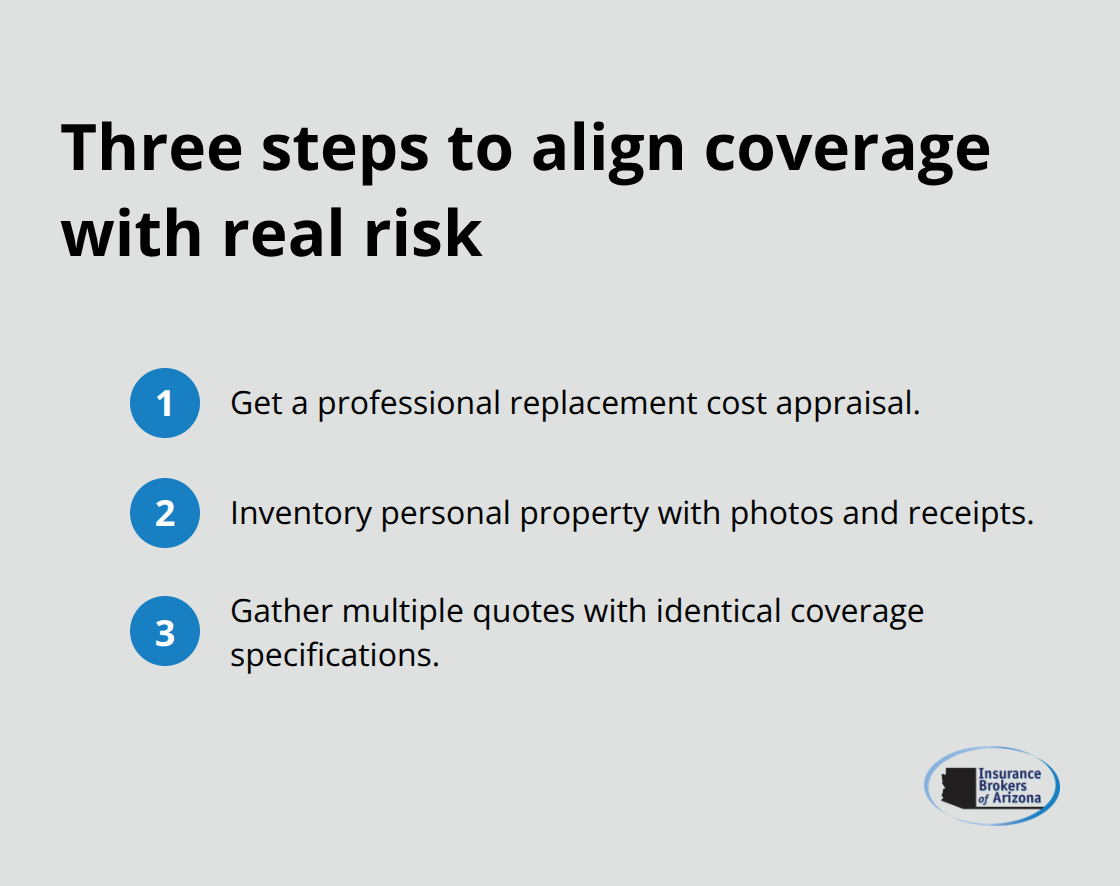
Start by obtaining a professional replacement cost appraisal, then inventory your personal property with photographs and receipts, and finally gather quotes from multiple carriers using identical coverage specifications. This process takes a few hours but reveals whether your current coverage matches your actual exposure or leaves dangerous gaps. Pay attention to exclusions, available discounts for security systems or safety upgrades, and whether specialty coverage or standalone policies make financial sense for your situation.
We at Insurance Brokers of Arizona® work with over 40 reputable carriers to match homeowners with coverage that actually protects their assets rather than leaving them underinsured. Our team understands Arizona’s specific risks and can help you navigate homeowners insurance alternatives that fit your property and budget. Contact us to review your current coverage and explore options that provide genuine peace of mind.
Disclaimer: The information provided in this blog is for general informational purposes only and does not constitute legal, financial, or insurance advice. Coverage options, terms, and availability may vary. Please consult with a licensed professional for advice specific to your situation.


